 Nederlands
 Deutsch
 Español
  Français
 Русский
Why AI-Powered Bathroom Mirrors Are Becoming a Standard Requirement for Luxury Hotel Procurement
AI-powered mirrors have transitioned from decorative tech gadgets to essential operational tools within the luxury hospitality sector. As hotels shift toward hyper-personalized guest experiences and automated facility management, the integration of smart mirrors provides a centralized interface for both guest interaction and building efficiency. For procurement teams, understanding the technical specifications and long-term value of these systems is now a prerequisite for maintaining brand standards in a competitive market.
Engineering Standards for Smart Mirror Hardware
Modern hospitality environments demand hardware that can withstand constant use and high-humidity conditions without degradation of sensitive electronics.
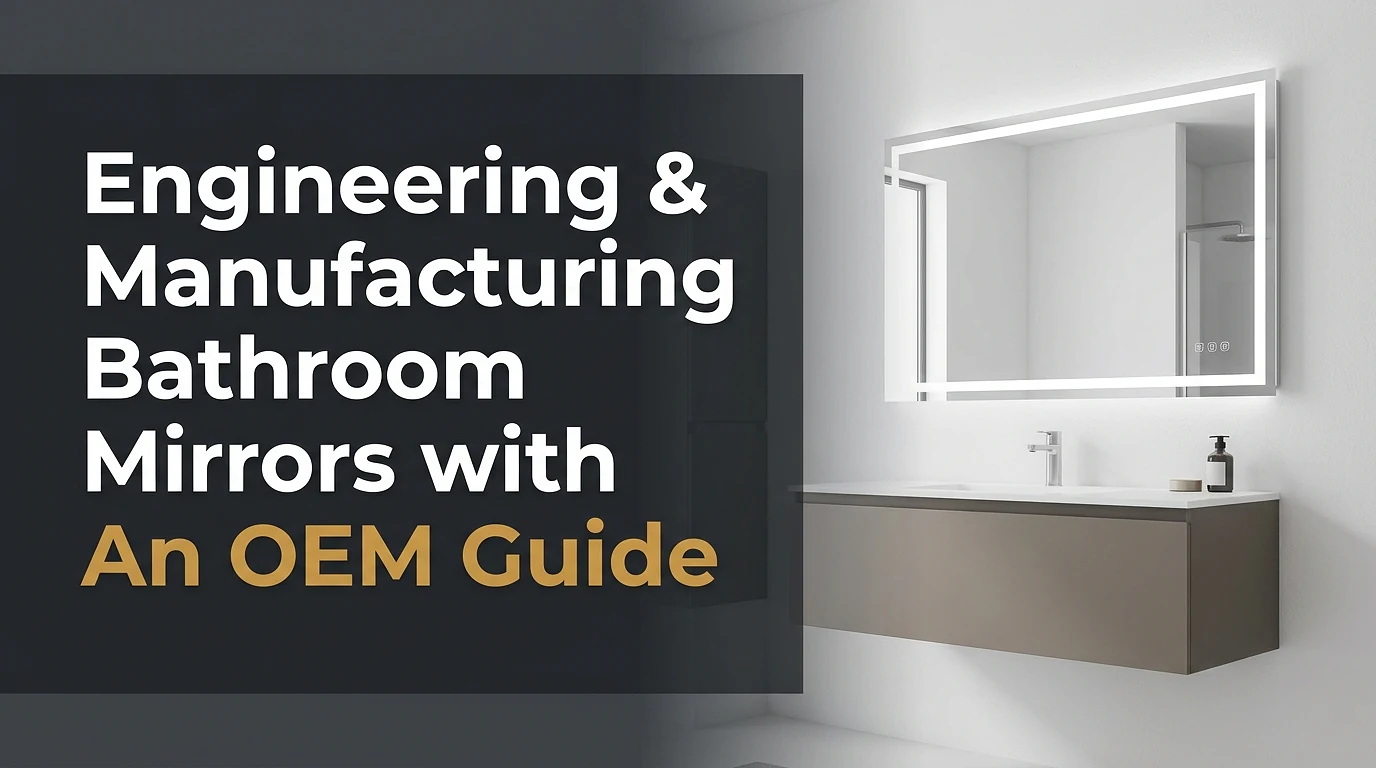
Unlike consumer-grade tablets, a professional Bathroom Mirror designed for B2B use features industrial-grade PCB protection and specialized thermal management systems. These components prevent internal condensation and ensure the longevity of the integrated display. Advanced Bathroom Mirror Customization allows for the inclusion of anti-fog heating pads and reinforced glass layers that meet international safety and durability standards required for high-occupancy environments.
Interoperability with Hotel Property Management Systems (PMS)
A primary driver for AI mirror adoption is their ability to serve as a bridge between the guest and the hotel’s digital ecosystem. By integrating directly with the Property Management System (PMS), these mirrors can provide personalized greetings, display real-time room service status, and offer one-touch concierge access. This level of interoperability streamlines staff communication and enhances guest satisfaction by centralizing utilities such as climate control, lighting presets, and valet requests directly within the bathroom vanity area.
Operational Efficiency and Sustainability Impact
AI-powered mirrors contribute significantly to a hotel's sustainability rating by managing energy consumption through intelligent sensor calibration.

Integrated motion sensors and ambient light detectors ensure that high-output LED arrays are only active when necessary. Many luxury properties utilize an Rgb Led Bathroom Mirror setup that can shift color temperature based on the time of day, supporting guest circadian rhythms while reducing total electrical load. These smart systems provide facility managers with data on usage patterns, allowing for more precise energy auditing and proactive maintenance scheduling before a hardware failure occurs.
Commercial-Grade Comparison
When evaluating procurement options, it is vital to distinguish between standard illumination and fully integrated AI assemblies. The following table highlights the key operational differences that impact Total Cost of Ownership (TCO).
| Feature | Standard LED Mirror | AI-Integrated Smart Mirror |
|---|---|---|
| Connectivity | None | Wi-Fi, Bluetooth, Zigbee |
| Guest Interaction | Physical / Touch Switch | Voice Command, Gesture Control |
| PMS Integration | No | Yes (Full Bi-directional Sync) |
| Diagnostics | Manual Inspection | Remote Firmware/Hardware Monitoring |
| Lifecycle Management | Static Hardware | Over-the-Air (OTA) Updates |
Common Pitfalls in AI Mirror Implementation
One of the most frequent errors in procurement is selecting consumer-grade smart screens placed behind standard glass. These units often lack the necessary brightness (nits) to overcome the semi-reflective surface, resulting in poor visibility. Furthermore, insufficient attention to data privacy can lead to guest dissatisfaction; procurement must verify that voice-activated systems use local processing or have physical "mute" switches to ensure guest security. Finally, failing to plan for software longevity can lead to obsolete hardware within a few years, making manufacturer roadmaps for firmware updates a critical selection criterion.
Q: How do AI smart mirrors integrate with existing hotel property management systems (PMS)?
A: Integration is typically achieved via secure API connections or localized IoT gateways, allowing the mirror to fetch guest data (names, preferences) and push service requests directly to hotel staff dashboards.
Q: What are the long-term maintenance and hardware replacement cycles for smart mirrors?
A: Industrial-grade mirrors are designed for a 7-10 year lifecycle. Maintenance involves periodic OTA software updates and cleaning of external sensors, which is much lower than the upkeep for standalone consumer tablets.
Q: What data privacy protocols are necessary for voice-activated mirrors in guest rooms?
A: Necessary protocols include local-voice processing (no audio sent to the cloud), clear visual indicators when mics are active, and the ability for guests to physically disable microphones.
Q: How does integration impact a hotel’s overall energy efficiency and sustainability rating?
A: By utilizing motion sensors and LED dimming based on occupancy, AI mirrors significantly reduce unnecessary energy draw, helping properties achieve higher LEED and ESG ratings.
Q: What are the electrical infrastructure requirements for installing AI mirrors in luxury retrofits?
A: Retrofits require a dedicated constant-power electrical feed and often a shielded Cat6 data line or a robust 5GHz Wi-Fi network to ensure stable connectivity for high-definition content streaming.


