 Nederlands
 Deutsch
 Español
  Français
 Русский
Commercial Electrical Standards for Wall Mounted LED Mirrors: A Technical Procurement Guide
Commercial electrical standards for wall mounted LED mirrors: To ensure compliance in hospitality and public spaces, commercial mirror systems must adhere to UL 1598 luminaire standards, utilize direct-wire electrical connections to meet code, and pass rigorous load-bearing pull tests to guarantee public safety and operational longevity.
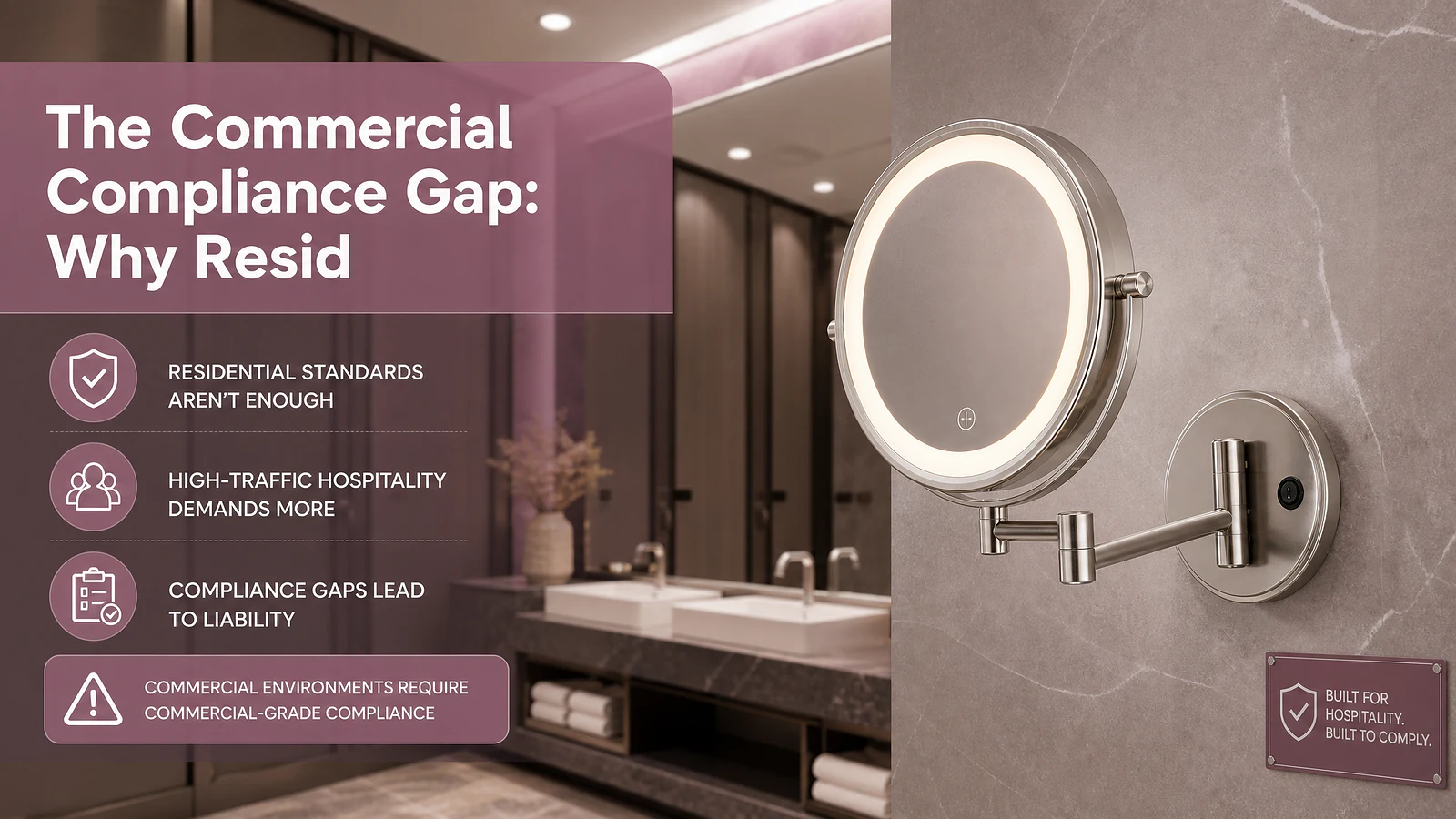
The Commercial Compliance Gap: Why Residential Installation Standards Fail in Hospitality
In high-traffic commercial environments, standard vanity mirror solutions often fail because they are tested against residential safety benchmarks rather than commercial code. Facility managers must prioritize fixtures certified under UL 1598, which governs luminaires for fixed installation. During factory audits, we have observed that residential-grade units lack the circuit protection required to handle the persistent surge loads common in hotel bathroom clusters.
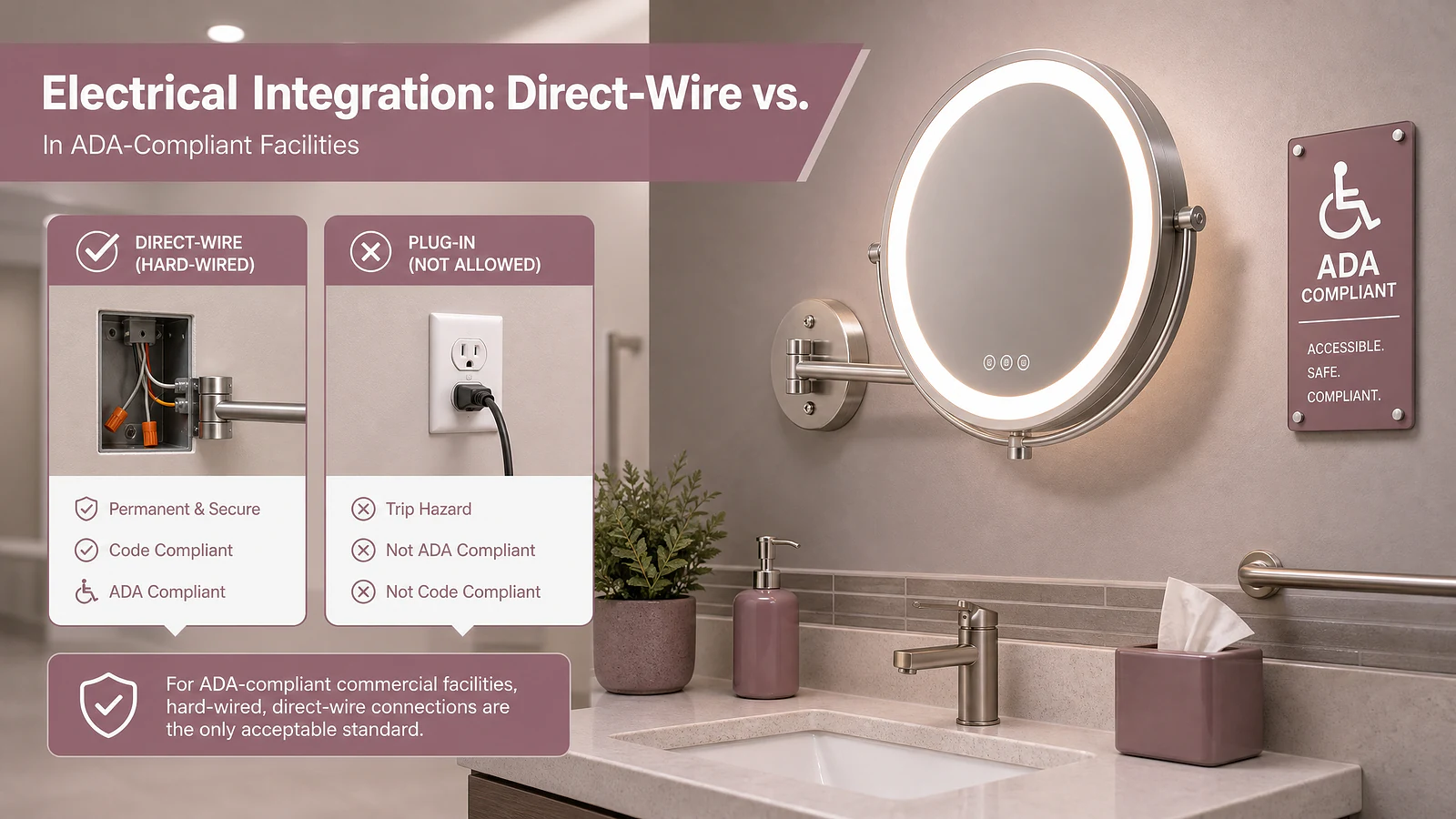
Electrical Integration: Direct-Wire vs. Plug-In Systems in ADA-Compliant Facilities
For ADA-compliant commercial facilities, hard-wired, direct-wire connections are the only acceptable standard. Plug-in systems introduce unnecessary failure points and do not meet the NEC (National Electrical Code) requirements for permanently mounted luminaires in wet locations. Our production line emphasizes internal wiring harnesses that consolidate power management, ensuring that bathroom mirror customization projects remain code-compliant.
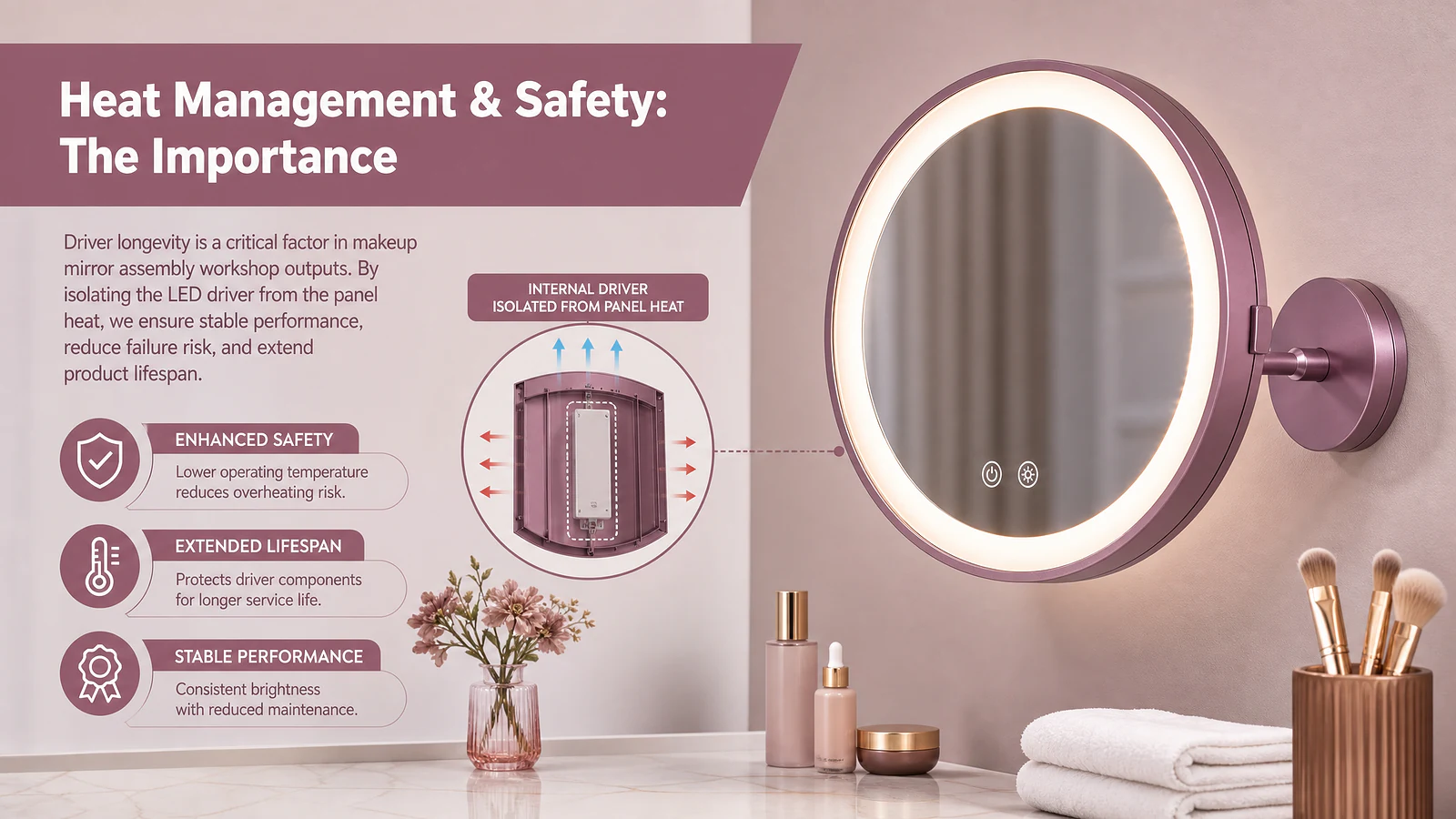
Heat Management & Safety: The Importance of Internal Driver Placement
Driver longevity is a critical factor in makeup mirror assembly workshop outputs. By isolating the LED driver from the primary light source using thermal-dissipating aluminum housings, we prevent heat-related component failure. Every unit features built-in thermal overload cutoffs that automatically de-energize the circuit if internal temperatures exceed 85 degrees Celsius, protecting the facility from potential electrical hazards.
Structural Integrity: Pull-Test Requirements for Publicly Accessible Mirrors
Public-facing mirrors must withstand significant mechanical force. Our internal load-bearing pull tests demonstrate that our stainless steel mounting brackets hold a static load of 45kg without deformation. This structural integrity is non-negotiable for high-traffic public restrooms where accidental or deliberate force is a constant risk.
Lighting Specs for Public Spaces: Flicker-Free Output and Dimming Compatibility
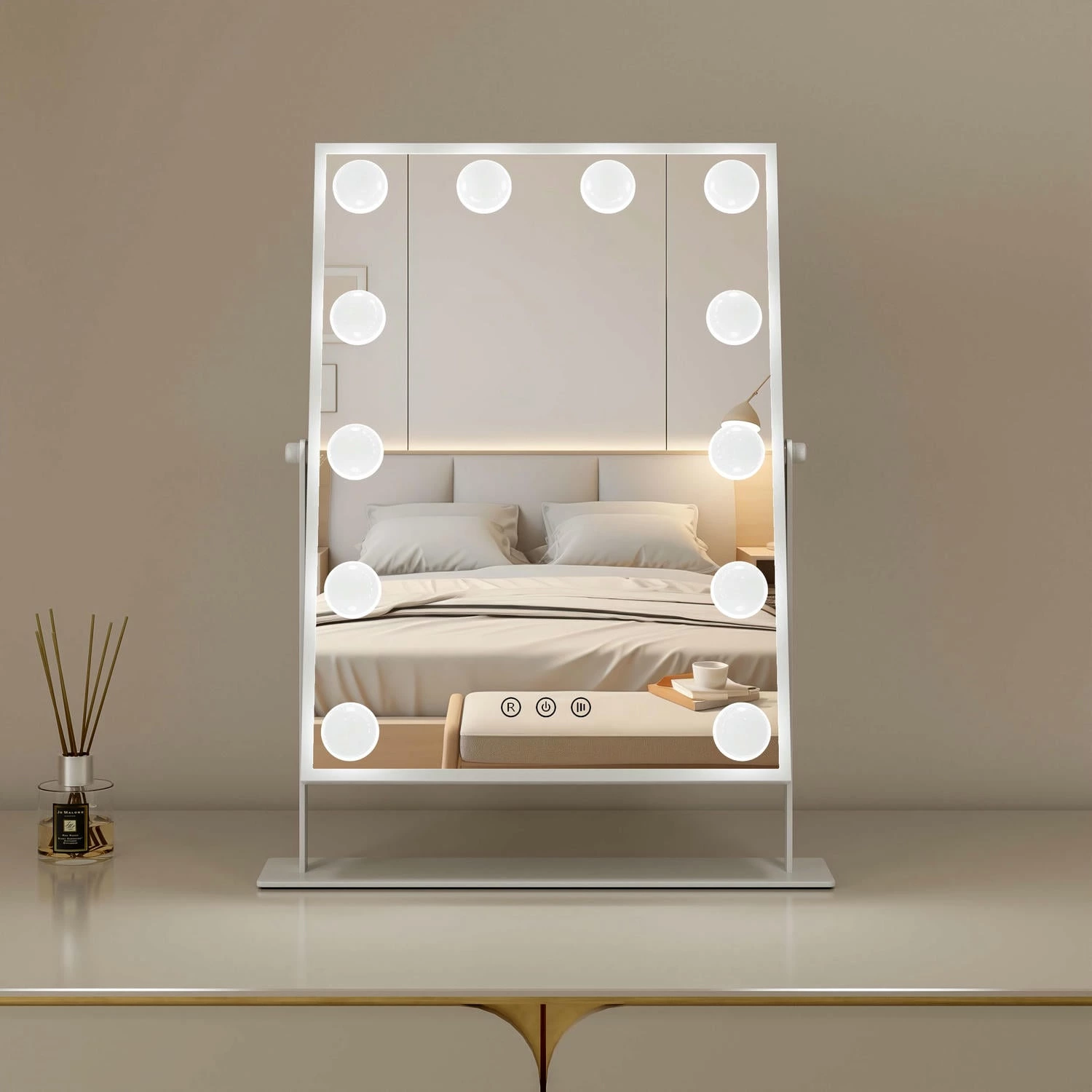
Commercial lighting requires precise flicker-free performance, verified by high-speed cameras. Our dimming systems are calibrated for compatibility with standard 0-10V dimmers common in building management systems. Unlike residential drivers, these industrial-grade drivers ensure consistent lumen output without audible buzzing or strobing, maintaining a professional atmosphere in luxury hospitality suites.
| Feature | Residential Grade | Commercial Grade |
|---|---|---|
| Connection | Plug-in/Battery | Hard-wired Direct |
| Testing | Limited/None | UL 1598/Pull-test |
| Driver Life | 10,000 hrs | 50,000+ hrs |
Need Technical Documentation?
Download our full compliance data, including pull-test results and UL certification abstracts for your upcoming project.
Download Spec SheetQuality Assurance Protocols: Burn-in Cycles and Batch Uniformity Standards
Every batch of frameless bathroom mirrors undergoes a mandatory 48-hour burn-in cycle in our facility. This process forces infant-mortality component failures to happen in the factory rather than in your facility. We measure lumen uniformity across the entire batch to ensure that color consistency (within 3 SDCM) is maintained across every mirror in the development.
Future-Proofing Procurement: What to Demand from Your OEM/ODM Partner
Project Engineers should require full traceability on electrical components. Demand proof of NEMA enclosure ratings for moisture protection in high-humidity zones to ensure that the internal electronics are shielded from water ingress. When evaluating partners, ask for specific vanity mirror customization data sheets that delineate the exact circuit protection mechanisms integrated into the design.
Frequently Asked Questions
Q: What are the NEC requirements for hardwired vanity mirror lighting in commercial bathrooms?
A: Commercial vanity lighting must comply with fixed-luminaire wiring standards, which mandate direct-wire connections to the building circuit and proper grounding to prevent electrical shock in high-humidity bathroom environments.
Q: How do IP44-rated mirrors differ from standard lighting fixtures in high-humidity commercial zones?
A: IP44-rated mirrors provide verified protection against solid objects larger than 1mm and splashing water from any angle, which is essential for preventing corrosion and short-circuiting in hospitality bathrooms compared to non-rated residential mirrors.
Q: Which electrical junction box configurations are required for heavy-duty wall-mounted mirror installation?
A: Commercial installations require standard UL-listed 4-inch square or round junction boxes capable of supporting the combined weight of the fixture and mounting hardware, ensuring secure attachment to wall framing studs.
Q: What are the standard voltage and driver requirements for hotel-grade LED mirror systems?
A: Hotel-grade systems typically operate on 120V-277V universal voltage drivers with thermal overload protection and flicker-free dimming protocols, designed to integrate seamlessly with commercial building electrical distribution.
Q: How to manage fire-rated wall integrity when installing recessed or surface-mounted mirror hardware?
A: When mounting hardware into fire-rated partitions, use UL-classified fire-rated wall inserts or putty pads around the junction box to ensure the wall assembly maintains its fire-resistance rating as required by IBC building codes.
Ready for a Commercial Partnership?
Our engineering team is ready to support your next project with certified, high-durability mirror solutions.
Request a Quote


