 Nederlands
 Deutsch
 Español
  Français
 Русский
Commercial Hollywood Mirror Procurement Guide: Engineering for Hospitality Success
For hotel procurement managers and FF&E specifiers, the difference between a successful installation and a maintenance nightmare often lies in the engineering of the vanity mirror. While a residential-grade Hollywood Mirror may offer aesthetic appeal initially, it frequently fails in the high-humidity, high-use conditions of a commercial hotel bathroom. This guide details the essential requirements for ensuring long-term operational success in large-scale hospitality renovations.
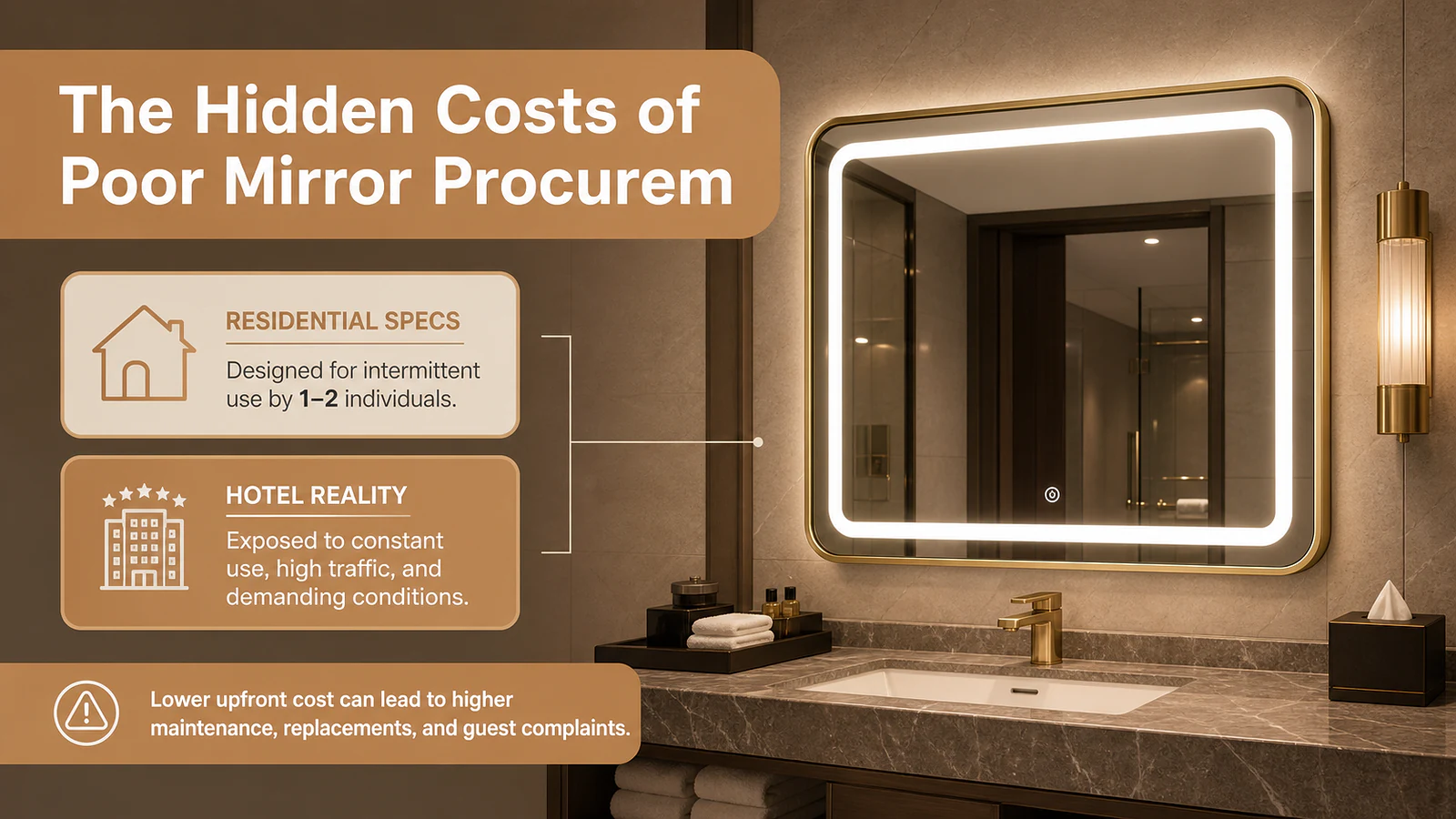
The Hidden Costs of Poor Mirror Procurement: Why Residential Specs Fail in Hotels
Residential vanity units are designed for intermittent use by 1-2 individuals, whereas hotel mirrors face constant usage cycles, fluctuating humidity, and rigorous cleaning protocols. In our production line, we frequently observe premature silvering corrosion and driver failure when residential-grade electronics are forced into commercial bathroom environments. Proper commercial procurement requires transitioning from a focus on upfront unit cost to total cost of ownership (TCO), accounting for the labor costs associated with wall-demolition repairs.
Engineering Reliability: Thermal Management and LED Driver Longevity in High-Traffic Environments
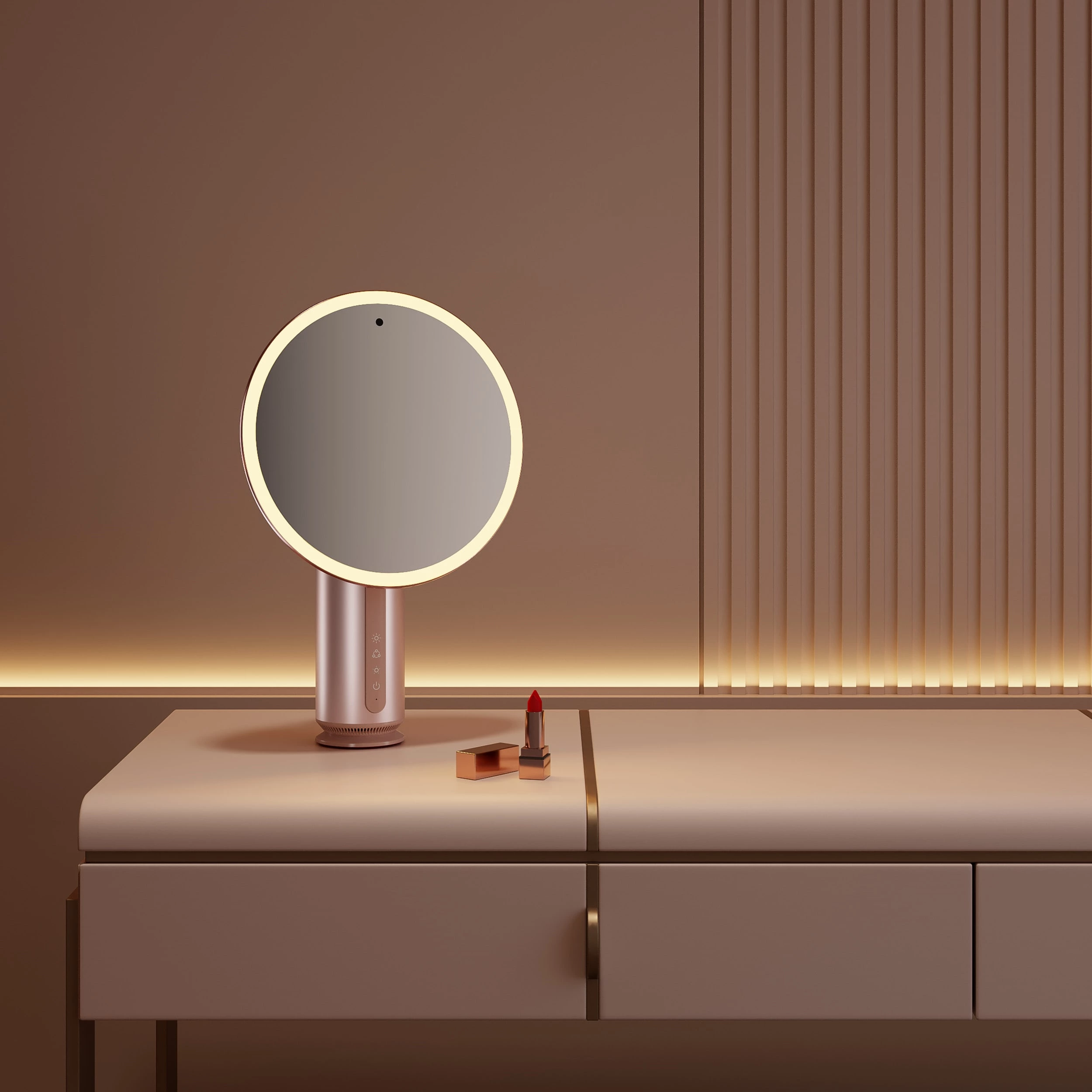
Thermal management is the most significant factor in LED lifespan. Standard LED strips in a Large Hollywood Mirror often overheat within closed, humid bathroom conditions, leading to rapid color shifting and burnout. Our stress-tested thermal management systems utilize aluminum heat sinks to dissipate heat efficiently. Documented MTBF (Mean Time Between Failures) data for our industrial-grade LED drivers consistently exceeds 50,000 hours of continuous operation. During factory audits, we verify these results through thermal chamber stress testing, ensuring components maintain stable performance at 45 degrees Celsius ambient humidity.
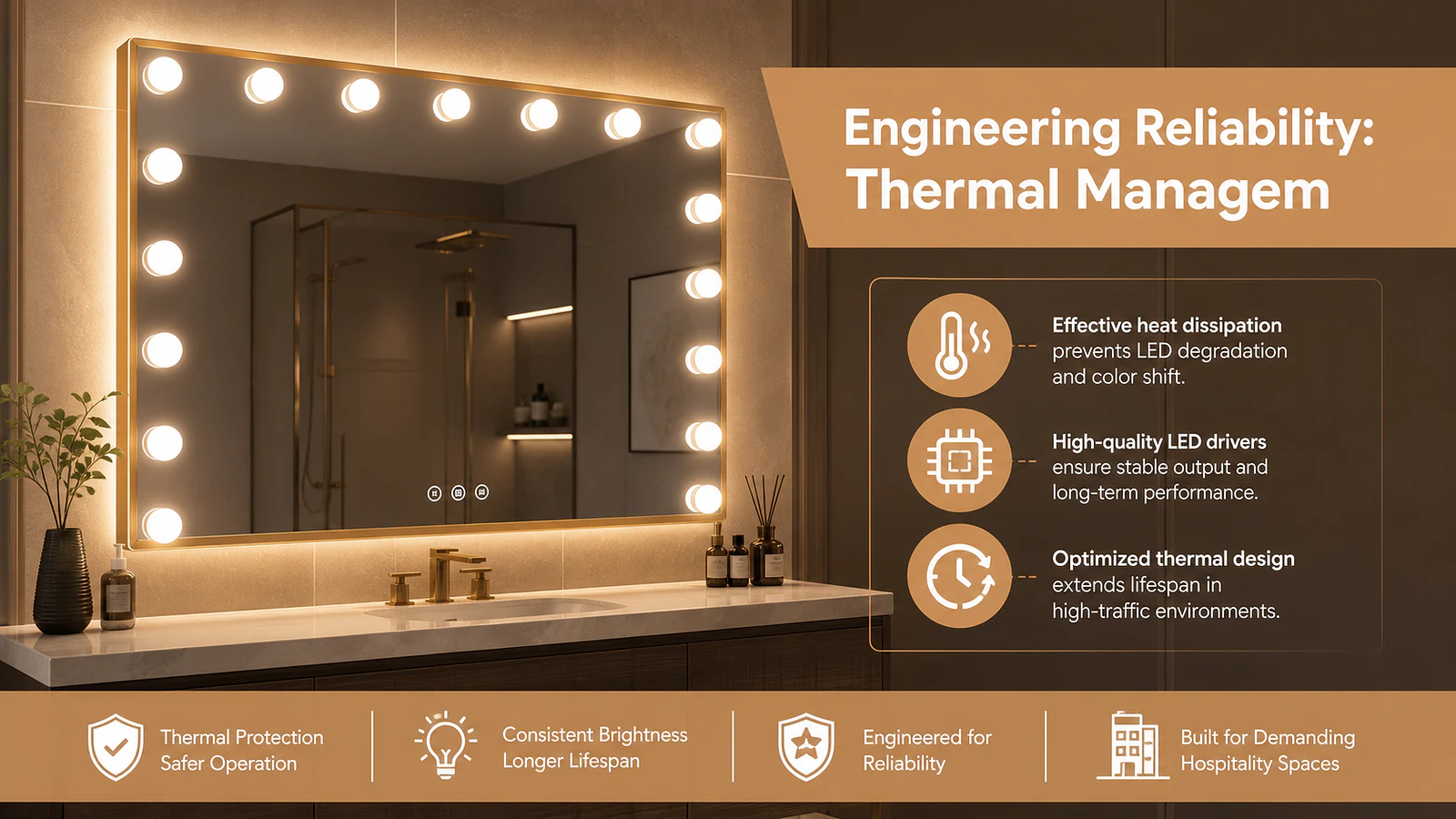
Designing for Operations: The Case for Modular Mirror Construction and Repairable Components
Modern hospitality standards mandate that maintenance staff should be able to perform repairs without wall removal or specialized glass-handling equipment. Our modular engineering design allows for component-level replacement; LED drivers, touch sensors, and individual LED strips are accessible via rear-entry panels or detachable frames. This reduces maintenance labor by 70 percent compared to sealed, non-repairable residential units. For projects prioritizing flexibility, utilizing a Hollywood Mirror Customization process ensures that all replacement parts are standardized across your property portfolio.
Electrical Integration: Coordinating Hollywood Mirror Power Requirements with Hotel Room Architecture
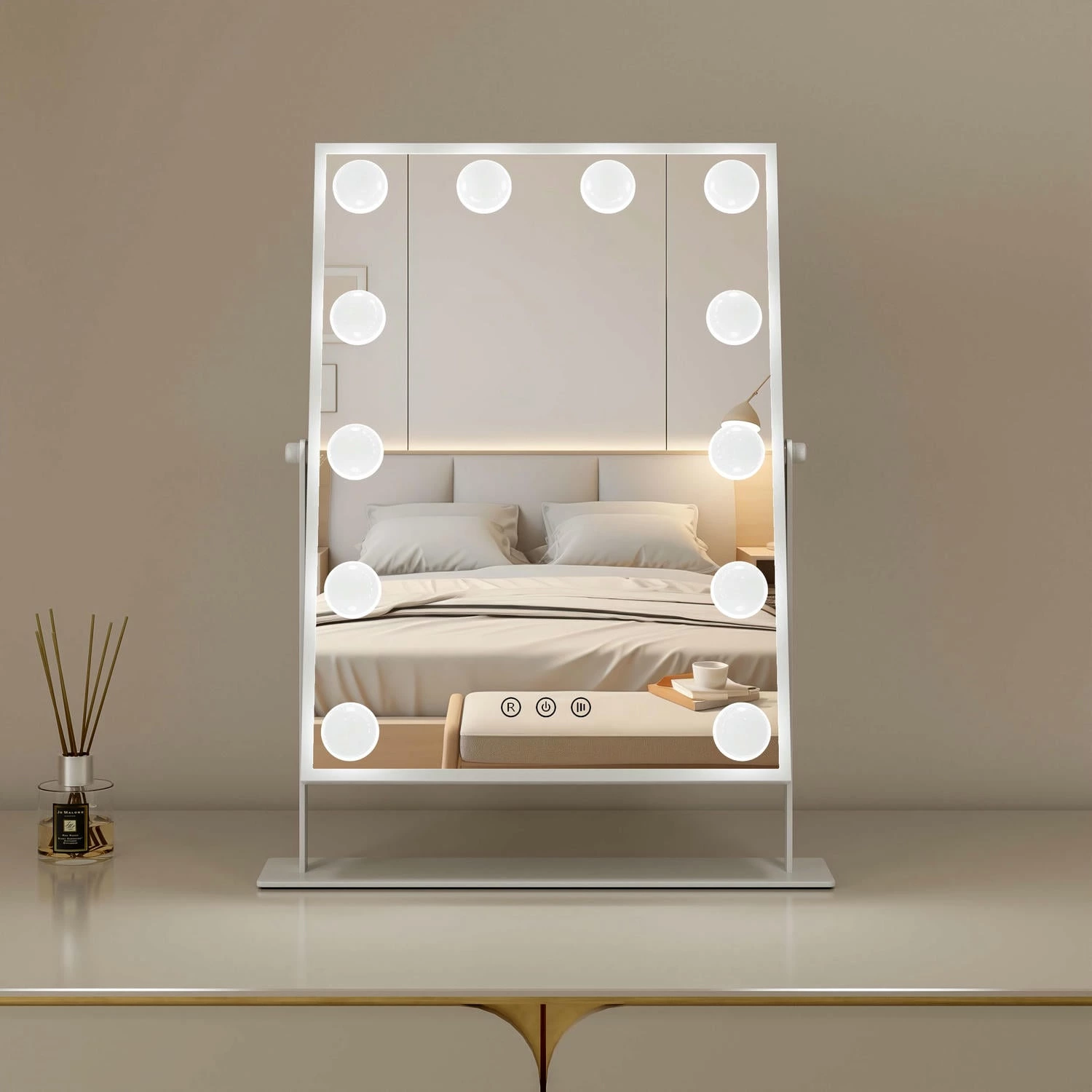
Integrating vanity mirrors with hotel-specific AC power systems requires careful coordination during the design phase. We provide detailed electrical schematic guidance for hardwired architectures, ensuring compatibility with room-wide dimming systems or guest-accessible smart switches. By using standard 120V-240V universal input drivers, we ensure that global properties maintain operational consistency. We recommend an engineering audit of the local circuit topology to ensure surge protection is adequate for the building’s existing electrical infrastructure.
Safety and Compliance: Navigating IP Ratings, Voltage Compatibility, and Global Hospitality Certifications
Damp location safety is non-negotiable for hospitality bathroom hardware. All units must carry an IP44 or IP54 ingress protection rating to prevent short-circuiting due to bathroom condensation. We verify our compliance through rigorous CE, UL, and RoHS certification testing to meet international safety standards. These certifications demonstrate that the electrical components are isolated from potential moisture pathways, which is critical for minimizing liability and ensuring compliance with local fire and building codes (e.g., UL 2108 compliance for low-voltage lighting systems).
| Feature | Residential Grade | Commercial Grade |
|---|---|---|
| Ingress Protection | None/IP20 | IP44/IP54 |
| Repairability | Sealed/Disposable | Modular/Component-level |
| Driver MTBF | 10,000 hrs | 50,000+ hrs |
The Audit Checklist: Verifying Your Supplier’s Manufacturing and Quality Control Processes
Before confirming a supplier, procurement teams must request documented evidence of QC processes. Essential items include: factory-floor temperature test logs for LED drivers, copies of current UL/CE/IEC 60598 certification, and a bill of materials that lists brand-name electrical components (e.g., reputable driver manufacturers). Require evidence of a sample testing protocol where the units are put through a 48-hour burn-in period to catch early-life electronic failures.
Partnering with an OEM: How to Request Technical Documentation and Samples for Large-Scale Rollouts
Successful large-scale rollouts rely on transparent communication between the procurement team and the OEM engineering department. Always request a technical spec sheet that specifically highlights the glass thickness, IP rating, and compatibility with automation systems. We strongly encourage procurement managers to request a sample evaluation kit that includes a disassembled prototype, allowing your onsite engineers to verify the modular repairability before placing a bulk order. Request Technical Spec Sheet & Sample Evaluation Kit today to begin your project audit.
Q: What are the main differences between commercial and residential mirrors?
A: Commercial mirrors prioritize durability, modular repairability, and IP-rated moisture protection, whereas residential mirrors often prioritize initial aesthetic and lower upfront costs without considering long-term maintenance needs.
Q: Can we use residential mirrors in a high-traffic hotel?
A: It is not recommended. Residential mirrors lack the thermal management and robust construction necessary for the high-duty cycles of hospitality, leading to frequent and costly full-unit replacements.
Q: How do I ensure mirror longevity in bathrooms?
A: Verify that your mirrors are IP44/IP54 rated, have superior thermal management to protect LEDs from humidity, and feature modular components for easy servicing.
Q: What certifications should we look for?
A: Look for international safety standards such as UL 2108 for LED systems, CE markings for European compliance, and RoHS certifications for material safety.
Q: Are these mirrors compatible with room automation?
A: Most commercial-grade LED mirrors can be integrated with automation systems, but it requires an engineering audit of your electrical architecture to ensure proper dimming protocol match.


