 Nederlands
 Deutsch
 Español
  Français
 Русский
The Economics of Sourcing Wholesale Bathroom Mirrors: Container-Load Shipping to the UK
For UK procurement managers and commercial distributors, importing bulk glass shipments directly from overseas manufacturers is a proven strategy for optimizing procurement margins. However, calculating the true financial feasibility of direct sourcing requires looking beyond simple factory-gate pricing to analyze ocean freight logistics, volumetric packaging efficiency, and UK-specific landing costs. Understanding the precise tipping point where full container-load (FCL) shipping outweighs domestic wholesale distribution is essential for managing a resilient and profitable supply chain.
Calculating the Landed Cost per Unit for UK Imports
When sourcing a high-volume order of a Bathroom Mirror collection, relying solely on Free On Board (FOB) quotes can severely distort your financial projections. The true metric of economic viability is the Landed Cost per Unit, which incorporates the factory price, ocean freight, UK customs duties, port handling fees (local terminal charges), customs clearance agency fees, and inland haulage to your de-vanning warehouse.
For example, importing standard glass mirrors or an advanced Bathroom Mirror Cabinet line involves paying a standard UK customs duty rate (typically 2% to 6.5% depending on the specific commodity code for glass mirrors or illuminated electrical goods). Additionally, VAT of 20% is calculated on the combined value of the goods, shipping costs, and duty. To find the exact economic tipping point, procurement teams must divide the total accumulated port-to-door cost by the exact number of units loaded. If your local UK distributor margins are 30% to 40%, direct FCL sourcing generally becomes highly profitable once your order volume fills at least 75% of a 20ft container.
Volumetric Efficiency: 20GP vs. 40HQ Containers
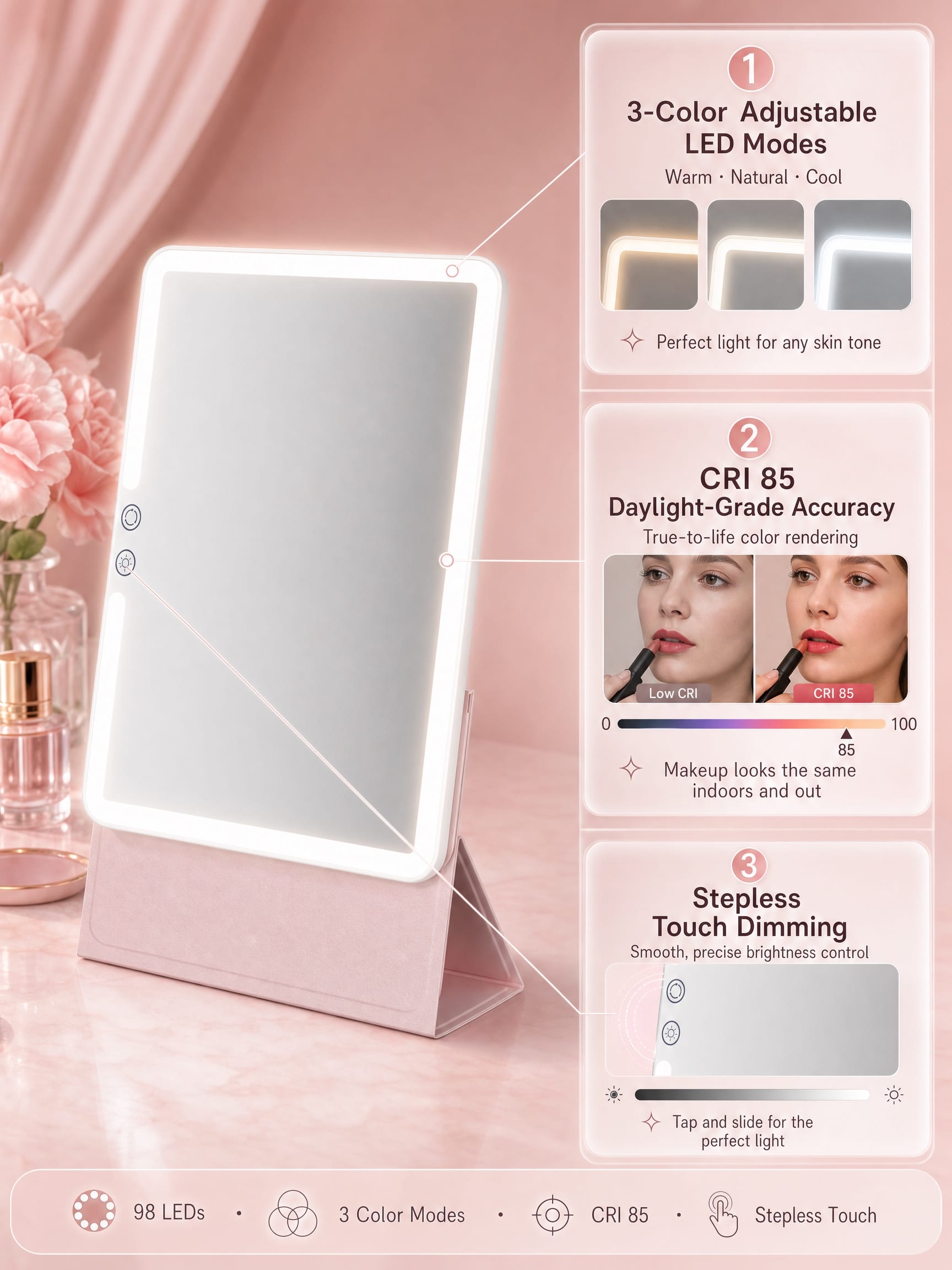
Glass is a dense, heavy commodity, which creates a unique logistical challenge: cargo often hits the legal road weight limits of the UK before utilizing the physical volume of the container. A standard 20ft General Purpose (20GP) container has a payload capacity of approximately 21,500 kg to 28,000 kg depending on shipping line restrictions and UK road weight regulations. Conversely, a 40ft High Cube (40HQ) container offers nearly double the volume (approx. 76 CBM vs 33 CBM) but has a similar maximum road weight limit in the UK due to multi-axle vehicle restrictions.
If you are shipping heavy, thick glass products such as a traditional Framed Bathroom Mirror, a 20GP container is often the most cost-effective choice because you will hit the weight limit before filling the space. However, when sourcing lightweight, high-volume products such as an LED-integrated Frameless Bathroom Mirrors range where protective foam packaging occupies substantial space, a 40HQ container maximizes volumetric efficiency, dramatically lowering the freight cost per individual unit.
Maritime Transit Packaging and Breakage Prevention
Preventing glass breakage during maritime transit requires specialized export packaging standards. Standard cardboard cartons are entirely insufficient for long-distance sea shipping where humidity, temperature swings, and physical shifting occur. Reputable manufacturers employ heavy-duty, seawater-resistant wooden crating or reinforced plywood crates that are custom-built to match the cargo dimensions. To combat internal condensation and "glass rot" caused by sea moisture, high-absorption desiccant gel packs are placed inside each sealed plastic barrier wrapping the mirror.
Furthermore, internal padding must feature high-density polyethylene (PE) foam corners and drop-tested honeycomb paperboard. For fragile glass shipments, particularly custom designs like a premium Bathroom Mirror Customization project, factories should perform ISTA-1A or ISTA-3A drop tests to guarantee the packaging can withstand port handling vibrations, mechanical loading, and rough maritime swells without structural failure.
UK Port Logistics and Inland Fragile Freight Challenges
Once your container arrives at major UK ports such as Felixstowe, Southampton, or London Gateway, the inland logistics phase begins. Demurrage and detention fees represent a major hidden cost for inexperienced importers. Demurrage accumulates when a container sits in the port yard past the allowed free days (typically 3 to 7 days), while detention is charged for holding the empty container chassis too long before returning it to the port. Because glass shipments require slow, careful unloading, delayed de-vanning at your warehouse can quickly trigger these expensive penalties.
Inland haulage of fragile glass inside the UK requires specialized freight carriers. Standard pallet networks are often unequipped to handle large, upright-standing glass crates. Ensuring your logistics partner uses air-ride suspension trucks and has experience handling fragile architectural glass minimizes the final-mile breakage risk during transit from the port to your distribution center.
Financial Feasibility Comparison: FCL Sourcing vs. Domestic Wholesale
This table outlines the typical economic differences between importing a Full Container Load (FCL) of commercial bathroom mirrors directly from an overseas manufacturer versus buying equivalent stock from a domestic UK B2B distributor.
| Cost & Risk Parameters | Direct FCL Sourcing (China to UK) | UK Domestic Wholesale Distributor |
|---|---|---|
| Average Unit Cost | Low (Factory-direct pricing) | Medium to High (Includes distributor markup) |
| Minimum Order Quantity (MOQ) | High (Typically 1x 20GP container) | Very Low (Single pallets or units) |
| Lead Time | 8 to 12 weeks (Production + Ocean Transit) | 1 to 5 working days (From local stock) |
| Logistics & Customs Risk | High (Port delays, demurrage, transit damage) | Negligible (DDP delivered to your door) |
| Customization Options | Unlimited (Custom size, LED integration, branding) | Limited (Off-the-shelf standard catalogs only) |
Sourcing Checklist & Common Pitfalls to Avoid
To ensure a seamless importing experience, UK procurement teams should follow this systematic quality and logistics checklist:
- Verify UK Compliance: Ensure all LED mirrors carry CE, UKCA, and RoHS certifications. Non-compliant electrical components can be seized at UK ports of entry.
- Moisture Control Check: Confirm the factory uses high-grade silica gel packets and hermetically sealed plastic barriers inside the wooden crates to prevent glass silvering damage from sea humidity.
- Audit the Demurrage Clauses: Negotiate at least 10 to 14 days of combined free-time at the UK port with your freight forwarder to buffer against port congestion.
- Clarify the Incoterms: Clearly define whether you are buying on FOB (Free On Board) or CIF (Cost, Insurance, and Freight) terms to understand exactly where your financial liability begins.
Frequently Asked Questions
Q: What is the average shipping cost for a 20ft container of mirrors from China to the UK?
A: Ocean freight rates fluctuate significantly based on seasonality, fuel prices, and global supply chain conditions. On average, shipping a 20GP container from major Chinese ports to Felixstowe or Southampton ranges between £1,500 and £4,000. However, this excludes local UK port handling charges, customs clearance fees, and final-mile haulage to your warehouse.
Q: How do manufacturers secure glass mirrors to prevent breakage during maritime transit?
A: Export-grade mirror packaging utilizes custom-built, heat-treated wooden or plywood crates. Inside, mirrors are separated by protective film and cushioned with high-density PE foam corners, honeycomb cardboard, and shock-absorbing air-cushions. Anti-moisture desiccant packs are also included to prevent humidity-induced glass clouding during the 35-to-45-day sea voyage.
Q: What are the UK customs duty rates for importing commercial bathroom mirrors?
A: Under the UK Global Tariff, standard glass mirrors generally carry a customs duty rate ranging from 2% to 6.5%, depending on whether they are framed, unframed, or illuminated. For LED-integrated mirrors, the classification may fall under electrical lighting fixtures, which can alter the duty rate. It is recommended to verify the specific HS commodity code with HM Revenue and Customs (HMRC) prior to shipping.
Q: How many wholesale LED bathroom mirrors fit in a standard 40ft HQ container?
A: A standard 40ft HQ container has a physical capacity of approximately 76 CBM. Depending on the mirror sizes (e.g., 600x800mm) and the thickness of the protective drop-test packaging, a 40HQ container typically accommodates between 600 and 1,000 units of packed LED bathroom mirrors, assuming optimized palletization.
Q: What are the port-to-door delivery challenges for glass shipments in the UK?
A: The primary challenges include road weight limit compliance, specialized unloading equipment requirements (such as forklifts with extended forks or crane-assisted offloading), and the high risk of final-mile transit vibration. Additionally, port delays at busy terminals can quickly lead to costly demurrage charges if your warehouse is not prepared to receive and de-van the container immediately.





