Nederlands
 Deutsch
 Español
  Français
 Русский
Why High CRI LED Bulbs Are Essential for OEM Hollywood Lighted Vanity Mirrors in Professional Studios
For professional makeup studios, television production sets, and high-end beauty salons, lighting accuracy is not a luxury—it is a critical operational standard. High Color Rendering Index (CRI) LED bulbs play a transformative role in commercial vanity systems by ensuring that cosmetics look identical under studio lights as they do in natural daylight. When sourcing wholesale fixtures, OEM procurement managers and distributors must prioritize specific spectral rendering metrics over basic lumen output to meet the demanding requirements of professional makeup artists and camera crews.
Understanding the Physics of High CRI: Ra, R9, and R13
Color rendering determines how accurately a light source reveals the true colors of objects compared to natural daylight. While standard commercial LED bulbs advertise a general color rendering index (Ra) of 80, this average score completely obscures critical gaps in the red spectrum. The traditional Ra metric is calculated using only the first eight test colors (R1 through R8), which are predominantly unsaturated, pastel shades. For professional cosmetic applications, the special color rendering indices R9 (saturated red) and R13 (skin tones) are far more critical.
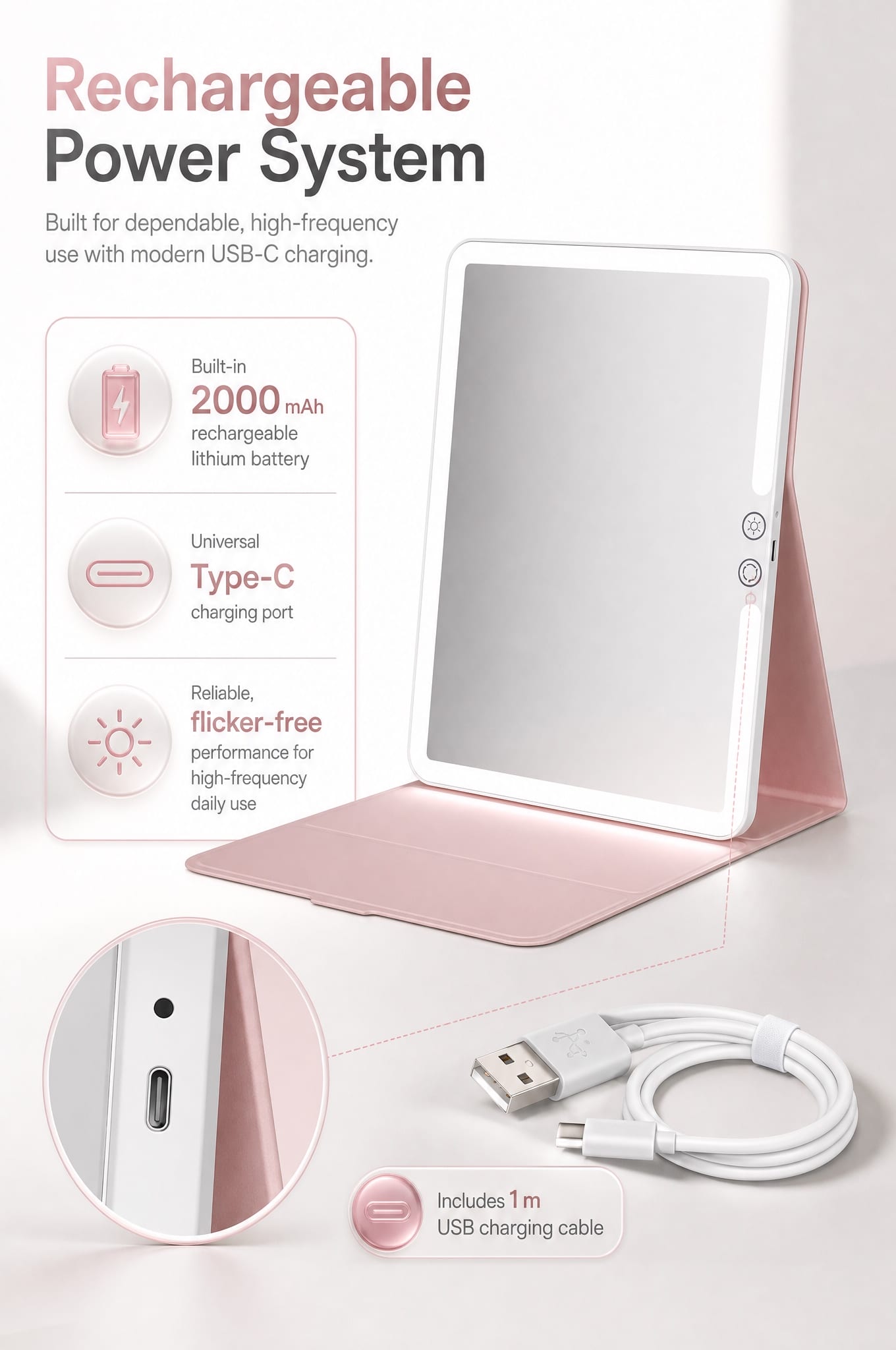
In our production line spectroradiometer testing, standard LED chips regularly drop to R9 values below 20, despite claiming an overall Ra of 80+. To achieve flawless cosmetic color blending, a professional Hollywood Mirror Customization requires a minimum Ra of 95, with an R9 value of at least 90 and an R13 value of 95 or higher. High R9 values ensure that red undertones in warm skin tones, lipsticks, and blushes are rendered with absolute fidelity, eliminating the common "ashy" or green-shifted appearance caused by low-quality LED spectral distributions.
Spectral Power Distribution and the TM-30-15 Standard
While the traditional CIE CRI metric remains the industry benchmark, modern studio optical engineers increasingly rely on the IES TM-30-15 method for a more comprehensive spectral analysis. TM-30-15 evaluates color fidelity using 99 individual color evaluation samples (CES) instead of just 8 or 15. It yields two primary metrics: Rf (Fidelity Index, scaling from 0 to 100) and Rg (Gamut Index, measuring saturation levels from 60 to 140).
For professional studios utilizing a high-performance Large Hollywood Mirror, the LED light source should target an Rf value of 92+ and an Rg value of 98 to 102. This precise range prevents both color distortion (desaturation) and over-saturation, allowing makeup artists to gauge pigment application with extreme precision. Incorporating high-fidelity spectroradiometric profiles is a standard practice during our factory-level quality control protocols to ensure every batch of vanity bulbs meets these rigorous optical requirements.
Thermal Management and Spectral Shift Mitigation
One of the most significant engineering challenges in OEM vanity mirror production is maintaining color rendering performance over the long term. LEDs are highly sensitive to thermal stress. As junction temperatures rise within enclosed or semi-enclosed bulb casings, the phosphor coating on the LED chip degrades, leading to "spectral shift"—a gradual drop in CRI and a noticeable shift toward cooler, bluish-green color temperatures.
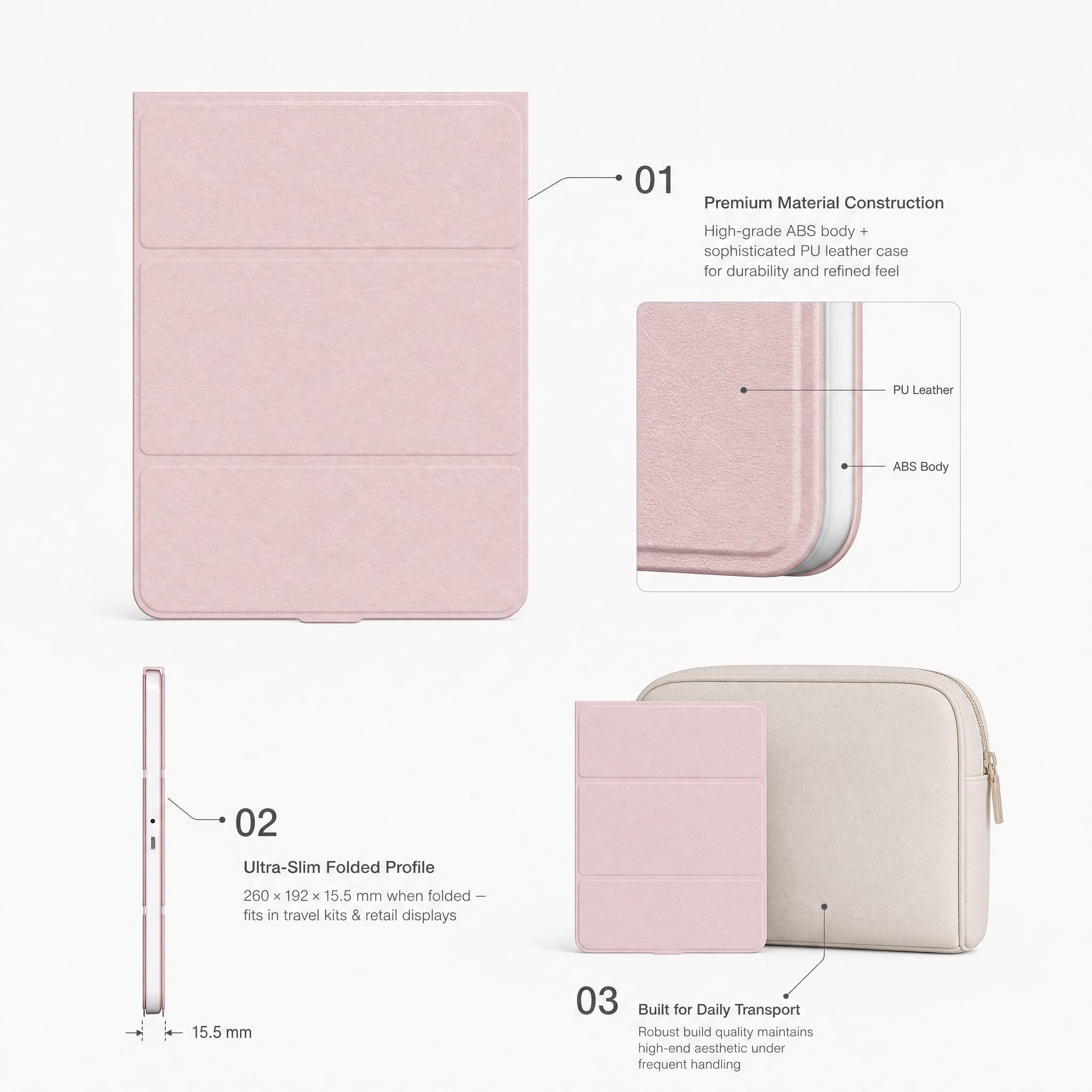
To guarantee a stable L70 lifetime of 50,000 hours, we design our OEM bulb assemblies with heavy-duty aluminum core PCBs and high-thermal-conductivity thermoplastic housings. During factory audits, we perform continuous 8-hour thermal load testing inside enclosed vanity structures. This ensures that the heat dissipation mechanism maintains junction temperatures well below the critical 85°C threshold, preserving both the luminous flux and the high CRI profile over years of continuous studio operation.
Optical and Electrical Industry Standards for B2B Sourcing
To ensure high quality, safety, and reliability in commercial environments, OEM vanity light assemblies must comply with international testing standards. All commercial-grade vanity light structures should undergo testing according to LM-79-08 (approved method for electrical and photometric measurements of solid-state lighting products) and LM-80-15 (lumen maintenance testing of LED light sources).
Furthermore, finished vanity mirrors must secure certifications such as UL 1598 (the standard for safety of luminaires in the United States) or CE EN 60598-1/2 for European markets. These standards ensure that the electrical systems, grounding networks, and insulated drivers can withstand the demanding, high-humidity environments often found in backstages and professional dressing rooms. High-quality Vanity Mirror Customization projects require complete compliance with these regulations to minimize liability and guarantee project approval by commercial electrical inspectors.
Performance Comparison: Standard vs. Professional-Grade Vanity Lighting
To help sourcing managers make informed procurement decisions, the table below outlines the critical differences between standard consumer-grade LED bulbs and professional-grade high CRI LED bulbs designed for commercial Hollywood Mirror assemblies.
| Technical Specification | Standard Consumer-Grade LED | Professional-Grade High CRI LED | Studio/Application Impact |
|---|---|---|---|
| General CRI (Ra) | 80 to 85 | 95 to 98 | Ensures basic color clarity; high CRI guarantees professional-grade color matching. |
| Special CRI (R9 - Red) | < 20 | > 90 | Critical for rendering red and warm pink undertones in makeup and skin tones. |
| Color Consistency | 5-step SDCM (MacAdam) | 3-step SDCM (MacAdam) | Prevents visible color temperature variations across multiple bulbs on a single mirror. |
| Thermal Dissipation | Plastic housing only | Aluminum core PCB + thermal plastic | Eliminates color temperature shifting (blue shift) and preserves LED lifetime. |
| Dimming Drivers | High-ripple phase cut | Flicker-free constant current (IEEE 1789) | Prevents camera banding and eye strain during filming or long-duration makeup sessions. |
Ensuring Batch Consistency: SDCM and Flicker-Free Drivers
In high-end studios, multiple lighted mirrors are often installed side-by-side. If there is even a minor variation in color temperature or chromaticity between bulbs, the human eye will immediately detect the inconsistency. To prevent this, professional OEM manufacturers enforce strict sorting standards based on MacAdam Ellipses, also known as Standard Deviation of Color Matching (SDCM). Our production lines utilize a 3-step MacAdam ellipse binning standard, ensuring that chromaticity variations between bulbs are completely imperceptible to the naked eye.
Furthermore, because modern studios are heavy camera environments with constant digital photography and high-definition filming, the electrical driver within the LED bulbs must be engineered to prevent high-frequency flicker. Standard dimming methods can cause visible banding lines on camera sensors. Utilizing premium constant-current drivers designed to meet IEEE 1789 flicker-free recommendations is a non-negotiable requirement for professional-grade Metal Vanity Makeup Mirror applications, protecting the integrity of both on-camera content and the artist’s eyes.
Frequently Asked Questions Regarding Professional Vanity Mirrors
Q: What is the absolute minimum R9 value required for commercial makeup studios?
A: For professional makeup and cosmetic applications, the minimum acceptable R9 value is 90. Any lower than 90, and warm skin tones, pink pigments, and red-based cosmetics will appear dull, greyish, or green-shifted under the lights, leading to inaccurate color application.
Q: Why do standard LED bulbs shift color or lose brightness over time inside vanity frames?
A: This degradation is primarily caused by poor heat dissipation. Standard LEDs without adequate thermal management suffer from high junction temperatures, which accelerate the degradation of the phosphor layer on the LED chip. This leads to a loss of luminous intensity and a noticeable spectral shift toward cool, bluish hues.
Q: What is the significance of the 3-step MacAdam ellipse (SDCM) in vanity mirror manufacturing?
A: A 3-step SDCM standard guarantees that the color variation between different LED bulbs is so small that it is virtually invisible to the human eye. This ensures total color temperature consistency across a single mirror or an entire studio installation of multiple vanity stations.
Q: How do professional vanity LED drivers prevent horizontal lines or banding on smartphone and HD camera screens?
A: Professional-grade vanity mirrors utilize high-frequency constant-current drivers or high-frequency Pulse Width Modulation (PWM) dimming. By raising the dimming frequency well beyond 1.25 kHz (often meeting IEEE 1789 standards), they eliminate the low-frequency flicker that interferes with camera shutter speeds and causes digital banding.
Q: Which certification standards are critical when sourcing commercial-grade lighted mirrors?
A: Sourcing managers should verify that the product holds UL 1598, CSA C22.2, or CE EN 60598 certification. These international standards guarantee that the mechanical, optical, and electrical properties of the luminaires have been independently tested and verified for commercial and hospitality environments.