 Nederlands
 Deutsch
 Español
  Français
 Русский
The Manufacturer's Guide to Battery Safety Standards for Rechargeable Hospitality Makeup Mirrors
Hospitality battery safety standards for rechargeable makeup mirrors: To mitigate property liability and fire hazards, procurement managers must specify products compliant with UL 2054, UL 1642, and IEC 62133 standards. Ensuring integrated thermal management systems and proper IP-rated moisture sealing is essential for high-traffic hotel environments.
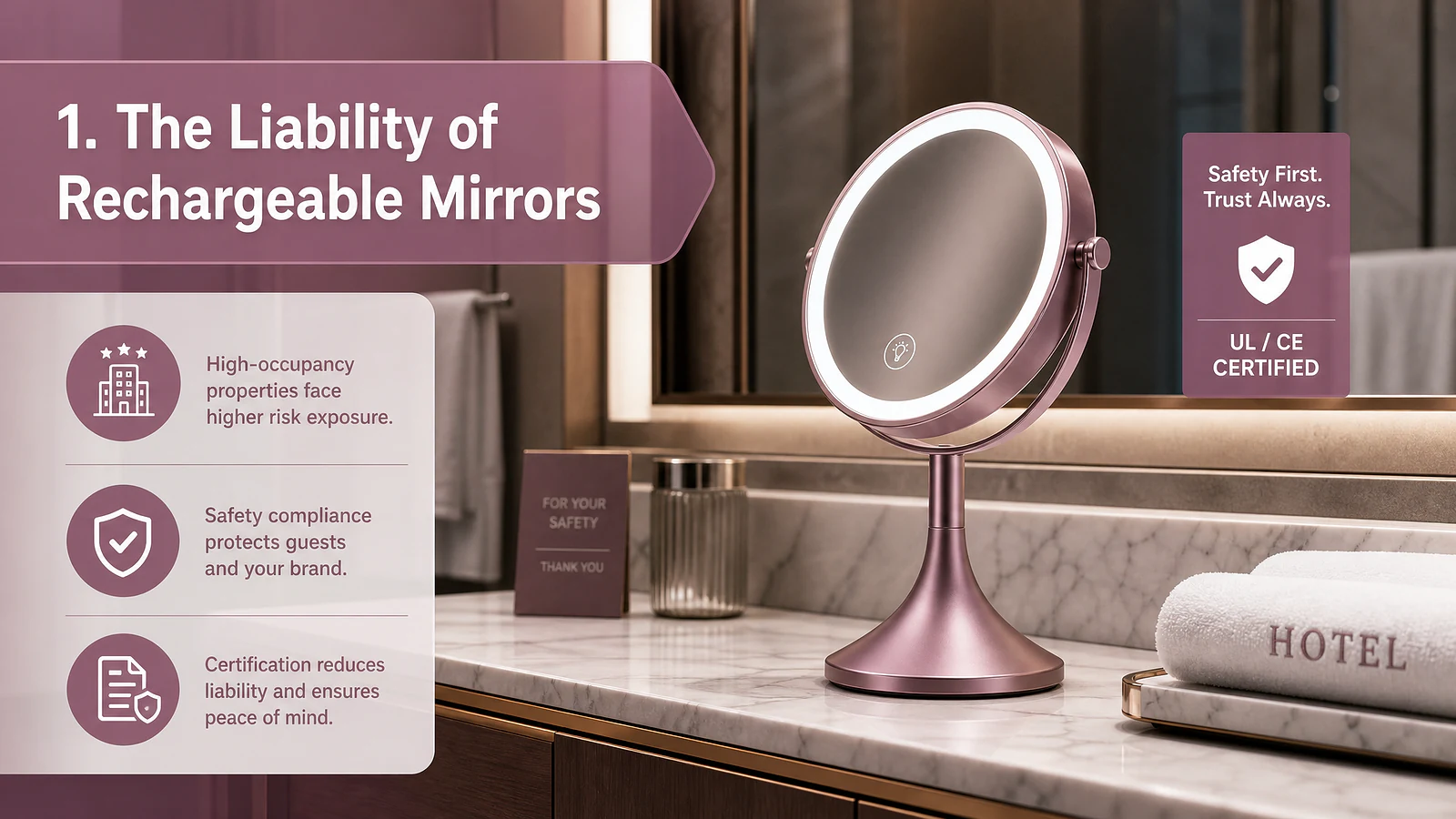
1. The Liability of Rechargeable Mirrors in High-Occupancy Properties
In luxury hotel chains, the integration of makeup mirrors presents a unique intersection of guest convenience and facility liability. Unlike residential use, hospitality settings impose rigorous, continuous duty cycles on rechargeable batteries. When these devices lack appropriate safety standards, the risk of thermal runaway, battery venting, or electrical fires increases exponentially, potentially invalidating insurance policies and threatening guest safety.
2. Decoding Compliance: Why CE Marking vs. Full Certification Matters
Procurement managers frequently mistake the presence of a CE mark for proof of rigorous testing. However, CE Marking is often a manufacturer's declaration of conformity, which does not always equate to third-party verification. For professional hotel infrastructure, it is critical to distinguish between self-certification and independent CE Directive compliance.
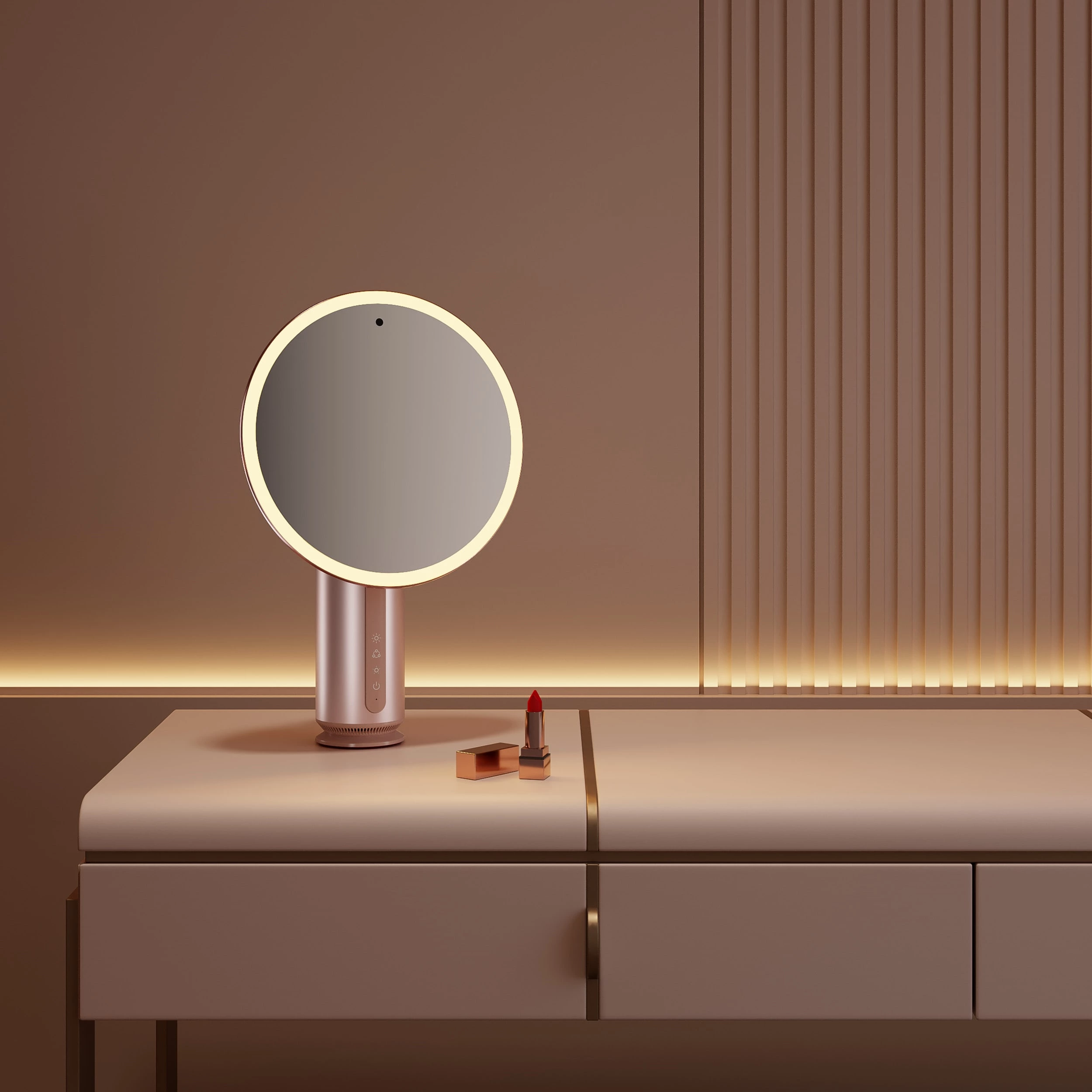
We recommend mandating full test reports for CE LVD (Low Voltage Directive) and EMC (Electromagnetic Compatibility) rather than relying on a sticker on the box. In our makeup mirror assembly workshop, we ensure that every unit undergoes documented voltage drop tests to confirm that internal circuits meet safety thresholds before final assembly.
3. The Technical Anatomy of a Safe Rechargeable Mirror
Safety in lithium-ion battery integration relies on the Battery Management System (BMS). A commercial-grade BMS must include thermal protection circuits to prevent overcharging—a common failure point in unattended hotel bathrooms. According to UL 2054 standards, a battery must pass force-discharge and short-circuit tests to be considered safe for public or commercial space utilization.
4. The Ingress Protection (IP) Factor: Why Waterproofing is a Battery Safety Issue
Moisture ingress in a table mirror housing can cause short circuits across the battery terminals, leading to failure. During factory audits, we have observed that standard consumer-grade mirrors lack the dual-layered seals necessary for bathroom humidity. We utilize IP44 or higher ratings, employing silicone gaskets that prevent moisture from reaching the PCB and the lithium cell. Our manufacturing process verifies these seals through vacuum-testing every enclosure before battery installation.
5. Commercial-Grade vs. Consumer-Grade: Durability Expectations
| Feature | Consumer-Grade | Hospitality-Grade |
|---|---|---|
| Battery Compliance | None or basic | UL 2054 & IEC 62133 |
| Thermal Protection | None | Integrated BMS Cut-off |
| Enclosure Seal | Snap-fit plastic | IP-rated Gasket Sealed |
Request a Detailed Battery Safety Report
Verify your supply chain with our third-party certified testing documents for all hospitality-grade mirrors.
Request Now6. Procurement Checklist: What Documentation to Demand
When sourcing for hotel projects, ensure your OEM provides: 1) UL 1642 and UL 2054 test report summaries for the specific cells used. 2) Valid IEC 62133 certification. 3) A Declaration of Conformity for CE LVD and EMC. 4) Batch traceability records confirming cell tier-1 origins. These documents are vital for MEP engineers to sign off on hotel FF&E specifications.
7. Conclusion: Mitigating Long-Term Asset Risk
Mitigating asset risk in vanity mirror customization requires proactive adherence to global safety standards. By choosing partners who prioritize transparency in cell sourcing and undergo rigorous third-party lab testing, hotel chains can ensure guest safety and operational continuity for years.
Frequently Asked Questions
Q: What is the primary difference between UL 1642 and UL 2054?
A: UL 1642 focuses exclusively on the safety of lithium battery cells, while UL 2054 covers the safety of the entire battery pack, including the circuits and protection systems.
Q: Why is IEC 62133 necessary for rechargeable mirrors?
A: IEC 62133 is the international safety standard for secondary lithium batteries, ensuring they remain stable during charging and discharging cycles in various environments.
Q: How do I verify if a supplier's UL report is legitimate?
A: Always request the UL file number and verify it directly through the official UL Product iQ database online.
Q: Can I use a standard CE mark as a guarantee of quality?
A: No, a CE mark is often a self-declaration. You must request the actual laboratory test reports to confirm the product has been verified against specific directives.
Q: How does moisture affect mirror battery safety?
A: High humidity in bathrooms can penetrate non-sealed housings, potentially causing internal short circuits and battery thermal events.
Need Compliance Documentation?
Download our full hospitality compliance spec sheet to ensure your next project meets all safety requirements.
Download Spec Sheet


