Nederlands
 Deutsch
 Español
  Français
 Русский
Manufacturing Standards for Large-Scale Rectangular Bathroom Mirror Procurement
Procuring large-scale rectangular mirrors for high-traffic commercial environments requires a deep understanding of structural glass engineering, silvering chemistry, and mounting tolerances. Unlike standard residential mirrors, commercial installations demand strict adherence to industrial quality controls to prevent premature degradation, optical distortion, and structural failure. Sourcing departments must evaluate precise factory-level specifications to ensure long-term performance and user safety.
Glass Substrate and Optical Distortion Standards
Architectural-grade float glass serves as the foundation for any high-performance commercial mirror. For large-scale installations, manufacturers must utilize low-iron float glass with a minimum thickness of 6mm to prevent the structural sagging and optical distortion common in thinner sheets. Optical quality is graded using standard ASTM C1036 specifications, which limit allowable gaseous inclusions, scratches, and linear blemishes per unit area.
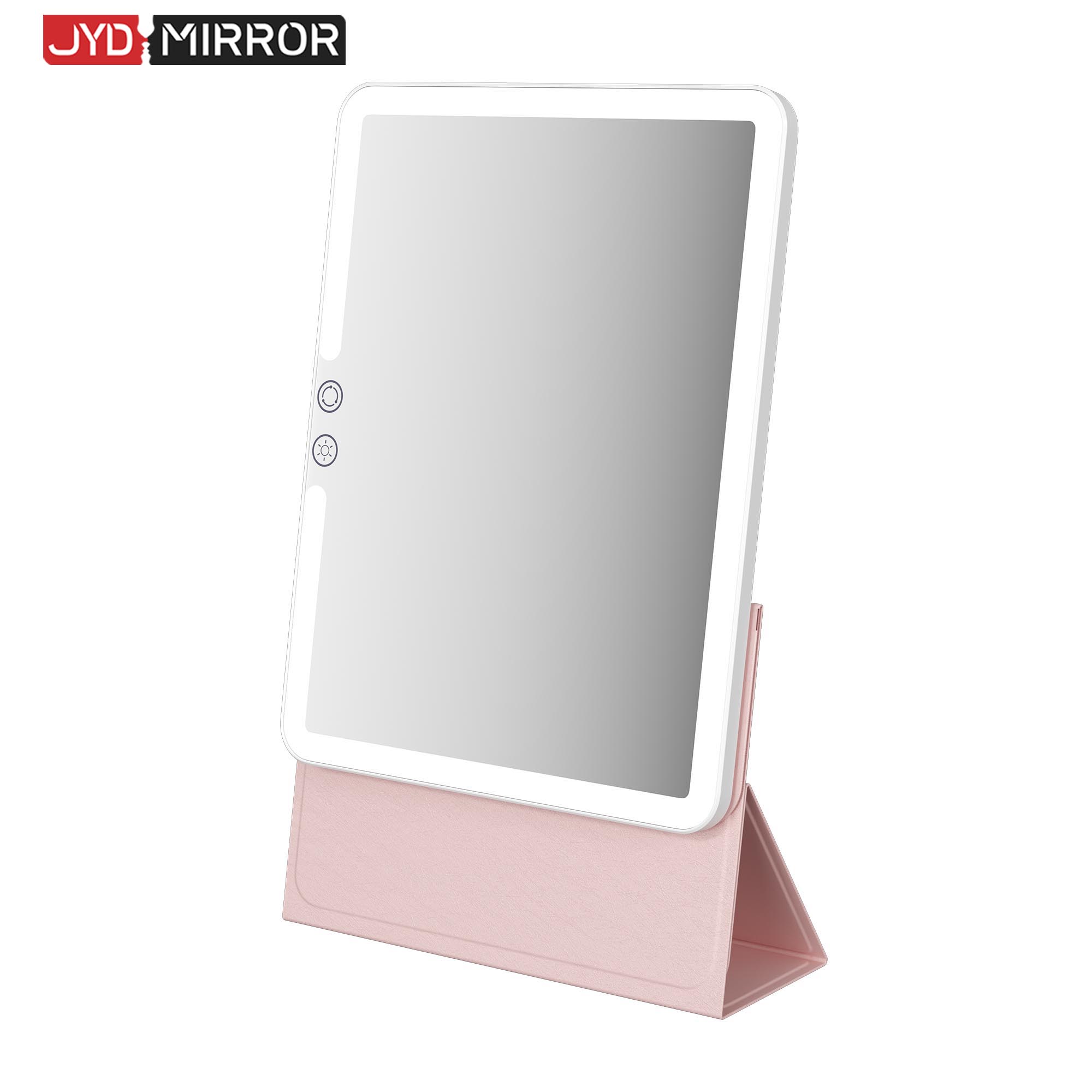
Oversized flat glass panels are susceptible to "roller wave distortion" during the heat-strengthening or tempering process. Procurement officers should specify a maximum allowable peak-to-valley roller wave of 0.15mm per 300mm of glass run to ensure a perfectly flat, distortion-free reflection from a distance. Utilizing a premium Bathroom Mirror substrate prevents the green tint seen in standard clear glass, ensuring true color rendering in hospitality and commercial washrooms.
Silvering Chemistry and Corrosion-Resistant Backing Paint
The longevity of a commercial mirror in high-humidity environments depends entirely on its silvering layers and backing chemistry. Traditional mirrors use a copper layer to protect the silver film, but this copper layer is highly prone to oxidation in humid bathroom environments, leading to edge corrosion or "black spot." Modern commercial specifications require a copper-free, environmentally-friendly silvering process.
To protect the silver layer, manufacturers apply a multi-pass backing paint system consisting of a base primer and an epoxy-based topcoat. This protective backing must be lead-free (containing less than 90 ppm of lead) and formulated with a chemical-resistant polyurethane or epoxy compound that prevents moisture ingress. Procurement teams should verify that factory-level quality control testing includes a Copper-Accelerated Acetic Acid Salt Spray (CASS) test exceeding 120 hours, ensuring the backing can withstand harsh commercial cleaning agents.
Edge-Working and Dimensional Tolerance Requirements
Large-scale mirrors require precise edge-working to maintain structural integrity during transport, handling, and installation. Raw cut glass has micro-fractures along its perimeter that can propagate into catastrophic cracks when subjected to thermal expansion or mechanical stress. Sourcing customized products through a dedicated Bathroom Mirror Customization program ensures that all edges undergo flat-polished or mitered processing to relieve these localized stresses.
For frameless installations, flat-polished edges with a slight arris are mandatory to eliminate sharp surfaces and minimize chipping. When opting for Frameless Bathroom Mirrors, dimensional tolerances must be strictly controlled to a maximum deviation of +/- 1.0mm in length, width, and diagonal squareness. This precision ensures seamless alignment when multiple oversized panels are installed side-by-side on a shared wall surface.
Structural Support and Mounting Systems for Oversized Glass
Oversized glass panels present substantial dead-load forces that cannot be supported by standard adhesive methods alone. A 6mm thick glass panel weighs approximately 15 kg per square meter. For large rectangular installations, a hybrid mounting system combining mechanical brackets and structural silicone adhesive is recommended to distribute weight evenly across the wall substrate.
| Mirror Area (sq. m) | Recommended Thickness | Primary Mounting System | Safety Backing Requirement |
|---|---|---|---|
| Under 1.5 | 4mm to 5mm | Heavy-duty Z-clips or J-channels | Optional CAT I safety film |
| 1.5 to 3.0 | 6mm | Aluminium J-channel bottom + structural adhesive | Mandatory CAT II safety backing |
| Over 3.0 | 6mm to 8mm | Full perimeter mechanical frame + structural adhesive | Mandatory CAT II safety backing |
To mitigate the risk of injury from accidental impact, all large-scale mirrors must feature a Class A or Class B safety film backing (such as CAT II woven backing) complying with ANSI Z97.1 standards. In the event of breakage, this film holds the glass shards in place, preventing them from falling and causing injury. For enclosed storage setups, a high-durability Rectangular Mirror Cabinet can integrate these safety backings directly within its structural aluminum framing.
Quality Assurance and Factory Testing Protocols
Sourcing teams must verify that the manufacturing facility implements stringent testing protocols to guarantee consistent performance across large production batches. This is particularly critical for mirrors integrating complex features, such as integrated heating pads, smart displays, or customized framing profiles. Quality assurance certifications such as ISO 9001, CE, and UL listed marks should be reviewed before finalizing procurement contracts.
Key factory testing criteria should include standard thermal cycle tests to evaluate how the mirror handles sudden temperature shifts from 0°C to 50°C. Additionally, adhesion pull-out tests must be conducted on the safety film backing to confirm that the adhesive layer does not degrade under hot, humid, and chlorinated air conditions typically found in commercial wellness facilities and public locker rooms.
Sourcing and Installation FAQ
Q: What is the optimal glass thickness for large-scale commercial bathroom mirrors?
A: For any mirror exceeding 1.5 square meters, a thickness of 6mm is standard. This thickness provides the necessary rigidity to prevent optical distortion and ensures the glass can handle mechanical stresses during maintenance and cleaning.
Q: How do copper-free mirrors prevent edge oxidation in high-humidity areas?
A: Copper-free mirrors utilize a passivated silver layer protected by dual-component epoxy backing paints. Removing the copper layer eliminates the primary metal subject to oxidation when exposed to water vapor and airborne cleaning agents.
Q: What is the difference between flat-polished and mitered edges regarding safety?
A: Flat-polished edges feature a smooth, rounded finish with flat sides, ideal for flush frameless installations. Mitered edges are cut at an angle and are typically used in framed designs, providing structural stability inside metal or wood profiles.
Q: Can oversized mirrors be installed using mounting adhesive alone?
A: No. Large-scale commercial mirrors should never rely solely on adhesive. A mechanical support system, such as aluminum J-channels, Z-clips, or safety frames, must be used to carry the dead-weight load of the glass.
Q: What certifications should B2B buyers request from mirror manufacturers?
A: Buyers should request ISO 9001 certification for quality management, ASTM C1503 compliance for silvered flat mirrors, ANSI Z97.1 impact safety certificates, and RoHS or REACH environmental compliance for backing paints.