 Nederlands
 Deutsch
 Español
  Français
 Русский
Navigating Supply Chains: How to Safely Source from Bathroom Mirror Manufacturers in China
Sourcing bulk glass products internationally requires a strategic approach to risk management, quality control, and logistics. For B2B buyers, distributors, and hospitality developers, partnering with bathroom mirror manufacturers in China offers excellent scalability and cost-efficiency, but only if you can navigate the complexities of factory verification, technical specifications, and transit protection. This guide delivers a practical framework to audit manufacturers, enforce strict quality standards, and secure your supply chain against common import pitfalls.
1. Distinguishing True Glass Factories from Trading Intermediaries
Identifying whether a prospective partner is a direct manufacturing facility or a trading company is the first step toward securing stable pricing and custom engineering capabilities. Direct manufacturers control the entire production line, from raw float glass cutting and edging to the final silvering and copper-free backing processes. Trading companies, while often offering diverse product portfolios, add a markup and lack direct oversight of production line quality.
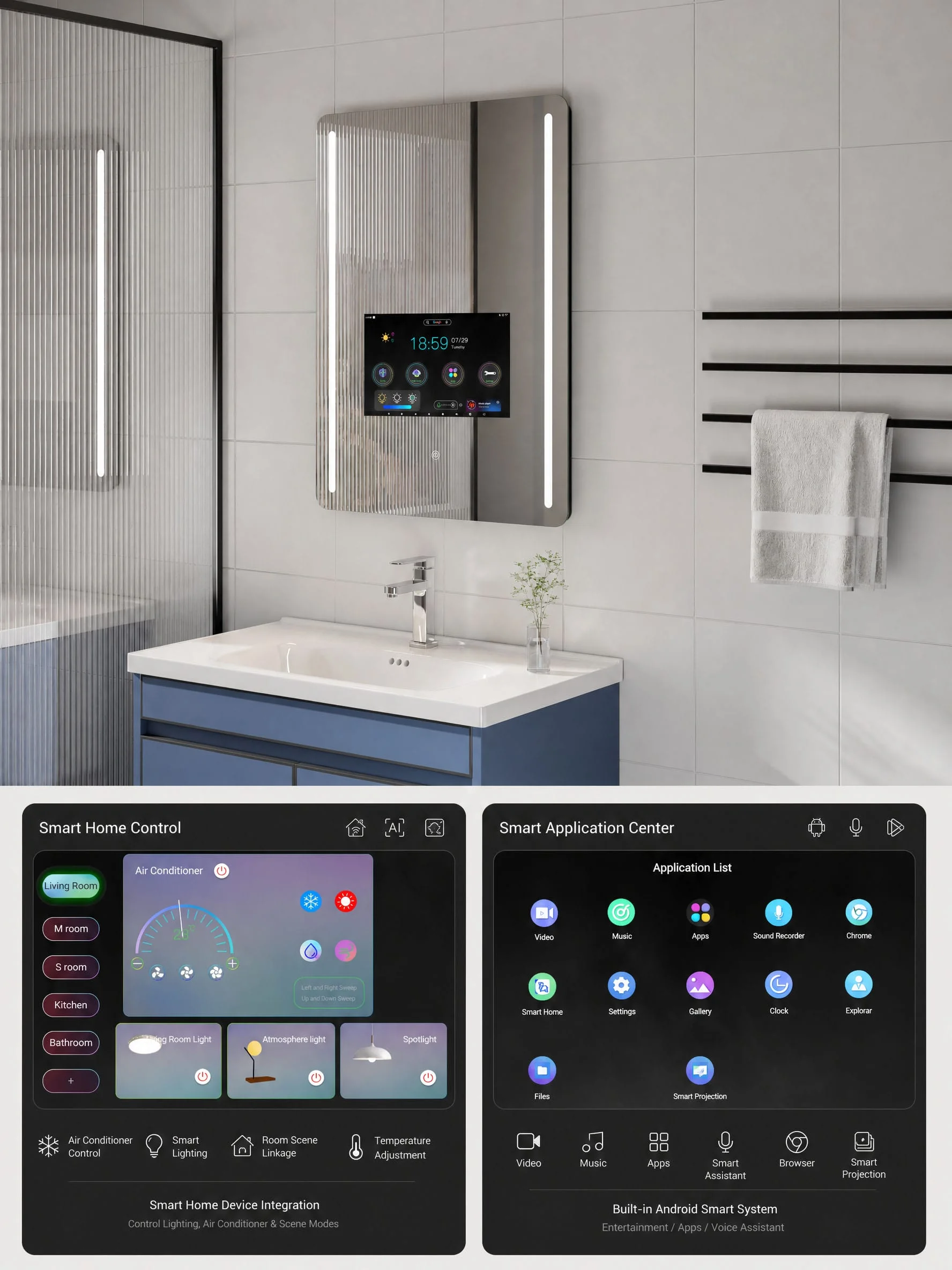
To verify factory capacity, request the business license (showing the exact scope of manufacturing), environmental impact assessment (EIA) approvals, and direct ISO 9001 audit reports. True manufacturers welcome third-party on-site audits and can easily provide traceability documentation for their raw glass supply. When sourcing specialized products like a bathroom mirror cabinet, verifying direct control over both the glass processing and the aluminum or stainless steel cabinet fabrication is critical to ensure seamless component integration.
2. Evaluating Raw Float Glass Source and Backing Durability
The durability of a commercial mirror depends heavily on the quality of the raw float glass and the backing paint layers. Low-grade glass contains high concentrations of iron, resulting in a distinct green tint and lower light transmission. High-end hospitality and residential projects typically require premium grade, low-iron float glass to achieve maximum clarity and color accuracy.
Furthermore, standard mirrors utilize copper in their reflective layers, which is highly susceptible to oxidation and black-edge corrosion when exposed to bathroom humidity. Modern commercial standards dictate the use of copper-free silver mirrors coated with double-layer lead-free protective paint. This advanced backing configuration prevents moisture ingress and extends the lifespan of the mirror in high-humidity environments. Whether you are importing standard frameless bathroom mirrors or complex lighted models, always specify copper-free silver glass with a minimum thickness of 5mm to prevent distortion.
3. High-Humidity QC Protocols and LED Component Verification
For smart and lighted mirrors, quality control must extend beyond the glass to cover electrical safety and moisture protection. The standard for bathroom electrical fixtures is an IP44 rating, which guarantees protection against splashing water from any direction. Sourcing departments must verify that the LED drivers, touch sensors, and anti-fog demister pads carry recognized international certifications such as UL, CE, RoHS, or SAA.
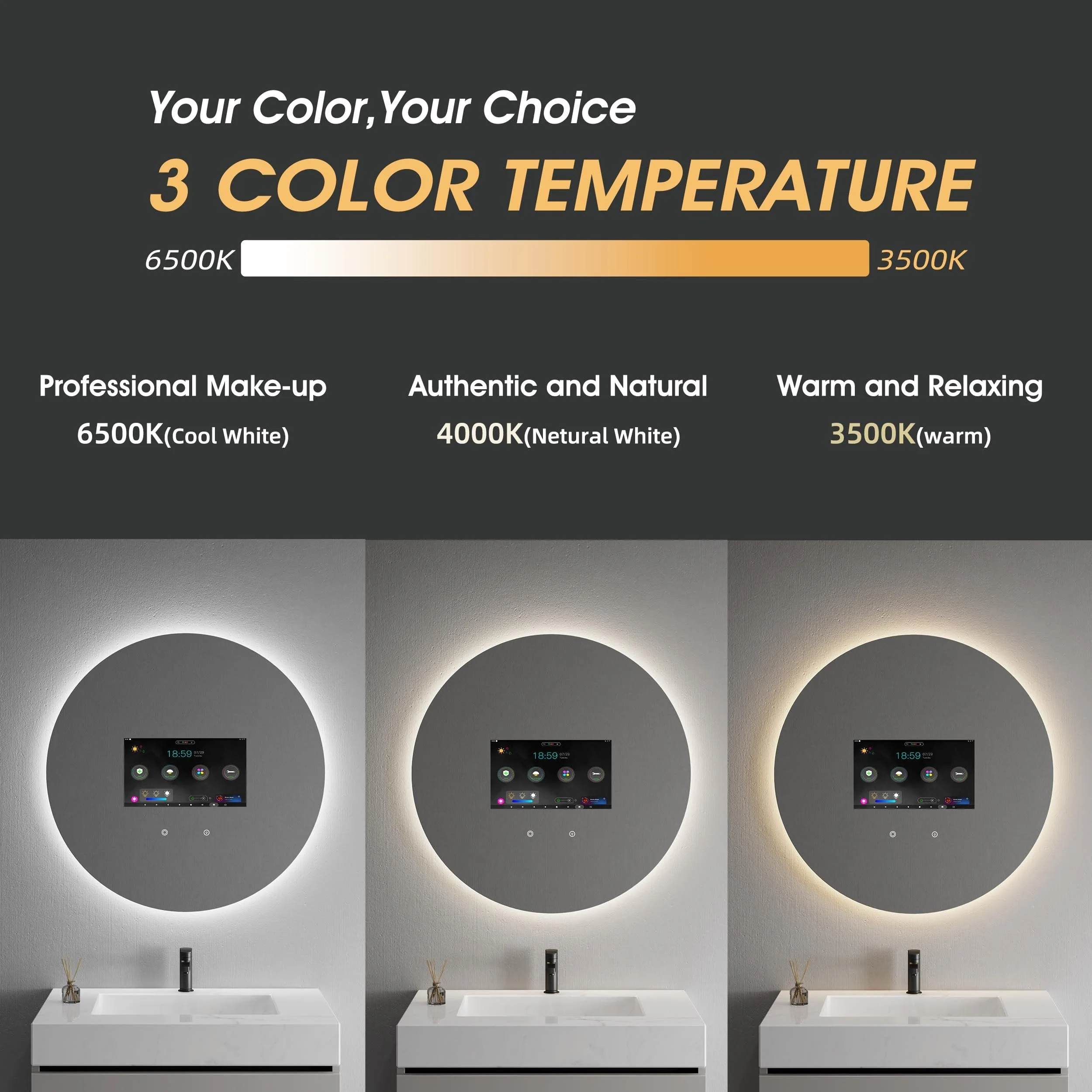
Pre-shipment inspection protocols should include a high-voltage dielectric withstand test, a power consumption check, and an IPX4 splash test in a controlled chamber. For high-end smart installations incorporating a dynamic ai tv bathroom mirror, the quality control checklist must also verify software responsiveness, Bluetooth/Wi-Fi connectivity, and integrated speaker performance under high-humidity conditions before the container is sealed.
4. Engineering Structural Packaging for Sea Freight Transit
Fragile glass shipments require robust packaging engineering to survive the mechanical stresses of sea freight, container handling, and inland transport. Relying on standard retail cartons for bulk ocean freight is a primary cause of high breakage rates. B2B buyers must stipulate drop-tested packaging designs, typically utilizing heavy-duty honeycomb cardboard, high-density polyethylene (EPE) foam edge protectors, and custom wooden crates or pallets for LCL (Less than Container Load) shipments.
For FCL (Full Container Load) shipments, proper weight distribution and moisture absorption are critical. Silica gel desiccant packs should be distributed throughout the container to prevent moisture build-up (container rain) during long ocean transits, which can degrade mirror backing paint. Customization projects require tailored packaging layouts; when choosing a comprehensive bathroom mirror customization service, ensure the manufacturer conducts ISTA 3A or 1A drop tests on the final packaged design to validate structural integrity.
5. Demarcating Liability and Risk in OEM/ODM Supply Contracts
To protect your capital, supply contracts must clearly define when title and risk transfer from the manufacturer to the buyer. Standardizing on Incoterms (such as FOB, CIF, or DDP) provides a legal baseline, but specific clauses regarding transit damage and manufacturing defects must be explicitly appended. Sourcing contracts should detail acceptable defect limits (AQL standards) and outline the precise compensation structure for broken glass discovered upon port arrival.
| Sourcing Phase | Key Operational Risks | Mitigation Strategy | Target Metric / Standard |
|---|---|---|---|
| Factory Selection | Trading companies posing as direct manufacturers; lack of quality control ownership | On-site factory audits, verification of EIA reports and raw glass material invoices | ISO 9001 Certification; direct factory ownership |
| Material Specification | Oxidation and black-edge corrosion caused by low-grade backing and high-iron glass | Mandate 5mm low-iron float glass with double-coated copper-free backing paint | Salt spray test resistance > 240 hours |
| Electrical Assembly | Electrical failure, short circuits, and safety hazards in humid bathroom zones | Specify certified waterproof drivers and touch sensors with sealed back enclosures | IP44 waterproof rating; UL, CE, or SAA listings |
| Logistics & Packaging | High glass breakage rate during maritime transport and warehouse handling | Enforce drop-test approved structural packaging with EPE foam, corner protectors, and wooden pallets | ISTA 3A or 1A Drop Test standards; < 1% breakage target |
Frequently Asked Questions
Q: How do I verify the factory capacity of a Chinese bathroom mirror manufacturer?
A: Verify factory capacity by requesting their ISO 9001 quality management system certificate, reviewing their monthly output capacity, and requesting documentation of their raw material supply chains. Additionally, hire a third-party inspection agency to conduct an on-site factory audit to inspect their glass cutting, edging, silvering, and assembly lines.
Q: What are the packaging standards for importing bulk glass mirrors from China?
A: Bulk shipments require heavy-duty packaging consisting of 5-layer corrugated cartons, thick high-density polyethylene (EPE) foam padding protecting all edges, and reinforced corner guards. For ocean freight, cartons should be securely stacked on fumigated wooden pallets or packed inside custom wooden crates with desiccants inside the container to prevent moisture damage.
Q: How do B2B buyers handle quality control inspections for LED mirrors before shipment?
A: Buyers should contract a third-party QC agency to inspect the goods at the factory before shipping. The inspection must include aesthetic checks, dimensional accuracy, structural stability, and rigorous electrical testing, including high-voltage safety tests, IP44 waterproof verification, and functional testing of the demister and touch sensors.
Q: What are the typical payment terms when sourcing custom mirrors from Chinese factories?
A: The standard industry payment term is a 30% T/T (Telegraphic Transfer) deposit to initiate production, with the remaining 70% balance payable upon presentation of the Bill of Lading (B/L) or after a successful pre-shipment inspection. For highly customized or large-volume contracts, Letter of Credit (L/C) terms can also be negotiated.
Q: How do shipping methods affect the breakage rate of wholesale bathroom mirrors?
A: Full Container Load (FCL) shipping significantly reduces breakage rates because the container is loaded at the factory and remains sealed until arrival. Less than Container Load (LCL) shipments carry a higher risk of damage due to repeated handling and consolidation with other cargo, requiring more robust structural wooden crating to ensure protection.





