 Nederlands
 Deutsch
 Español
  Français
 Русский
The Procurement Blueprint: Bulk Sourcing LED Makeup Mirrors for B2B Projects
Bulk sourcing LED makeup mirrors for B2B procurement: Successful procurement relies on prioritizing technical specifications such as high-CRI LED integration, rigorous thermal management, and international safety compliance. By vetting factory partners for ISO 9001 certification and precise binning protocols, buyers can mitigate the risks of product failure and inconsistency in high-volume hospitality or retail orders.
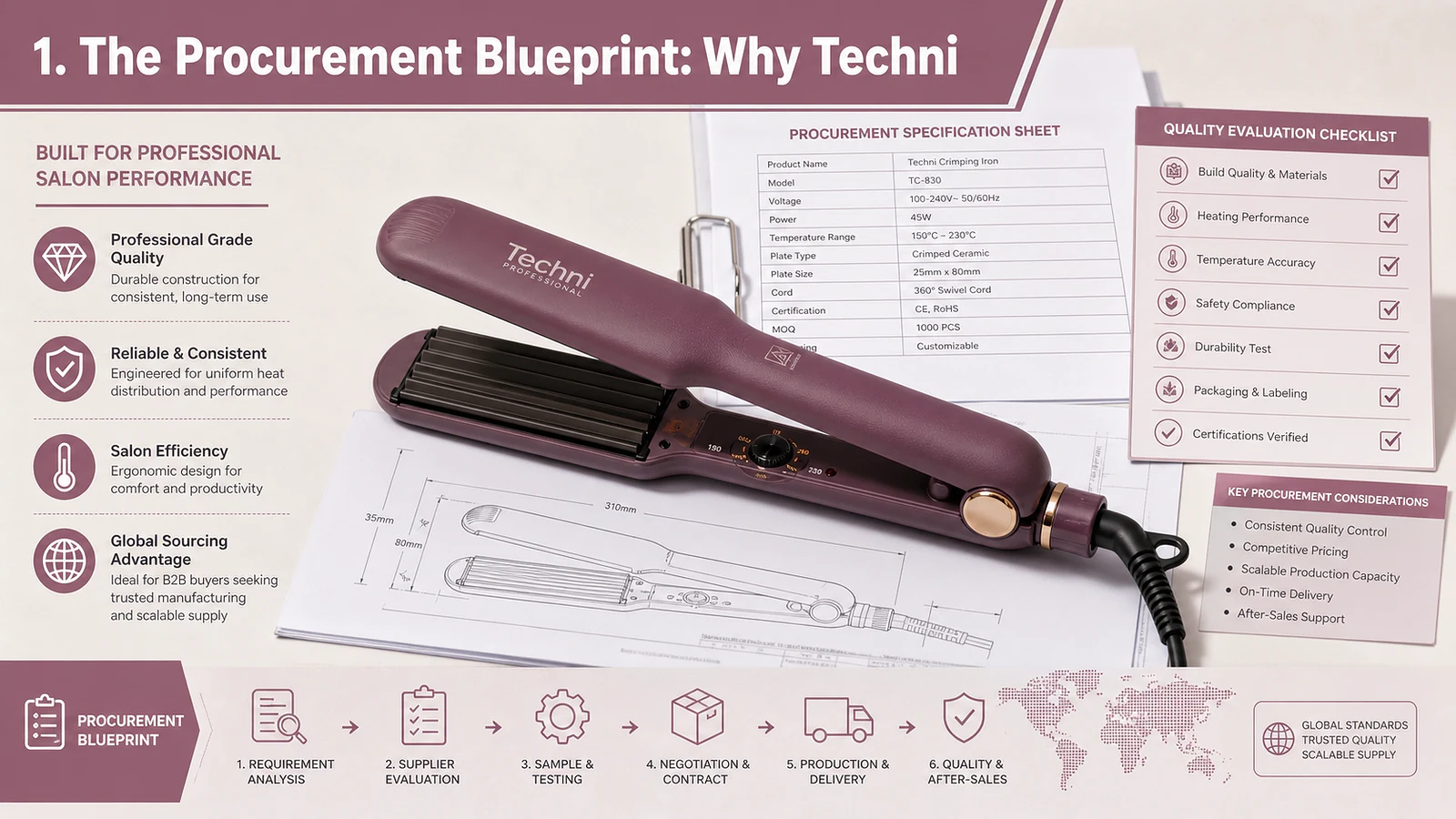
1. The Procurement Blueprint: Why Technical Specs Trump Unit Cost
For B2B procurement managers, the allure of low unit costs often masks significant long-term liabilities. In the hospitality and beauty sectors, a vanity mirror is not merely a piece of furniture; it is a critical component of the user experience. We have observed through factory audits that flickering, premature color shifting, and thermal degradation are frequently the result of using substandard LED strips and cheap, non-stabilized drivers. By shifting focus from base price to technical specifications, such as heat dissipation efficiency and PCB durability, buyers ensure the longevity of their inventory.
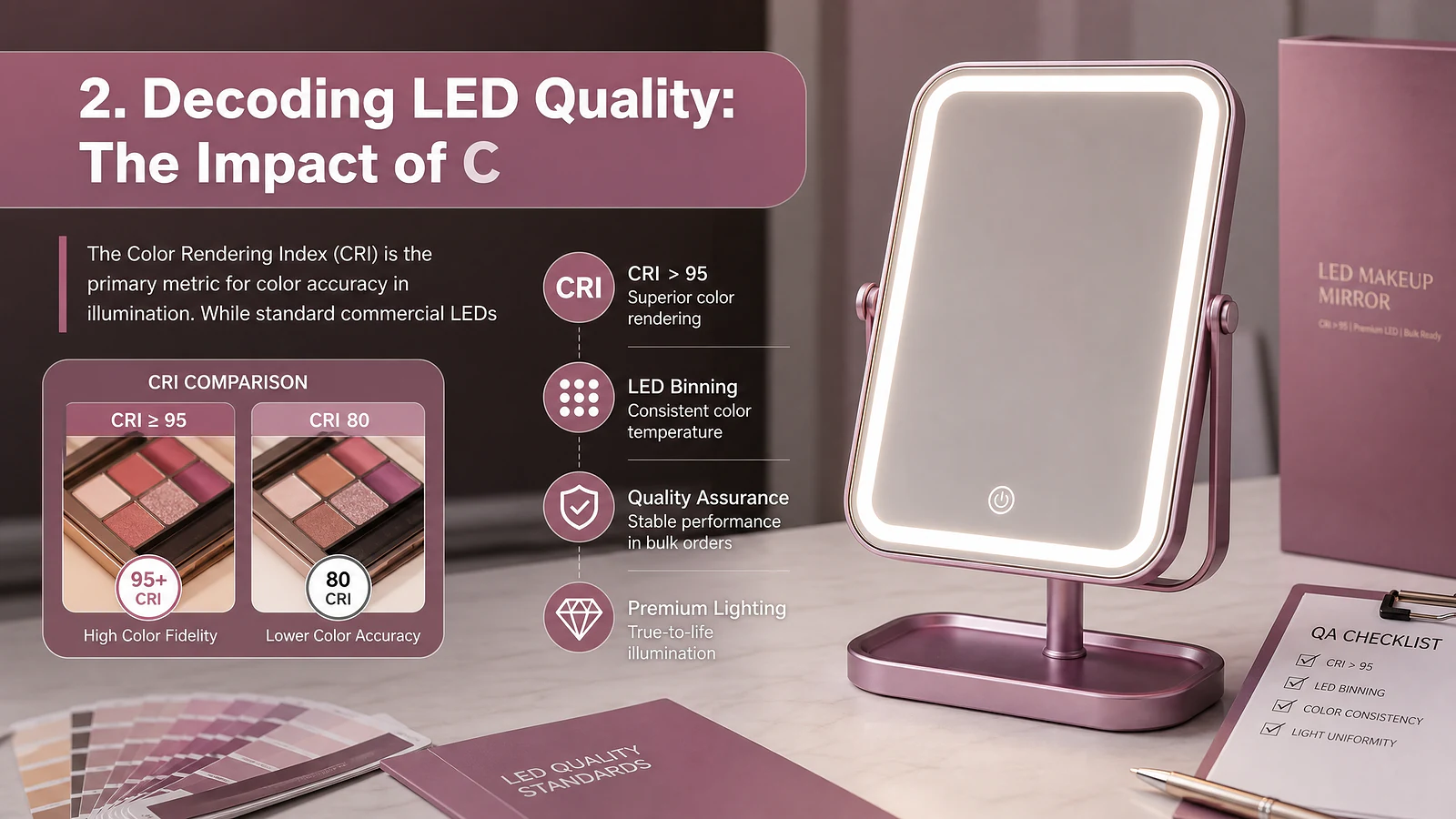
2. Decoding LED Quality: The Impact of CRI >95 and Binning
The Color Rendering Index (CRI) is the primary metric for color accuracy in illumination. While standard commercial LEDs often hover around 80 CRI, our production standards mandate >95 CRI for professional-grade makeup mirror applications to ensure true-to-life skin tone representation. For example, our SM612A-SL model integrates high-density 70-LED strips that utilize precise LED binning to guarantee uniform illumination across all four sides. Unlike commodity bins where color temperature can drift between units, our strict binning protocol limits variance to within 3-step MacAdam ellipses, ensuring that bulk shipments maintain color consistency.
3. Maintenance Architecture: Integrated vs. Modular Units
Maintenance is the hidden cost of hospitality procurement. Integrated LED strips, while sleek, can be challenging to service if not designed with a maintenance-first architecture. In our makeup mirror assembly workshop, we prioritize thermal management to prevent lens yellowing, a common failure point caused by improper heat dissipation. By utilizing high-thermal-conductivity aluminum substrates, we extend the lifespan of the integrated strips. In contrast, modular units offer faster field replacement but often require a larger, more visible housing bezel, which can disrupt the aesthetic requirements of high-end hotel suites.
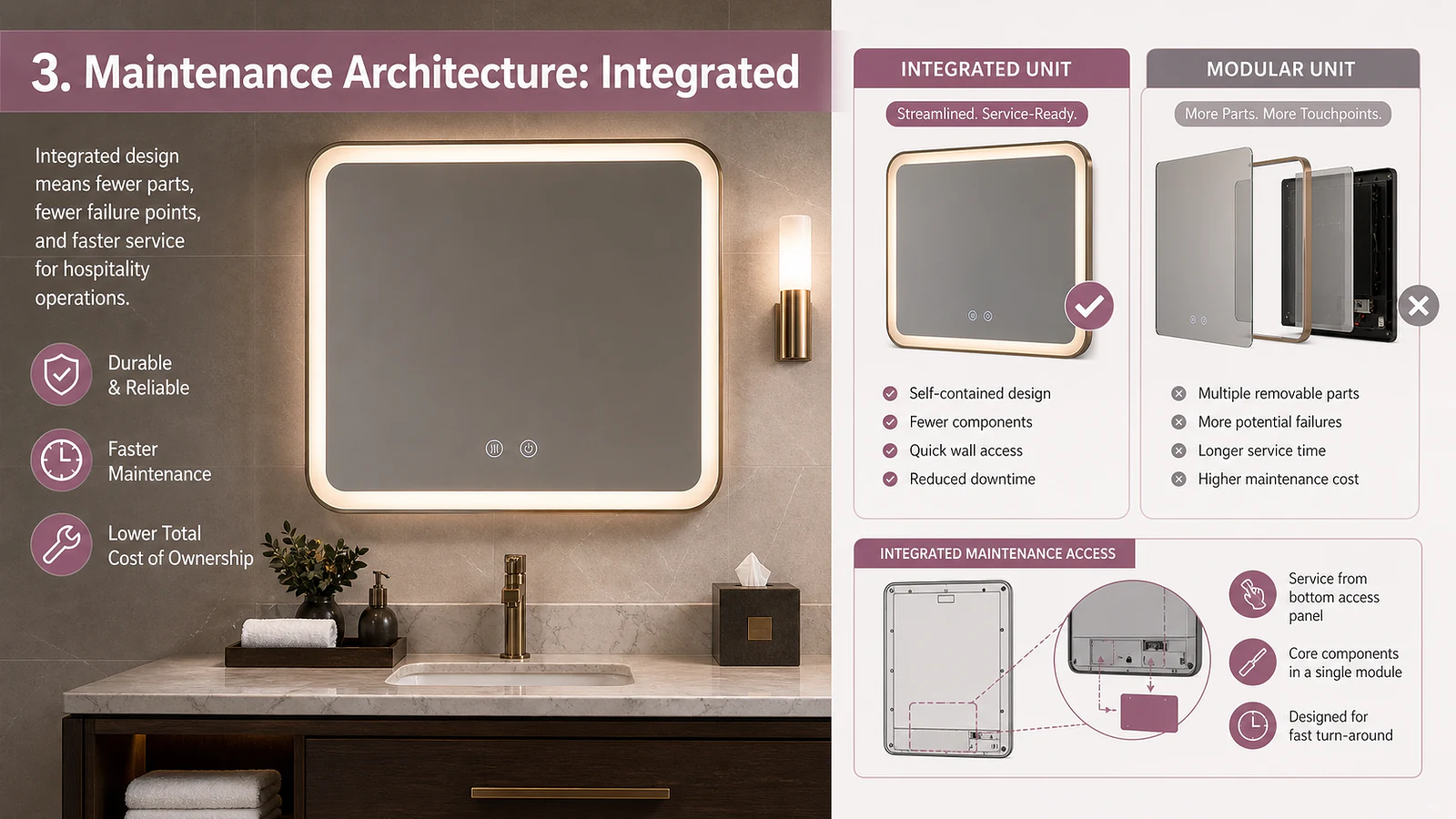
| Feature | Integrated LED Strips | Modular Units |
|---|---|---|
| Aesthetics | Seamless, ultra-slim profile | Bezel required for access |
| Heat Dissipation | Superior (Aluminum substrate) | Moderate |
| Field Maintenance | Requires specialized service | Plug-and-play replacement |
Request a Comprehensive Spec Sheet
Access detailed thermal management reports and our latest product specifications for your next high-volume project.
Download Spec Sheet4. Customization vs. Modularity: A Financial Analysis of Tooling
Investing in custom housing tooling allows for a truly unique brand identity but requires substantial upfront capital expenditure. For mid-volume projects, we recommend leveraging existing, proven modular designs that allow for vanity mirror customization of the interface and lighting temperatures without the massive cost of new steel molds. By utilizing our existing ABS housing base for models like the SM612A-SL, clients can achieve high-end branding results with significantly faster time-to-market.
5. Compliance as a Barrier to Entry: Safety Requirements
International market access requires strict adherence to safety protocols. We adhere to the UL 2108 standard for low-voltage lighting systems and IEC 62471 for photobiological safety to ensure no harmful blue light exposure. Furthermore, materials used across our production lines, such as those found in our QR-55 model (ABS + PC transparent cover), are compliant with RoHS and REACH standards, ensuring chemical safety and environmental responsibility.
6. Quality Assurance Framework: Auditing ISO 9001 Systems
A factory's ISO 9001 certification is only as good as the internal auditing processes it enforces. During our routine transit resilience tests, we subject our mirrors to rigorous silvering durability tests, simulating high-humidity environments and mechanical vibrations. We provide third-party validation of these results to ensure that your investment in high-quality mirrors arrives intact and performs consistently under the demands of daily commercial use.
7. Supply Chain Resilience: Balancing Lead-Time Reliability
Lead-time volatility is often a result of poor raw material management. By maintaining healthy inventory levels of critical components like high-density LED beads and durable PU leather casing materials, we stabilize production cycles. We believe in total transparency: we provide clear project timelines that account for both assembly duration and raw material sourcing windows, ensuring that bulk shipments align with your development milestones.
8. Conclusion: Partnering for Scalability and Long-Term Durability
Choosing the right B2B partner for table mirror and vanity solutions involves looking beyond the surface. By prioritizing technical precision, international compliance, and robust quality management, you can ensure that your procurement strategy supports your organization's growth. We are committed to providing the documentation, engineering data, and quality assurance necessary to build a long-term, scalable partnership.
Frequently Asked Questions
Q: How do I determine the minimum order quantity (MOQ) for custom-branded LED mirrors?
A: The MOQ is primarily determined by the level of customization required. Modular designs allow for lower MOQs, while custom-tooling projects require higher quantities to amortize mold development costs over the production run.
Q: Which international safety certifications are mandatory for importing light-up mirrors to the EU and US?
A: For the US market, UL/ETL safety certifications are typically required. For the EU, CE marking in compliance with the Low Voltage Directive and EMC Directive is mandatory to ensure both electrical and photobiological safety.
Q: How does high CRI (Color Rendering Index) impact end-user satisfaction in vanity mirrors?
A: CRI >95 ensures accurate representation of skin tones, crucial for beauty applications. Higher CRI minimizes color shifting, providing a superior user experience compared to the standard 80 CRI units found in mass-market products.
Q: What are the common failure points in mass-produced LED mirror electrical components?
A: Common failure points include thermal degradation of LED strips, flickering caused by non-stabilized drivers, and oxidation of the silvered mirror surface due to poor humidity sealing.
Q: What is the standard lead time for private label vanity mirror manufacturing?
A: Standard lead times vary based on design complexity and material availability. Typically, production cycles range from 30 to 60 days, depending on whether the project utilizes existing modular housing or requires new custom tooling.
Partner with a Reliable Manufacturer
Request a comprehensive spec sheet and quality testing report to validate your next procurement project.
Contact Our Sales Team


