Nederlands
 Deutsch
 Español
  Français
 Русский
Smart Mirror Wholesale Procurement: A Strategic Guide for Commercial Projects
For procurement managers and FF&E specifiers, the transition from consumer electronics to commercial-grade hardware is critical. Choosing the right smart mirror wholesale procurement for commercial projects requires moving beyond surface aesthetics to prioritize modularity, long-term technical support, and building system compatibility.
Section 1: The Hidden Risks of Consumer-Grade Smart Mirrors in Commercial Specs
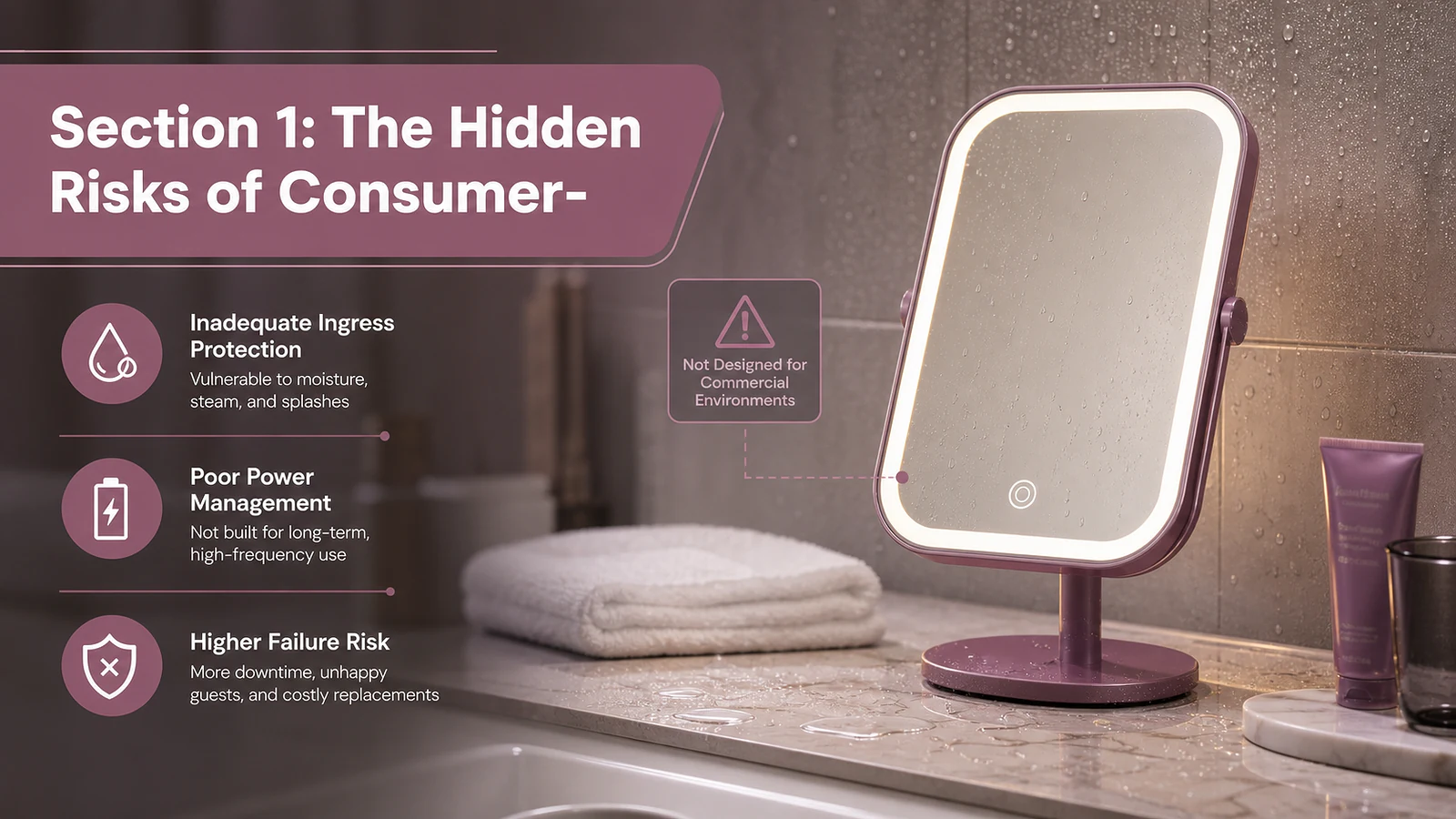
Consumer-grade devices often lack the ingress protection and power management required for heavy-duty hospitality environments. During factory audits, we have observed that standard consumer mirrors fail within 12 months due to inadequate thermal management of LED arrays in humid settings. Relying on these units leads to increased CAPEX volatility, as the lack of field-serviceable parts necessitates full-unit replacement rather than simple maintenance.
Section 2: Why Modular Architecture is the New Gold Standard for B2B Procurement
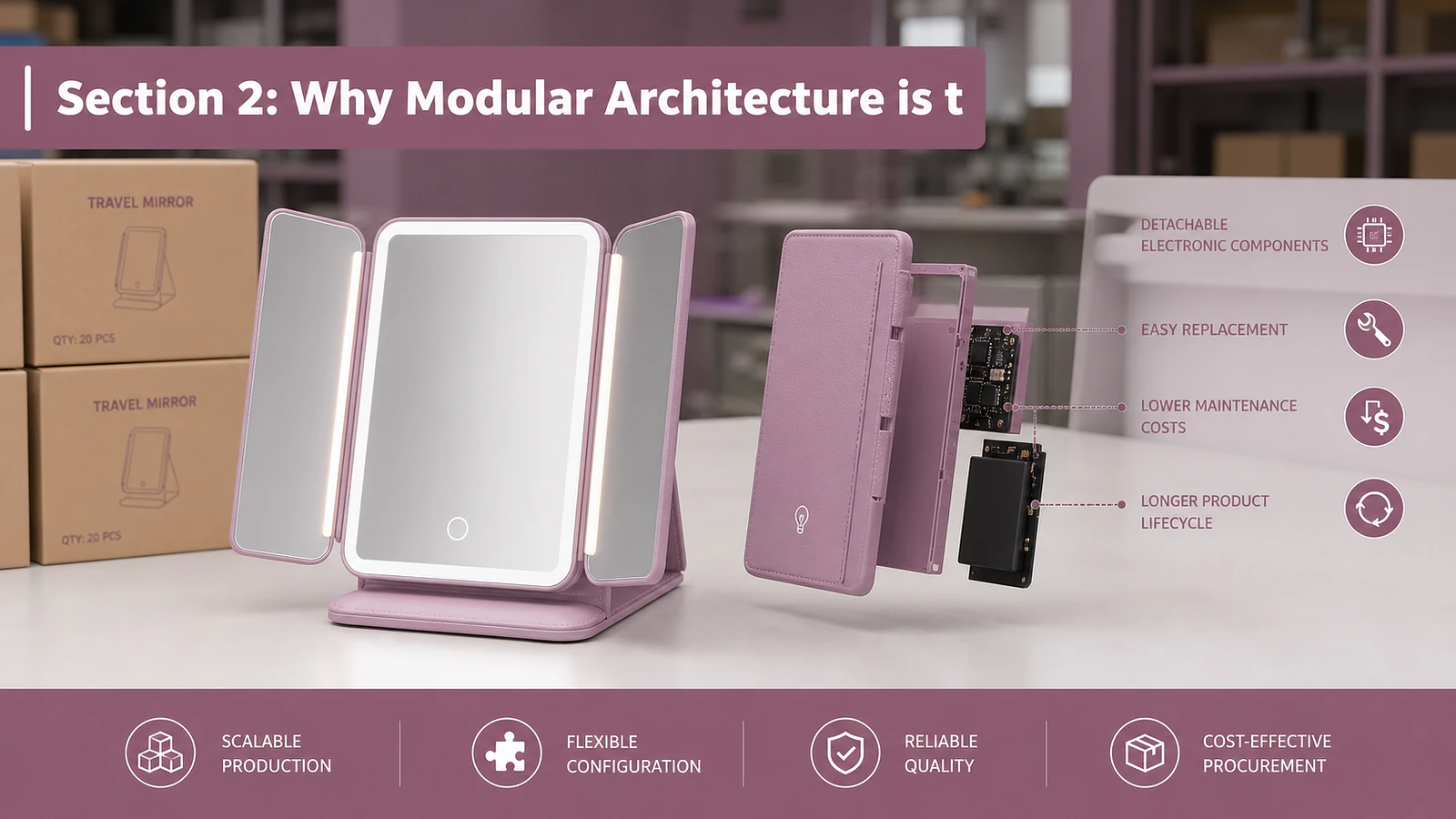
From manufacturing thousands of units, we prioritize a modular back-box design. This allows for detachable electronic controllers and display modules, ensuring that if a sensor or board malfunctions, it can be replaced in the field without removing the mirror from the wall. This design strategy effectively minimizes system obsolescence for hotels and multi-family units.
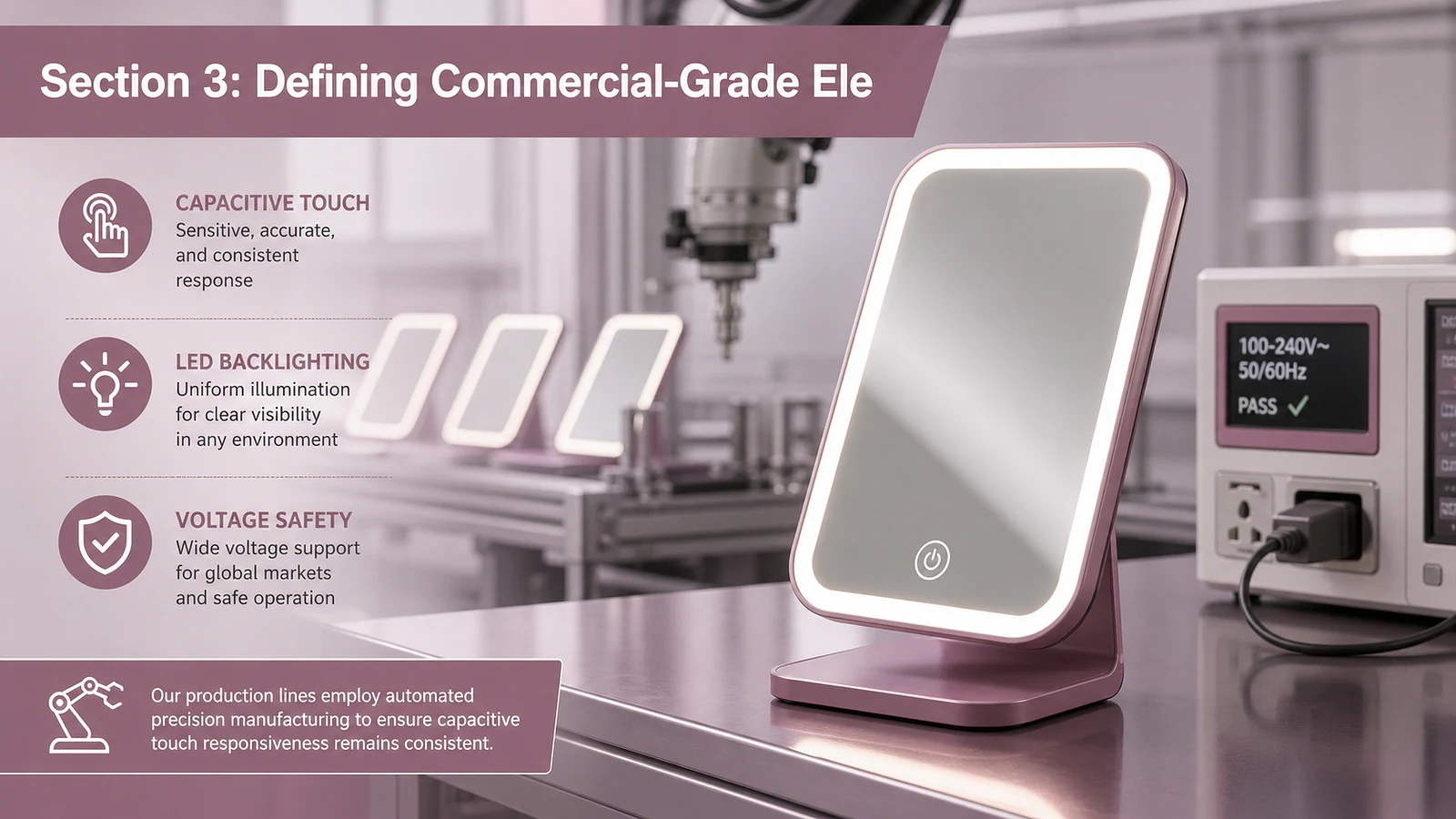
Section 3: Defining Commercial-Grade Electronics: Capacitive Touch, LED Backlighting, and Voltage Safety
Our production lines employ automated precision manufacturing to ensure capacitive touch responsiveness remains consistent across bulk orders. We use 3mm tempered glass, which provides 5x higher impact resistance than standard 2mm panes. All circuitry adheres to UL 2108 standards for low-voltage lighting systems, ensuring safety across diverse regional code requirements. We optimize lumen-to-watt efficiency, consistently achieving CRI >90 to ensure professional-grade lighting performance.
Section 4: Infrastructure Compatibility: Integrating Mirrors into Building Management Systems
Effective commercial installation requires proprietary-agnostic integration. By designing for universal API compatibility, our units act as intelligent nodes within a larger building management system (BMS). This allows for centralized control of occupancy sensing, dimming, and anti-fog functions, enhancing operational efficiency throughout the property.
Section 5: Beyond Aesthetics: Reliability Data and MTBF as Key Performance Indicators
We utilize industrial-grade MTBF (Mean Time Between Failures) data to validate our components. LED controllers and sensor arrays undergo 24/7 accelerated burn-in testing to verify durability. By adhering to IEC 60598-1 standards, we ensure that every component is tested for performance endurance before it leaves our factory floor.
Section 6: Procurement Strategy: Future-Proofing Through Long-Term Technical Support Capabilities
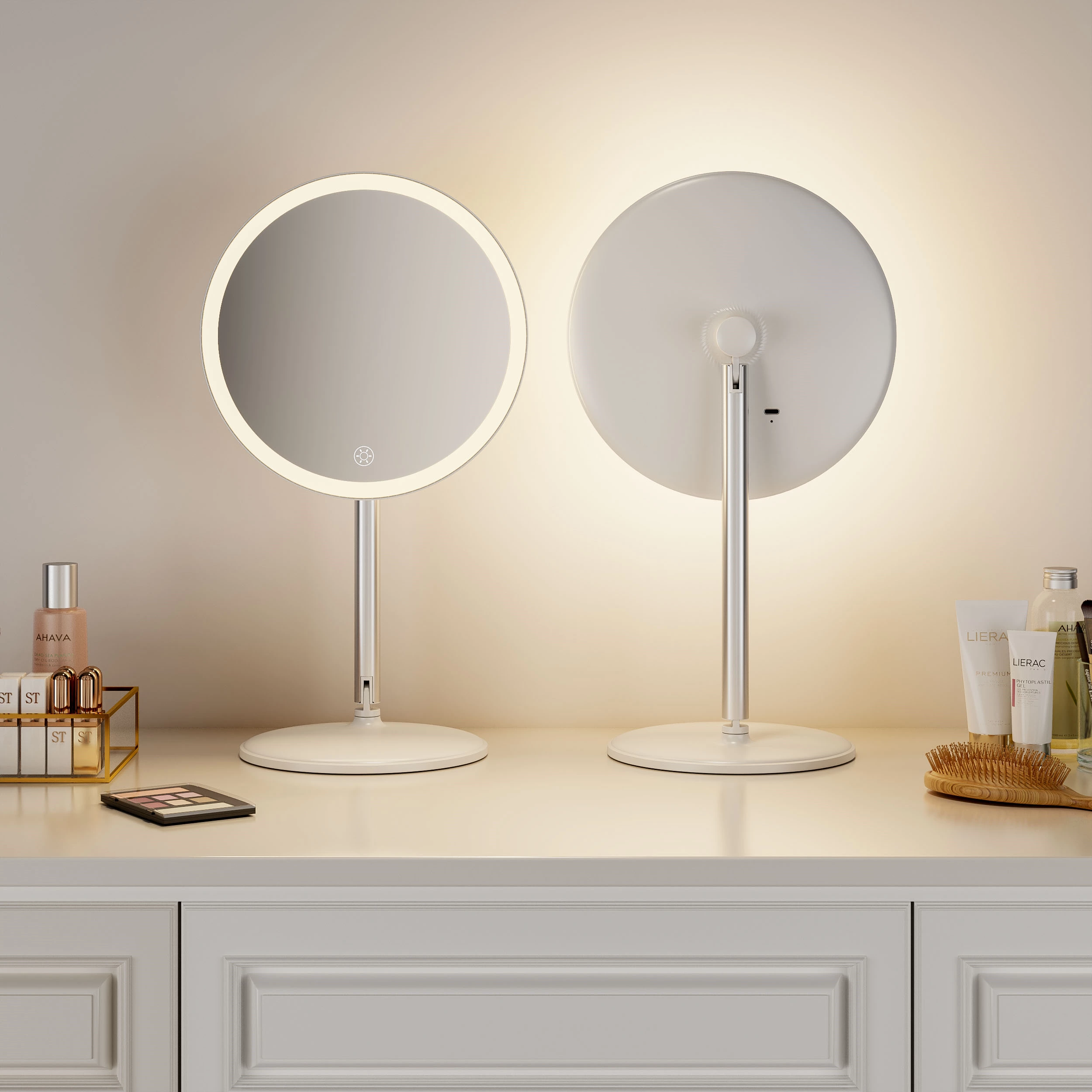
Successful procurement involves partnering with manufacturers who provide comprehensive technical documentation. Whether you are sourcing a Ai Smart Mirror for a lobby or a custom Bathroom Mirror Customization project, ensure the manufacturer offers a clear path for hardware upgrades. You may also explore a high-quality Vanity Mirror if the application requires portable commercial solutions.
Section 7: Summary Checklist: Essential Technical Specs for Smart Mirror RFQs
| Feature | Commercial Requirement |
|---|---|
| Certifications | UL, CE, RoHS compliant |
| Glass | 3mm tempered (impact resistance) |
| Maintenance | Modular back-box architecture |
| Optical | CRI >90 |
Q: What are the integration requirements for smart mirrors in hospitality vs. commercial retail environments?
A: Hospitality requires focus on low-voltage safety and anti-fog integration, while retail environments often demand tighter API integration with inventory or display management systems.
Q: How do smart mirror component lifecycles compare to traditional vanity mirrors?
A: Modular smart mirrors significantly outlast consumer units by allowing for the replacement of electronic components, thus matching the 5-10 year lifecycle of standard commercial hardware.
Q: Which connectivity standards are most stable for large-scale smart mirror deployment?
A: We recommend hard-wired open-protocol readiness or industrial-grade RF mesh networks, which offer higher stability than consumer Wi-Fi for multi-unit installations.
Q: What are the thermal management requirements for integrated LED smart mirror hardware?
A: Effective thermal management involves aluminum-based heat sinks and proper ventilation in the back-box to ensure the LED drivers meet the MTBF benchmarks.
Q: How do moisture-resistant housing standards affect long-term smart mirror maintenance?
A: IP44 or higher ingress protection is essential to prevent circuit board oxidation, which is the primary cause of maintenance calls in hotel bathrooms.