Nederlands
 Deutsch
 Español
  Français
 Русский
Sourcing High-Quality Mirrored Bathroom Cabinets with Integrated Lighting for Residential Developments
Sourcing premium mirrored bathroom cabinets with integrated lighting for high-density residential developments requires balancing architectural aesthetics with long-term durability. Developers and procurement managers must look beyond superficial design to evaluate the structural, electrical, and material integrity of these fixtures. This guide provides a technical framework for evaluating manufacturers, optimizing serviceability, and minimizing post-installation maintenance costs.
1. Structural Frame Rigidity and Load-Bearing Requirements
Large-scale mirrored cabinets installed in multi-family developments require highly stable, rigid frames to prevent warping over time. Choosing an anodized aluminum alloy frame (typically 6063-T5 grade) ensures corrosion resistance and high structural integrity without adding excessive weight to the drywall assembly. Manufacturers must provide specific load-bearing ratings for both the cabinet housing and the adjustable internal shelving systems.
When planning installations on standard metal or wood-stud partitions, structural blocking is highly recommended behind the drywall. Sourcing a high-quality bathroom mirror cabinet with pre-drilled mounting tracks simplifies alignment and safely distributes the physical load across the studs, preventing sagging doors and misaligned hinges in high-use environments.
2. LED Color Consistency and Electrical Safety Standards
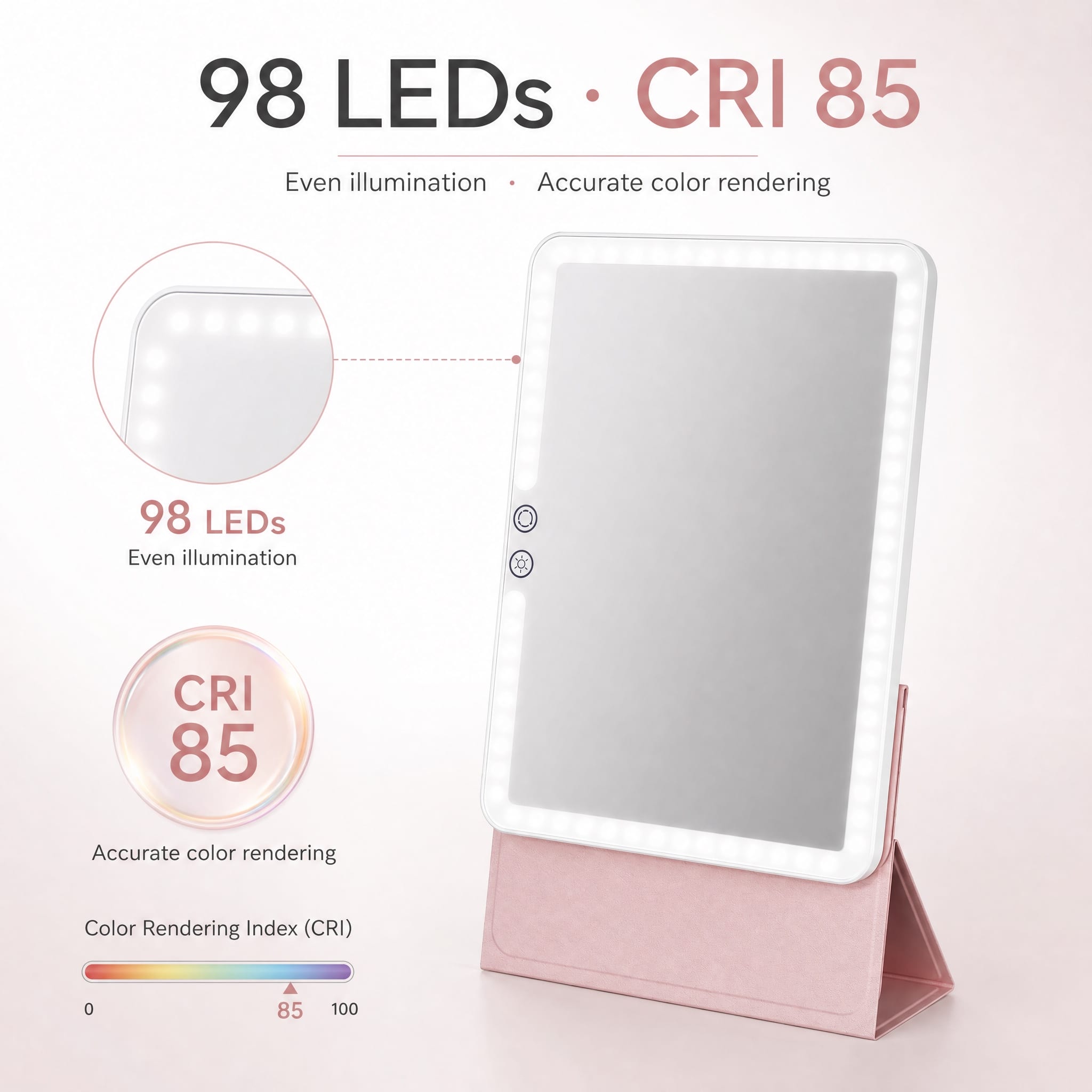
Integrated lighting systems must deliver uniform, flicker-free illumination across hundreds of units in a residential development. Procurement teams should mandate a tight MacAdam Ellipse threshold (typically 3 SDCM or lower) to guarantee color temperature consistency from unit to unit. High-performance LED strips must also offer a Color Rendering Index (CRI) of 90 or higher to satisfy modern residential buyers.
For wet zone safety, especially in Zone 2 bathroom layouts, ensure the entire cabinet assembly carries an IP44 rating or higher. A robust manufacturing partner will offer custom integration options, including a specialized bathroom mirror customization process to incorporate UL or ETL-listed components that meet local electrical codes without delaying municipal building inspections.
3. Evaluating Copper-Free Mirror Backing Performance
High-humidity bathroom environments pose a major threat to low-grade mirrors, leading to rapid desilvering and unsightly black edges. High-quality specifications demand 5mm copper-free silver mirrors with a multi-layer protective backing. This advanced backing prevents oxidation and chemical corrosion caused by common household cleaning agents and persistent moisture.
When evaluating suppliers, ask for salt-spray test certifications (ASTM B117 or equivalent) to verify that the backing material can withstand years of intense humidity. Investing in premium copper-free backing significantly reduces replacement rates and protects the developer's reputation for luxury finishes.
4. Modular Component Serviceability and LED Driver Access
One of the most common design flaws in illuminated cabinetry is burying the LED driver deep inside the chassis, requiring maintenance crews to rip out the drywall or entirely dismount the cabinet to replace a faulty power supply. Specifying a design with an accessible, dedicated dry-cavity compartment allows facilities managers to replace drivers in under ten minutes using standard tools.
In high-density buildings, sourcing dual-function furniture such as a makeup mirror with storage requires smart interior wiring channels. These channels must isolate low-voltage LED wires from 110V/220V shaver sockets, preventing electrical interference and simplifying modular component swapping over the building's operational lifecycle.
5. Selection Checklist and Sourcing Pitfalls
To avoid costly project delays and premature product failures, procurement officers should follow a structured inspection checklist. Watch out for non-tempered glass shelves, unsealed electrical junction boxes, and cabinets lacking damp-rated safety labels. The table below outlines key technical differences between typical retail-grade cabinets and professional commercial-grade solutions.
| Technical Specification | Retail-Grade Cabinets | Commercial-Grade (Recommended) |
|---|---|---|
| Frame Material | MDF, Plastic, or Thin Steel | Anodized Aluminum Alloy (6063-T5) |
| Mirror Type | Standard Aluminum or Low-grade Copper Mirror | 5mm Eco-Friendly Copper-Free Silver Mirror |
| LED Driver Placement | Sealed behind back panel (Inaccessible) | Dry-cavity compartment (Front/Bottom accessible) |
| IP Protection Rating | IP20 (No moisture protection) | IP44 or IP54 (Damp and splash proof) |
| LED Lifespan (L70) | 15,000 - 20,000 hours | 50,000+ hours with high CRI (Ra > 90) |
6. Sourcing FAQ
Q: What are the structural load requirements for installing large-scale mirrored cabinets in multi-family developments?
A: Standard installations require the wall assembly and anchors to support at least twice the weight of the fully loaded cabinet (typically 25 to 50 kg depending on cabinet volume). Specifying backing timber or metal plates inside the wall cavity during the framing phase is highly recommended.
Q: How does integrated LED driver placement affect maintenance access in commercial wet zones?
A: If drivers are placed in an inaccessible backplate, maintenance teams must uninstall the entire cabinet, risking damage to wall tiles and seals. Designing cabinets with a dedicated, front-accessible dry-cavity compartment ensures drivers can be replaced in minutes without disturbing the primary installation.
Q: What IP ratings are required for integrated lighting cabinets located in Zone 2 bathroom layouts?
A: An IP44 rating is the minimum international standard for Zone 2 bathroom areas. This ensures the internal electrical circuitry and LED modules are completely protected against multi-directional water splashes and dust ingress.
Q: How do manufacturers ensure copper-free mirror backing prevents desilvering in high-humidity projects?
A: Leading manufacturers apply multiple protective polymer layers over a high-density, copper-free silver layer. This design stops moisture, humidity, and cleaning chemicals from reacting with the silver, eliminating edge blackening and extending the lifespan of the mirror surface.
Q: What are the typical lead times and MOQ thresholds for custom-dimension lighted cabinets?
A: For mid-to-high-rise residential projects, typical manufacturing lead times range from 35 to 45 days following shop drawing approval. Minimum Order Quantities (MOQs) for custom sizes usually start at 50 to 100 units per specification, which aligns well with standard development phases.