 Nederlands
 Deutsch
 Français
 Русский
Wholesale Pocket Mirrors: Sourcing Standards, Packaging Solutions, and Quality Control for B2B Distributors
For B2B distributors and procurement managers in the beauty tools sector, the pocket mirror market is rife with quality variability. Successful sourcing requires moving beyond aesthetic appeal to prioritize the structural integrity and technical consistency of every unit. This guide outlines the essential benchmarks for maintaining supply chain stability and minimizing return rates.
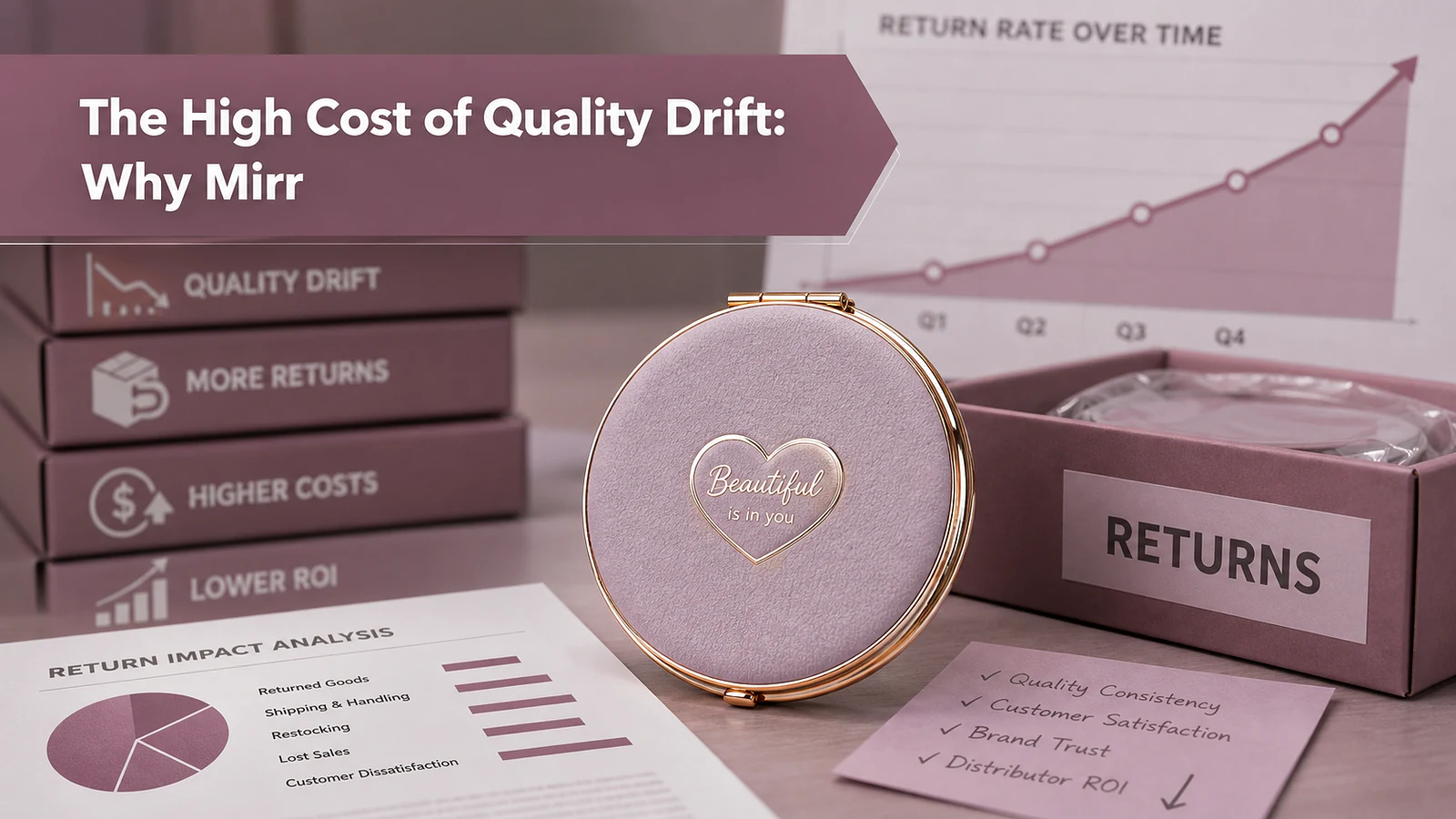
The High Cost of Quality Drift: Why Mirror Returns Damage Distributor ROI
Quality drift—the incremental decline in manufacturing standards over time—is the primary driver of customer dissatisfaction and product returns in the Compact Mirror market. Distributors often face issues like uneven reflective coatings or hinges that degrade after minimal usage. In our production line, we monitor these variables through documented checkpoint intervals every 500 units to ensure that large-scale batches remain within tight variance tolerances, protecting your brand's reputation and your bottom line.
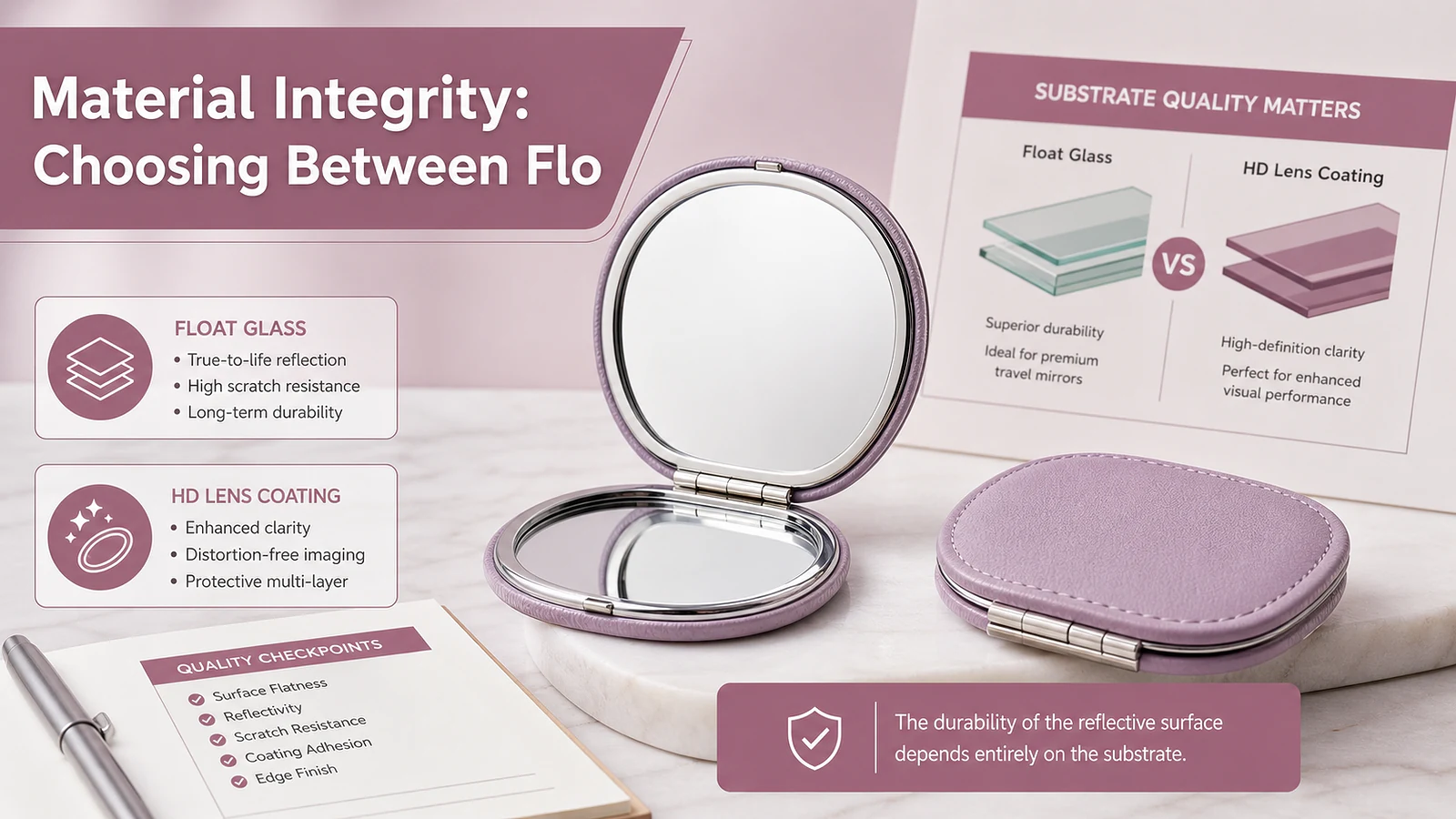
Material Integrity: Choosing Between Float Glass and High-Definition Lens Coatings
The durability of the reflective surface depends entirely on the substrate. High-quality Travel Mirror models require float glass that undergoes stringent tempering. For our Makeup Mirror models, we utilize high-definition coatings that resist oxidation. When comparing casing materials, our SM606 unit demonstrates the superior impact resistance of ABS+PC blends. Compared to standard brittle plastics, the ABS+PC casing provides a significant reduction in surface cracking during standard 1.5-meter drop tests.
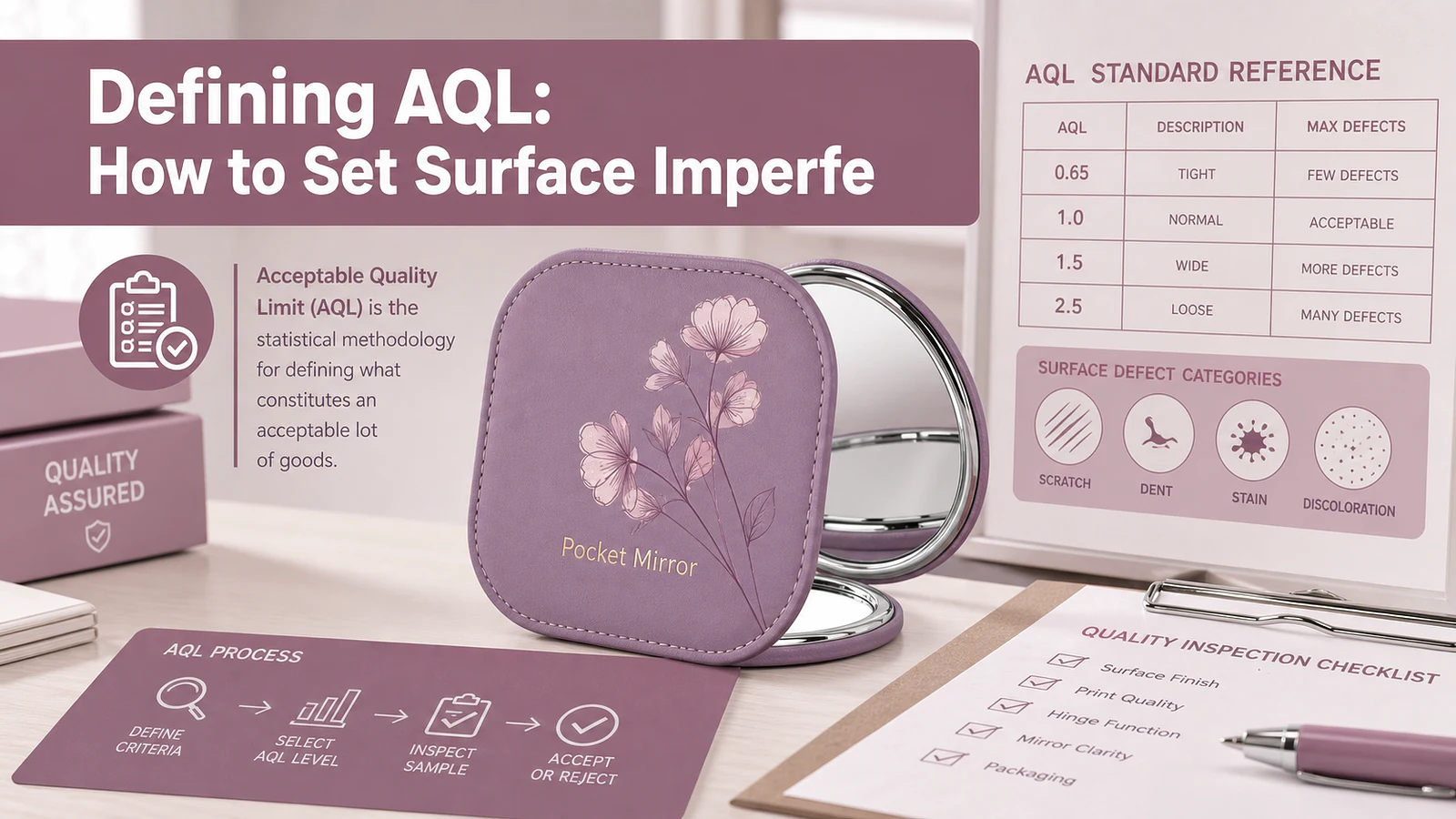
Defining AQL: How to Set Surface Imperfection Standards for Your Supplier

Acceptable Quality Limit (AQL) is the statistical methodology for defining what constitutes an acceptable lot of goods. For mirror manufacturing, we typically advise adopting an AQL 2.5/4.0 standard. Under these protocols, critical defects (like broken glass) are held to a zero-tolerance threshold, while minor aesthetic imperfections (such as microscopic surface scuffs) are permitted only within the established 2.5% to 4.0% failure rate limit. Clear communication of these levels with your factory partner is essential to avoid misunderstandings during final inspection.
| Standard | Application | Benefit for Distributor |
|---|---|---|
| AQL 2.5 | High-End Retail | Minimized returns, high perceived value |
| AQL 4.0 | Promotional/Bulk | Cost-effective production with acceptable yield |
Technical Deep Dive: Hinge Calibration and Battery Life in LED Pocket Mirrors
Reliability is built into the mechanical design. For example, our SM606 model features a robust hinge mechanism validated through testing to endure over 5,000 open/close cycles, ensuring the mirror remains stable at any desired angle. Furthermore, the 300mAh lithium battery is subject to CE and international safety standards to prevent over-heating. We ensure that all battery components are tested for charging capacity and safety discharge cycles before final assembly.
Packaging for the Last Mile: Balancing Cost-Efficiency with Breakage Protection

The transit environment is the most common cause of damage for high-volume mirror orders. We utilize drop-test validated packaging, moving away from simple cardboard toward EPE foam inserts that absorb kinetic energy during shipping. This protective barrier significantly reduces the breakage rates during international sea or air freight, which is critical for maintaining inventory integrity across the last mile of distribution.
Managing Manufacturing Consistency Across Large-Scale Production Runs
Scale should never equate to sacrifice. In our factory, we maintain consistency by batching raw materials from verified suppliers and using automated coating lines that regulate thickness across entire production runs. By locking in variables like temperature, pressure, and cure time, we ensure that the 5,000th unit of a batch matches the first in both color temperature of the LED and clarity of the lens.
Inspection Protocols: The B2B Checklist for Incoming Quality Control
Distributors should implement a standardized incoming quality control (IQC) checklist. This includes checking for lens clarity under controlled light, verifying the functionality of the three-color LED dimming modes, and conducting a 50-cycle hinge test on a randomized sample size of the delivery. By standardizing these checks, you create a feedback loop that holds the production facility accountable for every shipment.
Partnering for Longevity: Factory Compliance and Transparent Reporting
Transparency is the foundation of a successful long-term B2B partnership. We provide detailed lead time reporting and quality checkpoint documentation to our partners. By adhering to international certifications like CE and ensuring that all electronic components comply with safety regulations, we facilitate a smoother customs clearance and distribution process for our partners.
Q: What is the benefit of AQL 2.5 for wholesale mirrors?
A: AQL 2.5 allows for a tighter limit on defects, ensuring that the vast majority of your inventory meets high aesthetic standards suitable for premium retail environments.
Q: Why use ABS+PC material for casings?
A: ABS+PC offers superior impact resistance compared to standard plastics, protecting the internal components and glass lens from damage during shipping and daily usage.
Q: How do you ensure the longevity of the hinge?
A: We conduct rigorous hinge calibration testing to guarantee that the mechanism maintains its tension and integrity for over 5,000 cycles.
Q: Are your batteries safety certified?
A: Yes, all 300mAh lithium batteries used in our LED units are tested to meet international safety standards for energy storage and thermal stability.
Q: Can you accommodate custom branding requirements?
A: We offer various customization options, from precise pad printing to laser engraving, ensuring brand consistency while maintaining the structural finish of the mirror casing.
Download the Pocket Mirror Quality Inspection Template or Request a Batch Sample for Testing.


