Nederlands
 Deutsch
 Español
  Français
 Русский
The B2B Procurement Guide: Specifying Commercial Bathroom Mirrors for Luxury Hotel Projects
Procuring architectural glass for high-end hospitality developments requires balancing aesthetic ambition with rigorous structural performance. Unlike residential fixtures, commercial bathroom mirrors in luxury hotels must withstand high-humidity environments, frequent cleaning cycles, and continuous guest usage. This guide provides hospitality procurement managers, architects, and interior designers with the technical benchmarks necessary to specify premium mirrors that prevent premature deterioration and ensure guest safety.
1. Preventing Silvering Deterioration in High-Humidity Environments
The primary failure point of mirrors in luxury hotel bathrooms is black-edge corrosion, caused by moisture penetrating the reflective silver backing. Traditional manufacturing utilizes a copper layer to protect the silvering, but this copper oxidizes rapidly when exposed to steam and cleaning chemicals.
To guarantee long-term durability, specifications must demand a copper-free silvering process. Our factory engineering department subjects every batch of copper-free glass to ASTM B117 salt spray testing for a minimum of 480 hours. This test simulates years of exposure in humid vanity zones, proving that modern copper-free chemical backings offer up to three times more corrosion resistance than industry-standard mirrors. When requesting quotes, procurement officers should insist on certified test reports verifying this environmental resilience.
2. Selecting the Ideal Mirror Construction and Shape
Modern luxury hospitality projects frequently move beyond standard rectangular shapes to establish distinct brand identities. Whether your design requires a minimalist frameless bathroom mirror or a bold framed bathroom mirror, specifying the correct glass thickness is crucial.
Architects specifying curved geometries such as an arched bathroom mirror or an oval bathroom mirror must ensure the edges are precision-polished to prevent micro-fractures during installation. For standard commercial vanities, a 6mm architectural-grade glass thickness is highly recommended to eliminate the visual distortion (the "funhouse" warping effect) commonly seen in thinner 4mm residential alternatives.
3. Electrical and Smart Technology Requirements for LED Mirrors
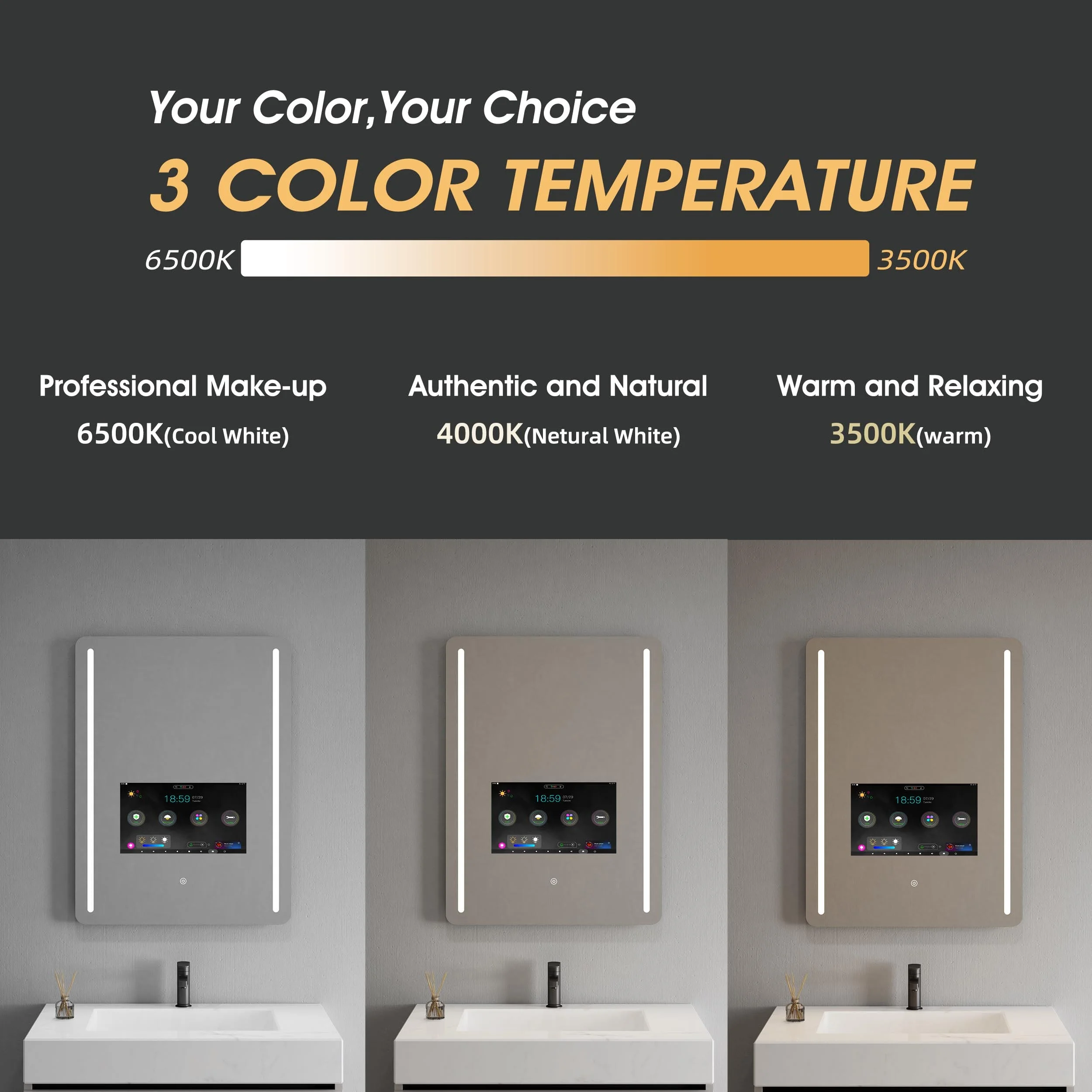
Integrated illumination has transitioned from a premium upgrade to a baseline expectation in luxury hospitality. Implementing an advanced bathroom mirror with smart features requires precise coordination between the electrical subcontractor and the mirror manufacturer. Technical submittals must detail the integration of integrated defogging pads, commercial-grade LED drivers, and the placement of hardwired junctions.
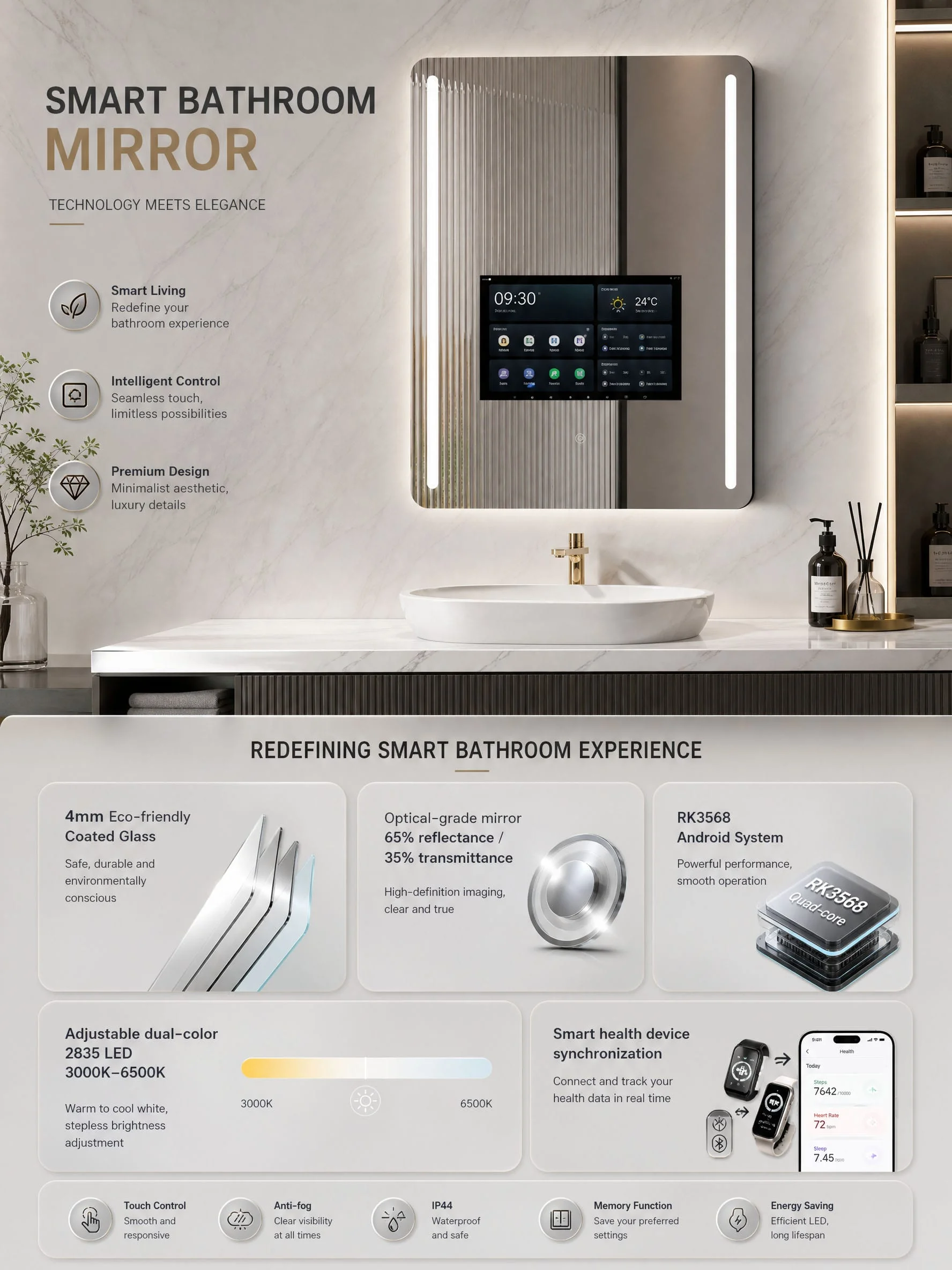
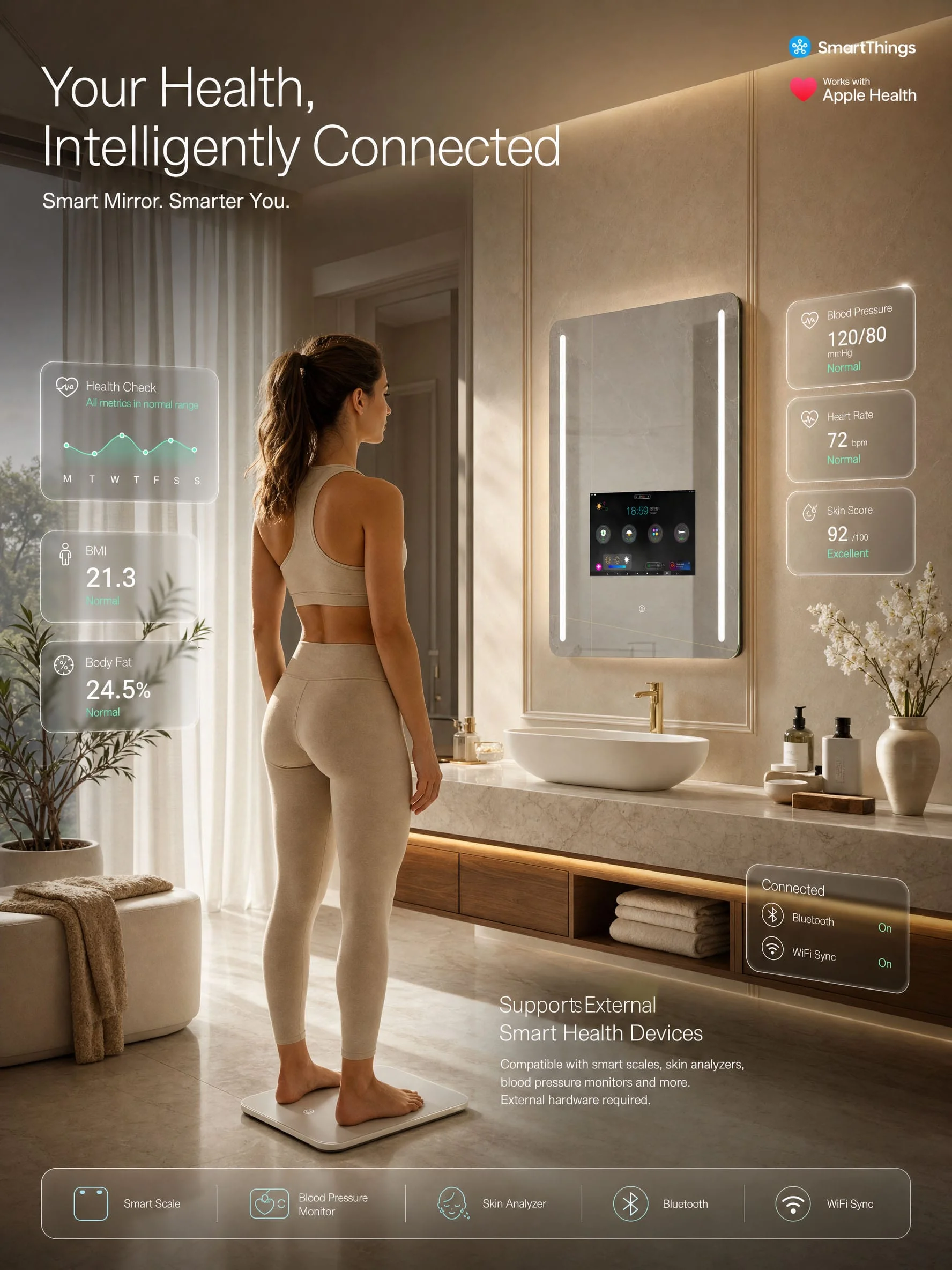
The electronic components must be housed in a dustproof, moisture-resistant chassis (IP44 rating or higher) to protect the internal wiring from condensation. In high-end suites, integrating smart interfaces or interactive features—such as an ai tv bathroom mirror—adds a layer of functional luxury that appeals to modern business travelers. Ensure all LED components feature a high Color Rendering Index (CRI >90) to deliver accurate skin tone rendering at the vanity.
4. Comparing Commercial Mirror Specifications
To assist procurement managers in evaluating different architectural mirror options, the table below highlights the critical structural differences between standard residential glass and high-performance commercial alternatives.
| Specification Metric | Residential Grade Mirror | Commercial / Luxury Hotel Grade |
|---|---|---|
| Glass Thickness | 3mm to 4mm | 5mm to 6mm (architectural float glass) |
| Silvering Chemistry | Copper-based backing | 99% Copper-free protective backing |
| Corrosion Resistance | 120 hours salt spray (ASTM B117) | 480+ hours salt spray (ASTM B117) |
| Mounting System | Standard brackets or adhesive | Heavy-duty french cleats with anti-theft locks |
| Compliance Standards | None or basic CE | UL/ETL listed, ADA depth compliant (< 4 inches) |
5. Safety Compliance and Structural Mounting Systems
In high-turnover hospitality environments, mirror mounting systems must prioritize both physical safety and security. Standard adhesive-only mounting is not acceptable for luxury commercial projects due to the risk of structural adhesive failure over time. Architects should specify mechanical French cleat mounting systems constructed from heavy-duty anodized aluminum.
These systems must incorporate integrated anti-theft lock screws, which prevent guests or maintenance crews from accidentally dislodging the mirror from its wall mount. Furthermore, the mounting depth must comply with ADA (Americans with Disabilities Act) guidelines. For mirrors with integrated backlighting or defogging chassis, the overall projection from the wall must not exceed 4 inches (100mm) if mounted within a public corridor or common vanity pathway, ensuring unhindered accessibility.
FAQ
Q: What are the hospitality standards for commercial bathroom mirror backing?
A: Hospitality standards require copper-free silvering coatings that resist chemical oxidation. The backing must undergo rigorous environmental validation, such as ASTM B117 salt spray testing for at least 480 hours, to ensure the mirror edges do not develop black-edge corrosion under humid conditions.
Q: How do you prevent silvering deterioration in high-humidity hotel bathrooms?
A: Prevention begins during the raw material selection phase. By choosing high-purity glass with a copper-free protective coating and sealing the raw glass edges with a specialized protective sealant, manufacturers ensure that ambient moisture cannot compromise the silver reflective layer.
Q: What are the electrical requirements for hardwired luxury LED mirrors?
A: All illuminated mirrors must be equipped with UL or ETL-listed components. The LED drivers, wiring, and optional defogging pads must be housed within a sealed, IP44-rated metal enclosure. Designers must coordinate with site electricians to ensure standard 110V/220V hardwired junction boxes are positioned precisely behind the mirror chassis cutout.
Q: How do hospitality procurement managers calculate commercial mirror lead times?
A: Commercial lead times depend heavily on customization requirements. For standard projects, design and sample approval takes 2-3 weeks, volume manufacturing takes 4-6 weeks, and ocean transit ranges from 3-5 weeks depending on the destination port. Sourcing teams should allow at least 12-14 weeks from initial order placement to on-site delivery.
Q: What mounting systems ensure anti-theft and safety compliance in luxury hotels?
A: The industry standard is an interlocking aluminum French cleat system equipped with bottom-locking security screws. This structural mechanical fastening method distributes the weight of the mirror evenly across the wall studs and prevents the fixture from being lifted or removed without specialized tools.