Nederlands
 Deutsch
 Español
  Français
 Русский
B2B Procurement Guide: Specifying Commercial-Grade Hollywood Vanity Mirrors for Hospitality Projects
Sourcing vanity mirrors for high-end hospitality projects requires a deep understanding of commercial durability, electrical integration, and safety standards. Standard residential options cannot withstand the high-occupancy demands and strict regulatory environment of modern hotels and resorts. This technical guide outlines the engineering specifications, testing protocols, and electrical standards required to specify professional-grade lighting solutions for guestrooms and vanity stations.
1. Engineering Mirror Durability: Glass Silvering & Desilverization Prevention
In high-moisture hospitality environments, standard mirrors are prone to edge corrosion and desilverization. During our factory production processes, we mitigate this risk by utilizing premium 5mm copper-free silver glass, which offers significantly higher resistance to moisture and oxidation than traditional 4mm copper-backed glass. From manufacturing thousands of units, we have found that precision CNC glass-cutting followed by automated edge-sealing is critical to prevent moisture from penetrating the reflective backing layers.
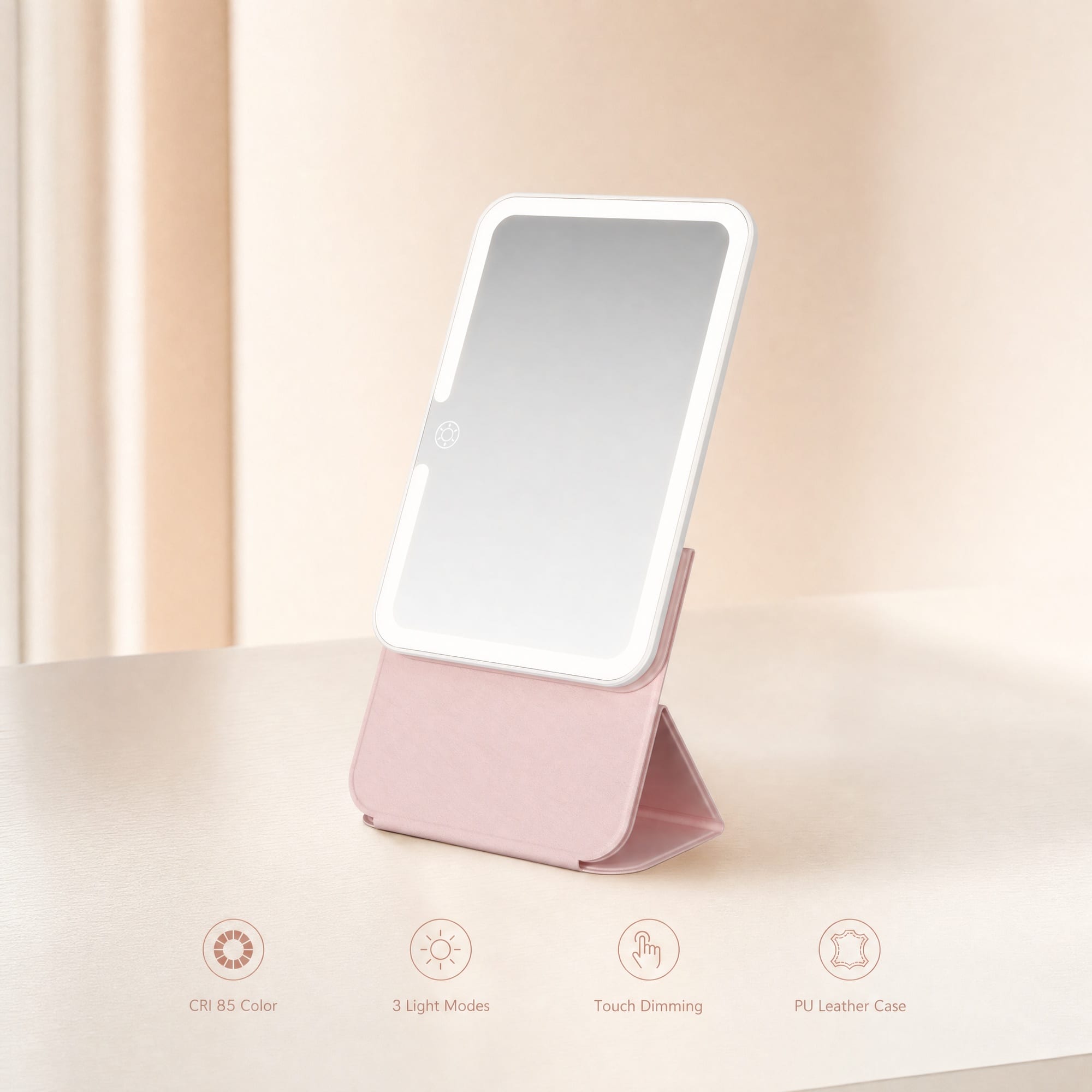
To guarantee long-term performance in guestroom bathrooms, our QA/QC protocol subjects our mirrors to a rigorous 120-hour salt-spray test (ISO 9227) to verify that the backing materials will not degrade over time. Sourcing a Vanity Mirror that utilizes these industrial-grade backing layers prevents premature failure and reduces costly maintenance interventions for hotel operators.
2. Electrical Compliance and North American Standards
Electrical safety and regulatory compliance are non-negotiable for commercial installations. Any illuminated mirror specified for hospitality projects in North America must carry certified proof of compliance with UL 1598 (Luminaires) or UL 2108 (Low Voltage Lighting Systems). These certifications ensure that the electrical driver, wiring harnesses, and sockets can handle continuous duty without risk of overheating or electrical fault.
Furthermore, electronic drivers must comply with FCC Part 15 regulations to prevent electromagnetic interference with hotel Wi-Fi networks and guest electronic devices. In our production line, we pre-wire and test every driver assembly under a continuous load for 4 hours to verify thermal stability before the final product is approved for shipment. For specialized vanity zones, choosing a certified Hollywood Mirror Customization program ensures that all internal electronic components, dimming modules, and wiring runs conform perfectly to local electrical codes.
3. Advanced Optical Performance: CRI, R9, and Color Temperature
Achieving realistic color rendering is essential for guest makeup application and grooming. Commercial-grade LED bulbs must deliver high-fidelity illumination with a Color Rendering Index (CRI) of Ra ≥ 90 and an R9 saturated red value of ≥ 50. Lower-quality consumer bulbs often ignore the R9 metric, resulting in a dull, greenish hue on human skin tones.
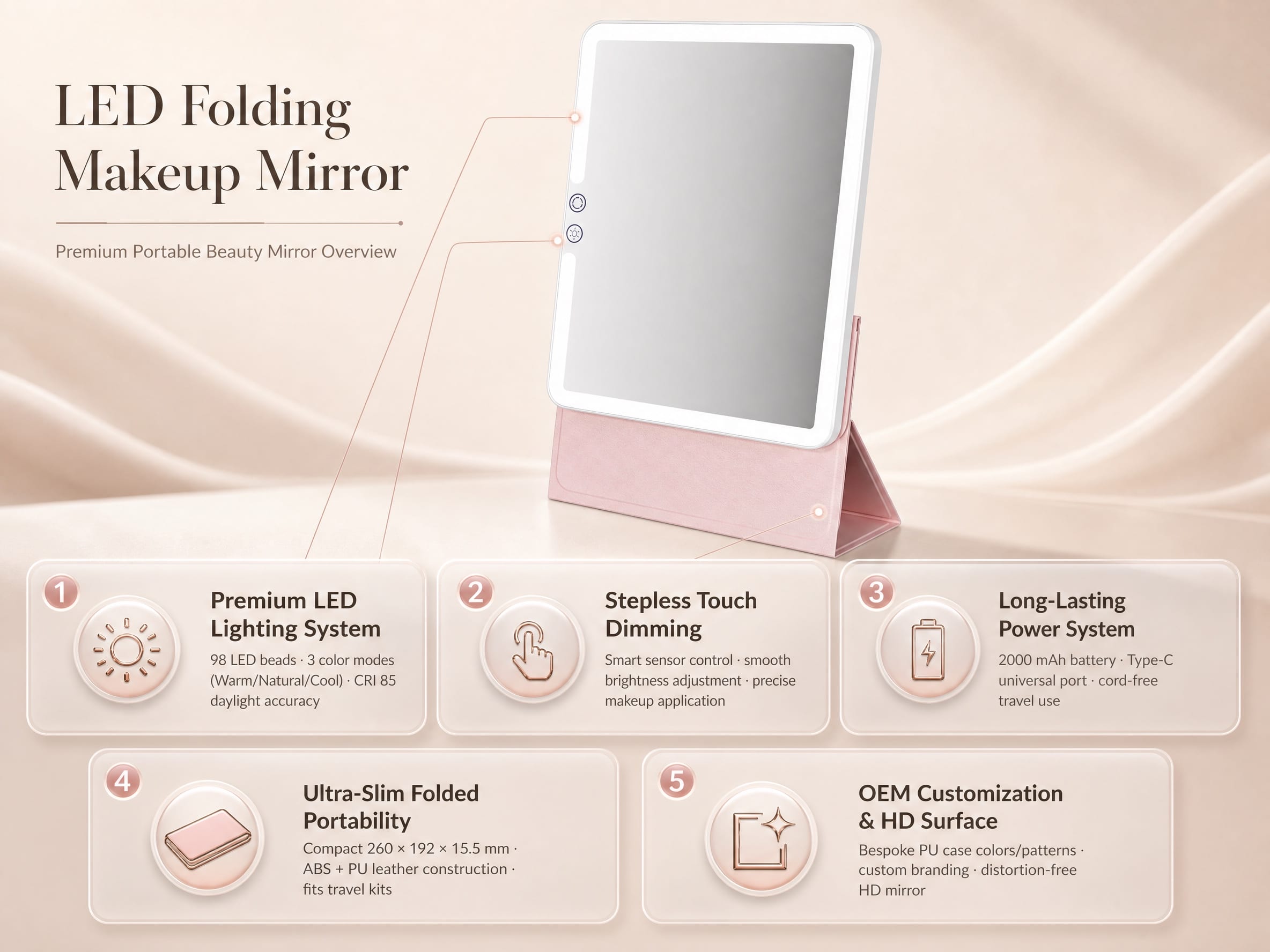
The luminous efficacy should exceed 85 lumens per watt to optimize energy consumption. When engineering our Large Hollywood Mirror models, we specify custom internal LED drivers that support seamless integration with hospitality Property Management Systems (PMS) and industry-standard dimming protocols, including 0-10V and Electronic Low Voltage (ELV) systems, ensuring flicker-free operation across the entire dimming range.
4. Comparing Residential vs. Commercial Vanity Mirrors
Understanding the structural and electrical differences between consumer-grade decorative mirrors and commercial-grade units is key to avoiding installation delays and premature failures during project commissioning. Below is a comparative breakdown of key engineering differences:
| Specification Parameter | Residential Grade | Commercial Grade (Hospitality) |
|---|---|---|
| Glass Type & Backing | 3-4mm standard glass; copper-backed | 5mm premium copper-free silver; CNC-sealed edges |
| Electrical Certifications | Non-certified or component-only certified | UL 1598 / UL 2108 / CE EN 62471 whole-fixture certification |
| Color Metrics (CRI & R9) | CRI < 80; R9 unspecified | CRI ≥ 90; R9 ≥ 50; 3-step MacAdam ellipse consistency |
| Dimming Protocol | Simple inline cord switch (PWM only) | Hardwired ELV / Triac / 0-10V commercial dimming compatible |
| Mounting Hardware | Standard D-rings or wire hanging kits | Z-bar heavy-duty brackets with integrated anti-theft locks |
5. Installation Engineering and ADA Protrusion Limits
For installations in public corridors or ADA-compliant hotel rooms, designers must strictly adhere to the Americans with Disabilities Act (ADA) protrusion limits. Under Section 4.4.1 of the ADA, wall-mounted objects located between 27 inches and 80 inches above the finished floor must not protrude more than 4 inches (102 mm) into the circulation path.
Our engineering team addresses this constraint by building ultra-slim powder-coated aluminum chassis housings with a maximum depth of 1.75 inches. When paired with standard 2-inch low-profile LED globes, the overall depth remains well under the 4-inch threshold. For table-mounted or vanity desk applications, choosing a durable Metal Vanity Makeup Mirror with weighted base-plates prevents tipping and provides a stable, secure fixture for guests.
6. Sourcing & Procurement FAQ
Q: What are the UL certification requirements for commercial vanity mirrors in hospitality guestrooms?
A: Commercial vanity mirrors must carry whole-fixture certification under UL 1598 (for line-voltage luminaires) or UL 2108 (for low-voltage systems). Component-only certification is not sufficient during property code inspections, and whole-fixture certification ensures the complete assembly is safe for commercial use.
Q: How do you calculate the optimal CRI and color temperature for hotel vanity lighting?
A: We recommend specifying a Color Rendering Index (CRI) of Ra ≥ 90 and an R9 (red spectrum value) of ≥ 50. For hospitality guestrooms, a warm-neutral color temperature of 3000K to 3500K is ideal, though multi-Kelvin switchable drivers (providing 2700K/4000K/6000K) are highly requested to accommodate diverse guest preferences.
Q: What is the average lifespan and replacement protocol for commercial-grade LED vanity bulbs?
A: High-quality commercial-grade LED bulbs feature an engineered aluminum heat sink that ensures an L70 lifetime rating of 50,000 hours. The replacement protocol relies on a standardized screw-in base (such as E12 or E26) allowing field maintenance teams to quickly swap bulbs without replacing the entire mirror fixture.
Q: How do IP ratings differ for vanity mirrors installed in guestroom bathrooms versus makeup vanity stations?
A: Mirrors installed directly above guestroom sinks require an IP44 rating to ensure protection against moisture spray and steam. For makeup vanity desks located in dry bedroom areas, a standard IP20 rating is acceptable, though dust-resistant chassis designs are still recommended to protect internal drivers.
Q: What are the mounting and hardwiring specifications for ADA-compliant commercial vanity mirrors?
A: ADA compliance requires that wall-mounted fixtures installed between 27 and 80 inches above the floor protrude no more than 4 inches into the room. Mirror back-housings should feature dedicated knockouts for direct connection to a standard 120V junction box, secured with structural heavy-duty Z-bars to prevent accidental displacement.