Nederlands
 Deutsch
 Español
  Français
 Русский
How to Choose a Smart Bathroom Mirror Manufacturer for Premium Residential Developments
Integrating high-end digital features into modern multi-family and premium residential developments requires a rigorous approach to hardware procurement. Smart mirrors have transitioned from luxury novelties to essential smart home fixtures, demanding careful evaluation of prospective manufacturing partners. This guide outlines the technical, architectural, and supply-chain criteria developers must analyze to secure reliable, commercial-grade smart mirrors that align with sophisticated project schedules.
1. Hardware and Software Integration Capabilities
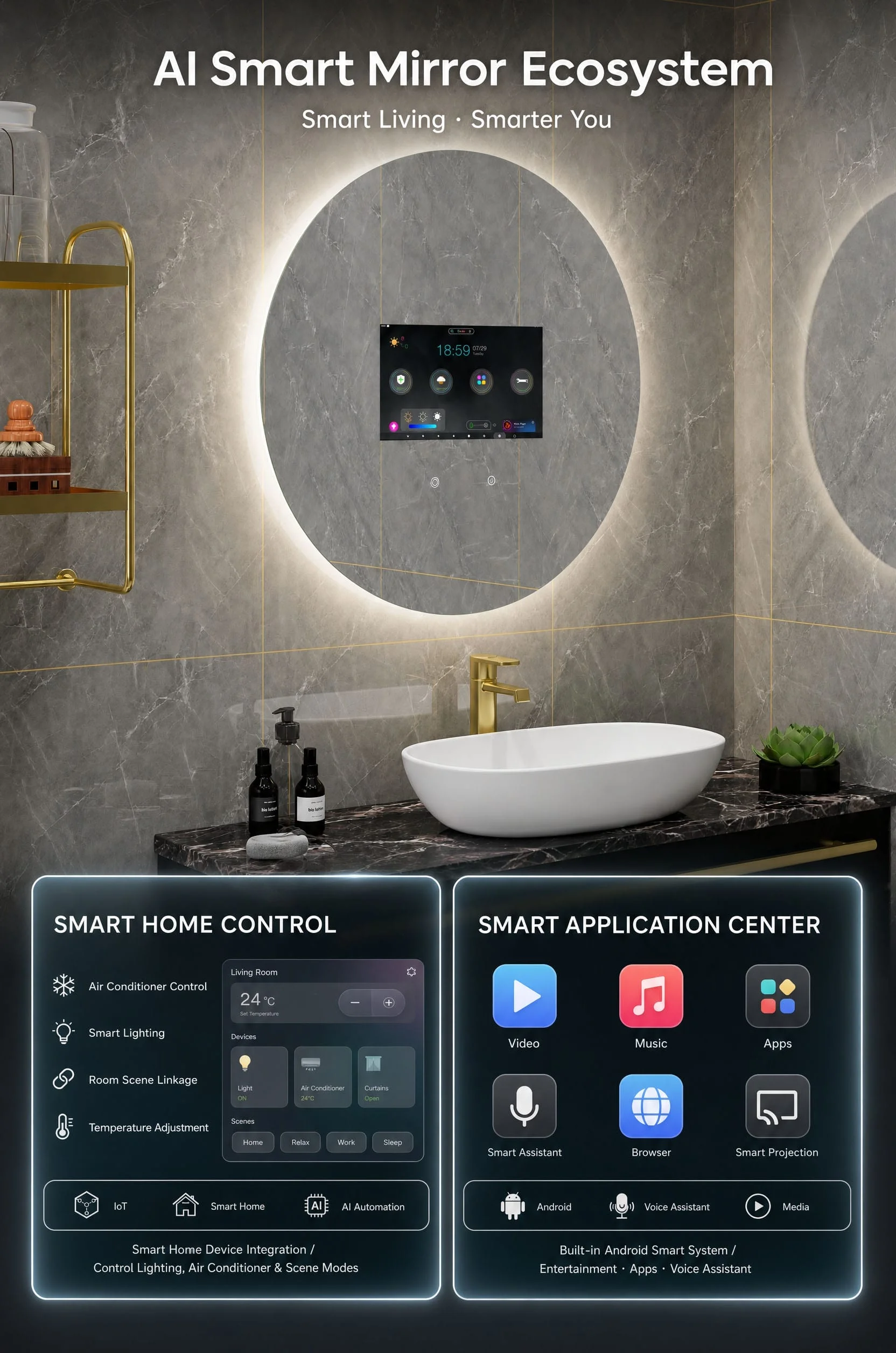
Premium developments rely on seamless ecosystem connectivity, meaning a smart mirror cannot operate as an isolated digital island. Developers must partner with a manufacturer capable of engineering advanced hardware-software interfaces that communicate with centralized building management systems (BMS) and smart home automation hubs like Control4, Crestron, or Savant. Selecting an advanced Ai Tv Bathroom Mirror platform ensures the unit features open APIs, RS485 serial ports, or reliable Wi-Fi/Zigbee modules.
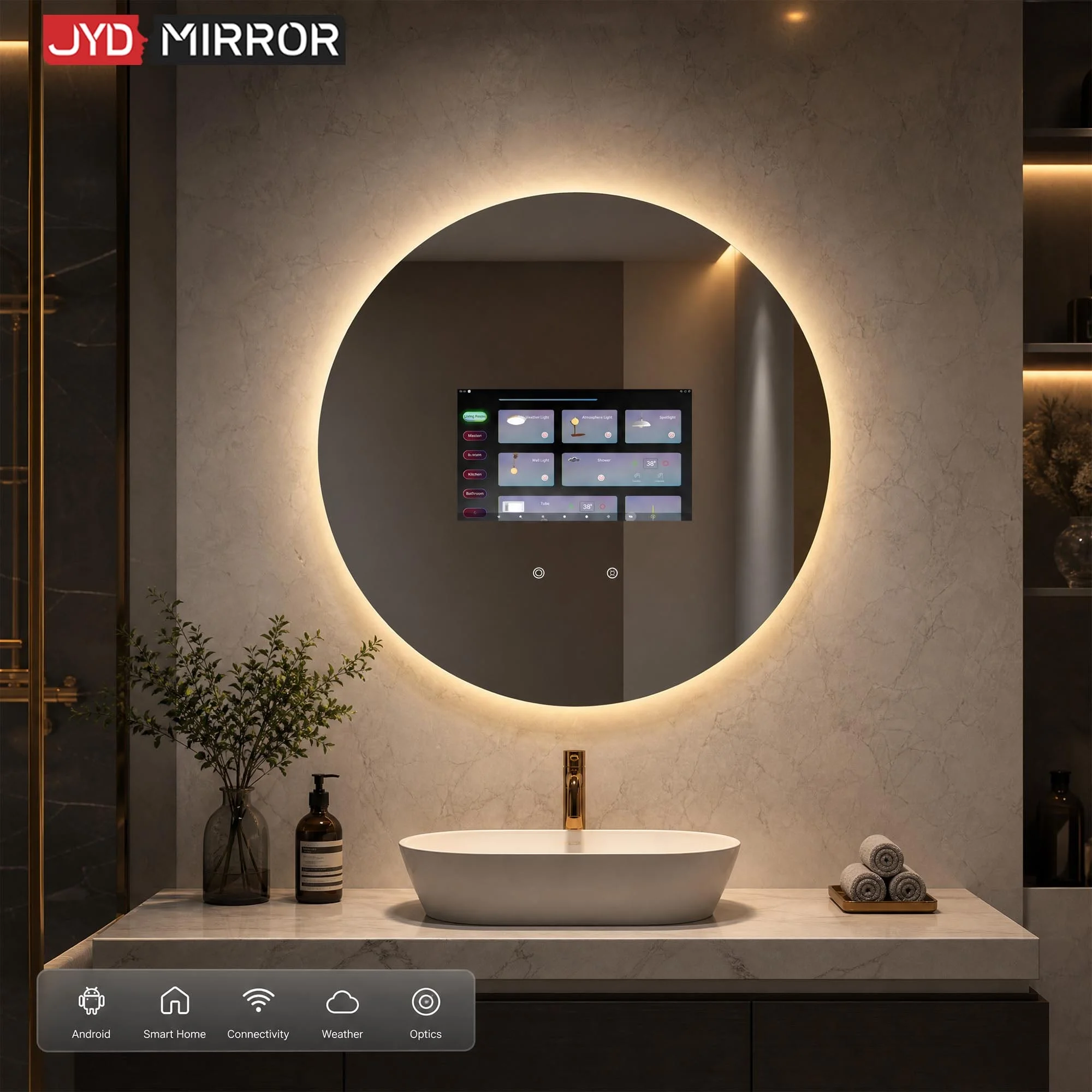
Beyond communication protocols, physical integration engineering must be planned early. True premium installations utilize recessed mounting to keep the glass flush with the wall finish. The manufacturer must supply precise CAD files, specify dedicated low-voltage or high-voltage conduit entry points, and design efficient cooling channels to dissipate heat generated by internal displays and power drivers within closed wall cavities.
2. Component Lifespan and Glass Specifications
Residential developers cannot risk high failure rates and subsequent warranty callbacks from sub-standard retail-grade components. Commercial-grade smart mirrors are engineered for continuous operation, utilizing premium optical glass with advanced multi-layer silvering. High-quality mirrors specify copper-free silver glass with a minimum thickness of 5mm to prevent edge corrosion, coupled with an integrated anti-shatter safety backing.
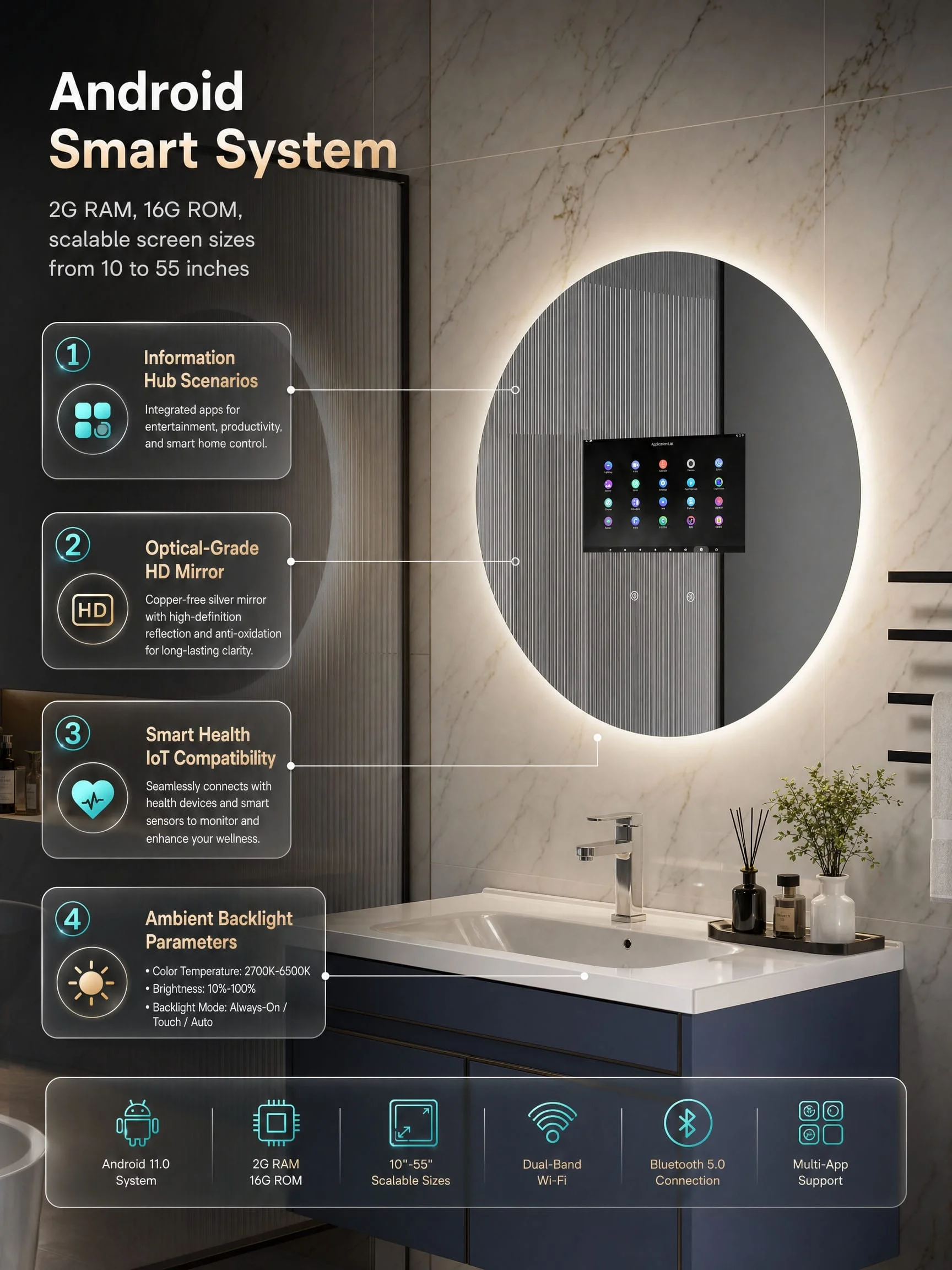
The electronic components dictate the actual lifespan of the fixture. Commercial displays must utilize high-brightness panels with a minimum rating of 30,000 to 50,000 operating hours, backed by industrial-grade LED driver chips and solid-state capacitors. Unlike consumer-grade electronics that degrade quickly in high-humidity zones, commercial assemblies employ potted power supplies and sealed control boards to maintain system integrity.
3. Moisture Protection and Regulatory Compliance
The master bathroom is a high-moisture environment that presents severe operational risks for complex electronics. When procuring a high-performance Bathroom Mirror, verify that the manufacturer designs and tests enclosures to meet strict IP44 or IP54 ingress protection ratings. This sealing prevents steam, direct water splashes, and condensation from short-circuiting internal LED drivers, touch sensors, or display panels.
Furthermore, developers must demand recognized testing certifications to pass local building inspections. Any mirror installed in a commercial or multi-family residential project must carry valid UL, ETL, CE, or FCC marks. Ensure the manufacturer can provide official test reports from third-party laboratories verifying compliance with electrical safety standards, electromagnetic interference rules, and damp-location safety protocols.
4. Comparing Commercial vs. Retail Smart Mirror Manufacturers
Understanding the operational differences between consumer-grade retail mirrors and heavy-duty commercial manufacturing partners prevents project delays and post-handover failures. The table below outlines the core differences critical for procurement teams:
| Metric / Feature | Commercial Sourced Manufacturers | Retail-Grade Suppliers |
|---|---|---|
| Glass Standard | 5mm-6mm copper-free, double-coated silver glass with shatterproof film | 3mm-4mm standard glass, susceptible to oxidation and edge blackening |
| Smart Home Control | Open API, RS485, Wi-Fi, Zigbee integration for BMS, Crestron, Control4 | Stand-alone Bluetooth or generic mobile apps with no external integration |
| Ingress Protection | IP44 / IP54 certified enclosures with potted electronics | IP20 or unrated back enclosures, vulnerable to steam damage |
| Lifespan (MTBF) | Up to 50,000 hours for displays and drivers | 10,000 to 15,000 hours for budget consumer electronics |
| Project Scalability | Custom dimensions, bespoke frame finishes, and modular servicing | Fixed retail stock dimensions with limited customization potential |
5. Customization, Scale, and Supply-Chain Management
Large-scale residential developments rarely utilize standard, off-the-shelf dimensions. High-end developments typically require tailored engineering, such as bespoke Bathroom Mirror Customization to fit specific vanity layouts, integrated architectural lighting, or custom framing finishes. The chosen manufacturer must possess the machinery and engineering staff to scale production from a few dozen penthouse units to hundreds of standard apartments without compromising quality control.
Furthermore, timeline management is crucial for developer profitability. Look for a manufacturing partner with a proven track record of shipping high-volume orders securely. They should offer structured lead times (typically 30 to 45 days for custom production runs), robust ocean-worthy packaging designs to prevent breakage, and localized field support or clear warranty terms that protect the development from installation defects and transit damage.
6. Frequently Asked Questions
Q: What are the integration requirements for smart mirrors in smart home automation systems?
A: Commercial smart mirrors require open APIs, local Wi-Fi, Bluetooth, or wired connections (such as RS485 or Ethernet) to communicate with centralized hubs. This enables integrated control of lighting, audio, and display settings through systems like Control4 or Crestron.
Q: How do smart mirror manufacturers handle humidity and IP ratings for master bathrooms?
A: Manufacturers build sealed enclosures using IP44 or IP54-rated gaskets, waterproof backing plates, and potted electrical boards to ensure condensation and water spray cannot penetrate the sensitive display and control electronics.
Q: What is the typical lead time for custom-sized smart mirrors in large-scale residential projects?
A: For bulk commercial orders, custom-engineered mirrors typically require 30 to 45 days for manufacturing and testing, plus international transit time. Planning should begin during the early interior design and MEP drawing stages.
Q: How do commercial smart mirrors differ from retail models in terms of component lifespan?
A: Commercial models feature heavy-duty 5mm-6mm copper-free glass and industrial-grade LED driver chips with lifespans up to 50,000 hours, whereas retail models often use cheaper 3mm glass and low-cost consumer components that wear out within 10,000 hours.
Q: What warranty and field-support terms should a developer look for in a smart mirror supplier?
A: Developers should prioritize manufacturers that offer a comprehensive 2 to 5-year warranty on electronic components and glass, provide replacement parts, and offer on-site or remote engineering support during the installation phase.