Nederlands
 Deutsch
 Español
  Français
 Русский
How a Commercial Illuminated Bathroom Mirror Manufacturer Designs for High-Traffic Environments
Designing illuminated mirrors for high-traffic commercial environments requires a complete shift from residential design paradigms. In public restrooms, airports, hotels, and retail hubs, mirrors must withstand constant operation, high humidity, aggressive cleaning protocols, and potential physical impact. This technical analysis explores the engineering decisions, material science, and structural testing required to manufacture commercial-grade illuminated systems that deliver long-term reliability and low cost of ownership.
Structural Chassis Engineering and FEA Load Testing
Unlike residential mirrors that often rely on simple adhesive backing or lightweight wire hangers, commercial mirrors require a heavy-duty, integrated chassis. Manufacturers utilize structural Finite Element Analysis (FEA) testing to model the stress distribution on wall-mounting brackets and the chassis under high-load cycles. This ensures the unit remains securely anchored even when subjected to deliberate pulling or external forces in public facilities.
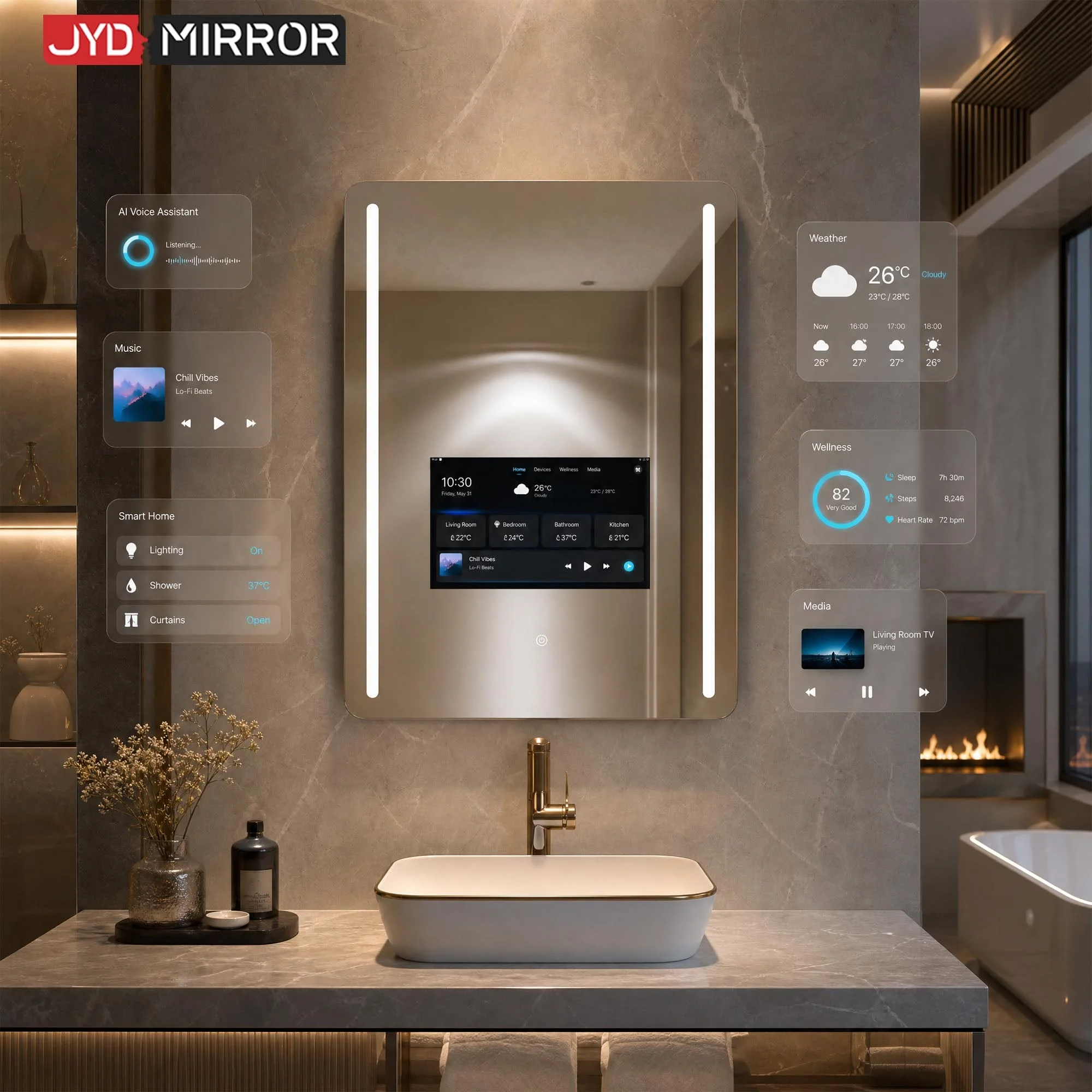
The chassis is typically constructed from powder-coated, corrosion-resistant steel or anodized extruded aluminum. This rigid housing protects the internal electronic components and prevents warping of the glass over time. By distributing the physical load across multiple reinforced anchoring points, the structural integrity of the bathroom mirror assembly is preserved under extreme daily operational stress.
Component-Level Thermal Management for LED Drivers
In high-traffic commercial environments, mirrors often remain illuminated 24/7. This continuous duty cycle generates significant heat within the sealed rear cavities of the chassis, which can prematurely degrade the light emitting diodes and the power supply. Commercial-grade manufacturers prioritize advanced component-level thermal management to prevent thermal runaway.
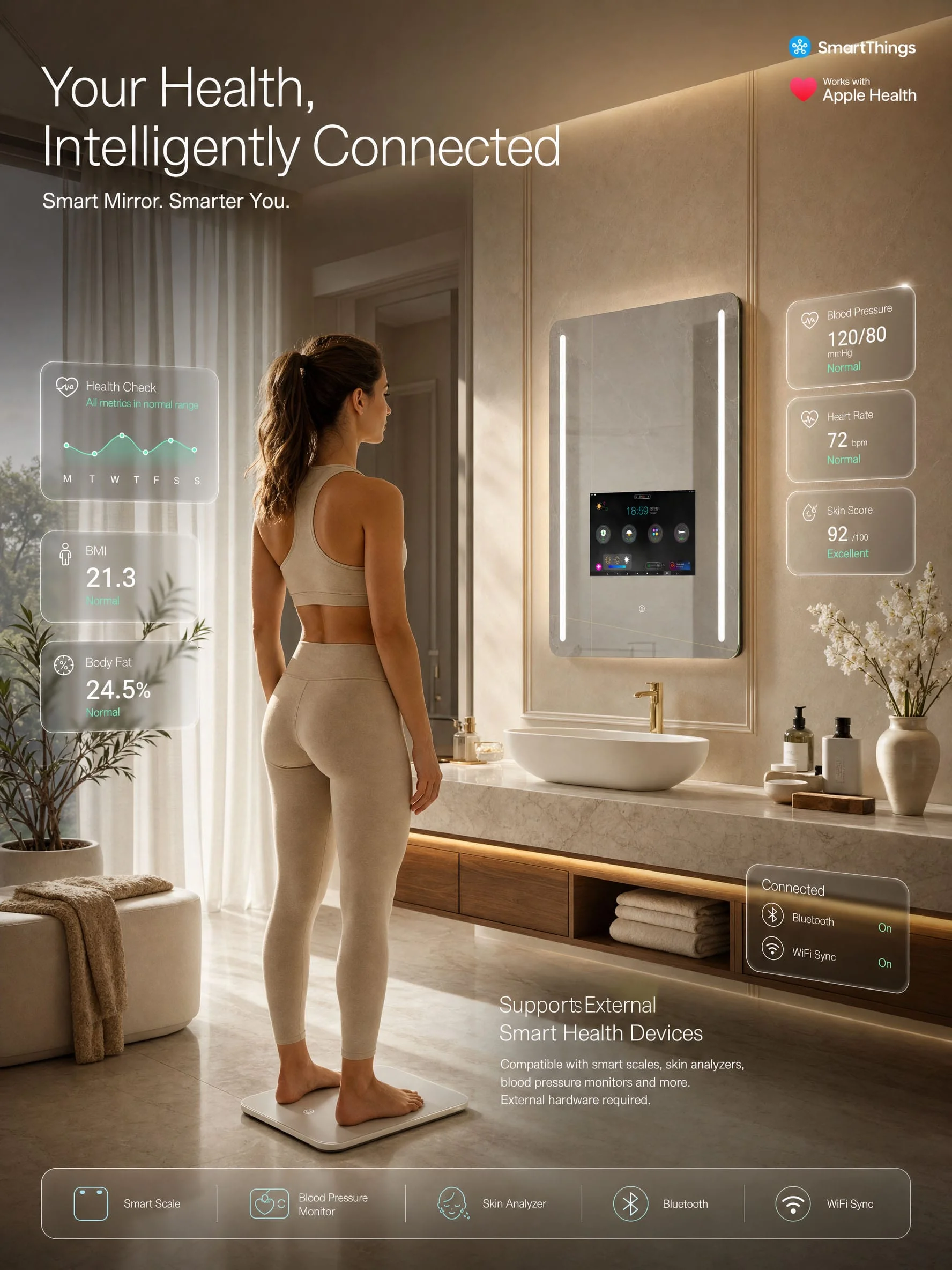
To achieve optimal dissipation, LED drivers are mounted directly to aluminum heat sinks or thermal interface materials that channel heat away from the sensitive circuitry. Additionally, manufacturers specify commercial drivers with high MTBF (Mean Time Between Failures) ratings and built-in over-temperature protection. This ensures the electronic system remains cool and operational, even when housed within a compact bathroom mirror cabinet configuration.
Material Science: Copper-Free Silver Mirror Backing
High humidity and aggressive chemical cleaning agents in public restrooms present a major threat to reflective surfaces, often leading to edge corrosion and black spots (silvering degradation). Standard silver mirrors use copper layers that oxidize rapidly when exposed to moisture and chemicals. To combat this, commercial manufacturers utilize advanced copper-free silver glass with multi-layer protective coatings.
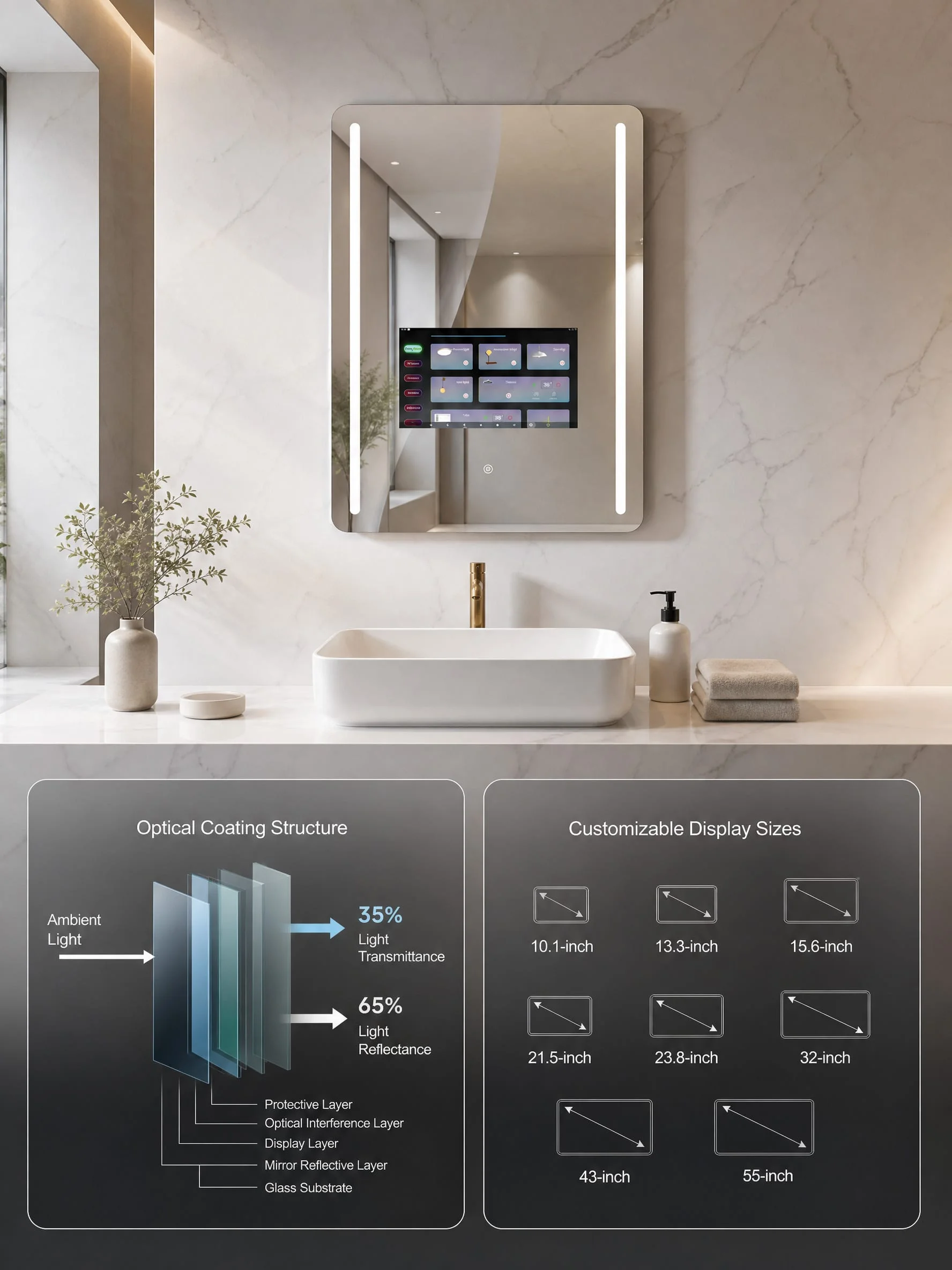
This material science verification guarantees excellent resistance to humidity and chemical corrosion from common industrial glass cleaners. When paired with options like a framed bathroom mirror design, the perimeter edges receive an extra layer of physical and environmental shielding, dramatically extending the operational lifespan of the installation.
Vandal-Resistant Engineering and Safety Integration
Public restrooms are vulnerable to vandalism and accidental impacts. Manufacturers mitigate these risks by integrating safety-backed glass and tamper-proof fasteners. Tempering or laminating the glass ensures that if an impact does occur, the glass breaks into small, harmless fragments held together by a safety film, preventing injury to users.
Furthermore, internal components are secured behind locked or custom-fastened access panels. This level of security is standard across high-performance architectural systems, including customized bathroom mirror customization projects designed for transport terminals, educational institutions, and public venues.
Technical Comparison: Commercial vs. Residential Mirror Construction
To highlight the engineering differences between consumer-grade and heavy-duty commercial mirrors, the table below compares key structural and electrical specifications:
| Engineering Feature | Residential Grade | High-Traffic Commercial Grade |
|---|---|---|
| Chassis Material | Thin plastic or light-gauge aluminum | Heavy-duty powder-coated steel or structural aluminum |
| LED Driver Lifespan | 15,000 - 25,000 hours | 50,000+ hours (Continuous 24/7 rating) |
| Glass Specification | Standard float glass (3mm to 4mm) | 5mm to 6mm copper-free silver with safety backing |
| IP Protection Rating | IP44 (basic splash-proof) | IP44 to IP65 (dust-tight and water-jet resistant) |
| Vandal Resistance | None (standard wall hangers) | Tamper-proof fasteners and impact-tested frames |
Frequently Asked Questions
Q: What IP ratings are required for commercial high-traffic bathroom mirrors?
A: For public restrooms, an IP44 rating is typically the minimum requirement to protect against multi-directional water splashes. However, in environments where high-pressure cleaning systems or heavy steam are present, an IP65-rated mirror chassis is recommended to ensure complete protection against dust ingress and low-pressure water jets.
Q: How do manufacturers prevent vandalism on illuminated mirrors in public restrooms?
A: Manufacturers incorporate impact-resistant safety-backed glass, rigid internal metal supports, and specialized lockable or tamper-proof mounting hardware. These engineering details prevent unauthorized removal, component theft, and minimize injury risks if the glass is subjected to high-force impacts.
Q: What is the average lifespan of LED drivers used in commercial illuminated mirrors?
A: Commercial-grade LED drivers are designed with high-quality capacitors and thermal protection, achieving a rated lifespan of over 50,000 hours of continuous operation. This contrasts significantly with residential-grade power supplies which are only rated for occasional use.
Q: How does chassis construction differ between residential and high-traffic commercial mirrors?
A: Commercial chassis utilize heavy-gauge structural aluminum or powder-coated galvanized steel, featuring integrated thermal ventilation paths and multi-point wall anchors. Residential mirrors usually feature simplified plastic housings or minimal framing meant for lighter loads.
Q: What are the maintenance protocols for commercial-grade defogging mirror systems?
A: Maintenance protocols involve routine checking of the electrical connections, verifying thermostatic switch functionality, and ensuring that moisture seals surrounding the heating element remain intact. Designed for commercial longevity, these defoggers are typically wired to automatic timers or occupancy sensors to reduce wear.