Nederlands
 Deutsch
 Español
  Français
 Русский
Sourcing Bulk Bathroom Mirrors with Lights: A Guide for Commercial Procurement Managers
For commercial procurement managers in the hospitality, multifamily, and commercial development sectors, sourcing lighted mirrors requires balancing aesthetic appeal with long-term durability. Unlike residential products, commercial-grade mirrors must withstand high-humidity environments, constant operation, and rigorous building codes. This guide outlines the essential technical specifications, manufacturing standards, and supply chain logistics required to secure reliable bulk shipments from factory-direct partners.
1. Critical Glass Durability and Anti-Corrosion Standards
The primary point of failure in high-humidity commercial bathrooms is desilvering, which causes unsightly black edges along the perimeter of the glass. To prevent this, procurement managers must specify copper-free silver mirror glass during the sourcing phase. Standard mirrors rely on a copper layer that oxidizes rapidly when exposed to ambient moisture, whereas copper-free formulations utilize advanced protective primers and multi-layered backing paint to seal the reflective silver layer.
When evaluating a manufacturer\'s production line, ensure they employ automated CNC glass cutting and precise edge-polishing equipment. Smoothly polished edges eliminate micro-fractures where moisture can penetrate. For high-end specifications, utilizing a Bathroom Mirror Customization program allows you to define specific sandblasting widths and anti-corrosion edge sealing treatments that double the service life of the glass under humid conditions.
2. LED Driver Reliability and System Integration
A lighted mirror is only as reliable as its electrical components, particularly the LED driver. For commercial building installations, drivers must have a high Mean Time Between Failures (MTBF) of at least 50,000 hours and feature robust heat dissipation designs. Standard retail-grade components overheat easily when enclosed behind a mirror backplate, leading to premature driver failure and costly maintenance cycles.
Modern commercial properties increasingly rely on building automation systems. When sourcing LED mirrors, verify if the factory-installed drivers support integration protocols such as 0-10V, TRIAC, or DALI dimming. Additionally, selecting a premium Bathroom Mirror configuration with high-density, CRI90+ LED binning ensures color consistency across hundreds of guestrooms, avoiding the visual mismatch of varying color temperatures.
3. Evaluating OEM vs. ODM Sourcing Models
Choosing between Original Equipment Manufacturer (OEM) custom designs and Original Design Manufacturer (ODM) standard models represents a key strategic decision for procurement timelines. ODM models utilize pre-tested configurations, offering shorter lead times and lower tooling costs. However, projects demanding unique branding, integrated technology, or unconventional shapes require dedicated OEM development.
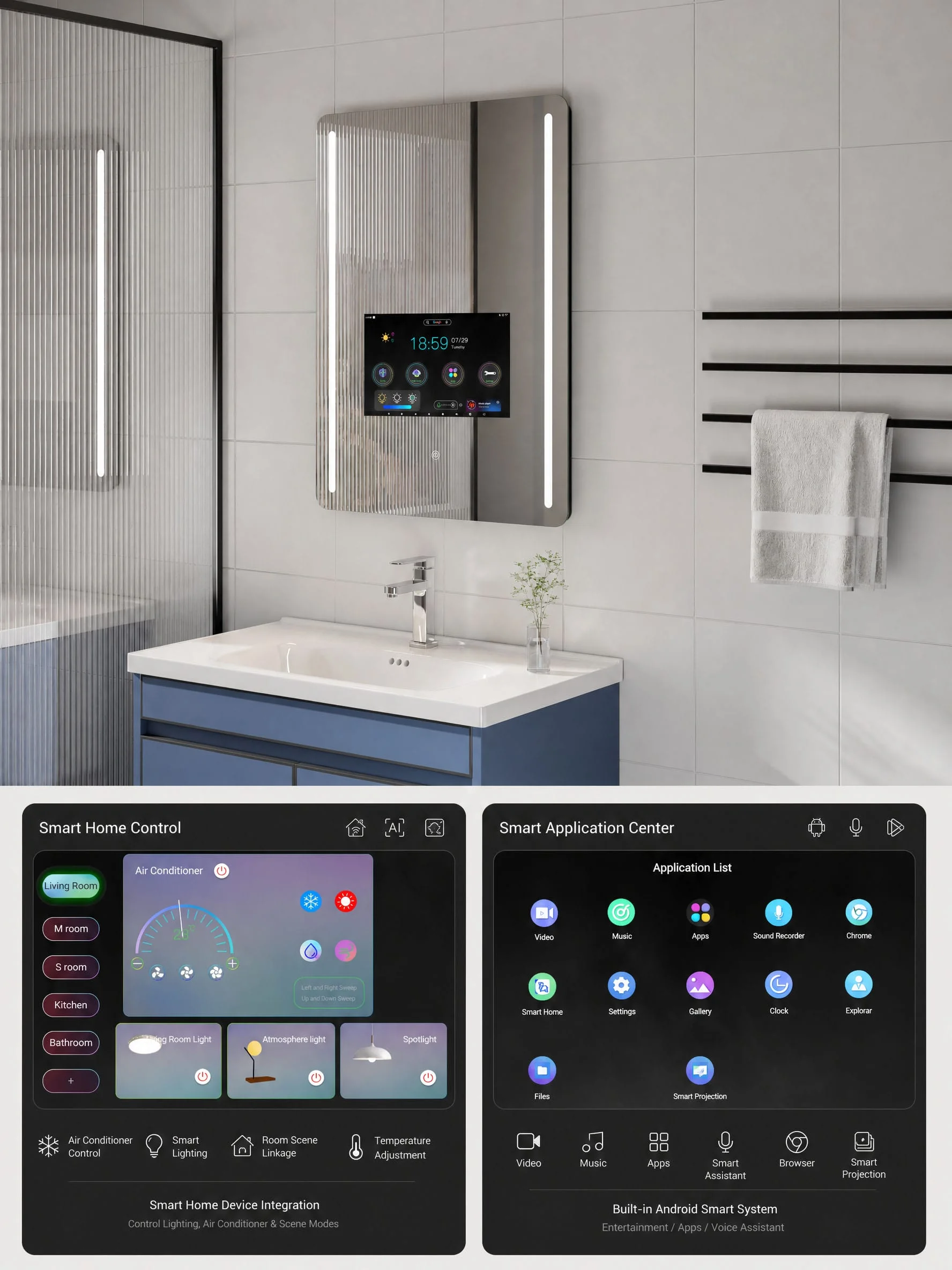
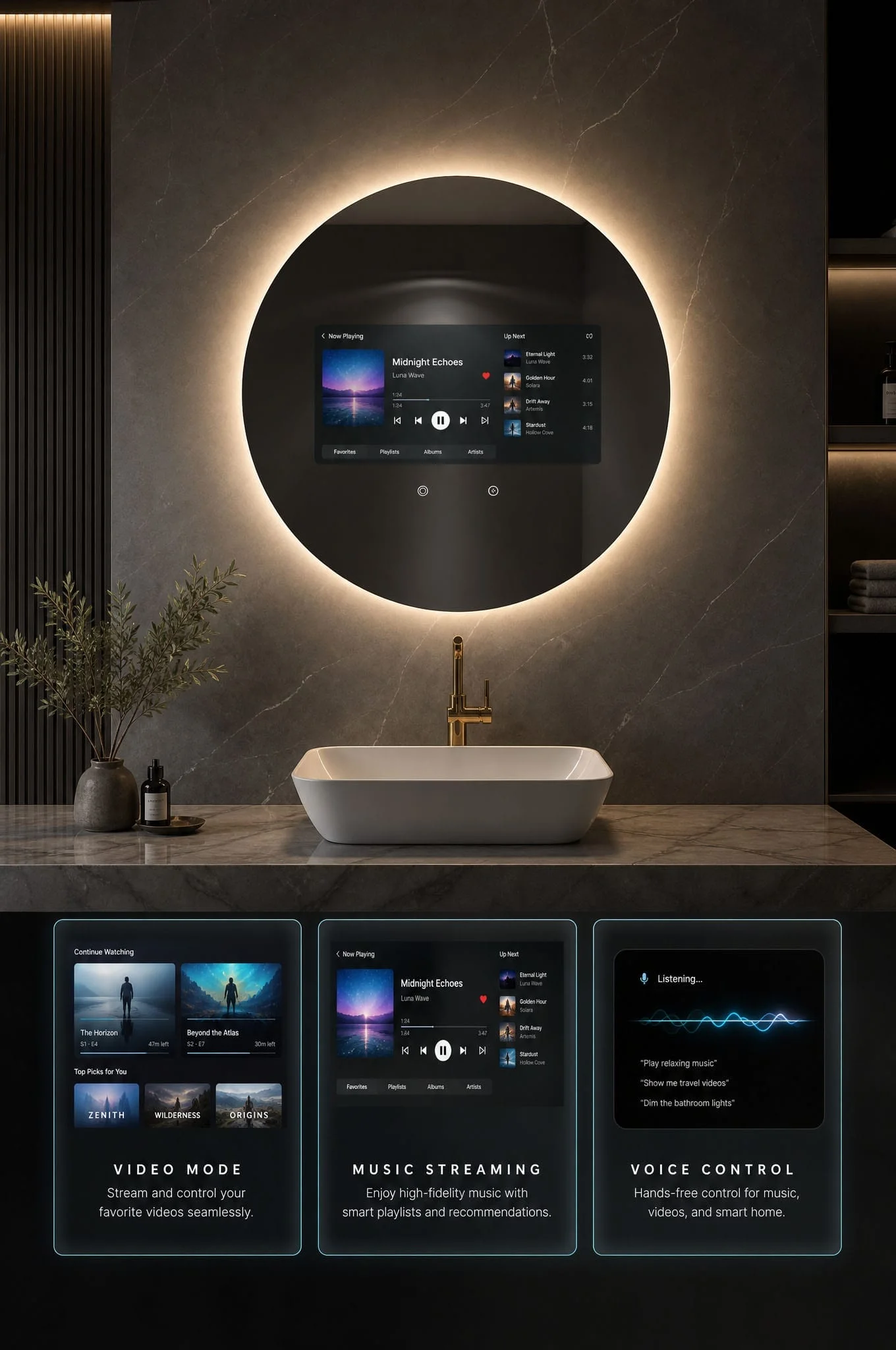
For instance, implementing a smart interface or incorporating a Ai Tv Bathroom Mirror into premium suites necessitates close technical coordination with the factory\'s engineering team. OEM customization requires detailed CAD drawings, prototype approvals, and specialized safety certifications, which typically extends production lead times by 4 to 6 weeks compared to standard off-the-shelf ODM production runs.
4. Comparing Lighted Mirror Specifications
To assist in the technical evaluation process, the table below outlines the core differences between entry-level residential products and high-performance commercial-grade illuminated mirrors.
| Technical Parameter | Standard Residential Mirror | Commercial Project Specification |
|---|---|---|
| Glass Type | Standard Silver Mirror (3-4mm) | 5mm Copper-Free Silver Mirror |
| LED Lifespan & CRI | 20,000 Hours / CRI 80 | 50,000+ Hours / CRI 90+ |
| Waterproofing (Driver/Strips) | IP20 or IP44 (Non-Sealed) | IP65 Waterproof Strip / IP44+ Box |
| Electrical Certification | Basic CE / Non-Certified Components | UL, cUL, ETL, CE Full-Fixture Certification |
| Edge Treatment | Simple Polished Cut | CNC Polished with Anti-Corrosion Sealing |
5. Quality Control, Packaging, and Shipping Logistics
Mitigating damage and defect rates is critical when importing bulk shipments. Procurement teams should enforce strict Acceptable Quality Limit (AQL) standards—typically AQL 1.5 or 2.5—during factory pre-shipment inspections. This process evaluates glass clarity, silvering consistency, LED color uniformness, and touch-sensor responsiveness before the goods leave the factory floor.
Furthermore, because glass is inherently fragile, standard packaging is insufficient for sea or rail freight. Demand drop-tested packaging that meets ISTA 1A or 3A standards, utilizing reinforced high-density polyethylene (HDPE) foam corners, five-layer corrugated outer cartons, and solid wooden crates. Selecting structured frame alternatives, such as a Framed Bathroom Mirror, can also provide extra structural rigidity during handling, lowering overall transit risks and on-site breakage rates during final installation.
Frequently Asked Questions
Q: What are the electrical certification requirements for commercial bathroom mirrors?
A: For North American commercial projects, the entire mirror assembly (not just the individual driver) must carry ETL or UL/cUL certification to comply with building codes and pass electrical inspections. In Europe, CE and RoHS certifications are mandatory, ensuring compliance with strict safety and environmental directives.
Q: How does copper-free silver mirror glass prevent desilvering in high-humidity commercial bathrooms?
A: Copper-free mirrors eliminate the traditional copper layer, which is highly susceptible to oxidation when moisture penetrates the backing paint. By using advanced metal passivation and highly resilient protective coatings, the silver reflective layer is shielded from humidity, eliminating the risk of black-edge corrosion.
Q: What are the lead-time differences between OEM custom lighted mirrors and ODM standard models?
A: Standard ODM models typically have a production lead time of 25 to 35 days since the manufacturing molds, driver configurations, and chassis designs are already established. Fully customized OEM models require CAD drawing approvals, custom CNC cutting setups, prototype testing, and safety certification reviews, which extends lead times to 45 to 60 days.
Q: How do commercial guestroom mirror defect rates (AQL) impact bulk shipping costs?
A: High defect rates found post-delivery lead to replacement shipping costs, project delays, and increased on-site labor fees. By establishing strict pre-shipment inspection parameters (e.g., AQL 1.5), factories are forced to filter out sub-par glass, substandard soldering, or driver failures before loading, ensuring that 100% of the shipped containers contain fully compliant products.
Q: What driver types are required for integrating LED mirrors into commercial building automation systems?
A: To connect mirrors to centralized building automation or smart room controllers, you must specify dimmable drivers that support standard control interfaces such as 0-10V, TRIAC phase dimming, or DALI (Digital Addressable Lighting Interface). These allow the hotel or building system to manage lighting levels, schedules, and power usage automatically.