 Nederlands
 Deutsch
 Español
  Français
 Русский
How a Custom Backlit Bathroom Mirror Manufacturer Solves Commercial Lighting Challenges
Designing and installing backlit mirrors in commercial environments like luxury hotels, multi-family high-rises, and wellness centers requires more than just high-quality glass. Commercial spaces present complex architectural, electrical, and environmental demands that off-the-shelf residential products simply cannot meet. Professional manufacturers approach these challenges with dedicated engineering solutions, ensuring long-term durability, strict safety compliance, and flawless visual performance.
Eliminating Hotspots and Shadow Gaps with Advanced Diffusion
In high-end commercial interiors, visual consistency is paramount. Traditional LED strip applications often suffer from visible hotspots (the individual dots of the light source reflecting in the glass) or dark shadow gaps at the corners where linear runs meet.
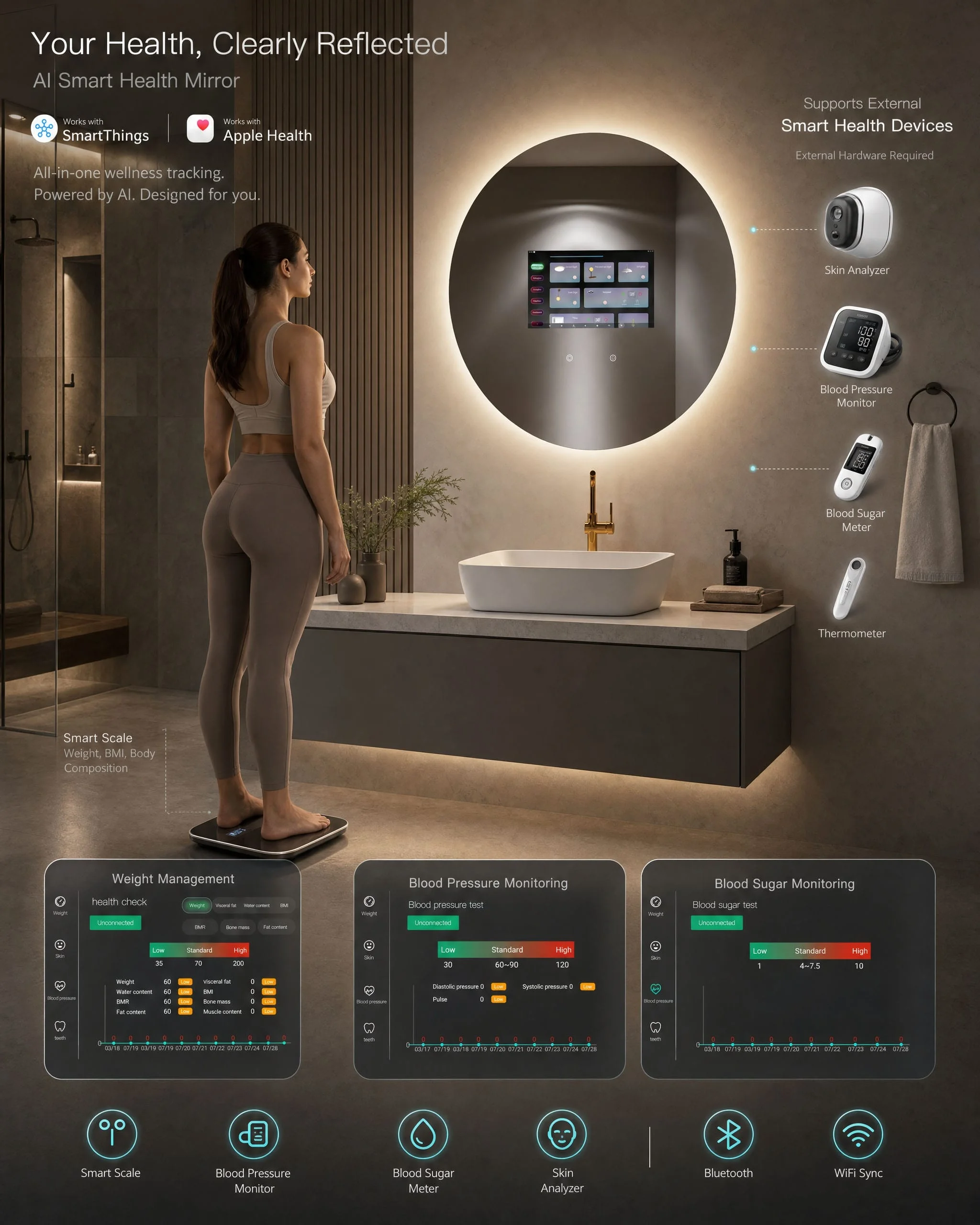
To solve this, custom manufacturers design integrated acrylic diffusers and engineered aluminum extrusions. By calculating the precise distance between the high-density LED diodes and the sandblasted frosted area of the mirror, engineers ensure a completely uniform, continuous glow. This custom engineering eliminates dark corners and uneven light distribution, providing perfect illumination for makeup application and grooming in vanity spaces.
Overcoming Voltage Drop in Large-Scale Commercial Layouts
Voltage drop is a critical issue in commercial installations where remote drivers are located far from the actual mirrors, or where long, daisy-chained runs of LED lighting are required. This drop causes the mirrors furthest from the power source to dim, creating an inconsistent aesthetic across a hotel corridor or public restroom facility.
Manufacturers overcome this by utilizing constant-current driver configurations and running localized thick-gauge wiring harnesses inside the mirror chassis. When designing a custom Bathroom Mirror Customization solution, engineering teams run photometric and voltage drop simulations beforehand. This allows them to specify the correct output power and driver placement, ensuring every single mirror in a multi-story project emits the exact same lux levels.
Integrating with Complex Commercial Dimming Systems
Commercial buildings rely on centralized automation networks to manage energy consumption and set environmental scenes. These systems frequently use advanced protocols such as 0-10V analog dimming, DALI (Digital Addressable Lighting Interface), or DMX control.
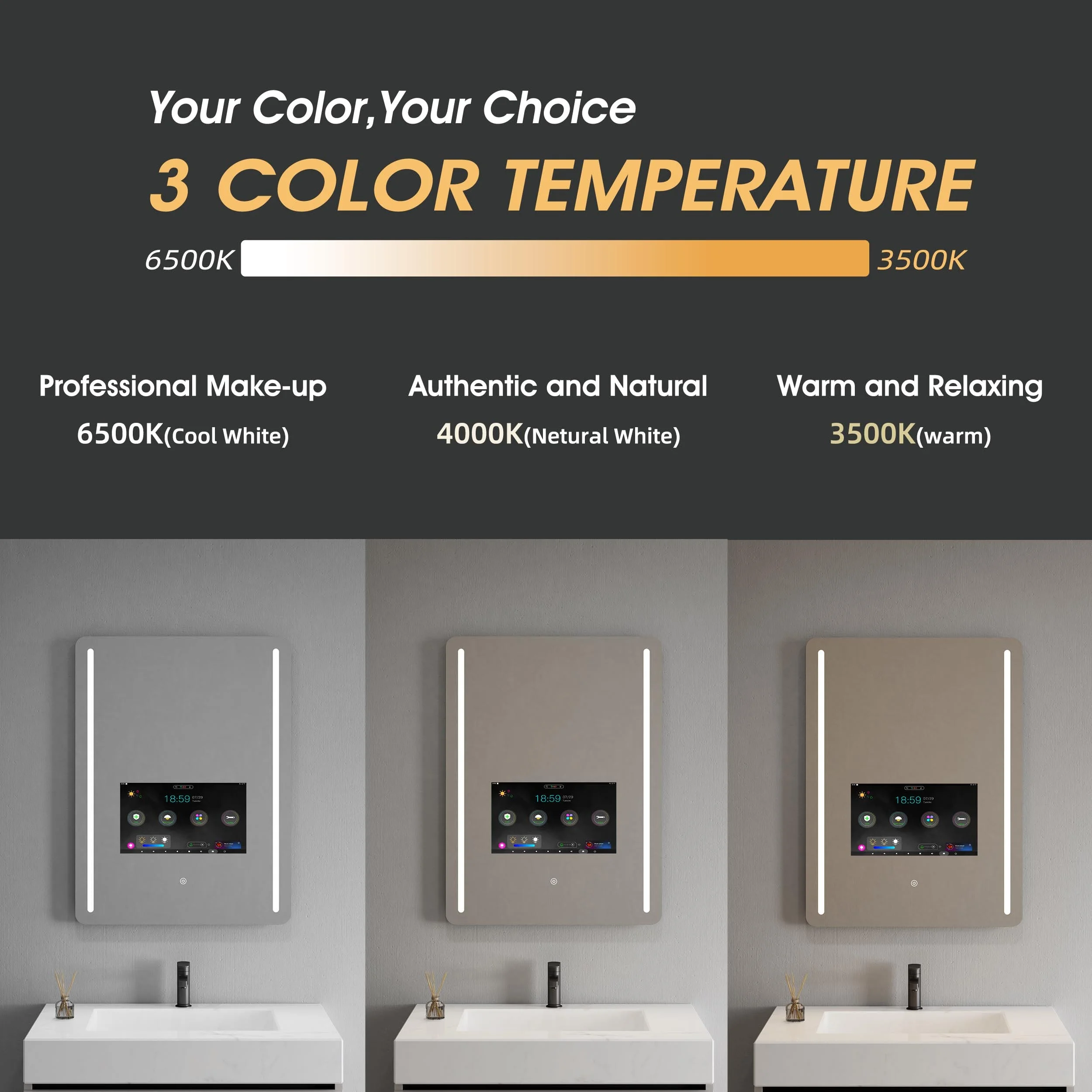
A generic LED mirror will not communicate correctly with these systems, leading to flickering, buzzing, or complete driver failure. Experienced manufacturers design custom mirror assemblies with certified multi-protocol drivers. This ensures seamless integration with hotel building management systems (BMS), allowing facility managers to dim vanity mirrors in synchronization with the rest of the room lighting.
Ensuring Thermal Management and High-Humidity Durability
Commercial bathrooms are high-moisture environments subject to near-constant use. Without proper engineering, humidity can penetrate the mirror backing, causing silver silver oxidation (black spots) and premature LED degradation. Additionally, heat trapped behind a flush-mounted mirror can quickly burn out standard LED strips.
To combat this, commercial-grade Bathroom Mirror designs incorporate closed-cell anodized aluminum frames that act as heavy-duty heat sinks. Electrical components are sealed inside IP44 or IP65 rated junction boxes. This protects delicate drivers, wiring, and optional defogger pads from steam and splash, dramatically extending the operational lifespan of the product in high-occupancy hospitality spaces.
CRI and Color Consistency Across Large Multi-Family Projects
In high-end residential and hospitality developments, color rendering is non-negotiable. Poor color rendering makes skin tones look pale or unnatural. Furthermore, slight differences in color temperature (CCT) between adjacent mirrors can disrupt the cohesive design of a shared vanity area.
Manufacturers resolve this by utilizing high-CRI (Color Rendering Index) LED chips, typically reaching CRI >90 with an R9 value greater than 50. By sourcing components from single-bin manufacturing runs, they guarantee color temperature consistency within a 3-step MacAdam ellipse. This ensures that every mirror delivered to a project maintains identical light quality and color warmth.
Technical Comparison: Commercial vs. Residential Backlit Mirrors
To help procurement managers understand the structural and performance differences, the table below compares standard residential products with customized commercial-grade solutions:
| Feature / Parameter | Residential Grade (Retail) | Commercial Grade (Manufacturer Custom) |
|---|---|---|
| Dimming Compatibility | Triac dimming only (often prone to flickering) | 0-10V, DALI, DMX, Lutron, and BMS integration |
| Color Rendering (CRI) | CRI 80 (typical) | CRI 90+ / R9 >50 (single-bin CCT control) |
| IP Rating & Safety | IP20 or unrated; minimal moisture protection | IP44 to IP65 rated sealed chassis, UL/CE listed |
| Chassis Material | Plastic or thin sheet metal backing | Heavy-duty anodized aluminum acts as heat sink |
| Glass Specification | Standard float glass (prone to corrosion) | 5mm copper-free, shatter-proof tempered glass |
Frequently Asked Questions
Q: How do custom mirror manufacturers resolve voltage drop in large-scale commercial bathroom installations?
A: Manufacturers design systems with localized constant-current drivers, optimized copper wire gauges, and pre-calculated electrical load balances to ensure that mirrors installed far from the main electrical risers perform identically to those closer to the source.
Q: What IP ratings are required for backlit mirrors in commercial high-humidity zones?
A: An IP44 rating is typically the minimum requirement for general commercial bathroom areas. However, for installations close to showers or in high-steam environments, manufacturers recommend sealed components rated up to IP65 to prevent corrosion and electrical failure.
Q: How does CRI and color temperature consistency affect commercial vanity lighting design?
A: Inconsistent color temperatures create an uncoordinated and unprofessional aesthetic across multi-unit properties. Using high-CRI (90+) LEDs from a single production bin ensures realistic skin tones and absolute color uniformity across all rooms.
Q: What driver options do manufacturers provide for commercial 0-10V or DALI dimming integration?
A: For projects utilizing Vanity Mirror Customization, manufacturers supply versatile driver options including 0-10V, DALI, and Triac-compatible drivers. These can be integrated directly inside the mirror frame or housed in remote driver enclosures for easy maintenance.
Q: How do mirror manufacturers design custom backlighting to prevent shadow gaps and hotspots?
A: Engineers map the exact spacing of high-density LED strips relative to the frosted glass borders, and utilize customized acrylic light guides and aluminum extrusions to spread the light evenly, ensuring a continuous, shadow-free glow.





