Nederlands
 Deutsch
 Español
  Français
 Русский
How Custom Bathroom Mirrors with Lights Enhance Guest Experience in Hospitality Design
In high-end hospitality design, the guestroom bathroom serves as a private sanctuary where travelers transition between work, leisure, and rest. Modern developers and interior designers recognize that lighting plays a critical role in shaping this experience, particularly at the vanity station. Custom-engineered illuminated mirrors bridge the gap between architectural aesthetics and functional reliability, ensuring that guests feel pampered while hotel operators benefit from energy efficiency and long-term durability.
The Engineering Behind Guest Comfort: Optical Diffusion and High CRI
Standard retail lighting often suffers from harsh hot spots and uneven distribution, which can ruin a guest's morning routine. Professional hospitality developers solve this by specifying custom mirrors with integrated LED strips that utilize advanced optical diffusion materials.
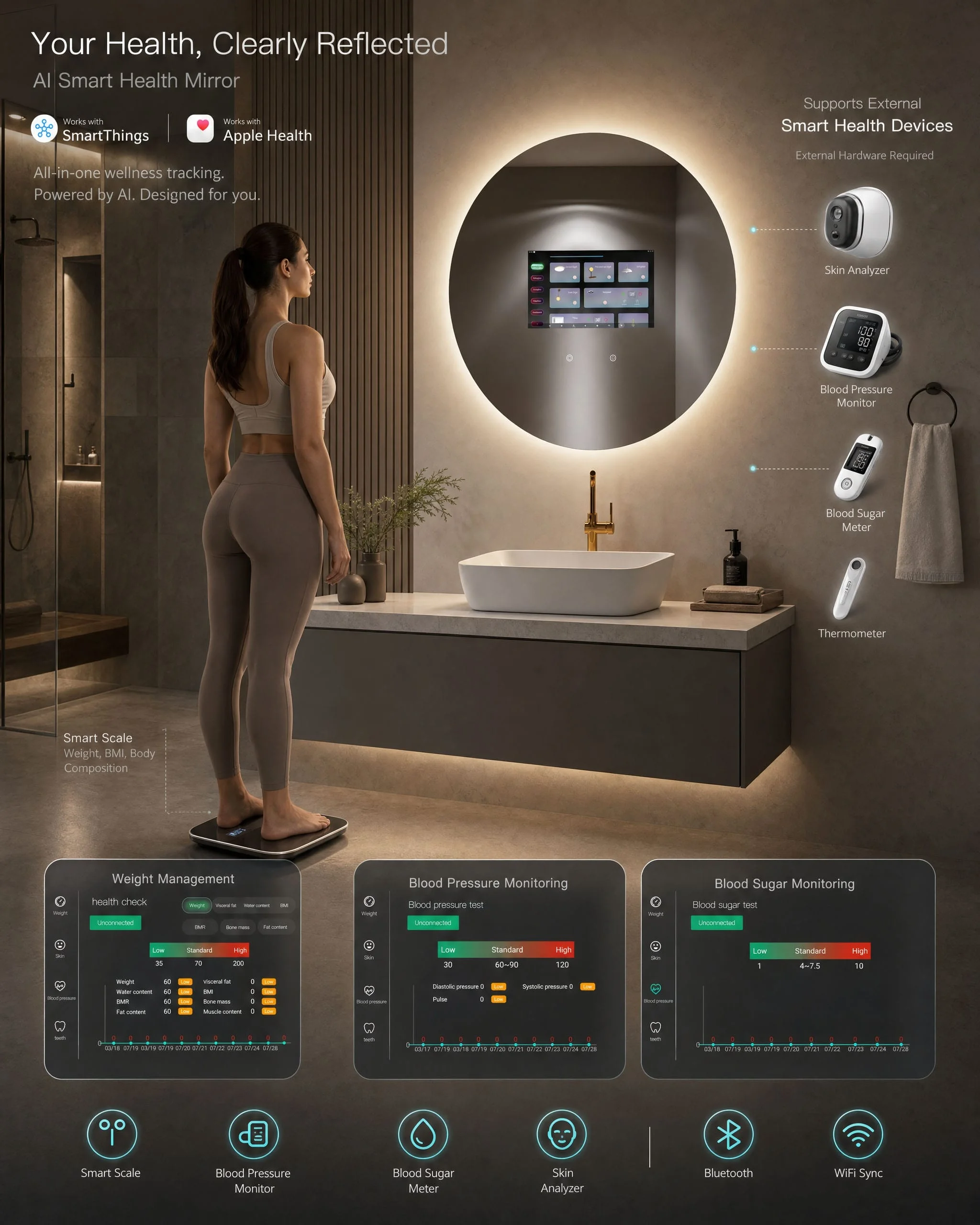
By incorporating high-density LED light engines behind specialized sandblasted borders, manufacturers achieve a completely uniform glow without visible diode shadowing. To deliver natural skin tones, the light source must feature a high Color Rendering Index (CRI) of 90 or above, combined with a color temperature calibrated between 2700K and 4000K. This meticulous optical engineering ensures flicker-free dimming and shadowless lighting, allowing guests to apply makeup or shave under optimal conditions.
Corrosion Resistance and Glass Durability in High-Humidity Environments
Hotel bathrooms experience near-constant humidity, making standard glass mirrors highly susceptible to edge blackening and silver delamination. In commercial applications, a Bathroom Mirror Customization program must prioritize copper-free silver glass processed with CNC edge-grinding and anti-corrosion protective coatings.
Standard copper-based mirrors oxidize rapidly when exposed to steam and cleaning chemicals. In contrast, copper-free silver mirrors offer up to three times more resistance to atmospheric corrosion. Furthermore, integrated defogger pads wired directly to the light switch or guestroom motion sensors ensure that guests always have a clear view, eliminating the need to wipe down the glass after a hot shower.
Commercial-Grade Driver Reliability and Smart Control Integration
For large-scale hotel operations, maintenance costs and downtime are critical metrics. While residential illuminated mirrors often use basic consumer-grade power supplies, commercial-grade hospitality designs require robust electrical engineering.
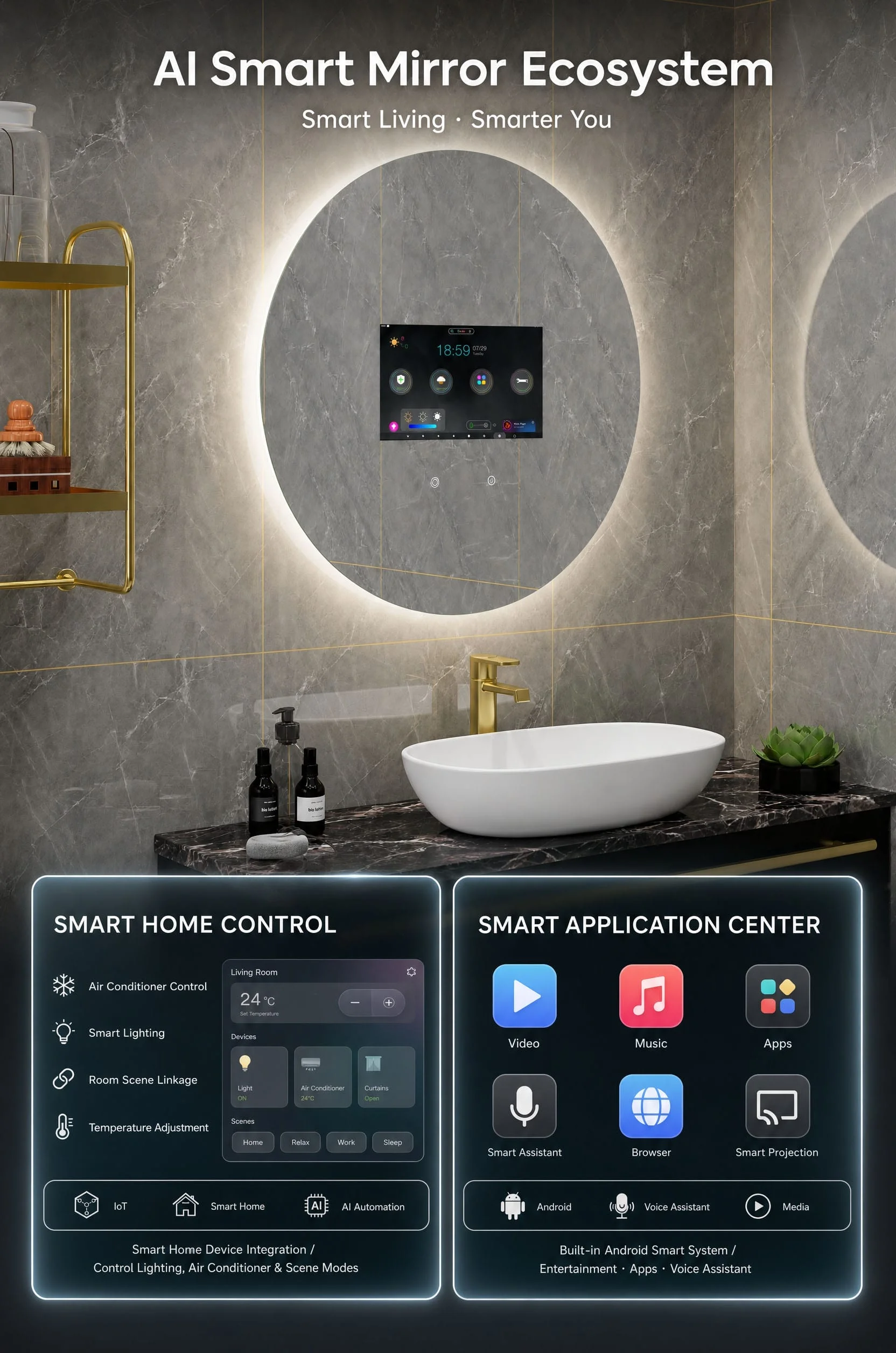
By utilizing UL-certified or CE-compliant isolated drivers with built-in heat dissipation, manufacturers guarantee a lifespan exceeding 50,000 hours. Modern hospitality designs often integrate these systems with the hotel Property Management System (PMS) or Smart Guestroom Controls, enabling automated energy-saving modes when rooms are vacant. Incorporating a premium Bathroom Mirror into the automated lighting scenes ensures a seamless, modern guest experience from check-in to check-out.
Comparing Residential vs. Hospitality-Grade Backlit Mirrors
Understanding the structural differences between retail-grade options and high-traffic hospitality fixtures is essential for procurement managers looking to optimize their total cost of ownership.
| Specification / Feature | Standard Residential Mirror | Hospitality-Grade Custom Mirror |
|---|---|---|
| Glass Material | Standard float glass with copper backing | 5mm copper-free silver glass with anti-corrosion seal |
| CRI & Light Quality | CRI 80, potential hot spots and uneven diffusion | CRI 90+, high-density LEDs with PMMA diffusion plate |
| Power Driver & Life | Non-dimmable basic drivers (~15,000 hours) | UL/CE isolated flicker-free drivers (~50,000+ hours) |
| Installation Design | Complex hardware, slow field installation | Cleat-mounting brackets, pre-wired quick-connectors |
| Moisture Protection | IP20 or lower, prone to early failures | IP44 or IP54 rated for high-humidity wet zones |
Selection Checklist: Customizing Mirrors for Large-Scale Hotel Projects
When executing a commercial rollout, selecting the right options ensures swift installation and localized safety compliance.
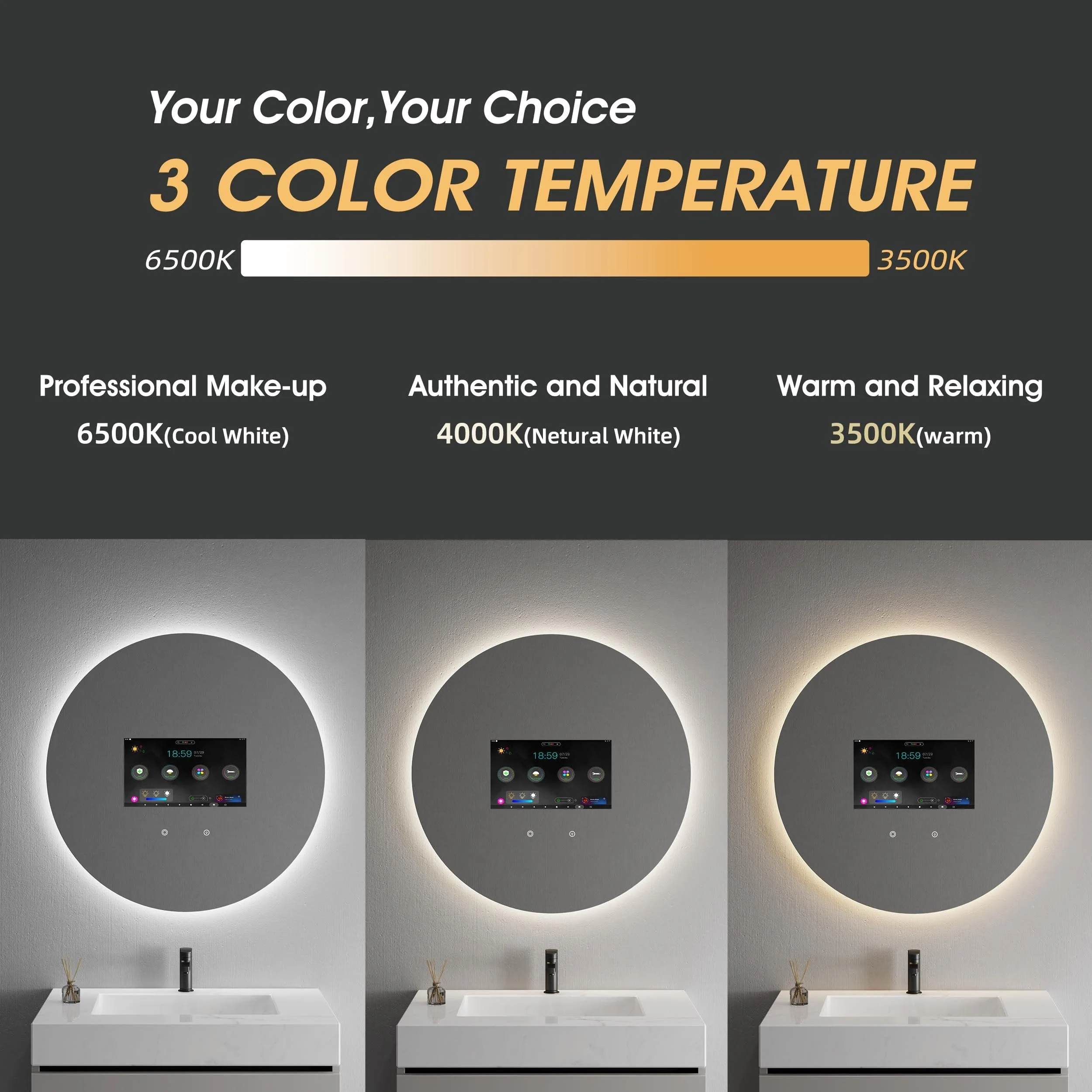
Prioritize these key checkpoints during the planning phase:
- Frame & Shape Options: Choose between a minimalist Frameless Bathroom Mirrors design or custom metallic frames that align with the brand identity.
- Safety Shatterproof Film: Ensure all mirror backings are laminated with an explosion-proof safety membrane to prevent injury if accidental impact occurs.
- Streamlined Mounting: Opt for heavy-duty Z-bar or French cleat mounting systems to drastically reduce labor costs and ensure exact alignment during field installation.
- Defogging Capability: Integrate custom-sized defogger pads to keep the reflection clear, especially in compact guest suites lacking heavy ventilation.
Frequently Asked Questions on Custom Hospitality Mirrors
Q: What are the commercial hospitality standards for backlit mirror IP ratings?
A: For safety and durability in wet zones, hospitality vanity mirrors typically require an IP44 or IP54 rating. This certification guarantees protection against dust ingress and water splashes, keeping internal electrical components safe in humid environments.
Q: How do custom light-up mirrors integrate with hotel guestroom PMS or smart controls?
A: Premium hospitality mirrors can be custom-engineered with 0-10V or DALI dimming drivers. These commercial protocols allow seamless integration into guestroom automation systems, enabling lighting presets and auto-shutoff when the room is empty.
Q: What are the durability differences between copper-free silver mirrors and standard mirrors in high-humidity hotels?
A: Standard copper mirrors suffer from accelerated oxidation, leading to black edge corrosion within 12 to 24 months in humid bathrooms. Copper-free silver mirrors undergo specialized edge sealing and show superior resistance to humidity, chemicals, and steam over decades of use.
Q: How does a manufacturer calculate the optimal CRI and color temperature for hotel bathroom vanity lighting?
A: Optical engineers balance color fidelity with visual warmth. They achieve this by using high-density LED strips with a Color Rendering Index (CRI) of 90 or above, typically paired with a color temperature of 3000K to closely replicate natural daylight without being overly clinical.
Q: What are the typical lead times and MOQ requirements for custom hospitality mirror production?
A: For bulk commercial projects, typical production lead times range between 30 to 45 days after design approval. Minimum Order Quantities (MOQs) depend on the level of customized tooling required, but generally start at 50 to 100 units for fully customized layouts.