 Nederlands
 Deutsch
 Español
  Français
 Русский
Designing Professional Backstage Areas: Sourcing High-CRI Hollywood Makeup Mirrors at Scale
Procuring vanity mirrors for high-traffic production hubs requires a departure from retail-grade solutions toward industrial-standard infrastructure. For procurement managers and architectural specifiers, the priority lies in ensuring that every station within a facility delivers uniform performance under rigorous usage conditions.
The High-Stakes Environment: Why Professional Backstage Mirrors Demand Industrial Specs
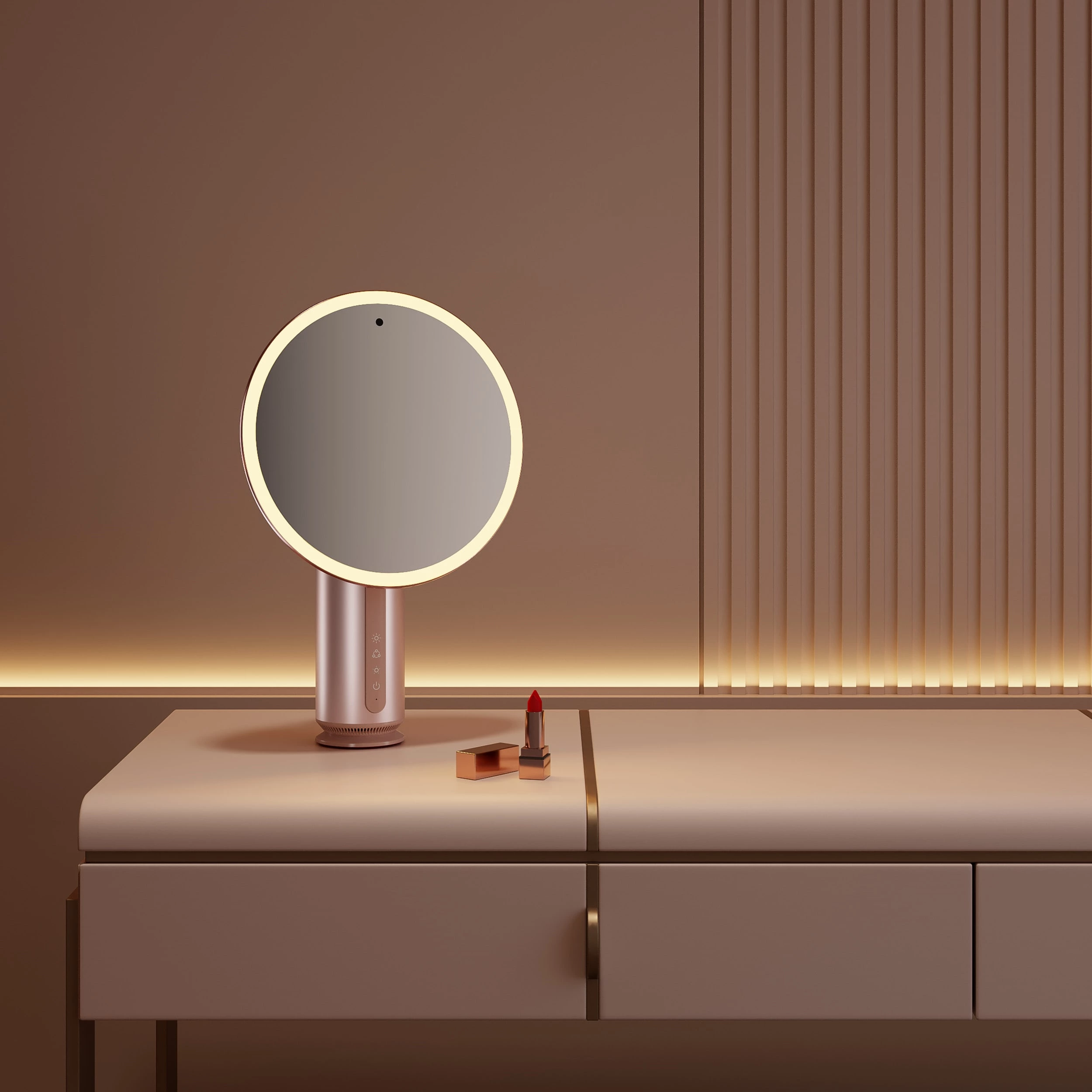
Professional studios face a specific set of challenges when installing a Hollywood Mirror. Retail products often suffer from component fatigue within months of intensive use, leading to flicker, localized LED failure, and degradation of color rendering. In our production line, we emphasize that a backstage mirror is a tool, not furniture; it must withstand thousands of hours of operation while maintaining the exact visual environment required for makeup artists to perform color-critical tasks without variance.
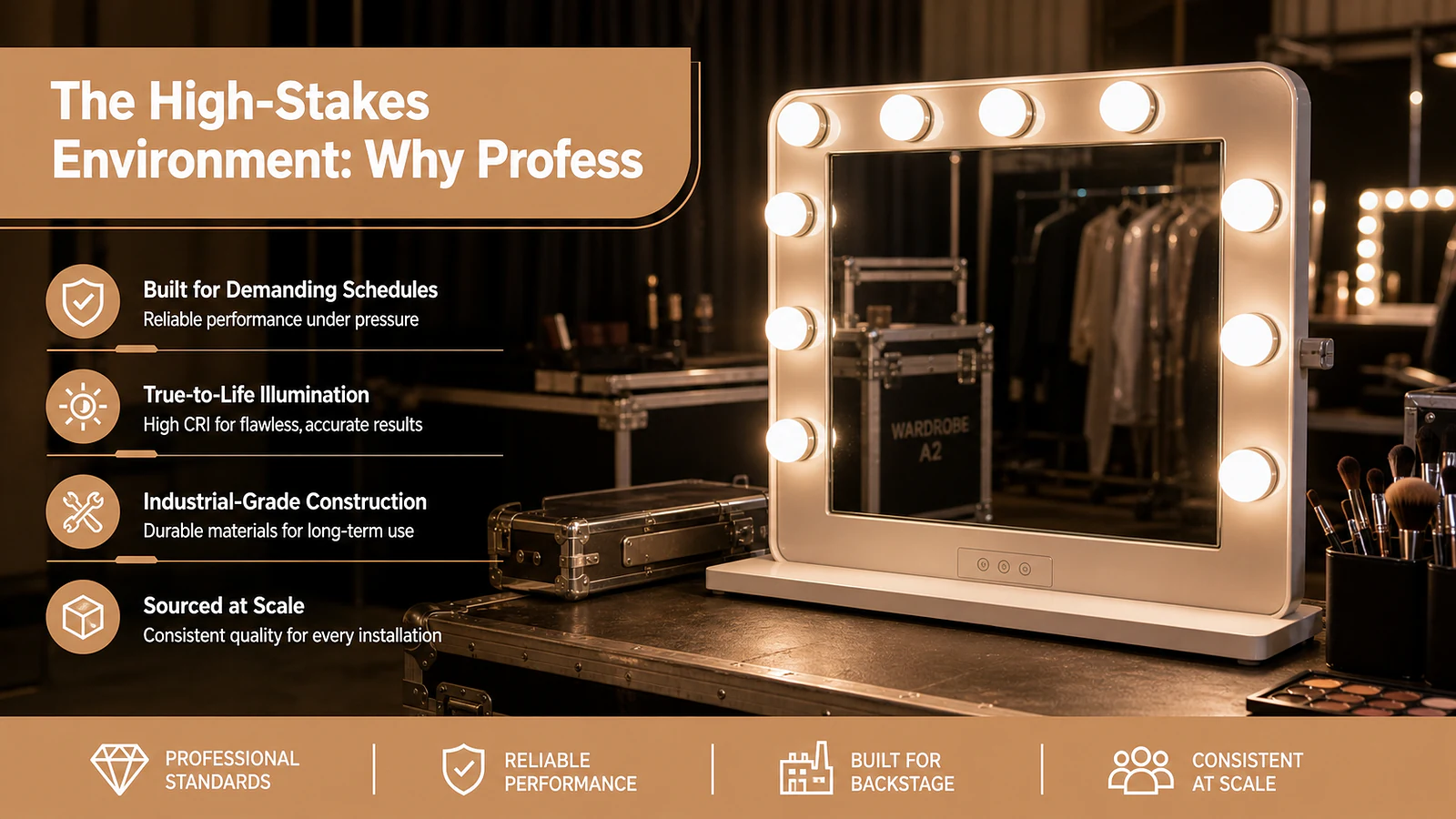
The Physics of Lighting: Why CRI and TLCI Matter for On-Camera/Professional Makeup Accuracy
For makeup artists, color perception is non-negotiable. We ensure our units exceed a CRI >95 and TLCI >96, providing a spectral power distribution that closely mimics natural daylight. By adhering to these benchmarks, we eliminate the green or magenta shifts frequently found in standard LED strips. These metrics are verified through certified third-party testing labs, ensuring that the light rendered on the performer's face is consistent with the output captured by studio cameras.

Engineering for Scale: Challenges in Batch Uniformity and Installation Logistics
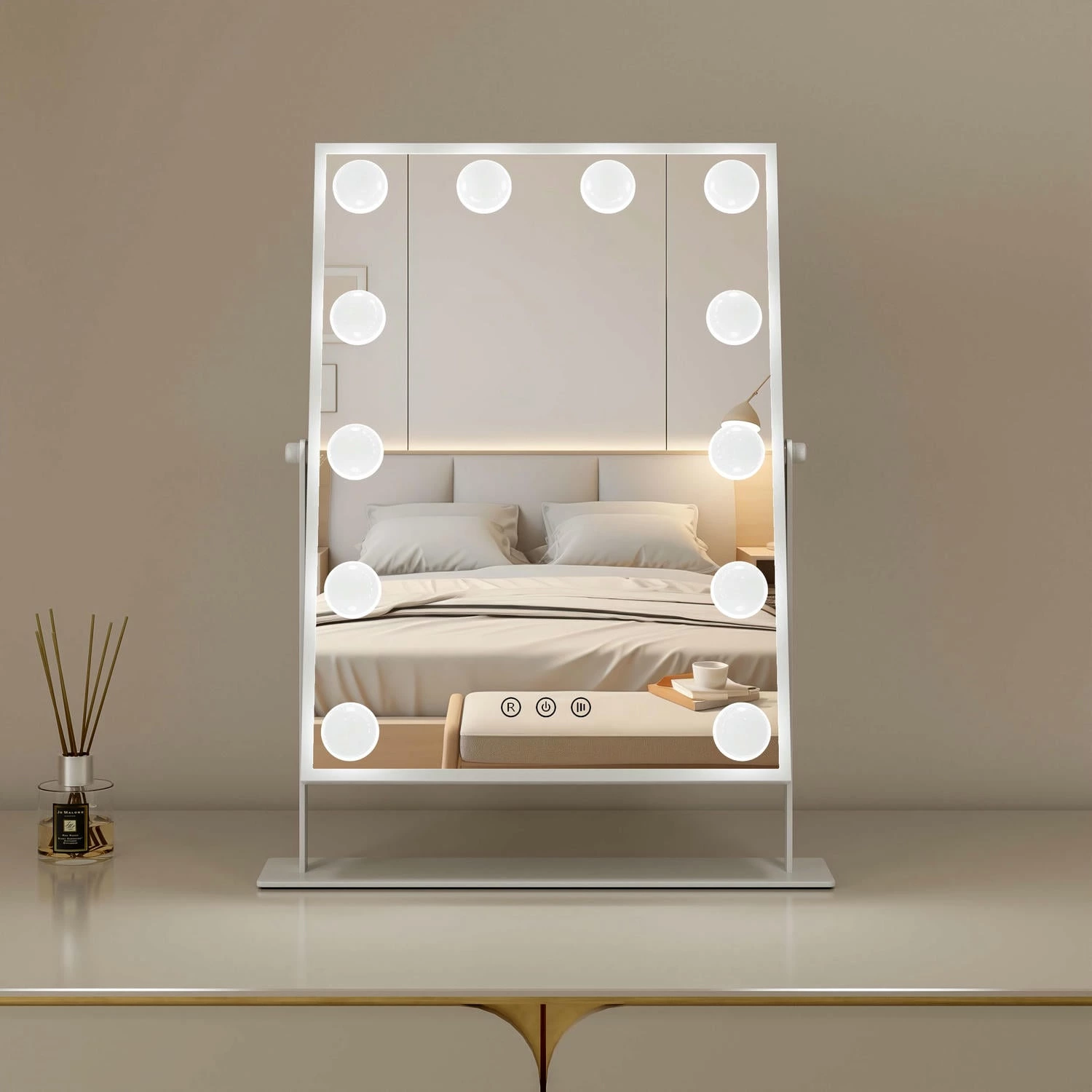
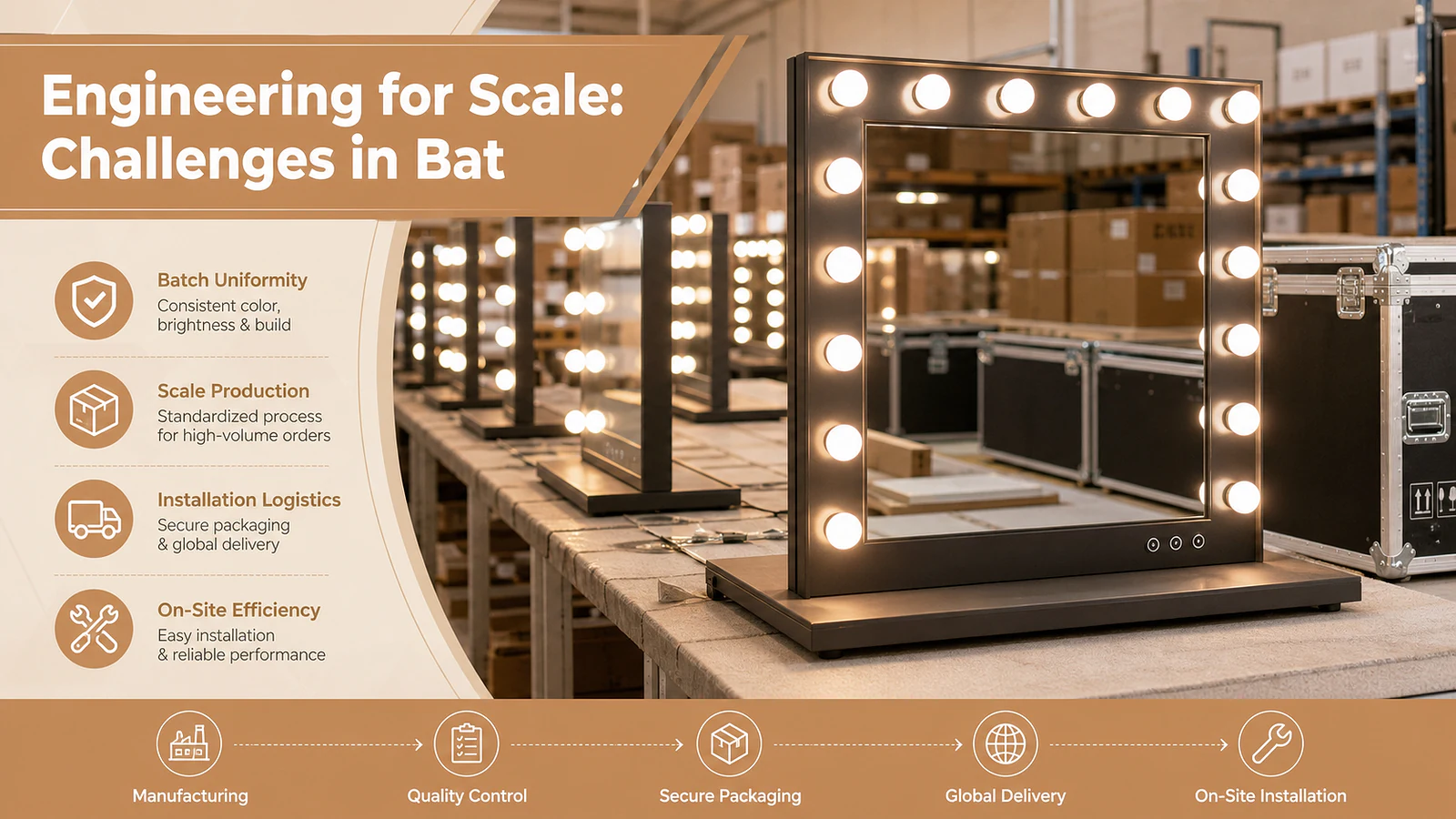
Achieving batch-to-batch consistency is the primary hurdle in high-volume Hollywood Mirror Customization. We utilize MacAdam Ellipse standards to ensure that even across a deployment of 500+ units, the color temperature delta remains imperceptible to the human eye. During factory audits, we monitor the spectral output of every bin-sorted LED batch to maintain uniformity. This rigor prevents the visual disharmony that occurs when mismatched lighting is installed across a single dressing room row.
| Specification | Professional Grade | Retail/Residential Grade |
|---|---|---|
| CRI/TLCI | >95 / >96 | 80 - 85 |
| Heat Management | Active Heatsinks | Passive/None |
| Repairability | Modular Components | Non-Serviceable/Sealed |
Durability Requirements: High-Traffic Hardware and Thermal Management for 24/7 Operations
Our units are designed for high-traffic environments, utilizing 3mm tempered glass that offers 5x the impact resistance of standard 2mm architectural glass. Beyond the optics, thermal management is key; our extended-life LED heatsinks have undergone 5,000-hour accelerated aging tests. By preventing excessive heat buildup, we significantly extend the lifespan of the electronics, protecting your long-term infrastructure investment.
Compliance and Safety: Navigating EMC and Electrical Standards for Large-Scale Facilities
Studio environments are complex electrical ecosystems. Every Metal Vanity Makeup Mirror we produce is designed to meet strict EMC/EMI compliance to prevent electrical interference with sensitive production equipment. We rigorously test against industry standards such as IEC 60598, ensuring the safety of your facility and the integrity of the surrounding audio-visual environment.
Procurement Strategy: A Buyer's Checklist for OEM/ODM Partnerships
When approaching mass-scale procurement, look for partners who provide full transparency on raw material sourcing, including LED chip origins and aluminum extrusion grades. Demand documentation for photometric testing and lifecycle analysis. A reliable manufacturer should offer a technical specification sheet that details the power requirements, connection types, and specific maintenance protocols for your facility's technicians.
Future-Proofing Studio Infrastructure: Modularity and Scalability
Our design-for-maintenance philosophy ensures that components like drivers and light engines can be swapped out in minutes without removing the entire unit from the wall. This modular electrical architecture minimizes downtime in active studio environments. When planning your layout, consider the benefits of a standardized mounting system that allows for future upgrades as your lighting requirements evolve.
Request Technical Specification Sheet & Sample Testing Kit
Q: How does high-CRI lighting affect studio electrical loads?
A: High-CRI LEDs require dedicated drivers that may draw different power profiles than standard bulbs, necessitating proper electrical circuit planning during the build phase.
Q: What is the lead time for custom, high-volume orders?
A: Lead times depend on the scale and customization level, typically requiring 30 to 60 days to allow for rigorous batch consistency testing and QC.
Q: Can residential mirrors be used in professional studios?
A: No, residential mirrors lack the necessary thermal management, EMI shielding, and high-frequency dimming stability required for professional studio usage.
Q: How do you guarantee batch uniformity for 500+ units?
A: We bin-sort LED chips based on color temperature and flux, verifying performance against MacAdam Ellipse standards before and during assembly.
Q: What maintenance is required for professional backstage mirrors?
A: With our modular electrical design, routine maintenance consists of simple component swaps, eliminating the need for complex, tool-heavy repairs.


