 Nederlands
 Deutsch
 Español
  Français
 Русский
The Science of Illumination: Specifying High-CRI Illuminated Hollywood Mirrors for Luxury Hotels
In the competitive landscape of luxury hospitality, the vanity mirror is more than a utility; it is a critical touchpoint that defines guest satisfaction. For procurement leads and fit-out contractors, specifying Hollywood Mirror technology requires balancing stringent aesthetic demands with the operational realities of high-humidity environments and long-term maintenance cycles.
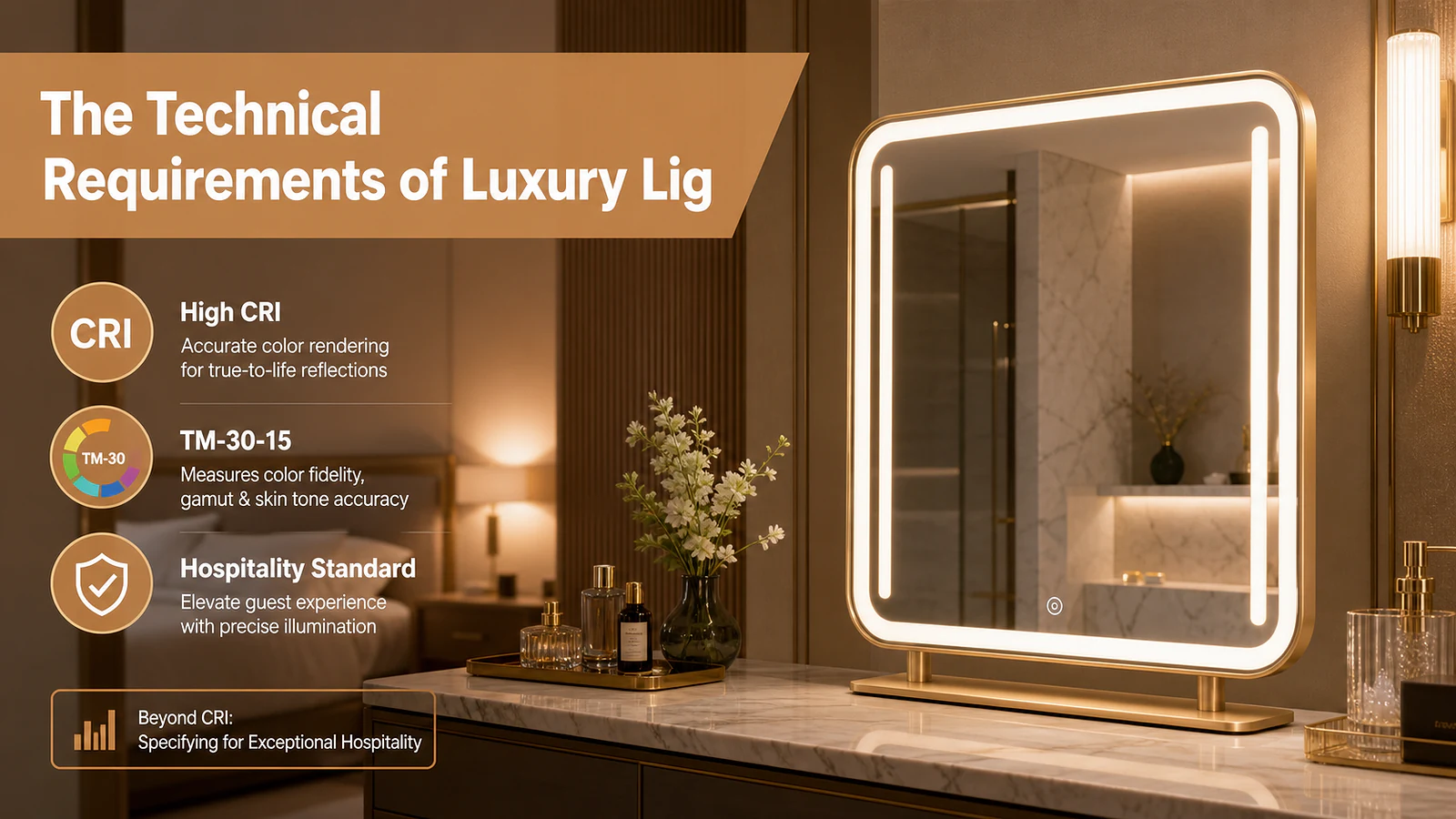
The Technical Requirements of Luxury Lighting: Why CRI and TM-30-15 Matter in Hospitality
Standard color rendering index (CRI) metrics are no longer sufficient for modern hospitality lighting. To ensure accurate skin-tone rendering, procurement teams must look to the IES TM-30-15 standard. Unlike traditional CRI, which relies on a limited set of pastel samples, TM-30-15 utilizes 99 color samples to provide a comprehensive analysis of spectral fidelity (Rf) and gamut (Rg). In our production line, we prioritize diodes that achieve an Rf value of 95+ to guarantee that guests experience natural, consistent light quality essential for grooming in luxury hotel bathrooms.
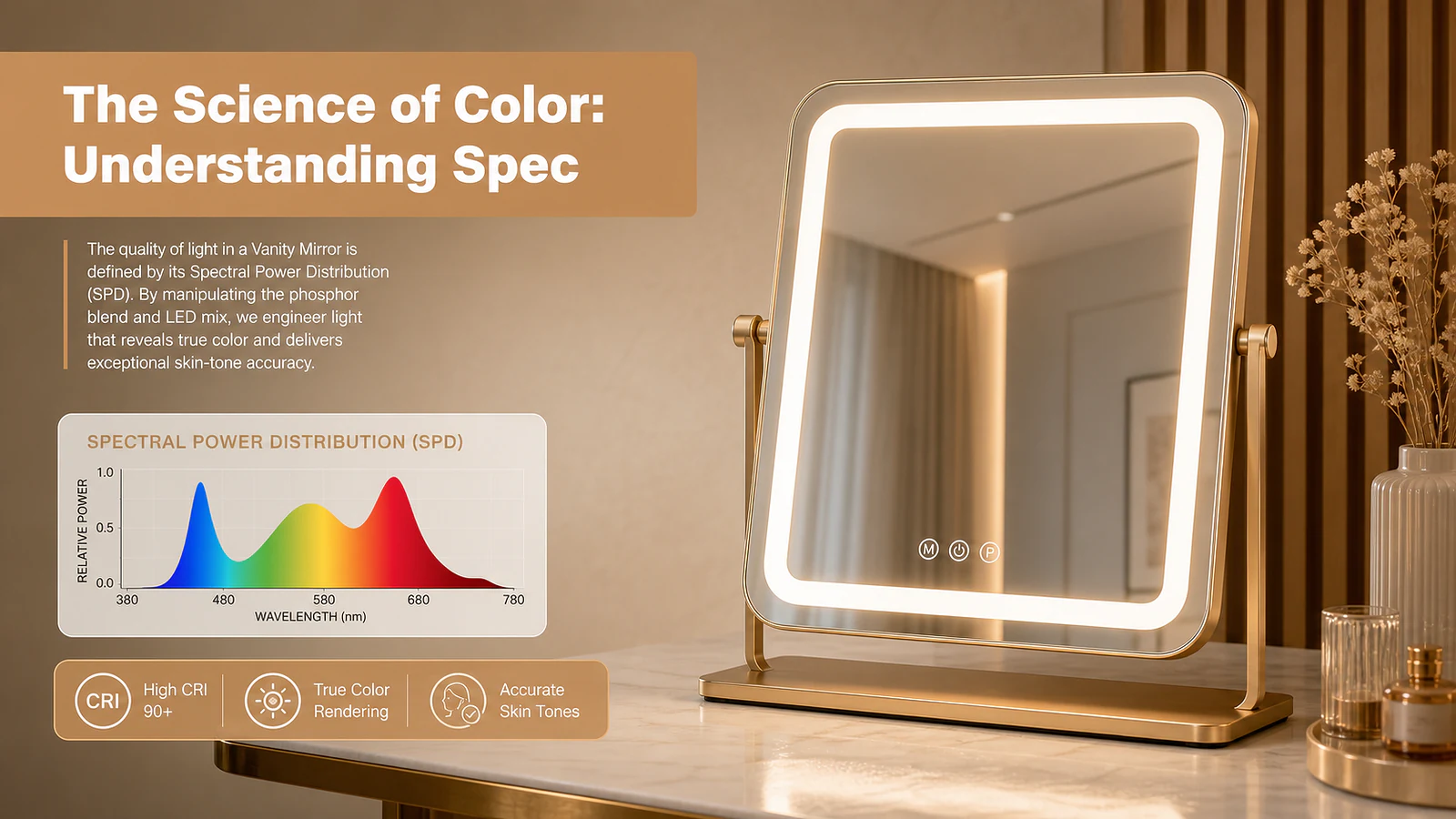
The Science of Color: Understanding Spectral Power Distribution (SPD) and Skin-Tone Accuracy
The quality of light in a Vanity Mirror is defined by its Spectral Power Distribution (SPD). By manipulating the phosphor mix, we ensure that the spectral output peaks in the red-orange nanometer ranges, which is critical for warm, flattering skin-tone reflection. During factory audits, we test SPD output to confirm that the correlated color temperature (CCT) remains stable across the entire lifespan of the fixture, preventing the greenish or bluish shifts commonly observed in lower-quality LEDs.
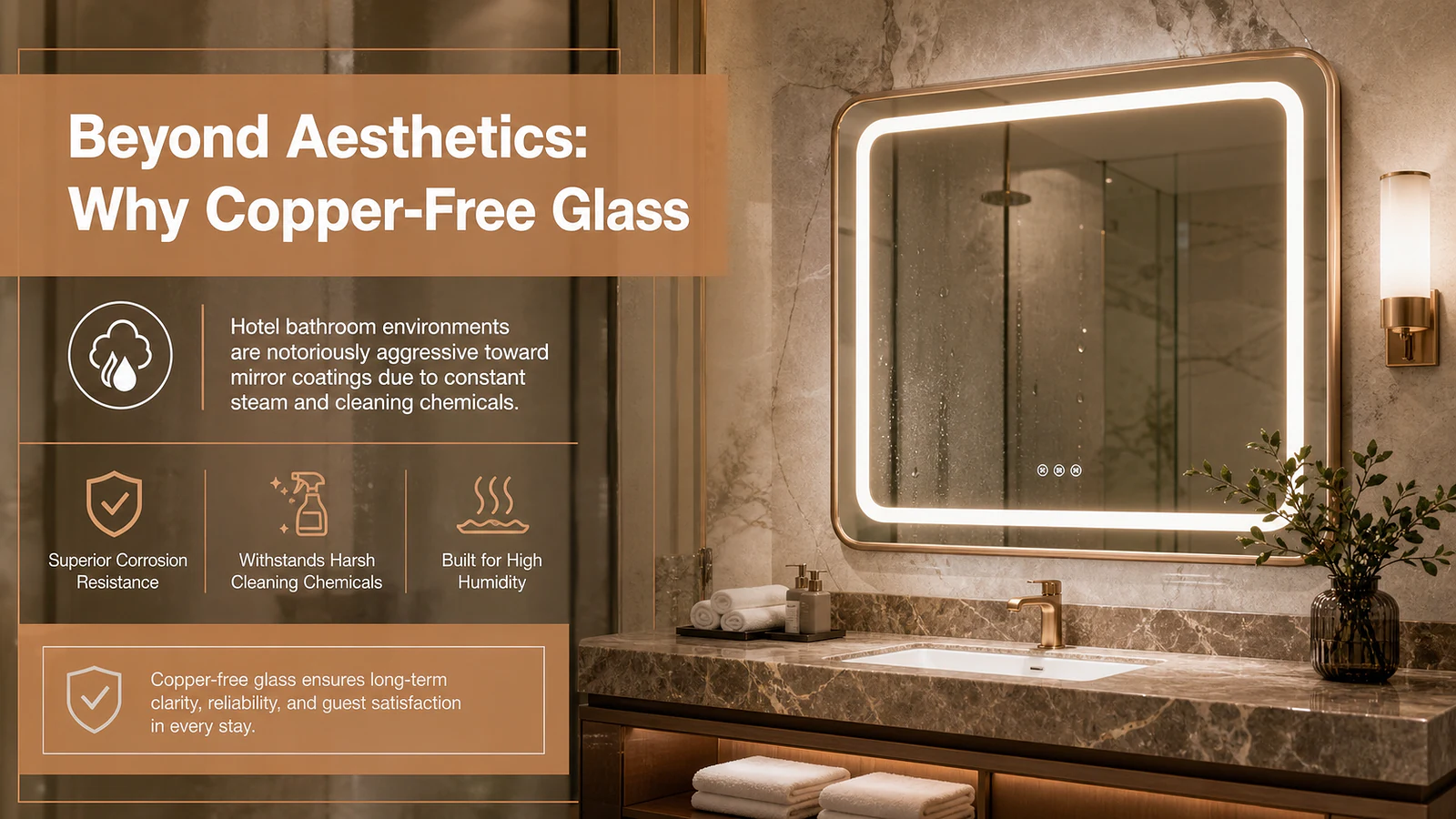
Beyond Aesthetics: Why Copper-Free Glass is Mandatory for High-Humidity Hotel Environments
Hotel bathroom environments are notoriously aggressive toward mirror coatings due to constant steam and cleaning chemical exposure. Standard mirrors often feature silvering processes that utilize copper, which inevitably leads to edge blackening and oxidation. We utilize copper-free, silver-based glass substrates that have passed ASTM B117 salt spray testing, confirming resilience against corrosion. This material integrity is vital for maintaining the Large Hollywood Mirror aesthetic without the need for premature refurbishment.
Driver Integration Strategy: Why Modular Internal Drivers Simplify Long-Term Hotel Maintenance
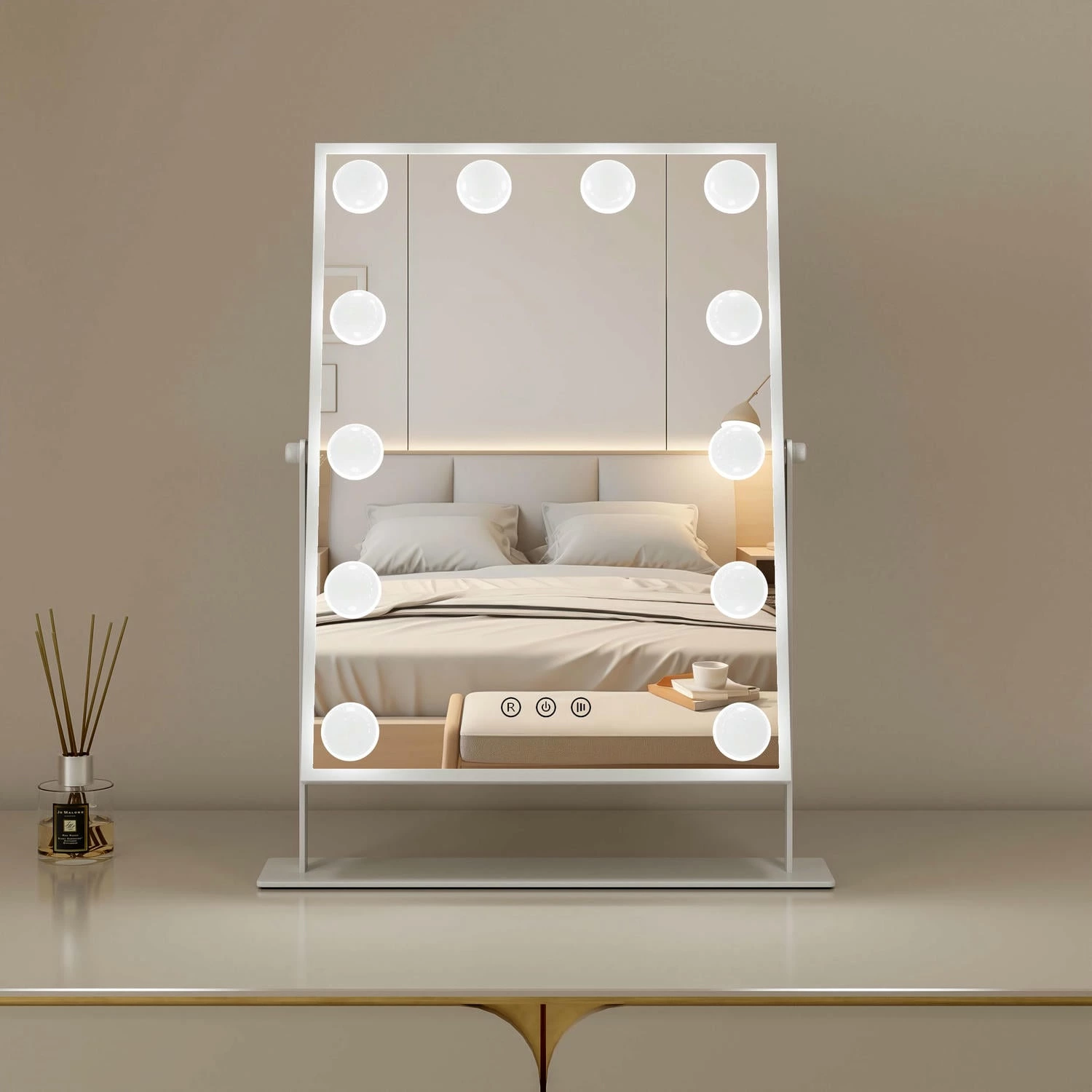
A recurring pain point in hotel operations is the failure of non-serviceable, integrated LED drivers. Our architecture favors a dual-maintenance approach, utilizing modular, field-replaceable drivers. This allows engineering teams to perform repairs without discarding the entire mirror assembly. As seen in our high-durability product lines, such as those utilizing reinforced compression knit technology, we emphasize longevity. Our Hollywood Mirror Customization process ensures that all internal components meet stringent heat dissipation standards, supporting a 50,000+ hour service life.
Factory Calibration: The Role of LED Binning in Maintaining Uniformity Across 500+ Units
Color variation across a bulk order can destroy the cohesive interior design of a hotel. Our factory-floor LED binning process uses MacAdam Ellipse tolerances (typically 3-step SDCM) to ensure that every diode exhibits identical chromaticity. From manufacturing thousands of units, we have established that strict sorting of LED batches is the only way to ensure uniform light output in large-scale rollouts.
Compliance and Safety: Navigating UL/cUL 962 for Commercial Bathroom Furnishings
All commercial lighting for hospitality must comply with UL/cUL 962, which governs the safety of household and commercial furnishings. This includes critical testing for electrical grounding, temperature rise limits, and moisture resistance for wet-location installation. Our designs incorporate impact-resistant backing compliant with ANSI Z97.1, ensuring that the glass does not create dangerous shards in the event of accidental impact, a standard we also apply to our durable outdoor sock materials to ensure high-standard quality control across our manufacturing ecosystem.
| Standard | Technical Requirement | Procurement Goal |
|---|---|---|
| IES TM-30-15 | Rf 95+ / Rg 100±5 | Skin-tone accuracy |
| ASTM B117 | No edge corrosion @ 500 hrs | Corrosion resistance |
| LM-80 | 50,000+ hours L70 | Maintenance reduction |
| ANSI Z97.1 | Impact resistance compliance | Safety compliance |
Q: What is the difference between CRI and TM-30 metrics for high-end hospitality lighting?
A: CRI is a legacy metric measuring color accuracy across eight pastel colors, whereas TM-30-15 evaluates fidelity and gamut across 99 samples, providing a deeper understanding of spectral performance.
Q: How does light flicker impact guest experience in luxury hotel bathrooms?
A: Inconsistent driver output can cause high-frequency flicker, leading to eye strain and headaches, which undermines the premium guest experience.
Q: What IP rating is required for illuminated mirrors in commercial wet-room environments?
A: For typical hotel bathroom zones near showers, an IP44 rating is recommended to protect against water splashes and humidity.
Q: How do you ensure color consistency across a large-scale hotel vanity mirror rollout?
A: We utilize strict LED binning and MacAdam Ellipse (3-step SDCM) sorting to ensure that every unit in a batch emits light within an indistinguishable chromaticity range.
Q: What are the specific electrical integration requirements for smart-mirror power supplies in commercial construction?
A: Power supplies must be UL/cUL 962 listed, featuring thermal overload protection and easy-access modular connectors for long-term facility maintenance.


