Nederlands
 Deutsch
 Español
  Français
 Русский
The Engineering Behind Bluetooth Bathroom Mirrors: Waterproofing Speakers and Touch Controls
Integrating high-fidelity audio and interactive interfaces into high-humidity bathroom environments requires sophisticated component-level engineering. Commercial-grade smart mirrors must withstand constant moisture exposure, thermal fluctuations, and direct water splashes while maintaining flawless touch sensitivity and acoustic clarity. This guide explores the material science, physical engineering, and testing protocols that separate durable, industrial-grade smart mirrors from standard consumer-grade alternatives.
Acoustic Engineering: Waterproofing Speakers Without Sound Muffling
Standard speakers rely on paper or untreated composite cones that quickly degrade when exposed to steam. To prevent physical deterioration, manufacturers of high-end smart mirrors utilize specialized hydrophobic acoustic membranes made from expanded Polytetrafluoroethylene (ePTFE) or woven polymer meshes.
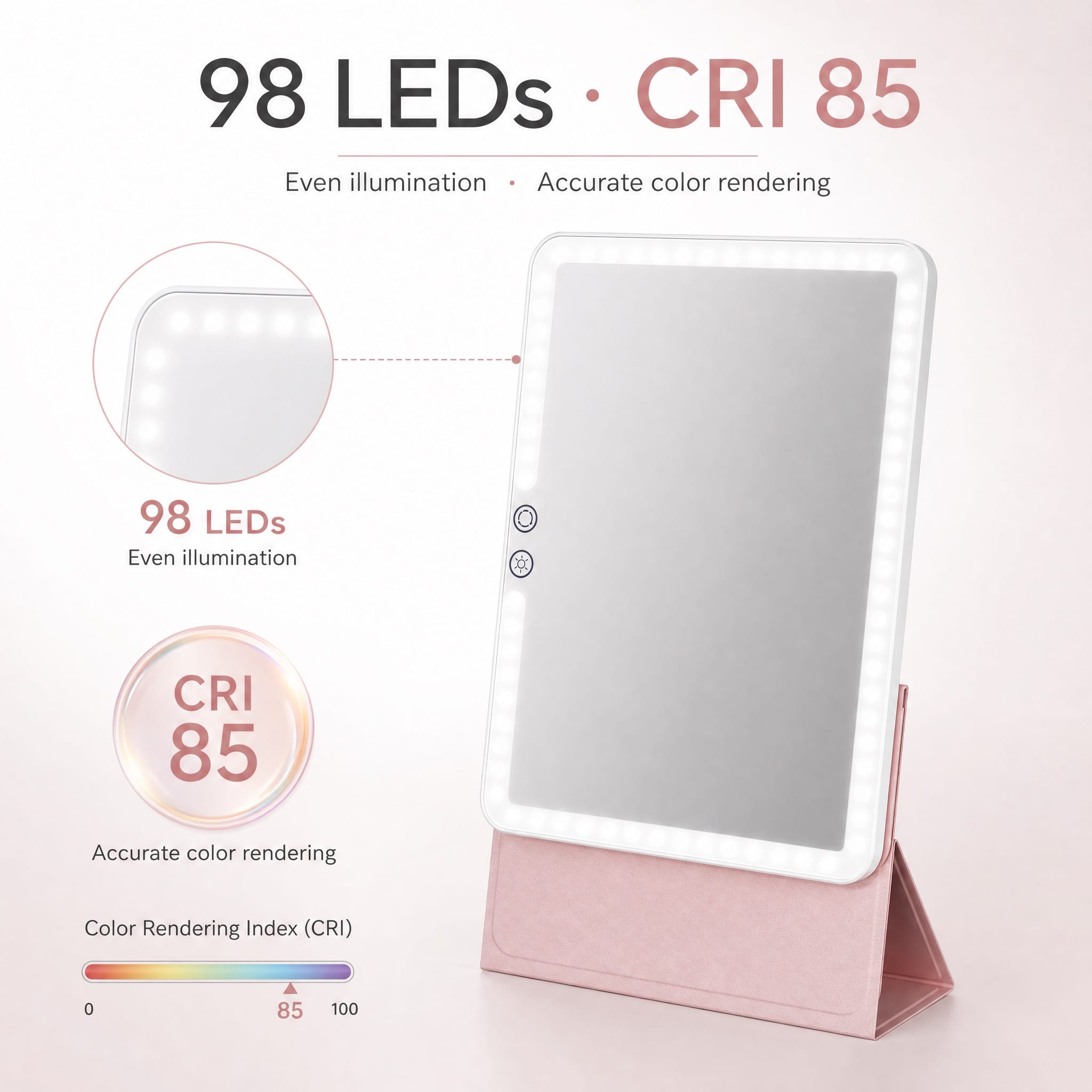
These materials permit sound pressure waves to pass through with minimal acoustic impedance while presenting a physical barrier to water droplets. The speaker enclosure itself is often integrated into the chassis design using CNC-machined silicone gaskets. This ensures the rear acoustic chamber remains hermetically sealed, maintaining balanced bass response and preventing internal air pressure changes from damaging the delicate speaker cones during high-volume playback. For premium hospitality projects, utilizing a Bluetooth Hollywood Mirror or advanced back-lit mirror requires this level of architectural acoustic sealing.
Capacitive Touch Calibration: Preventing Condensation False Triggers
Capacitive touch sensors detect changes in electrical capacitance when a conductive object, such as a human finger, approaches the glass surface. However, water droplets and condensation are also highly conductive, which can lead to frustrating "ghost touches" or complete sensor unresponsiveness in a steamy bathroom.
To overcome this, engineers apply customized microcontroller unit (MCU) firmware algorithms that measure the rate of change in capacitance. Water film build-up creates a slow, static shift in capacitance, whereas a finger tap produces a rapid, localized spike. The controller is programmed to recalibrate its baseline threshold dynamically in real time. For optical clarity and physical durability, industrial manufacturers use a specialized Bathroom Mirror Customization process to bond the capacitive sensors to the wet-rated glass using optically clear, moisture-resistant acrylic-based liquid adhesives.
Chassis Design and IP-Rated Sealing Protocols
The structural backbone of any smart mirror is its rear chassis. While cheap retail imports often rely on folded sheet-metal backings with simple foam tapes, commercial-grade mirrors utilize heavy-duty extruded or CNC-milled aluminum alloy enclosures.
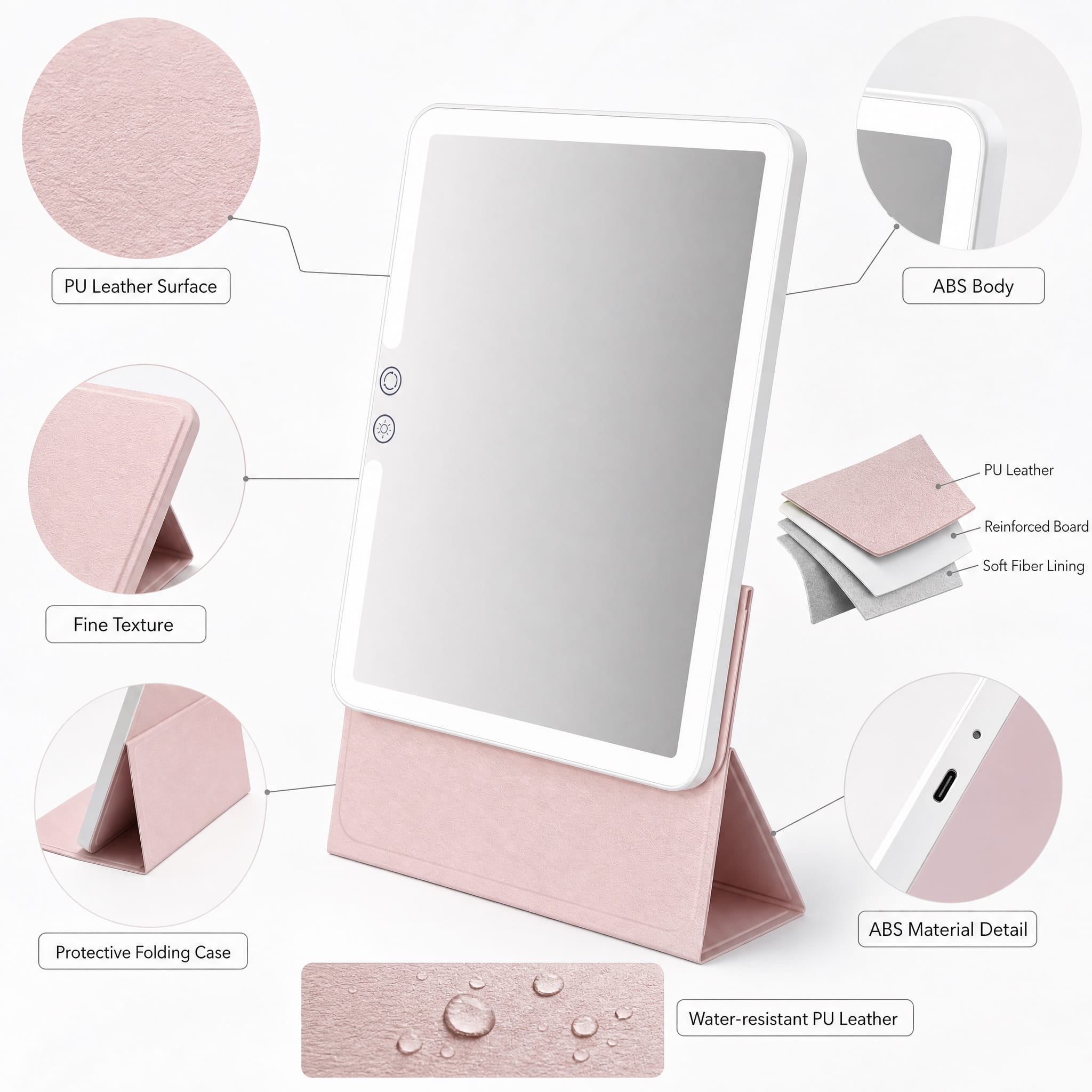
The aluminum chassis is treated with an anti-corrosion anodized finish to prevent oxidation in high-humidity zones. To achieve IP44 (splash-proof) or IP66 (water jet protection) ratings, the perimeter where the mirror glass meets the chassis is sealed using vulcanized silicone gaskets or high-performance polyurethane adhesives. Cable entry points for the main power feed and external control lines are routed through liquid-tight nylon cable glands, ensuring no moisture can enter the internal electronics compartment.
Thermal Management and Defogger Coexistence
Integrating a high-output Bluetooth amplifier, a power supply, LED drivers, and a heating pad (defogger) into a sealed, unventilated mirror chassis creates significant thermal challenges. Overheating directly accelerates the degradation of internal capacitors and reduces the operational lifespan of the LED chips.
To mitigate this heat build-up without relying on open ventilation slots (which would compromise the IP rating), engineers design the aluminum chassis to act as a passive heat sink. High-heat components, such as the LED power drivers and Bluetooth amplifiers, are directly coupled to the metal chassis using thermal interface materials (TIMs). This allows heat to dissipate across the entire rear surface of the Bathroom Mirror structure, keeping internal operating temperatures safely below critical thresholds.
Comparing Commercial vs. Retail Smart Mirror Engineering
Understanding the internal engineering differences is essential for hotel developers, builders, and wholesale buyers who require long-term durability and minimal maintenance overhead.
| Engineering Feature | Retail-Grade (Low-Cost Imports) | Commercial-Grade (Project Specification) |
|---|---|---|
| Ingress Protection | IP20 to basic IP44 with foam tape | IP44 to IP66 with vulcanized silicone gaskets |
| Chassis Material | Folded steel or thin plastic backpan | Anodized extruded aluminum alloy |
| Acoustic Membrane | Untreated paper or plastic speaker cones | Hydrophobic ePTFE acoustic membranes |
| Touch Control Sensing | Fixed-threshold capacitive sensors | Dynamic self-calibrating MCU algorithms |
| Thermal Design | No heatsinks; trapped thermal pockets | Integrated aluminum heatsink coupling |
Frequently Asked Questions
Q: How do manufacturers test IP rating seals on touch-screen bathroom mirrors?
A: Manufacturers use specialized automated test chambers where completed mirrors are subjected to continuous high-pressure water sprays (for IP65/IP66) or splash tests (for IP44). Following the water exposure, the units undergo dielectric strength and insulation resistance testing to ensure there has been zero internal moisture ingress.
Q: What is the failure rate of Bluetooth speaker membranes in high-humidity environments?
A: Retail-grade speakers using standard materials often see failure rates as high as 15% within the first 12–18 months due to voice coil corrosion. In contrast, commercial-grade speakers utilizing hydrophobic ePTFE membranes and sealed back chambers maintain a failure rate of under 0.5% over a 5-year operating cycle.
Q: How is heat dissipation managed for integrated Bluetooth mirror power supplies?
A: Power supplies and amplifiers are mounted directly onto the interior surfaces of the anodized aluminum chassis using thermal conductive pads. This design transfers internal heat outwards through conduction, transforming the entire back panel into a large, passive heat dissipator without requiring open air vents.
Q: What adhesive is used to bond capacitive touch sensors to wet-rated mirror glass?
A: Industrial manufacturers use highly stable, moisture-resistant acrylic-based Optically Clear Adhesives (OCA) or liquid LOCA. These adhesives are UV-cured to create a bubble-free, hermetic bond that remains transparent, does not yellow, and prevents moisture from migrating between the glass and the capacitive sensor.
Q: How do wholesale suppliers prevent galvanic corrosion on internal mirror electronics?
A: Suppliers apply a multi-layer conformal coating to all printed circuit boards (PCBs) to protect them from moisture. Additionally, isolating plastic washers and non-conductive standoffs are used wherever dissimilar metals meet, preventing galvanic corrosion in humid environments.