Nederlands
 Deutsch
 Español
  Français
 Русский
The Engineering Behind Professional Hollywood Makeup Mirrors: Durability Standards for Salon Chains
For high-volume beauty salons and commercial cosmetics environments, lighting fixtures and vanity equipment are subjected to demanding, continuous operation. Unlike residential vanity products designed for brief daily use, professional installations require specialized engineering to ensure electrical safety, structural integrity, and color accuracy over tens of thousands of operating hours. This technical guide examines the structural, electrical, and optical standards required for commercial-grade vanity mirrors to help procurement teams minimize total cost of ownership (TCO).
Structural Engineering: Frame Integrity and High-Grade Glass
In commercial environments, physical impact and chemical exposure are constant hazards. While retail units often utilize thin plastic backings or light-gauge aluminum frames, commercial-grade Metal Vanity Makeup Mirror designs utilize heavy-duty structural frames engineered to withstand continuous handling. In our production line, we process high-tensile 6063-T5 extruded aluminum and robust steel enclosures, which provide structural rigidity and prevent torsional bending during wall mounting or high-frequency pivoting.
The glass itself must meet rigorous safety requirements. Standard 3mm non-tempered glass poses a significant liability in commercial spaces due to its tendency to shatter into sharp shards under minimal impact. Professional installations require a minimum of 5mm copper-free silver glass with a shatter-resistant safety film backing. This design complies with EN 12600 impact test standards, ensuring that even under severe impact, the glass fractures safely without shedding hazardous shards onto clients or salon staff.
Electrical Safety and Compliance Standards
Commercial salon mirrors must comply with strict national electrical safety standards to mitigate shock and fire hazards. The complete electrical assembly of a professional Hollywood Mirror must conform to certifications such as UL 1598 (for luminaires) or CE EN 60598. This guarantees that all internal wiring, LED drivers, and touch sensors have been tested under thermal stress and high-voltage conditions.
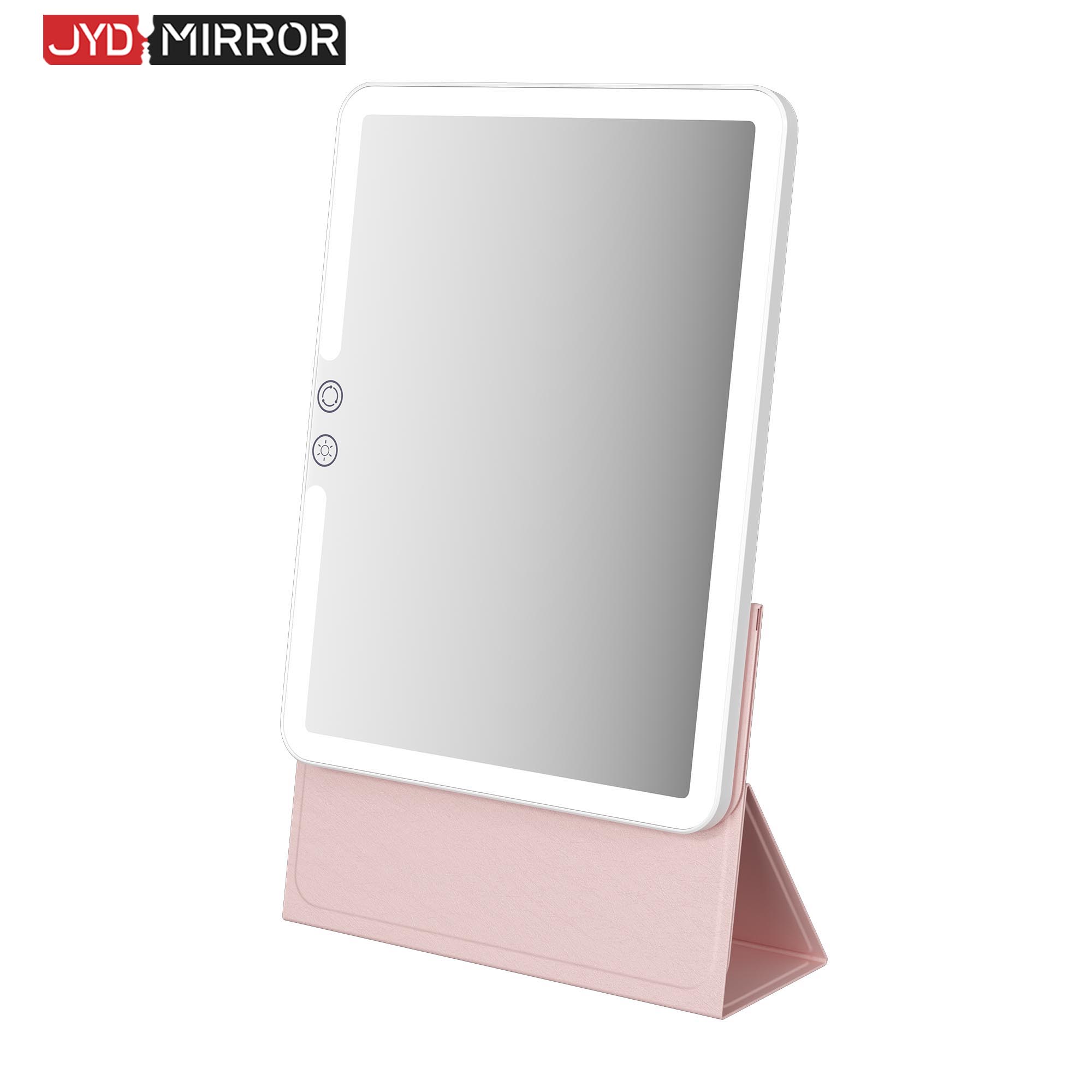
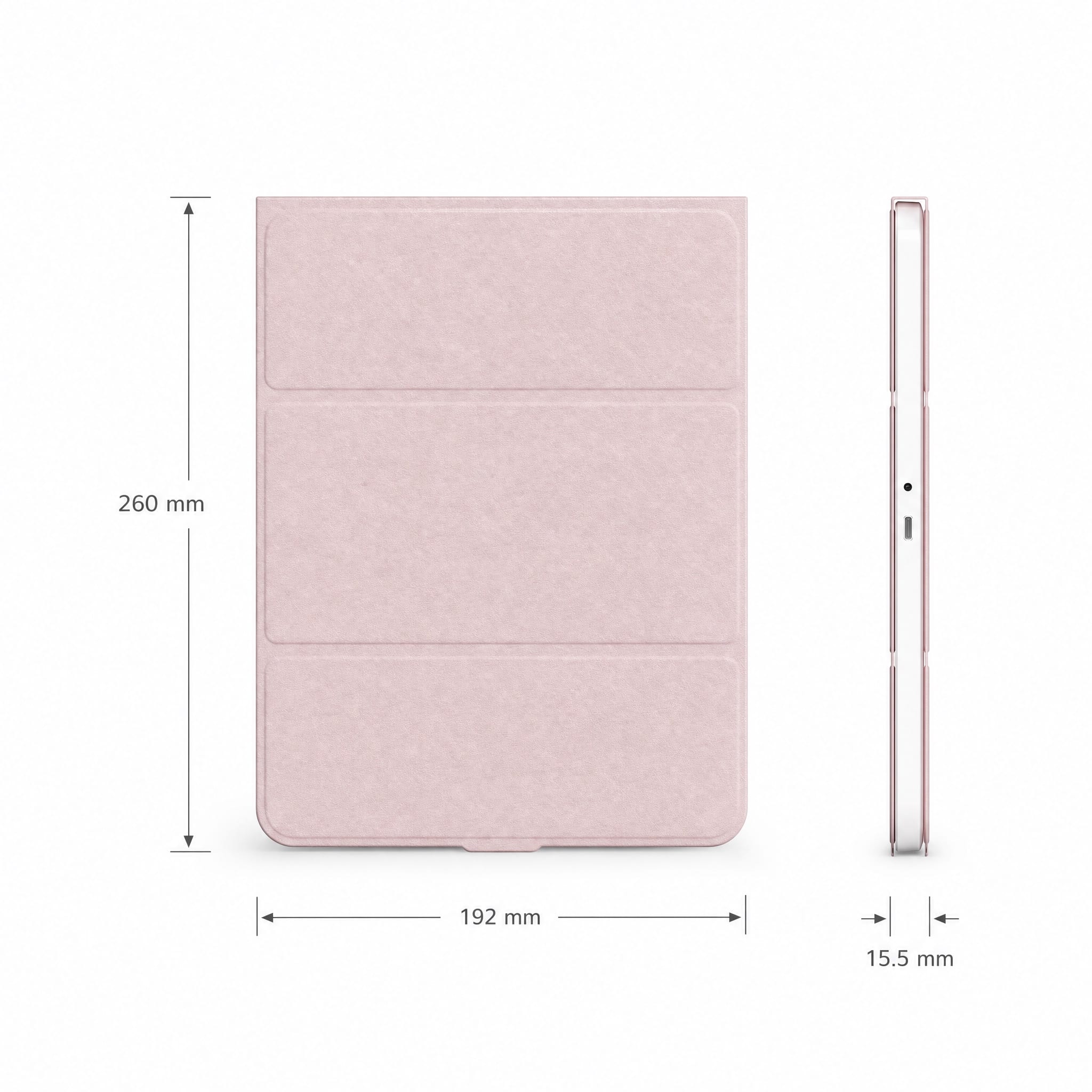
Furthermore, because salon environments naturally involve hair sprays, water mists, and high humidity, the electrical housing must feature a verified ingress protection rating, typically IP44. Our engineering team conducts factory stress-testing on driver components to ensure a Mean Time Between Failures (MTBF) of over 50,000 hours. For portable or secondary station applications, our premium tablet-sized model SM612A-SL utilizes a specialized rechargeable pad LED makeup mirror configuration with a PU leather case, incorporating integrated lithium-polymer battery cells with over-charge and over-discharge protective circuitry to guarantee stable output.
Optical Precision: CRI Calibration and Thermal Management
Color rendering is critical in salon applications, where incorrect lighting can lead to errors in hair coloring and makeup application. While retail mirrors often feature a Color Rendering Index (CRI) of 70 to 80, professional-grade models require a CRI of at least 90, with premium systems achieving CRI 95+. This ensures highly accurate color representation across the visible spectrum. For instance, our SM611A features a high-density array of up to 98 LED beads, delivering a professional-grade dimmable 3-color light emission that closely replicates natural daylight.
High-power LEDs generate significant localized heat. Without adequate thermal management, the junction temperature rises, causing rapid color shifting and early LED failure. Professional designs incorporate aluminum PCBs and dedicated heat sinks to dissipate thermal energy away from the diodes. This maintains the junction temperature well below the critical 85°C threshold, preserving both color accuracy and the rated 50,000-hour diode lifetime.
Hardware Durability and Mechanical Testing
Daily operation in a multi-location salon chain subjects switches, dimmers, and hinges to continuous mechanical stress. Traditional mechanical rotary dimmers are prone to dust ingress and internal wear, leading to flickering. Commercial units typically utilize capacitive touch sensors or heavy-duty sealed potentiometers tested for over 100,000 cycles.
Hinges and mounting brackets undergo rigorous factory testing. For adjustable or folding configurations, we execute a continuous 20,000-cycle pivot test under full load to ensure zero hinge slipping or structural fatigue. This meticulous testing guarantees that large-scale wall-mounted mirrors remain securely positioned, eliminating drift and potential safety hazards over years of continuous service.
Commercial vs. Retail Mirror Comparison
To assist procurement managers in evaluating capital equipment, the following table compares key technical specifications between standard retail mirrors and commercial-grade professional units:
| Technical Parameter | Retail-Grade Mirror | Commercial/Salon-Grade Mirror |
|---|---|---|
| Glass Thickness & Type | 3mm Standard float glass | 5mm Copper-free glass with safety film (EN 12600) |
| Color Rendering Index (CRI) | 75 - 82 Ra | 90 - 97 Ra (True color calibration) |
| Electrical Safety Certification | Non-certified or basic CE | UL 1598, CE EN 60598, FCC Part 15 compliance |
| Thermal Dissipation | Passive backplate, no heat sink | Aluminum PCB with dedicated heat sink channels |
| Ingress Protection (IP Rating) | IP20 (No moisture protection) | IP44 splash-proof rating (Moisture/steam resistant) |
Commercial Procurement Selection Checklist
When sourcing professional vanity equipment for multi-location salon chains or hotels, utilize this checklist to verify structural and electrical performance:
- Frame & Chassis: Verify the use of anodized aluminum or powder-coated steel to prevent corrosion from saline hair products and high humidity.
- Glass Standard: Ensure the mirror glass is copper-free to prevent edge-oxidation (black edge disease) over time, and backed with explosion-proof shatter-resistant backing.
- Driver Integration: Confirm the LED drivers are isolated, short-circuit protected, and certified under UL or relevant regional directives.
- Thermal Validation: Request test reports demonstrating thermal stability under 24-hour continuous burn-in conditions.
- Serviceability: For large-scale installations, opt for modular designs where LED bulbs or driver components can be individually replaced without dismantling the entire chassis.
Frequently Asked Questions
Q: What are the structural differences between retail and commercial-grade Hollywood mirrors?
A: Commercial-grade Hollywood mirrors utilize heavy-duty 6063-T5 aluminum or steel chassis with 5mm copper-free shatter-resistant glass. Retail models typically feature thin plastic backings and standard 3mm float glass, which is far more susceptible to cracking and silver oxidation in high-humidity salon environments.
Q: How do salon-grade Hollywood mirrors meet commercial electrical safety standards?
A: Professional-grade mirrors undergo rigorous compliance testing to meet UL 1598, CE EN 60598, and FCC Part 15 regulations. This ensures that all electronic components, from the high-capacity drivers to touch sensors, have built-in overcurrent and thermal protection to prevent overheating during continuous 12-hour daily use.
Q: What impact resistance ratings are required for salon chain mirror glass?
A: Commercial mirrors must comply with safety glass standards such as EN 12600. The mirror is backed by a high-strength polymer adhesive film that binds the glass shards together in the event of high-impact breakage, preventing injury to technicians and clients.
Q: How does high-frequency usage affect LED bulb lifespan in professional makeup mirrors?
A: High-frequency usage generates continuous heat. While poorly ventilated retail LEDs degrade and dim within 10,000 hours, commercial mirrors utilize aluminum PCBs and thermal paste to channel heat away from the diodes, maintaining a stable operating temperature and guaranteeing a lifetime of 50,000+ hours with minimal color shifting.
Q: What are the mounting and weight-bearing requirements for commercial salon mirrors?
A: Commercial wall-mounted mirrors require heavy-duty Z-bar or French cleat mounting systems. These mounting systems must be structurally rated to support at least four times the dry weight of the mirror assembly to withstand heavy vibration, bumps, and pulling forces common in busy salon environments.