Nederlands
 Deutsch
 Español
  Français
 Русский
Standardizing Quality: QC Protocols in the Mass Production of Hollywood Lighted Vanity Mirrors
Sourcing commercial-grade illuminated mirrors at scale requires a deep understanding of factory-floor quality control (QC) protocols. For B2B buyers, hospitality procurement managers, and global distributors, securing product consistency across a production run of thousands of units is essential to minimizing return rates and protecting brand reputation. This technical guide outlines the rigorous manufacturing checkpoints, electrical safety testing, and structural stress-testing protocols required to ensure every shipment meets international standards.
1. Glass Processing and Edge-Work Tolerances
In our production line, the manufacturing process begins with high-precision raw materials and strict dimensional controls. For a premium Hollywood Mirror, we utilize 5mm copper-free silver glass, which offers significantly higher resistance to oxidation and black-edge degradation compared to standard 4mm panels. During factory audits, we've found that maintaining strict tolerances during the automated CNC cutting and beveling phases is critical to preventing edge chipping during assembly.
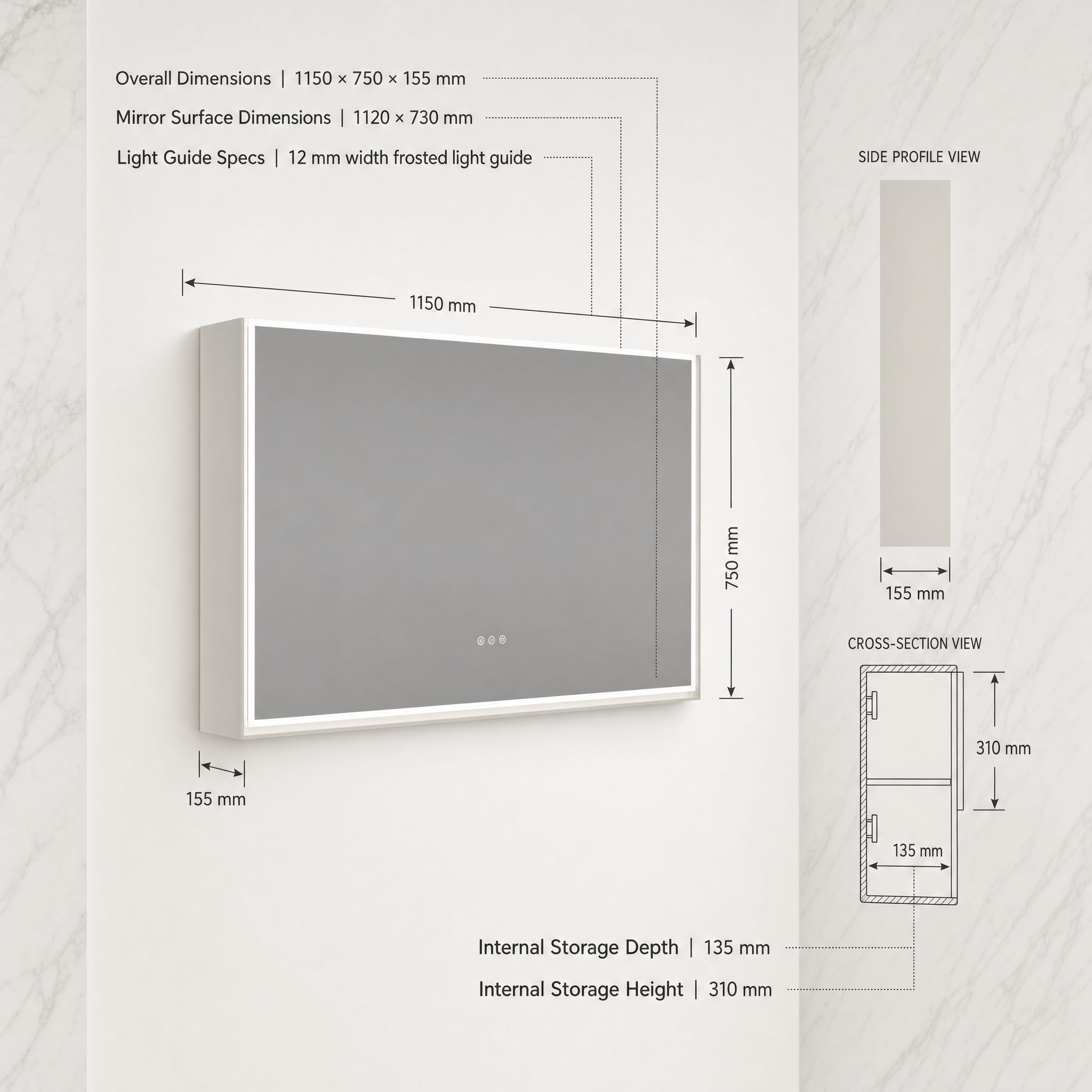
Our CNC glass edge-work machines are calibrated daily to maintain a bevel tolerance of ±0.5mm. After cutting, the glass undergoes a specialized washing and drying cycle using demineralized water (electrical conductivity < 10 μS/cm) to remove all microscopic glass powder and oil residues before silvering and protective back-coating application. This process prevents premature silver mirroring degradation and oxidation during long-term bulk storage in high-humidity regional warehouses.
2. LED Driver Compatibility and CRI Consistency
From manufacturing thousands of units, we recognize that color rendering and light uniformity define the user experience. For any high-end Large Hollywood Mirror, we implement a strict 3-step MacAdam Ellipse binning strategy to ensure there is no visible color temperature deviation between individual light bulbs or integrated LED strips. Every batch of LEDs is tested using an integrating sphere to verify a Color Rendering Index (CRI) of Ra ≥ 90 and an R9 red-rendering value of ≥ 50.
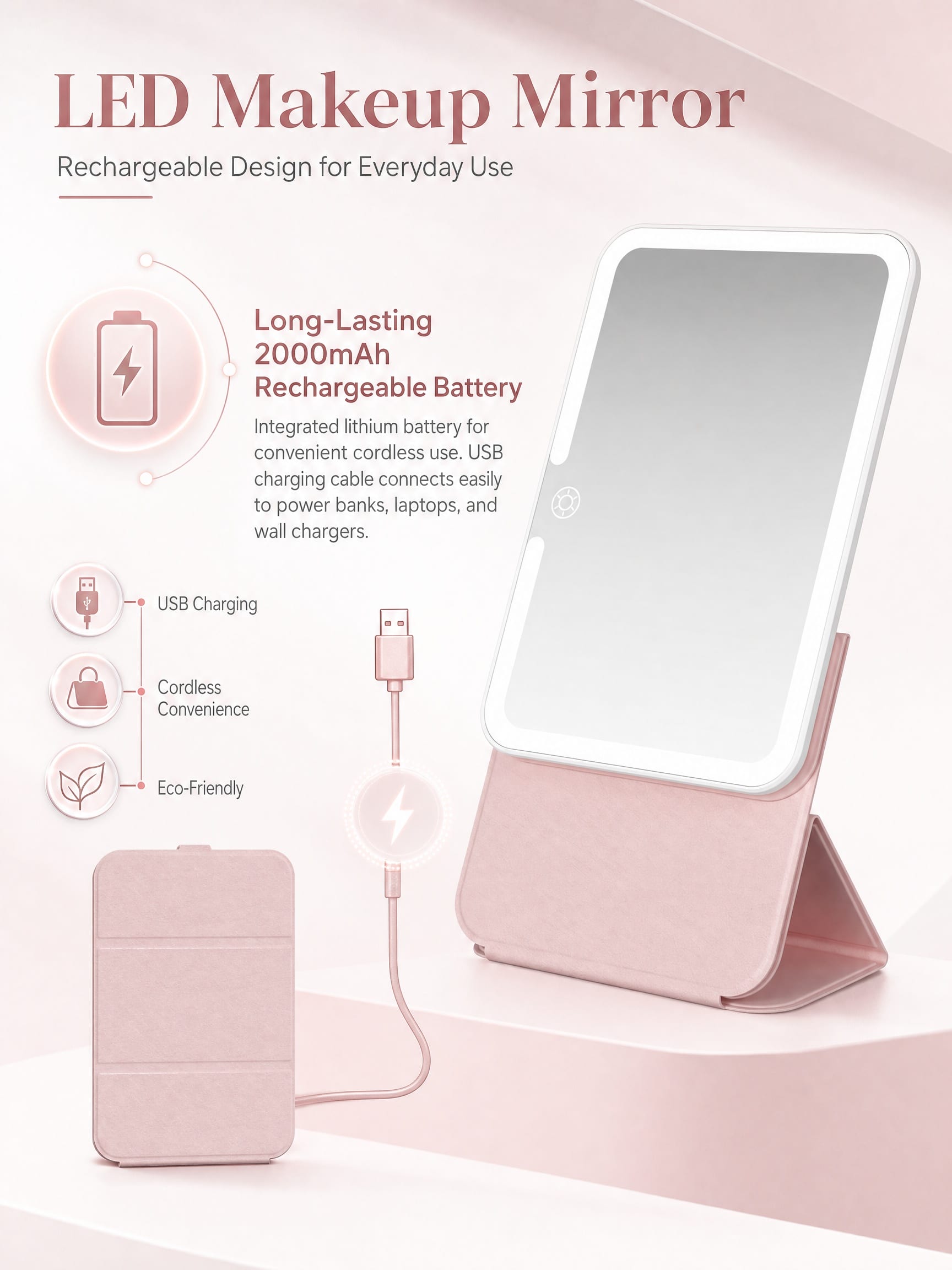
The electronic drivers are the heartbeat of the system. We pair our LEDs with constant-voltage, flicker-free drivers that boast an efficiency rating of ≥ 85% and a power factor of ≥ 0.9. These drivers are fully isolated and enclosed in flame-retardant polycarbonate housings. During inline inspection, drivers are tested for electromagnetic compatibility (EMC) and must pass a high-temperature load test of 50°C for 4 hours to verify thermal stability before final assembly into the metal frames.
3. Electrical Safety Compliance and Certifications
When executing global commercial shipments, compliance with local safety standards is non-negotiable. Our production lines are audited annually to maintain ISO 9001 certification, and all electrical assemblies are engineered to comply with UL 2108 (Low Voltage Lighting Systems) for North America and EN 60598-1/2-1 for European CE compliance. This level of oversight ensures that our Hollywood Mirror Customization projects comply with municipal building codes.
Every single completed vanity mirror undergoes a comprehensive 100% end-of-line electrical safety test. This includes a Dielectric Voltage-Withstand (Hi-Pot) test at 1500V AC for 2 seconds to check for insulation breakdown or leakage currents, and an Earth Ground Resistance test ensuring resistance is below 0.1Ω. Additionally, components such as touch dimmers and Bluetooth modules are certified under FCC Part 15 to eliminate radio frequency interference with other commercial hospitality electronics.
4. Structural Integrity and Finishing QC
A durable chassis is vital to protecting the delicate internal electronics of a Metal Vanity Makeup Mirror. We construct our structural frames using heavy-duty 6063-T5 extruded aluminum or SPCC steel sheet with an average thickness of 1.2mm to prevent twisting or bowing under the weight of the glass. The metal undergoes a multi-stage pre-treatment process, including degreasing and zinc-phosphating, prior to receiving an electrostatic powder coating cured at 200°C.
To guarantee long-term reliability in humid bathroom environments, the completed frames are subjected to a continuous 48-hour neutral salt spray test (ASTM B117) to verify that no corrosion, blistering, or paint adhesion failure occurs. For tabletop and wall-mounted models alike, we verify that all structural fasteners and mounting brackets can withstand up to 4 times the actual weight of the mirror assembly without structural deformation.
5. Package Engineering and Freight Drop Testing
Preventing glass breakage during transit is a major focus of our logistical QC protocols. Standard consumer packaging is often inadequate for heavy-duty B2B bulk freight. Consequently, we utilize custom-engineered packaging solutions featuring high-density expanded polyethylene (EPE) foam cushioning with a minimum thickness of 40mm wrapping all sides of the mirror frame.
Our standard packaging design is validated using the ISTA 1A (International Safe Transit Association) drop test protocol. This involves subjecting the packaged product to a sequence of 10 drops from a height of up to 76cm (depending on package weight)—including one drop on the most vulnerable corner, three on adjacent edges, and six on flat faces—followed by a vibration test at 1.5g for 1 hour. This rigorous testing ensures that bulk shipments arrive at their final destination with a zero-damage guarantee.
Commercial QC Protocols Comparison Table
The following table outlines the key differences in QC tolerances between commercial-grade and standard consumer-grade lighted vanity mirrors:
| Inspection Parameters | Commercial B2B Specification | Standard Consumer Specification | Primary Testing Instrument |
|---|---|---|---|
| Glass Material & Thickness | 5mm Copper-Free Silver Mirror | 3mm - 4mm Standard Aluminum Mirror | Digital Vernier Caliper & Chemical Test |
| Color Rendering Index (CRI) | Ra ≥ 90 (R9 ≥ 50) | Ra 70 - 80 (No R9 threshold) | Spectroradiometer Integrating Sphere |
| Electrical Isolation (Hi-Pot) | 1500V AC for 2 Seconds | Not tested or spot-tested only | Dielectric Strength (Hi-Pot) Tester |
| Chassis Corrosion Resistance | 48-Hour Salt Spray (ASTM B117) | None or basic visual check | Salt Spray Chamber |
| Packaging Standards | ISTA 1A Drop Test Certified | Standard retail box (bubble wrap only) | Drop Test Machine & Vibration Table |
Quality Control FAQ
Q: What are the standard defect tolerance rates (AQL) for wholesale vanity mirrors?
A: For commercial wholesale shipments, we enforce an Acceptance Quality Limit (AQL) of 0 for critical defects (safety hazards), AQL 1.0 for major defects (such as glass blemishes, non-functional LEDs, or major finish scratches), and AQL 2.5 for minor defects (including minor cosmetic irregularities in non-viewing areas).
Q: How do manufacturers test CRI and lumen consistency across mass-produced lighted mirrors?
A: We utilize an integrating sphere equipped with a high-speed spectroradiometer. This equipment measures the spectral power distribution of LED strips and light bulbs from every single component batch. It ensures that the correlated color temperature (CCT) stays within a strict ±100K tolerance limit and the CRI meets our minimum threshold of Ra ≥ 90.
Q: What UL or CE electrical safety tests are mandatory for commercial vanity mirror shipments?
A: The primary mandatory tests include the Dielectric Voltage-Withstand (Hi-Pot) test at 1500V to guarantee there are no current leaks through the chassis, and the Ground Continuity test to ensure the grounded metal chassis resistance remains below 0.1Ω. Additionally, components must be certified to UL 2108 or relevant EN/IEC standards.
Q: How does a factory prevent silver mirroring degradation and oxidation during bulk storage?
A: We exclusively use copper-free silver glass with a dual-layer lead-free protective backing paint. Furthermore, our raw materials are stored in climate-controlled rooms with a relative humidity kept strictly below 60% and temperatures maintained at 22°C ± 3°C, preventing moisture from reacting with the silver layer.
Q: What structural QC protocols prevent glass cracking during international ocean freight shipping?
A: Beyond the ISTA 1A drop testing, we perform pre-shipment structural stress-tests. This includes checking glass-to-frame bonding integrity using high-tensile structural adhesives that withstand temperatures up to 80°C without degradation. We also conduct simulation shipping vibration tests on a shaker table to mimic the long-term low-frequency vibrations typical of marine transit.