Nederlands
 Deutsch
 Español
  Français
 Русский
Engineering Frameless Bathroom Mirrors: Safety Backing and Edge-Polishing Standards for High-Traffic Commercial Spaces
Designing for high-traffic public restrooms requires a deep understanding of structural glass engineering, environmental stressors, and building safety codes. Selecting the correct specifications for Frameless Bathroom Mirrors is not merely an aesthetic choice; it directly impacts structural integrity, liability management, and long-term durability. This technical guide outlines how commercial architects and specifiers can balance impact-safety ratings with edge-finishing techniques to prevent moisture intrusion, silver degradation, and glass failure in heavy-use facilities.
1. Preventing Silvering Degradation and Desilvering in Humid Zones
In high-humidity commercial bathrooms, moisture and airborne cleaning agents constantly attack exposed mirror edges. The silvering layer on a premium Bathroom Mirror is highly susceptible to oxidation when moisture penetrates the protective copper and paint backings.
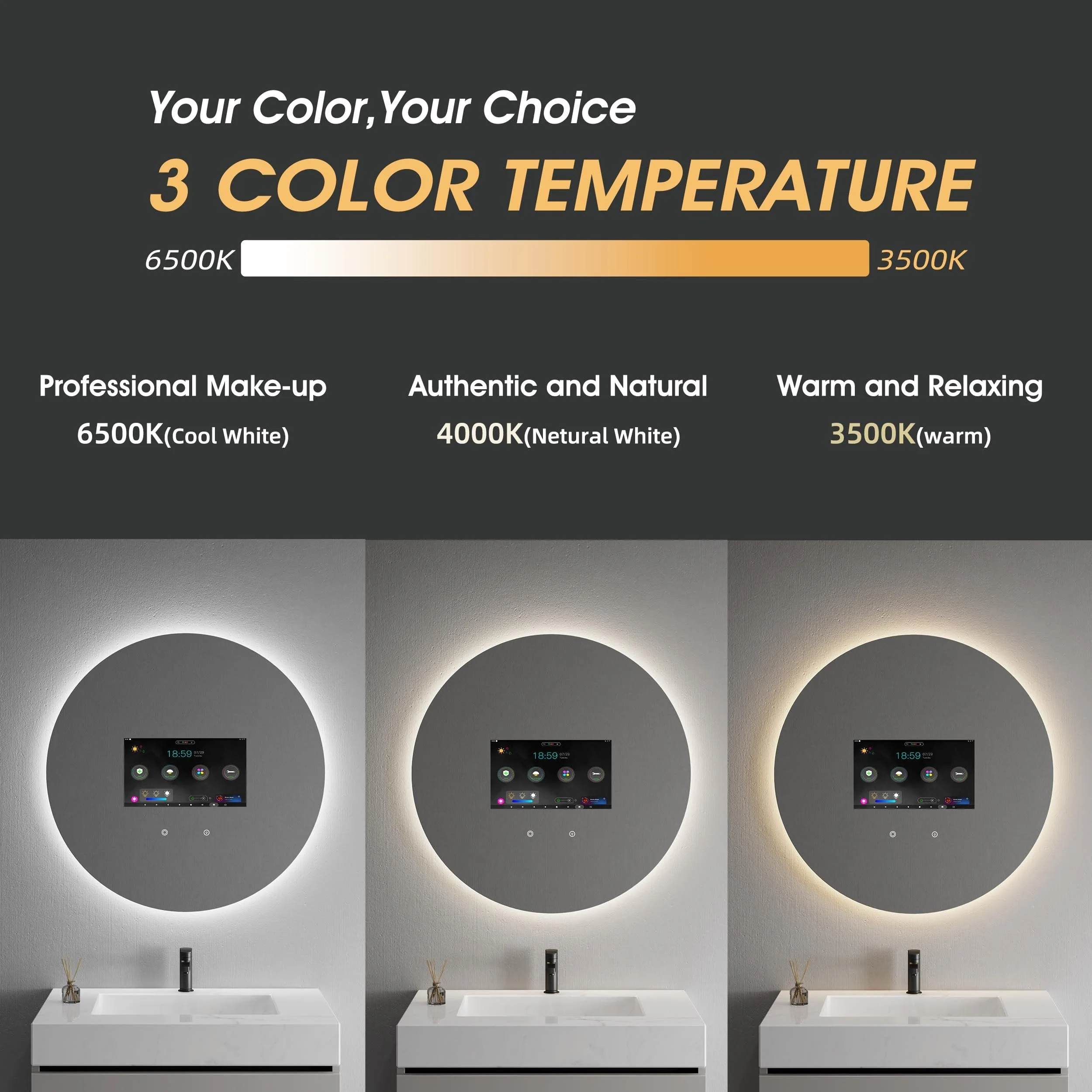
When specifying mirrors for these environments, it is critical to ensure that adhesive backings do not chemically react with the silver coatings. Many standard construction adhesives contain acidic curing agents (such as acetic acid in acetoxy silicones) that corrode the protective backing, leading to rapid desilvering and black edge spots. Specifiers must mandate the use of chemically neutral, solvent-free mirror mastic or specialized water-based adhesive backings engineered specifically to isolate and protect the silver layer from chemical attack.
2. Impact Safety Ratings: ANSI Z97.1 and Category Standards
Public restrooms require strict compliance with building safety codes, specifically relating to human impact hazards. Architectural specifications must clearly define the required impact safety ratings for mirror installations, contrasting laminated glass with adhesive safety backing films.
Under ANSI Z97.1 and CPSC 16 CFR 1201 standards, safety glass must withstand specified kinetic impact tests. Category I (CAT I) testing utilizes a 150-foot-pound impact, suitable for smaller panels or areas with lower risk. Category II (CAT II) requires a 400-foot-pound impact test, which is mandatory for larger glass expanses in high-risk, high-traffic commercial spaces. Factory testing protocols ensure that if a mirror breaks, the fragments remain adhered to the backing, eliminating the risk of falling shards. While laminated glass provides excellent built-in safety, utilizing a high-tensile CAT II filmed backing on monolithic glass is often the most cost-effective solution for standard Bathroom Mirror Customization projects.
3. Flat Polish vs. Pencil Polish Edging Under Structural Load
The type of edge finish specified for a frameless mirror directly determines its mechanical durability and resistance to thermal or structural stress. Raw, unpolished glass contains microscopic micro-fissures that act as stress concentration points, leaving the mirror highly vulnerable to cracking.
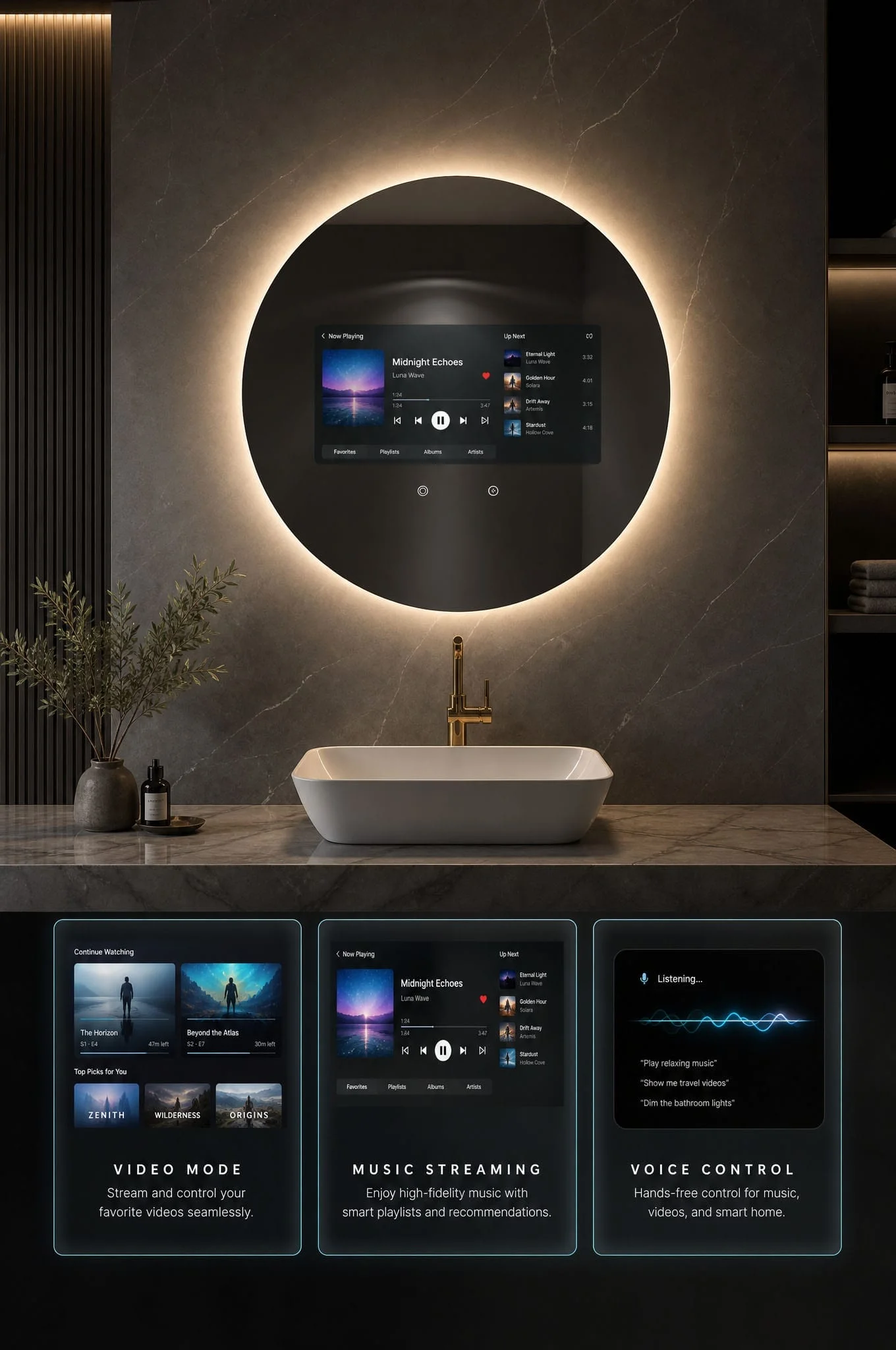
A flat polish edge features a flat profile with small 45-degree ground chamfers (miters) on the top and bottom corners. This profile distributes physical loads uniformly across the glass pane, making it ideal for large, butt-glazed mirror walls. Conversely, a pencil polish edge exhibits a rounded, C-shaped profile. The pencil polish is exceptionally effective at dissipating localized impact energy, making it the preferred choice for exposed-edge mirrors in high-traffic public corridors. Properly polished edges seal the perimeter against moisture capillary action, protecting the silvering chemistry from atmospheric corrosion.
4. Engineering Specification Comparison
The following table outlines the key technical differences between various edge profiles and safety backings used in commercial installations. This comparison assists engineering and procurement teams in selecting the optimal configuration based on specific project load and humidity levels.
| Specification Element | CAT I Safety Backing | CAT II Safety Backing | Flat Ground Polish Edge | Pencil Polish Edge |
|---|---|---|---|---|
| Primary Material | Woven polymeric film | Heavy-duty polyethylene film | Ground flat glass profile | Rounded (C-shape) glass profile |
| Impact Rating | 150 ft-lbs kinetic energy | 400 ft-lbs kinetic energy | N/A (Structural edge distribution) | N/A (Localized impact dissipation) |
| Best Application | Small residential/office mirrors | Heavy commercial restrooms | Butt-glazed and framed panels | High-traffic frameless mirrors |
| Moisture Resistance | Moderate | Excellent (vapor barrier) | High (requires edge sealant) | Maximum (smoother water runoff) |
5. Selection Checklist for Commercial Mirror Specifications
When preparing architectural submittals for commercial projects, ensure the following checklist is completed to prevent premature product failures and liability risks:
- Verify Glass Type: Specify high-durability float glass, preferably copper-free silver glass to naturally resist corrosion in wet environments.
- Safety Backing Standard: Ensure CAT II (ANSI Z97.1-2015) safety film is factory-applied with solvent-free, non-acidic adhesive.
- Edge Processing Quality: Select either flat or pencil polish edges; reject raw, seamed-only, or roughly ground edges that invite moisture and cracking.
- Adhesive Compatibility: Cross-reference the mirror manufacturer's approved mastic list with the structural adhesive specified by the installation contractor.
- Ventilation Planning: Ensure the mounting system allows a minimum of 1/8-inch (3mm) air gap behind the mirror to prevent trapped condensation.
Frequently Asked Questions
Q: What are the industry standards for commercial mirror safety backing?
A: The primary industry standards are ANSI Z97.1 (United States) and CPSC 16 CFR 1201. These standards define the impact performance requirements for safety glazing materials used in buildings, dividing coatings and films into Category I and Category II based on their ability to resist kinetic impact forces and retain broken glass shards.
Q: How does edge-polishing affect frameless mirror durability in high-humidity commercial bathrooms?
A: Edge polishing removes microscopic micro-fissures and stress points left behind during the cutting process. By creating a smooth, sealed boundary, flat or pencil polishing prevents humidity from utilizing capillary action to seep between the glass surface and the silver coating, thereby eliminating edge desilvering.
Q: What is the difference between CAT I and CAT II safety backing for commercial mirrors?
A: CAT I safety backing is designed to withstand an impact of 150 foot-pounds, which is suitable for smaller mirrors or lower-risk areas. CAT II safety backing is a thicker, reinforced woven or polyethylene film designed to withstand 400 foot-pounds of impact, making it mandatory for large-scale frameless mirrors in public commercial restrooms.
Q: How do you specify flat polish vs pencil polish edges for architectural mirrors?
A: For projects requiring seamless alignment or clean, geometric lines, specify "Flat Polish with a 1/16-inch chamfer." For standalone frameless mirrors in heavy-use corridors where impact risk and frequent cleaning occur, specify "Pencil Polish (rounded C-edge)" to maximize impact resistance and water runoff.
Q: Which backing materials prevent mirror desilvering in high-traffic public restrooms?
A: Copper-free silver coatings coupled with chemically neutral, polymer-based safety backing films are the industry standard. These materials avoid the use of acidic curing agents that chemically degrade the silver layer, and they act as an effective physical barrier against moisture and alkaline cleaning chemicals.