Nederlands
 Deutsch
 Español
  Français
 Русский
Why Modern Hotel Developers Prefer Frameless Bathroom Mirrors for Minimalist Guestrooms
In contemporary hospitality design, the guestroom bathroom serves as a critical touchpoint for luxury, hygiene, and modern aesthetics. Hotel developers and procurement specialists are increasingly moving away from bulky, framed vanity fixtures in favor of sleek, minimalist alternatives. This transition is driven not only by visual trends but also by rigorous engineering, structural safety, and long-term cost considerations that directly impact a property's return on investment.
1. Structural Integrity and Copper-Free Glass Technology
High-occupancy hospitality environments subject bathroom fixtures to constant humidity, temperature fluctuations, and aggressive cleaning agents. Standard reflective surfaces often suffer from edge corrosion, commonly known as "black edge," when moisture penetrates the protective backing paint and reacts with the copper layer. To prevent this degradation, leading developers specify advanced Frameless Bathroom Mirrors manufactured with premium, copper-free silvering processes.
Copper-free glass technology utilizes high-density, multi-layer protective coatings that isolate the reflective silver layer from atmospheric moisture and chemicals. In contract manufacturing, utilizing high-purity, distortion-free float glass raw materials ensures that the optical surface remains perfectly flat without warping or waviness. This chemical composition provides up to three times the corrosion resistance of standard mirrors, drastically extending the replacement cycle in high-humidity commercial bathrooms.
2. Precision Edge Processing and Safety Engineering
Without an external frame to conceal the glass boundaries, the perimeter of a frameless mirror demands precise processing to ensure both visual perfection and physical safety. Commercial-grade production processes utilize computerized double-edging machinery to achieve uniform pencil-edge, flat-polished, or beveled profiles. This clean edge-finishing eliminates microscopic micro-fractures along the glass border, which are the primary catalysts for stress cracks during installation and daily maintenance.
Furthermore, liability management is paramount for commercial property developers. Hospitality-grade glass must be equipped with a high-strength safety backing film (often Category II vinyl backing). In the rare event of severe impact, this backing holds the fractured glass shards firmly in place, preventing airborne debris and mitigating the risk of guest injury. When procuring a high-quality Bathroom Mirror, verifying these structural safety certifications is a vital step in the value-engineering checklist.
3. Advanced Mounting Systems and Installation Efficiency
In large-scale hospitality construction, time-to-completion is a major cost driver. Traditional framed mirrors often require complex, multi-point mounting anchors that are difficult to align quickly. Modern frameless architectural solutions rely on engineered mounting hardware, such as heavy-duty French cleat systems or structural Z-bars, paired with commercial-grade polyurethane adhesives.
These mounting systems distribute the weight of the glass evenly across the wall studs rather than concentrating stress on single anchor points. This prevents bowing and ensures that the glass remains completely flush with the wall. For developers opting for bespoke geometric configurations, such as a specialized Bathroom Mirror Customization program, standardized French cleats allow installation teams to achieve perfect alignment in a fraction of the time required for traditional frames.
4. Cost-Benefit Analysis: Frameless vs. Framed Mirrors
While the initial material cost of high-grade copper-free glass can be slightly higher than entry-level framed products, the total cost of ownership (TCO) tells a different story. Framed models frequently suffer from dust accumulation, moisture entrapment behind the molding, and joint splitting caused by temperature shifts. These issues lead to accelerated wear and premature replacement.
| Evaluation Metric | Frameless (Copper-Free) Mirror | Standard Framed Mirror |
|---|---|---|
| Corrosion Resistance | Excellent; copper-free chemistry prevents black edge oxidation. | Moderate to Poor; moisture traps easily inside frame joints. |
| Cleaning & Hygiene | Seamless surface; 3-second wipe down with standard cleaners. | Frames harbor dust, mold, and cleaning product residue. |
| Structural Lifespan | 10+ years in high-humidity commercial environments. | 3 to 5 years (frame warping, finish peeling, joint loosening). |
| Installation Speed | Rapid alignment via structural cleat/Z-bar systems. | Variable; dependent on bracket design and weight variations. |
By eliminating the frame, hotel properties significantly reduce maintenance labor. Housekeeping staff can sanitize a frameless surface in seconds without dealing with dirt-trapping crevices, ensuring a high level of hygiene that modern guests expect. Consequently, the amortized cost over a 10-year period strongly favors durable, frameless alternatives.
5. Customization Options for Commercial Bulk Orders
Selecting frameless designs does not mean sacrificing aesthetic variety. For hotel brands seeking to establish distinct visual signatures, manufacturers offer extensive customization possibilities. Developers can specify geometric variations like a modern Round Bathroom Mirror or an elegant Oval Bathroom Mirror to match specific vanity curves.
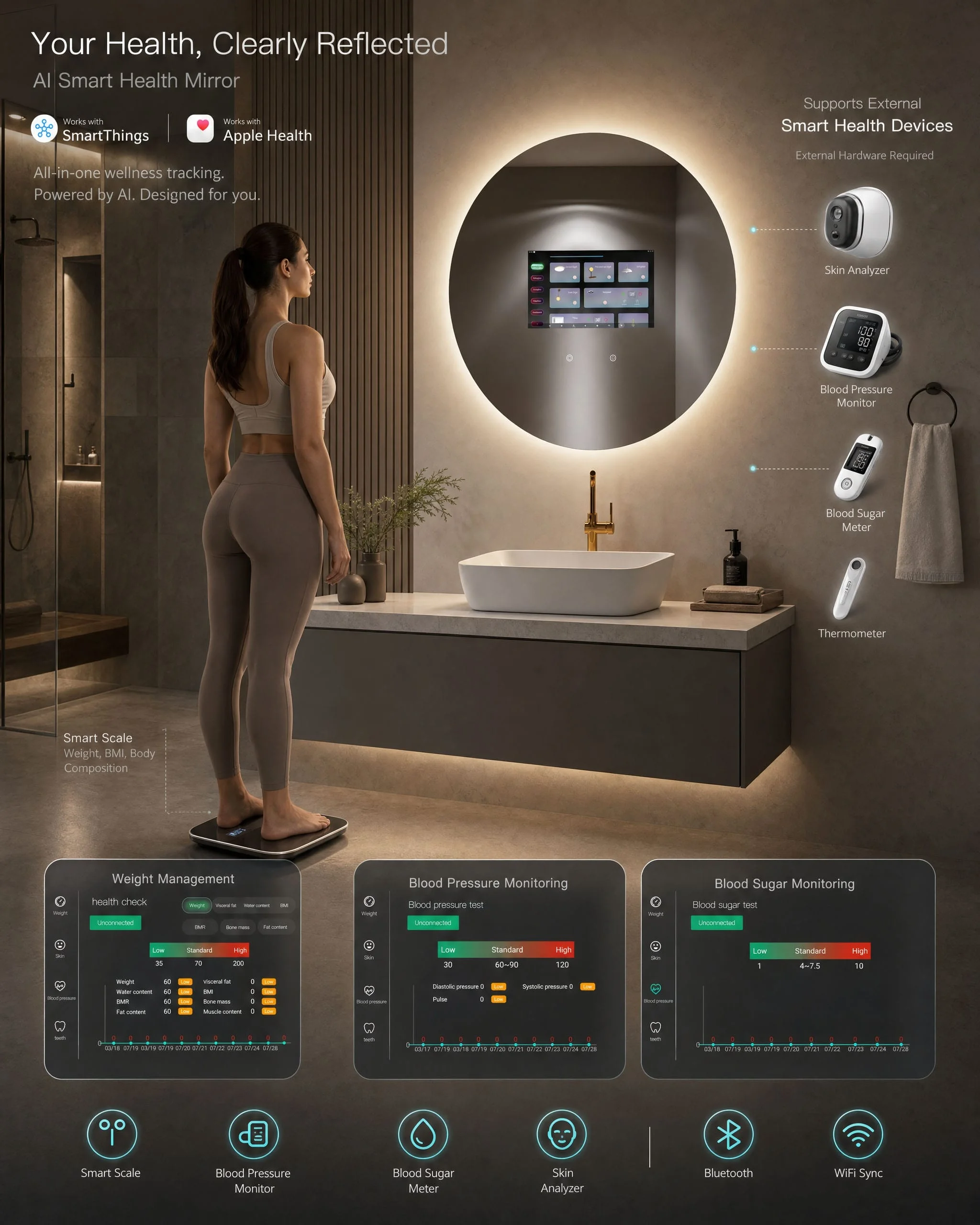
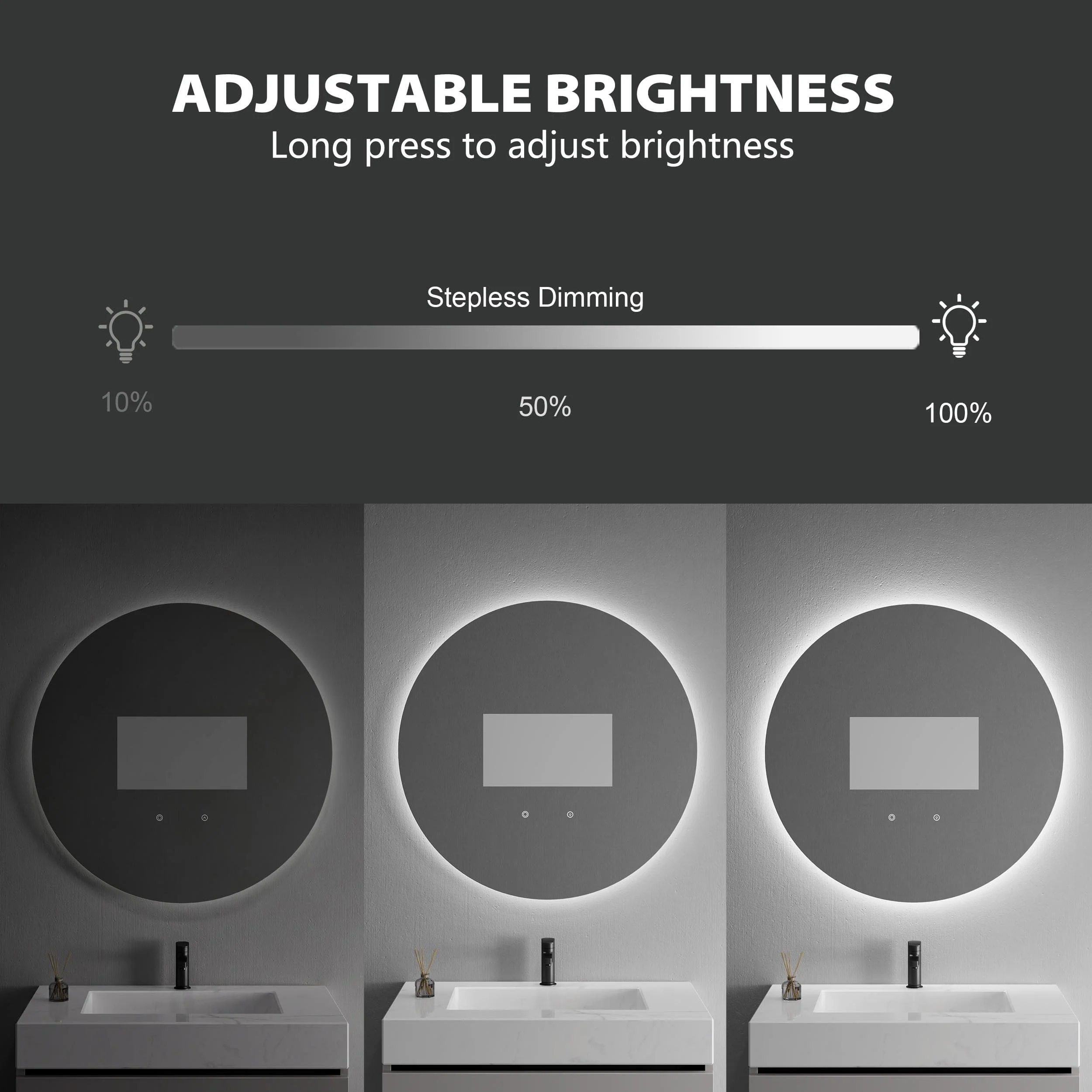
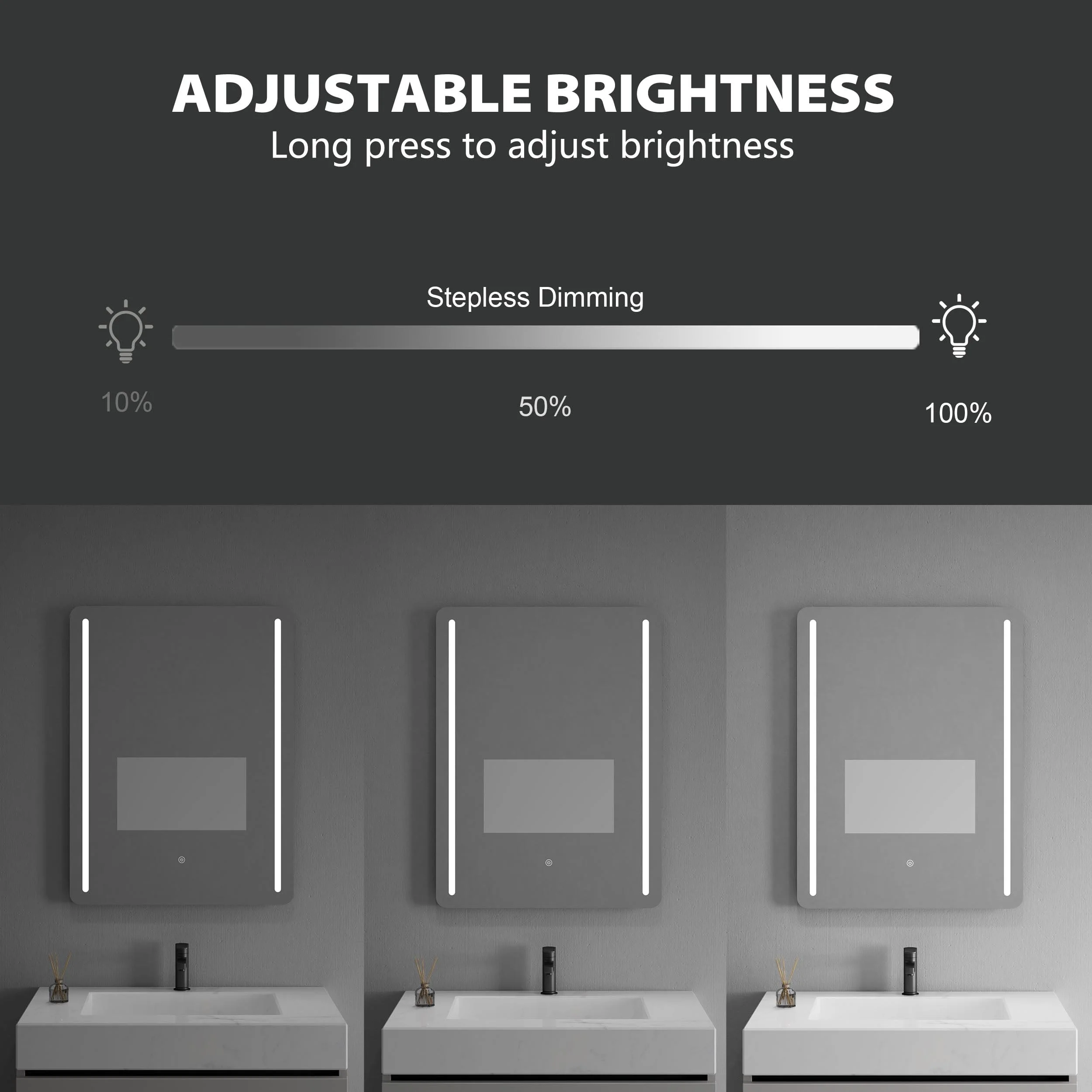
Additionally, advanced features such as integrated LED lighting, touch-sensor controls, built-in defogging pads, and digital displays can be seamlessly integrated directly behind the glass pane. This integration allows developers to provide high-tech amenities to guests while maintaining a clean, uninterrupted wall profile that enhances the feeling of spaciousness in compact guestroom layouts.
Frequently Asked Questions
Q: How do frameless mirrors handle moisture resistance in high-humidity hotel bathrooms?
A: Modern commercial frameless mirrors utilize advanced copper-free backing chemistry and multiple protective paint coatings. Without a metal or wood frame to trap water droplets, moisture evaporates rapidly from the polished glass edges, preventing the silver layer from oxidizing and forming unsightly black edges.
Q: What are the mounting and installation safety standards for commercial frameless mirrors?
A: Commercial installations require high-tensile structural mounting hardware, such as Z-bars or French cleats, paired with professional structural silicone. Additionally, the glass must feature an impact-resistant safety backing film (CAT II) to prevent shattering and hold all glass fragments in place if broken.
Q: How do frameless mirrors compare to framed mirrors in long-term hotel maintenance costs?
A: Frameless options dramatically reduce ongoing maintenance. They do not have crevices that collect dust, mold, or soap scum, allowing housekeeping teams to clean them much faster. Furthermore, they are immune to frame warping, rusting, or finish peeling, leading to a much longer service life and fewer replacement cycles.
Q: What customization options exist for bulk-ordered frameless LED mirrors?
A: For bulk hospitality orders, manufacturers can customize shapes, incorporate integrated anti-fog heating pads, add touch-capacitive sensors, and build in customized kelvin-temperature LED backlighting. The glass can also be custom-cut to specific architectural dimensions to align with vanity cabinetry.
Q: How do glass thickness and backing quality affect the durability of hotel mirrors?
A: A thickness of 5mm to 6mm is the industry standard for commercial environments, providing the rigidity needed to prevent optical distortion. High-quality backing paint protects the silver coating from mechanical damage during installation and chemical attacks from common wall adhesives and plaster outgassing.