Nederlands
 Deutsch
 Español
  Français
 Русский
Evaluating LED Drivers and CRI in Commercial Illuminated Bathroom Mirrors: A B2B Purchasing Guide
Sourcing high-durability illuminated mirrors for hospitality, multifamily developments, and commercial properties requires a strict technical assessment of their internal components. While aesthetic appeal often dominates initial design discussions, the long-term performance, visual comfort, and maintenance costs of a commercial Bathroom Mirror depend entirely on two critical elements: the LED driver and the Color Rendering Index (CRI). Understanding how these components interact under continuous load is essential to preventing premature product failures and sub-par guest experiences.
1. The Critical Role of LED Drivers in Commercial Longevity
The LED driver is the heart of an illuminated mirror, converting high-voltage alternating current (AC) into regulated direct current (DC). In commercial environments where fixtures remain operational for twelve to twenty-four hours a day, the driver experiences intense thermal and electrical stress. Specifying the correct driver topology—either constant current or constant voltage—directly influences the operational lifespan of the light source.
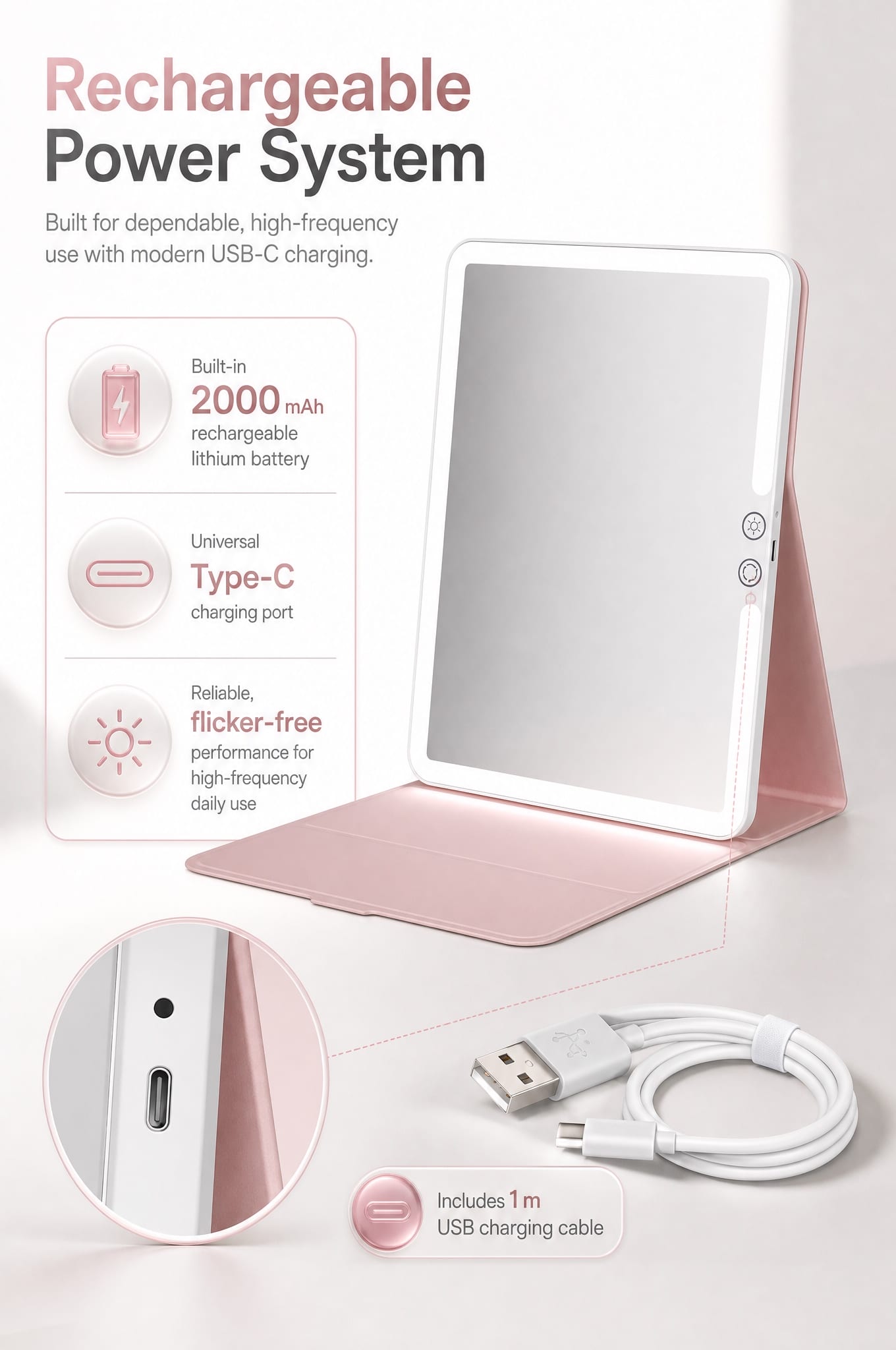
Unstable current delivery from low-grade drivers degrades LED chips rapidly, accelerating lumen depreciation and permanently shifting color temperatures. For heavy-duty commercial installations, constant current drivers are preferred because they maintain a steady current level across all diodes, preventing the thermal runaway that commonly occurs in cheaper constant voltage setups.
2. Color Fidelity Demystified: Beyond Nominal CRI (Ra)
Many procurement managers rely solely on nominal Color Rendering Index (Ra) values, assuming any fixture rated above CRI 80 is sufficient. However, nominal CRI is calculated as an average of only the first eight pastels (R1 to R8), which completely excludes the saturated red spectrum (R9) and realistic skin tone spectrum (R13). For hospitality applications, high-performance Bathroom Mirror Customization must specify a minimum CRI of 90, with an R9 value of at least 50.
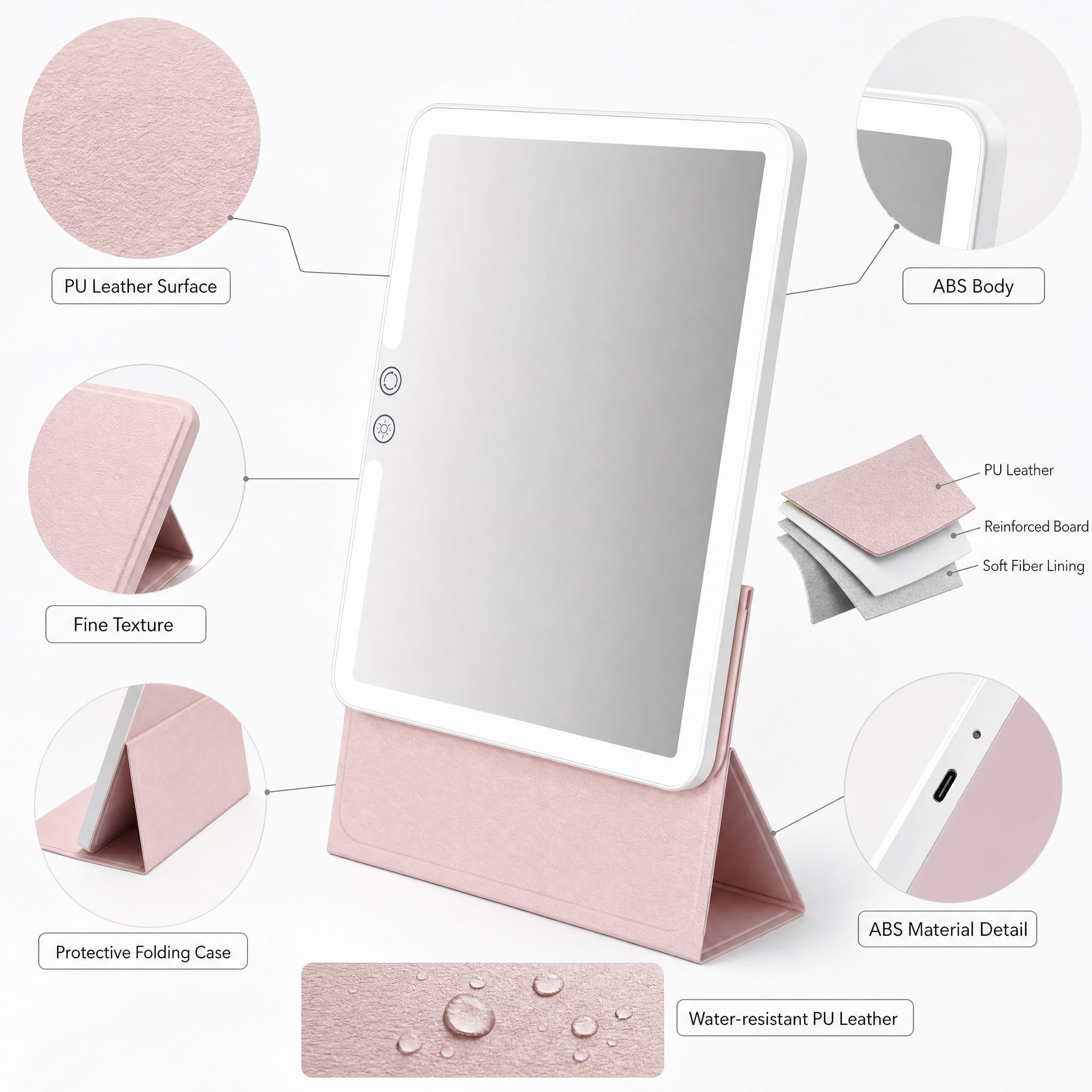
Without a strong R9 and R13 performance, light reflecting off human faces looks pale or greenish, impacting guest satisfaction. Ensure your supplier provides spectroradiometer test reports verifying these specific color channels alongside tight MacAdam ellipse steps (3-step or less) to guarantee color consistency across hundreds of rooms.
3. Dimming Protocols and Flicker Mitigation
Integrating illuminated mirrors into modern building automation systems requires careful coordination of dimming protocols. Pulse Width Modulation (PWM) and Constant Current Reduction (CCR/Analog) are the two primary dimming methods. PWM dims LEDs by switching them on and off at high frequencies. If this frequency is too low, it causes a high flicker index, leading to digital camera interference and user eye strain.
For high-end commercial spaces, choosing high-frequency PWM or CCR drivers ensures a flicker-free environment. This is especially vital when implementing specialized lighting fixtures like an Rgb Led Bathroom Mirror or complex architectural arrays that interface with central DALI, 0-10V, or TRIAC control systems.
4. Technical Comparison of Driver & LED Specifications
To assist procurement managers in setting hardware benchmarks, the table below outlines the core technical differences between consumer-grade mirrors and high-durability commercial systems.
| Specification Parameter | Standard Consumer Grade | Commercial / Hospitality Grade |
|---|---|---|
| LED Driver Type | Constant Voltage (unregulated) | Constant Current (regulated) |
| Color Rendering Index (Ra / R9) | CRI 80 / R9 < 0 | CRI 90+ / R9 ≥ 50 / R13 ≥ 90 |
| Power Factor (PF) & THD | PF < 0.90 / THD > 20% | PF ≥ 0.95 / THD ≤ 15% |
| Ingress Protection (IP Rating) | IP20 or IP44 | IP44 (Fixture) / IP65-IP67 (Driver) |
| Dimming Compatibility | Non-dimmable or simple resistive | 0-10V, TRIAC, DALI, or PWM (>25kHz) |
5. Thermal Management and Environmental Ingress Protection
LED drivers housed behind sealed vanity mirror chassis face a major engineering challenge: heat dissipation. Operating high-CRI LEDs requires more power and generates greater thermal output than low-end alternatives. Without proper chassis ventilation or integrated thermal paste to conduct heat away from the driver components, internal temperatures will skyrocket, leading to accelerated capacitor failure.
Furthermore, bathroom installations demand high resistance to moisture and steam. The driver itself must feature an IP65 or IP67 rating, shielding its delicate circuitry from condensation. For customized installations such as a premium Bathroom Mirror Cabinet, designers must verify that the driver position is isolated from wet zones while remaining accessible for long-term maintenance.
6. Frequently Asked Questions
Q: How does LED driver ripple current affect flicker in commercial vanity mirrors?
A: High ripple current in low-quality LED drivers causes rapid fluctuations in output current, which manifests as high-frequency optical flicker. This can cause headaches and eye strain for guests, and creates distracting banding lines on smartphone cameras during video recordings or selfies.
Q: What is the minimum CRI and R9 value required for commercial bathroom lighting?
A: Commercial hospitality and multifamily spaces require a minimum CRI (Ra) of 90, with an R9 (red) value of 50 or higher and an R13 (skin tone) value of at least 90. This ensures accurate skin tones and color reproduction for makeup application and grooming.
Q: How do constant current vs constant voltage drivers impact LED mirror lifespan?
A: Constant current drivers regulate the flow of electricity precisely to prevent thermal runaway, significantly extending LED lifespan. Constant voltage drivers are cheaper but struggle to protect LEDs from overcurrent as temperature changes, leading to faster light degradation.
Q: What IP rating is required for LED drivers integrated into hospitality bathroom mirrors?
A: While the overall mirror chassis should carry at least an IP44 rating to resist splashes, the integrated LED driver itself should ideally be IP65 or IP67 rated to protect internal components from the high-humidity, steam-heavy environments typical of hotel bathrooms.
Q: How does high-CRI lighting in mirrors affect power consumption and thermal management?
A: High-CRI LED chips require more energy to produce balanced spectral light, which lowers their overall luminous efficacy. This higher power draw generates more heat, requiring advanced thermal management, such as aluminum heat sinks and high-grade thermal pads inside the mirror chassis, to prevent driver overheating.