Nederlands
 Deutsch
 Español
  Français
 Русский
Evaluating OEM/ODM Partners for Custom Oval Bathroom Mirrors
Selecting the right manufacturing partner is critical for bringing a custom oval bathroom mirror to market. An experienced OEM/ODM supplier provides more than just production; they offer comprehensive design, engineering, and supply chain expertise. This overview details the key capabilities B2B buyers should evaluate, from material science and tooling to production scalability and quality control. Understanding these factors ensures a successful partnership and a high-quality final product that meets both market demands and technical specifications for durability and performance.
The OEM vs. ODM Co-Development Process
Understanding the distinction between Original Equipment Manufacturer (OEM) and Original Design Manufacturer (ODM) services is the first step in a successful partnership. In an OEM model, you provide the complete product design and specifications, and we act as your production facility. This gives you full control over the intellectual property. In an ODM model, we collaborate on the design, often adapting one of our existing platforms to meet your specific requirements for aesthetics, features, and cost. This can significantly reduce your development time and R&D investment. Our process for Bathroom Mirror Customization is flexible, accommodating both approaches to ensure your project goals are met efficiently.
Material Engineering for High-Humidity Environments
The bathroom environment presents unique challenges for material durability, requiring resistance to moisture, steam, and cleaning agents. The choice of frame material for an Oval Bathroom Mirror directly impacts its longevity, aesthetic appeal, and unit cost. We provide expert guidance on material selection, balancing performance trade-offs to meet your target price point and quality standards. Our engineering team rigorously tests materials for corrosion resistance, structural integrity, and finish adherence in simulated high-humidity conditions.
| Frame Material | Durability & Humidity Resistance | Aesthetic & Finish Options | Relative Cost |
|---|---|---|---|
| 304 Stainless Steel | Excellent corrosion resistance, ideal for premium and commercial applications. High structural rigidity. | Brushed, polished, PVD-coated (e.g., matte black, brushed gold). | High |
| Anodized Aluminum | Very good resistance to moisture. Lightweight yet strong. Anodized layer provides a protective seal. | Matte or satin finishes in various colors (silver, black, bronze). Clean, modern look. | Medium |
| ABS Polymer | Completely waterproof and will not rust or corrode. Good impact resistance. | Highly versatile; can be molded into complex shapes and finished in any color, metallic plating, or wood grain effects. | Low |
| Iron / Steel (Powder Coated) | Durability is highly dependent on the quality of the powder coating. Any scratch can expose the metal to rust. | Wide range of colors and textures (matte, gloss, textured). | Low-Medium |
Advanced Glass Silvering and Edge Sealing
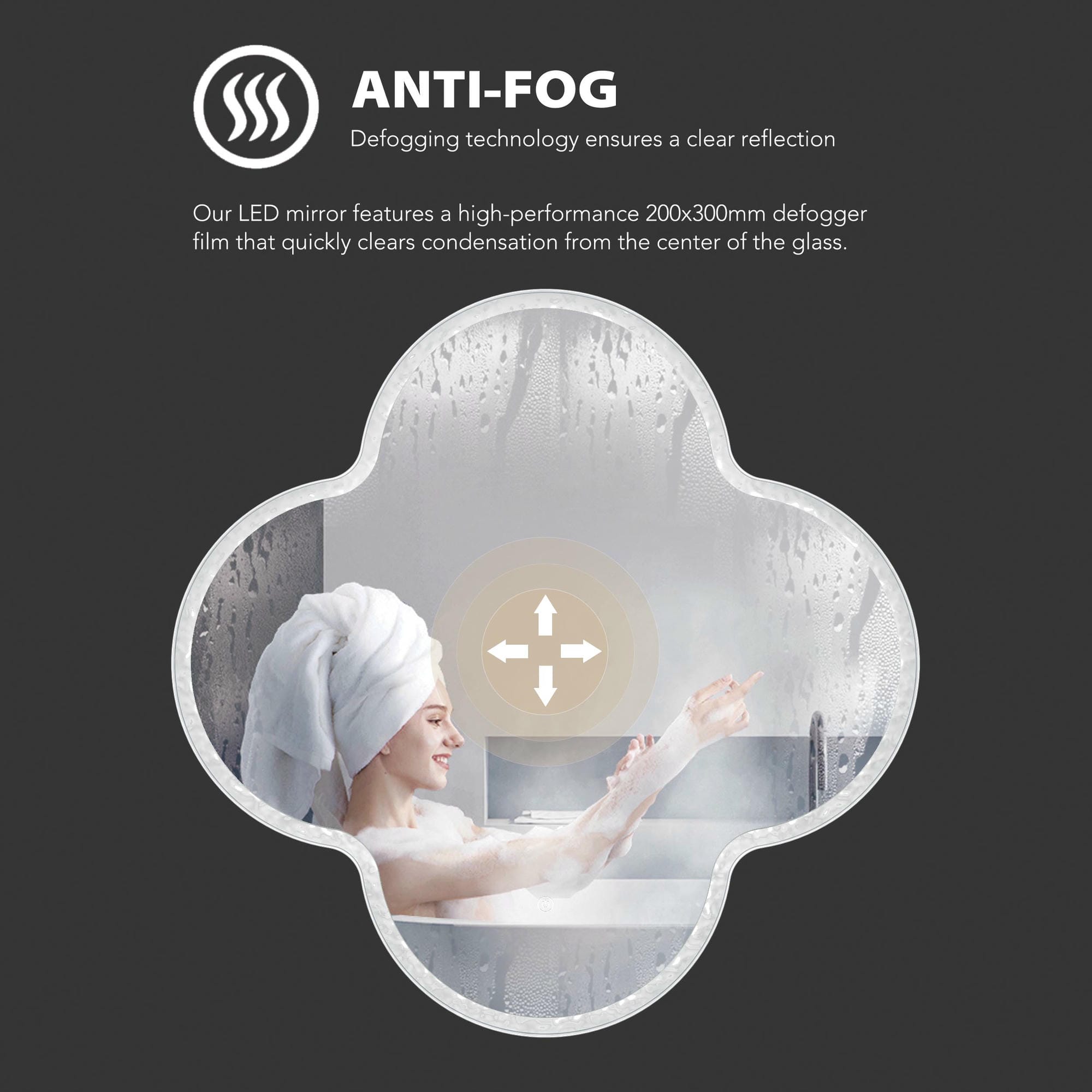
A common failure point in bathroom mirrors is 'black edge' or 'creep' corrosion, where moisture penetrates the mirror's edge and degrades the silver reflective layer. We mitigate this through a multi-stage process. Our process begins with high-quality, low-iron float glass for maximum clarity. The silvering process is followed by multiple protective layers of copper and paint, which are then cured under controlled conditions. Most importantly, we apply a specialized edge sealant that creates an impermeable barrier against moisture, ensuring long-term durability even in commercial settings like hotels and spas.
Tooling and Mold Creation for Unique Oval Frames
Creating a unique oval frame shape requires precision tooling and mold creation, the cost and complexity of which vary by material. For injection-molded polymer frames, we utilize CNC machining to create high-precision steel molds capable of producing tens of thousands of identical parts with complex details. For fabricated metal frames, tooling involves creating jigs and fixtures for cutting, bending, and welding. We provide a detailed breakdown of non-recurring engineering (NRE) costs for tooling, amortized over the initial production run, giving you a clear picture of the total project investment. This expertise is central to our Vanity Mirror Customization services.
Production Scalability and Lead Time Management
From initial prototype to full-scale mass production, we provide transparent timelines and scalable capacity. Our project management team works closely with your procurement specialists to establish a clear production schedule. We manage the entire supply chain, from raw material sourcing to final assembly and packaging, to mitigate delays. This integrated approach allows us to optimize production flow and provide reliable lead times, ensuring your product reaches the market on schedule. We can scale production up or down based on your sales forecasts, providing the flexibility needed in a dynamic market.
Frequently Asked Questions (FAQ)
Q: What are the typical Minimum Order Quantities (MOQs) for custom oval bathroom mirrors?
A: MOQs vary based on the complexity of the design and materials used. Generally, for a fully custom design requiring new tooling, MOQs start around 500 to 1,000 units. For modifications to existing designs (ODM), we can often accommodate lower quantities. Please contact our sales team with your specific project details for an accurate quote.
Q: How does the OEM/ODM process differ for mirrors with integrated LED lighting versus non-lit models?
A: The process for LED models includes additional engineering and certification steps. This involves electronics design (driver selection, CCT/CRI specification, dimming functionality), thermal management to ensure LED longevity, and regulatory compliance testing (e.g., UL, CE, ETL). Prototyping is more intensive to validate both the lighting performance and electrical safety.
Q: What material options are available for custom mirror frames and what are their durability trade-offs in high-humidity environments?
A: We offer a range of materials including 304 stainless steel (highest corrosion resistance), anodized aluminum (excellent balance of durability and cost), and ABS polymers (completely waterproof). Powder-coated steel is a cost-effective option, but its durability depends heavily on the coating's integrity. The best choice depends on your product's target market, price point, and desired lifespan.
Q: What is the standard lead time for a new custom mirror design from prototype approval to mass production?
A: After the final prototype is approved, the typical lead time for the first mass production run is between 60 to 90 days. This includes time for raw material procurement, tooling fabrication, production line setup, and initial quality assurance checks. Subsequent orders typically have a shorter lead time of 45 to 60 days.
Q: How are intellectual property and design exclusivity handled in an ODM partnership?
A: In an ODM partnership, we establish clear terms in our manufacturing agreement. While the base model may be our intellectual property, any custom modifications, unique tooling, or new design elements developed specifically for your project are exclusively yours. We sign non-disclosure agreements (NDAs) and can offer market or regional exclusivity for the final co-developed product.