 Nederlands
 Deutsch
 Español
  Français
 Русский
A Wholesaler's Guide: Sourcing & Specifying Bulk Orders of Oval Bathroom Mirrors
For wholesalers and distributors, sourcing oval bathroom mirrors involves more than just aesthetics. Success in bulk procurement hinges on a deep understanding of the technical specifications that dictate product longevity, landed cost, and supply chain reliability. This guide moves beyond surface-level design choices to provide a manufacturer's perspective on the critical factors—from glass quality and backing paint to frame construction and packaging—that ensure a profitable and durable product line. Focusing on these details helps de-risk your investment and build a reputation for quality.
Understanding Glass & Silvering Specifications
The core of any mirror is its glass and reflective layer. For commercial applications, specifying the right materials is crucial for preventing defects and ensuring a long service life, especially in high-humidity bathroom environments. Standard glass thickness for bathroom mirrors is typically 4mm or 5mm. While 4mm is cost-effective, 5mm glass offers superior rigidity and a flatter, distortion-free reflection, making it a better choice for larger mirrors or premium product lines. The silvering process is equally important. We utilize a copper-free silvering process, which applies a layer of silver directly to the glass, followed by multiple layers of protective paint. This method significantly enhances resistance to corrosion and black edge, a common failure point in mirrors exposed to moisture.
Choosing the Right Frame Material for Durability
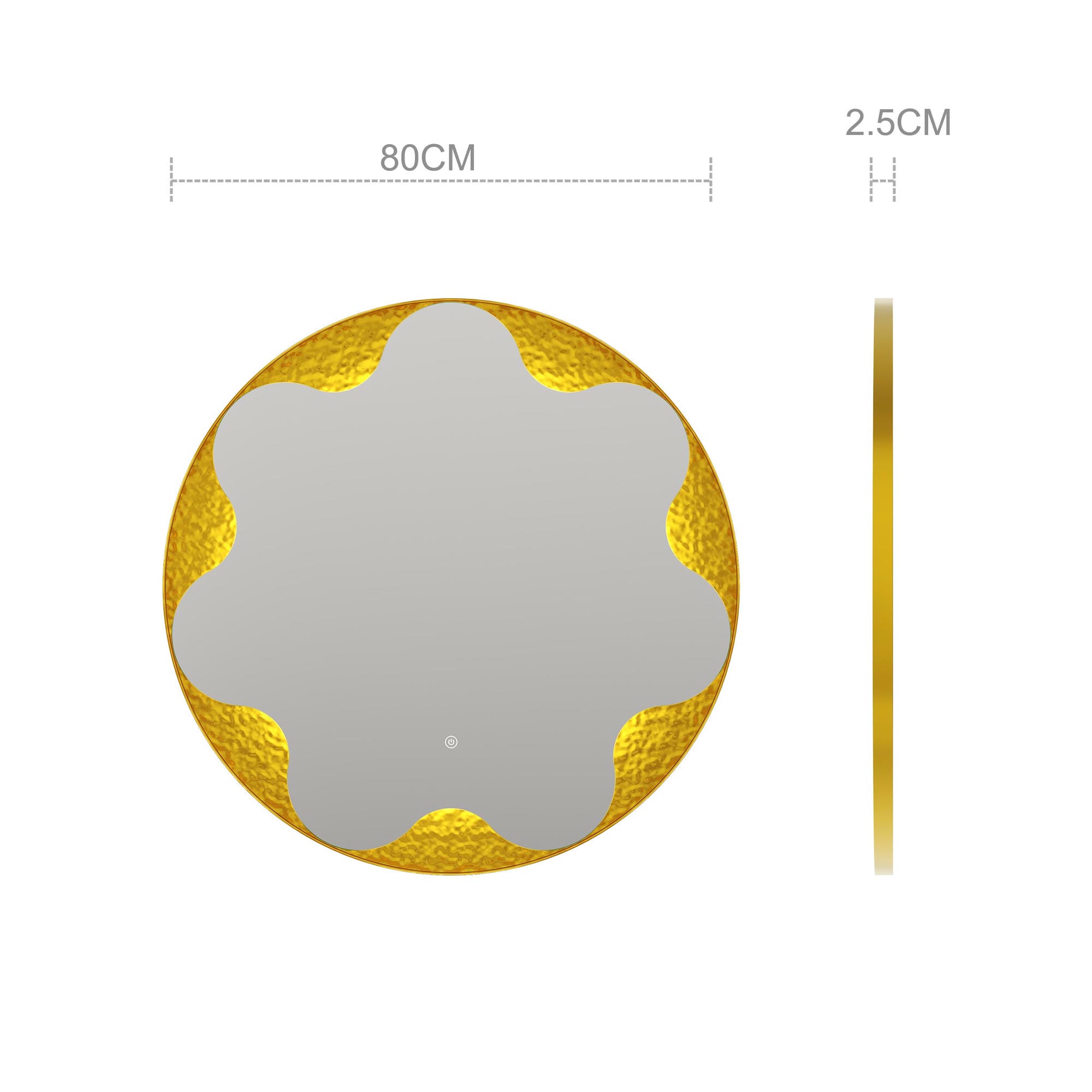
The frame not only defines the mirror's style but also provides structural support and protection. The choice of material directly impacts the product's durability, weight, and cost, particularly in the humid conditions of a bathroom. When selecting a Framed Bathroom Mirror, it is essential to balance these factors to meet your market's price point and quality expectations. Below is a comparison of common materials used in bulk manufacturing.
| Material | Corrosion Resistance | Unit Cost | Best Use Case |
|---|---|---|---|
| Stainless Steel (304) | Excellent | High | Premium hospitality, commercial projects, and coastal areas. |
| Aluminum Alloy | Very Good | Medium | Mid-range residential and commercial use; offers a great balance of performance and cost. |
| Polystyrene (PS) | Good (when sealed) | Low | Entry-level and budget-conscious projects; high-volume retail. |
Edge Work Explained: Polished vs. Beveled Edges
The finish of the mirror's edge is a key detail that affects both safety and aesthetics, particularly for Frameless Bathroom Mirrors. A seamed edge is the most basic finish, where the sharp edges are simply sanded to make the mirror safe to handle. A polished edge takes this a step further, grinding and polishing the edge to a smooth, shiny finish, which is the standard for most visible frameless applications. A beveled edge involves cutting and polishing an angle on the front edge of the mirror, creating a decorative border that adds depth and elegance. The width of the bevel (e.g., 1/2 inch, 1 inch) can be specified and impacts the final unit cost.
Navigating MOQs and Lead Times for Custom Orders
Understanding Minimum Order Quantities (MOQs) and production lead times is fundamental to managing inventory and project timelines. For standard models from our catalog, MOQs are generally lower, and lead times are shorter, typically ranging from 30-45 days. However, for fully custom OEM orders involving unique shapes, frame profiles, or integrated technology, MOQs will be higher to account for new tooling and material sourcing. Lead times for these custom projects are also longer, often 60-90 days after sample approval. We recommend discussing your specific needs with our team to get precise figures for your Bathroom Mirror Customization project.
Critical Packaging Specifications for Freight Shipping
Product damage during transit can erode profits and delay projects. Robust packaging is not an area to cut costs. For bulk orders, especially Less than Container Load (LCL) shipments which involve more handling, specifying durable packaging is non-negotiable. We recommend a multi-layer approach: an inner PE bag to protect from moisture, custom-molded foam or honeycomb cardboard corner protectors, and a sturdy 5-ply outer carton. For large or high-value orders, we can develop ISTA-certified packaging solutions designed to withstand specific drop heights and compression forces. As a case study, we worked with a large hospitality client to engineer custom packaging that reduced their breakage rate from 4% to under 0.5% on a 10,000-unit order.
Frequently Asked Questions (FAQ)
Q: What are the standard MOQs for custom oval bathroom mirror designs?
A: Standard MOQs for fully custom designs typically start at 300-500 units per SKU. This allows for efficient production runs and amortization of tooling costs. For minor modifications to existing models, MOQs may be lower. We advise discussing your specific project for an accurate quote.
Q: How does glass thickness and silvering quality impact unit cost and durability in bulk orders?
A: Moving from 4mm to 5mm glass can increase unit cost by 10-15% but significantly improves durability and reduces distortion. High-quality, copper-free silvering adds a marginal cost but drastically increases the mirror's lifespan by preventing corrosion, offering a much better long-term value.
Q: What are the key differences between frame materials (e.g., stainless steel, aluminum, PS) for high-humidity environments?
A: Stainless steel (304 grade) offers the best corrosion resistance, ideal for premium applications. Aluminum provides a very good balance of durability and cost. Polystyrene (PS) is the most budget-friendly but is more susceptible to degradation over time unless properly finished and sealed.
Q: What packaging specifications are necessary to minimize damage during LCL/FCL freight shipping?
A: For LCL, we strongly recommend individual packaging with reinforced corner protection and a 5-ply carton. For FCL, while the risk is lower, robust packaging is still key. Palletizing orders correctly and using dunnage to prevent shifting is also critical. ISTA-3A certified packaging is the gold standard for parcel shipments.
Q: How do lead times differ for standard versus fully custom (OEM) mirror orders?
A: Standard catalog orders typically have a lead time of 30-45 days. Fully custom OEM orders, which require new molds, material sourcing, and sample approvals, generally have a lead time of 60-90 days from the confirmation of the final design.





