Nederlands
 Deutsch
 Español
  Français
 Русский
Integrating Smart Audio: Best Practices for Sourcing OEM Bluetooth Bathroom Mirrors for Student Housing
Procuring smart amenities for high-density student housing projects requires a strict balance between modern technology and commercial-grade durability. Integrating Bluetooth audio into bathroom mirrors offers a high-end feel that attracts student residents, but standard consumer-grade products quickly fail under the demands of multi-family facilities. Sourcing agents and project developers must evaluate OEM manufacturers on specific technical engineering standards to ensure these smart fixtures withstand moisture, high-density wireless interference, and frequent room turnovers.
1. Preventing Bluetooth Signal Interference in High-Density Living
In student housing environments, dozens of active mobile devices operate within close proximity, separated only by standard drywall or light concrete partitions. Standard Bluetooth receivers can broadcast overlapping signals, leading to cross-room connection errors where a student in Room 302 accidentally pairs with the mirror in Room 304. To prevent these localized connection conflicts, sourcing agents must specify Bluetooth chipsets that feature unique MAC address identifiers and localized pairing protocols.
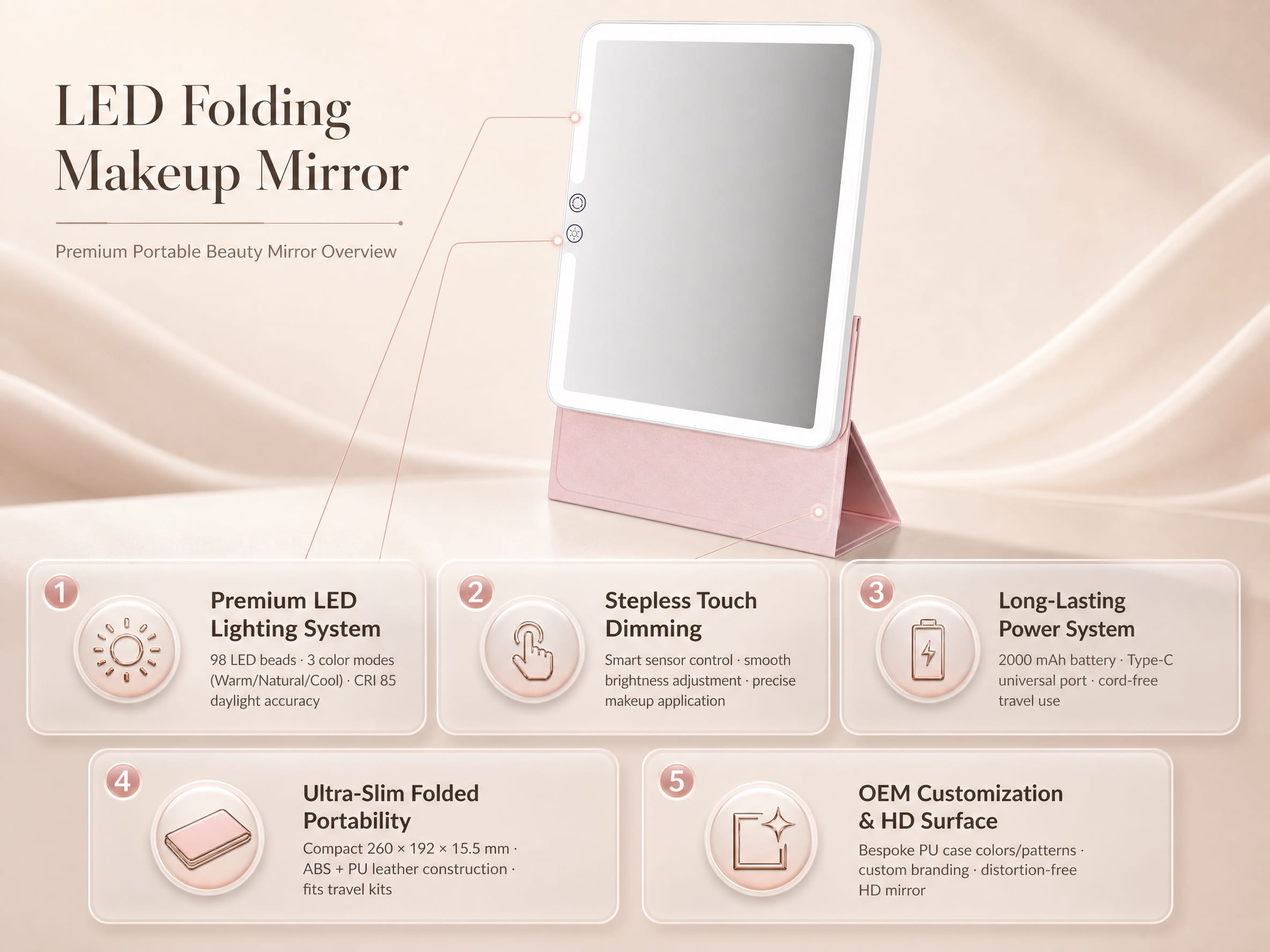
OEM engineering should implement a localized pairing window that only opens when the mirror's capacitive touch button is physically pressed, auto-closing after 60 seconds of inactivity. Additionally, specifying a power-capped Class 3 Bluetooth transmitter restricts the signal range to a 3-meter radius, confining the connection strictly within the bathroom footprint. This technical configuration prevents accidental connection hijackings and reduces support requests to campus facility management teams.
2. Moisture Protection and Acoustic Chamber Engineering
Bathrooms in student housing experience prolonged periods of high relative humidity and localized condensation. To protect the integrated audio electronics, a standard Bathroom Mirror must be engineered with sealed back-chassis designs. Sourcing agents should verify that the factory-installed acoustic components carry a minimum IP44, or ideally IP66, ingress protection rating.
Rather than using exposed paper-cone speakers that deteriorate rapidly in humid environments, commercial-grade smart mirrors utilize sealed transducers or specialized sound exciters. Exciters adhere to the rear of the mirror glass, turning the mirror pane itself into a sound-generating diaphragm. This design eliminates the need for exposed speaker grilles on the chassis, protecting the internal components from water droplets, high humidity levels, and aggressive chemical cleaning agents used during student turn seasons.
3. Sound Quality Verification and OEM Exciter Standards
Sourcing teams must differentiate between low-tier piezoelectric transducers and high-clarity OEM exciters when evaluating factory samples. Piezoelectric components are prone to tinny sound profiles, high-frequency distortion, and rattling at higher volumes, which degrades the perceived quality of the property. Evaluating a manufacturer's Bathroom Mirror Customization process should include testing the Total Harmonic Distortion (THD) of the integrated audio system.
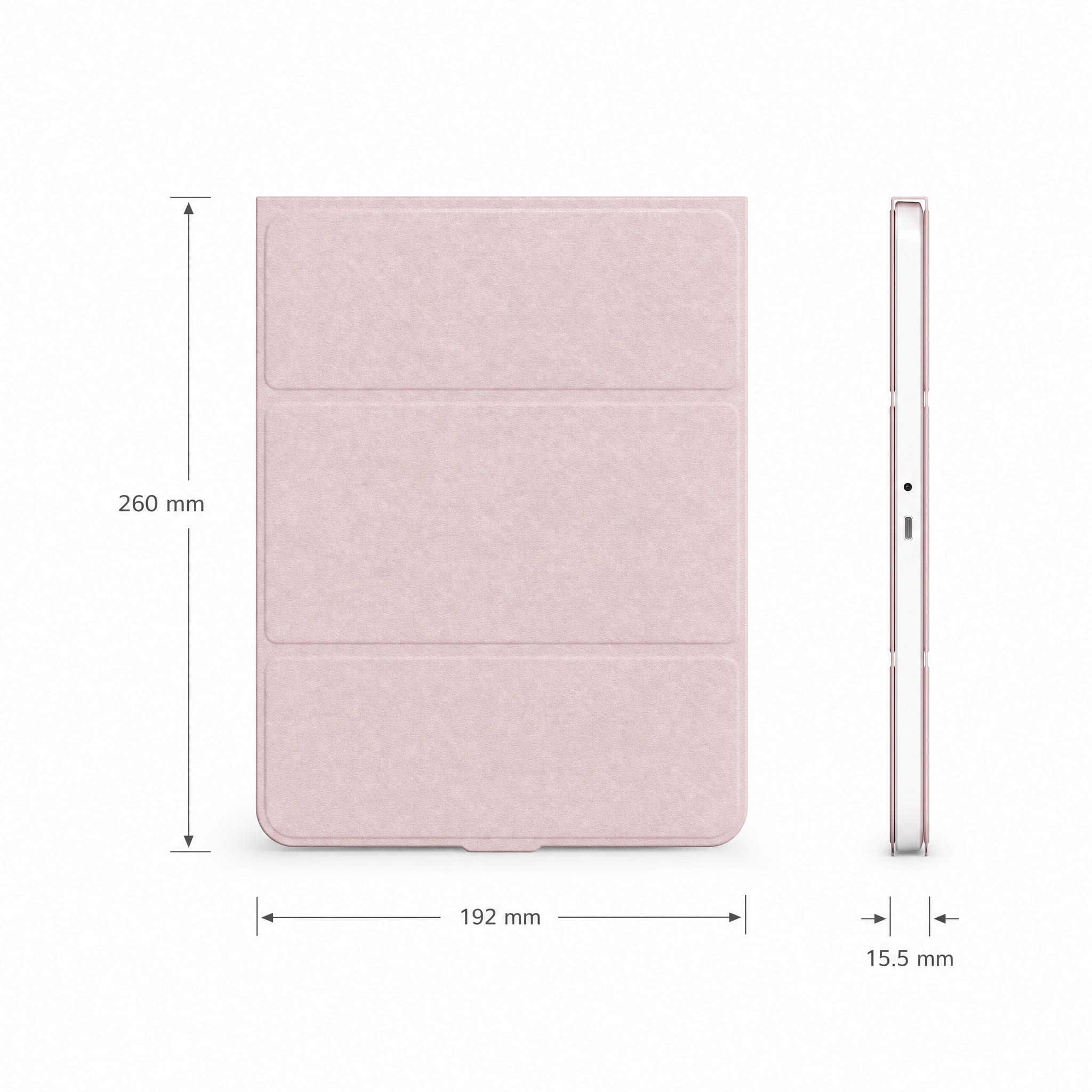
A premium commercial-grade exciter configuration will achieve a THD of less than 1% at normal listening volumes. Requesting a factory-level audio sweep test verifies that the assembly doesn't cause the mirror's structural frame or integrated LED housing to vibrate sympathetically. This is particularly critical when sourcing products like a high-end Bluetooth Hollywood Mirror or illuminated backlit units where loose tolerances lead to audible rattling.
4. Modular Maintenance and Lifespan Considerations
Student housing fixtures must be built for easy maintenance. Traditional integrated smart mirrors often feature monolithic designs where a blown speaker or a failed Bluetooth receiver requires the facility team to replace the entire mirror assembly. When working with an OEM manufacturer, prioritize modular component architecture.
Modular designs house the power supply, LED driver, and Bluetooth receiver module in individual, hot-swappable compartments located behind the mirror panel. If a component fails, on-site maintenance technicians can quickly unscrew the rear access panel and replace the specific modular component within minutes, reducing maintenance costs and avoiding the need to throw away an otherwise functional structural mirror.
5. Engineering Comparison for Smart Audio Sourcing
To assist procurement managers in selecting the correct hardware profile, the table below outlines the key structural and technical differences between standard consumer-grade Bluetooth mirrors and heavy-duty, commercial-grade OEM models engineered for multi-family installations.
| Technical Feature | Low-Tier Consumer Standard | Commercial OEM Standard |
|---|---|---|
| Bluetooth Range Control | Class 2 Transmitter (up to 10m); causes cross-room pairing | Class 3 Power-Capped (3m); restricted to the bathroom footprint |
| Audio Driver Type | Standard paper-cone speakers with open grilles | Sealed structural exciters using glass as the diaphragm |
| Moisture Resistance | IP20 to IP40; susceptible to humidity-driven short circuits | IP44 to IP66; sealed acoustic chambers and conformal-coated PCBs |
| Maintenance Design | Monolithic; requires full replacement upon component failure | Modular compartments with hot-swappable electronic parts |
| Pairing Security | Always-on, open pairing mode without PIN or physical activation | Capacitive button activation with dynamic timeout and pairing limits |
6. Sourcing Best Practices and Quality Control Protocols
When sourcing OEM bathroom mirrors for volume housing projects, procurement teams should establish a rigorous quality control program at the factory level. Sourcing custom designs, such as a specialized Bathroom Mirror Cabinet or integrated storage setups, requires checking the physical sealing around both the electrical enclosures and structural seams.
Insist on receiving documentation for Salt Spray Testing (minimum 96 hours to prevent premature backing silver oxidation) and IP Rating certifications from third-party testing laboratories. Furthermore, verify that all power supplies meet regional compliance standards, such as UL in the United States or CE in Europe. Selecting a factory with robust testing standards ensures that your smart mirror investment remains highly reliable over years of heavy student use.
Frequently Asked Questions
Q: How do OEM manufacturers prevent Bluetooth signals from crossing into adjacent student apartments?
A: Manufacturers use power-capped Class 3 Bluetooth chipsets that limit the signal radius to 3 meters, preventing connection overlap. Additionally, mirrors can be programmed to require a physical tap on a capacitive button to open the pairing window, ensuring only the resident inside the room can connect.
Q: What is the average lifespan of integrated audio components in smart mirrors?
A: Commercial-grade exciters and Bluetooth components designed with high-quality heat sinks and IP44/IP66 sealing have an average operating life of 50,000 hours, equivalent to over 5 years of heavy daily usage in student housing.
Q: Are the integrated speaker elements replaceable if they fail?
A: Yes, if the OEM manufacturer uses a modular design architecture. These mirrors are designed with localized access panels on the back, allowing facility managers to quickly replace the modular audio receiver or exciter without disposing of the mirror unit.
Q: How do smart mirrors handle high relative humidity in small dormitory bathrooms?
A: Premium mirrors feature sealed rear enclosures and conformal-coated electronic boards. This design isolates all electrical connections, LED drivers, and audio modules from moisture, preventing corrosion and short-circuiting.
Q: What are the power supply requirements for smart audio mirrors in commercial multi-family projects?
A: These mirrors are hardwired directly into a standard 110V-240V AC junction box. High-quality models feature integrated step-down LED drivers and isolated power transformers to safely convert the current for low-voltage LED and Bluetooth systems.