Nederlands
 Deutsch
 Español
  Français
 Русский
Maximizing Facility ROI: A Procurement Guide to Commercial Bathroom Mirrors with Shelves
For facility managers and procurement specialists, selecting commercial bathroom fixtures extends beyond aesthetics and initial price. The true value of an asset is measured by its total cost of ownership (TCO), encompassing durability, maintenance requirements, and long-term performance. This guide provides a deep dive into selecting a commercial Bathroom Mirror With Shelf, focusing on engineering and material choices that maximize lifecycle value and return on investment for high-traffic environments.
Total Cost of Ownership: Beyond the Unit Price
A comprehensive TCO analysis reveals that upfront material and construction choices directly impact long-term operational budgets. Cheaper materials may lead to premature corrosion, damage, and frequent replacement cycles, increasing labor and material costs over time. Investing in higher-grade materials and robust construction minimizes maintenance, reduces the risk of damage-related liability, and ensures the fixture maintains its integrity and appearance for years, delivering a lower overall TCO and a higher ROI for the facility.
Material Durability: 304 Stainless Steel vs. Anodized Aluminum
The choice of frame and shelf material is critical for longevity, especially in humid or high-use commercial restrooms. Each material offers a distinct balance of cost, durability, and corrosion resistance. Understanding these differences is key to specifying the right product for the environment.

Below is a direct comparison to aid in procurement decisions for various commercial applications, from hospitality to healthcare.
| Feature | 304 Stainless Steel | Anodized Aluminum |
|---|---|---|
| Corrosion Resistance | Excellent, especially against water and cleaning agents. Ideal for high-humidity and coastal areas. | Good. The anodized layer provides a hard, protective surface, but can be compromised by deep scratches or harsh chemicals. |
| Durability & Impact Resistance | Very high. Resistant to dents, scratches, and bending. Suitable for high-traffic, vandal-prone areas. | Moderate. Lighter than steel but more susceptible to denting from significant impact. |
| Maintenance Cycle | Low. Easy to clean and disinfect without degrading the finish. Fingerprints can be more visible on certain finishes. | Low. The anodized surface is non-porous and easy to clean, but abrasive cleaners should be avoided. |
| Upfront Cost | Higher. The raw material and fabrication costs are greater. | Lower. Generally more cost-effective for large-scale projects with tight budgets. |
| Long-Term ROI | Excellent. Longer lifespan and minimal replacement needs justify the initial investment in demanding environments. | Good. Provides a solid return in moderate-traffic environments where budget is a primary constraint. |
Engineering for High-Traffic Use: Shelf Design & Vandal Resistance
In commercial settings, the method of shelf attachment is a critical factor in both durability and maintenance. A securely integrated shelf must withstand daily use and potential misuse without failing. The two primary manufacturing methods are welded and bracketed attachments.
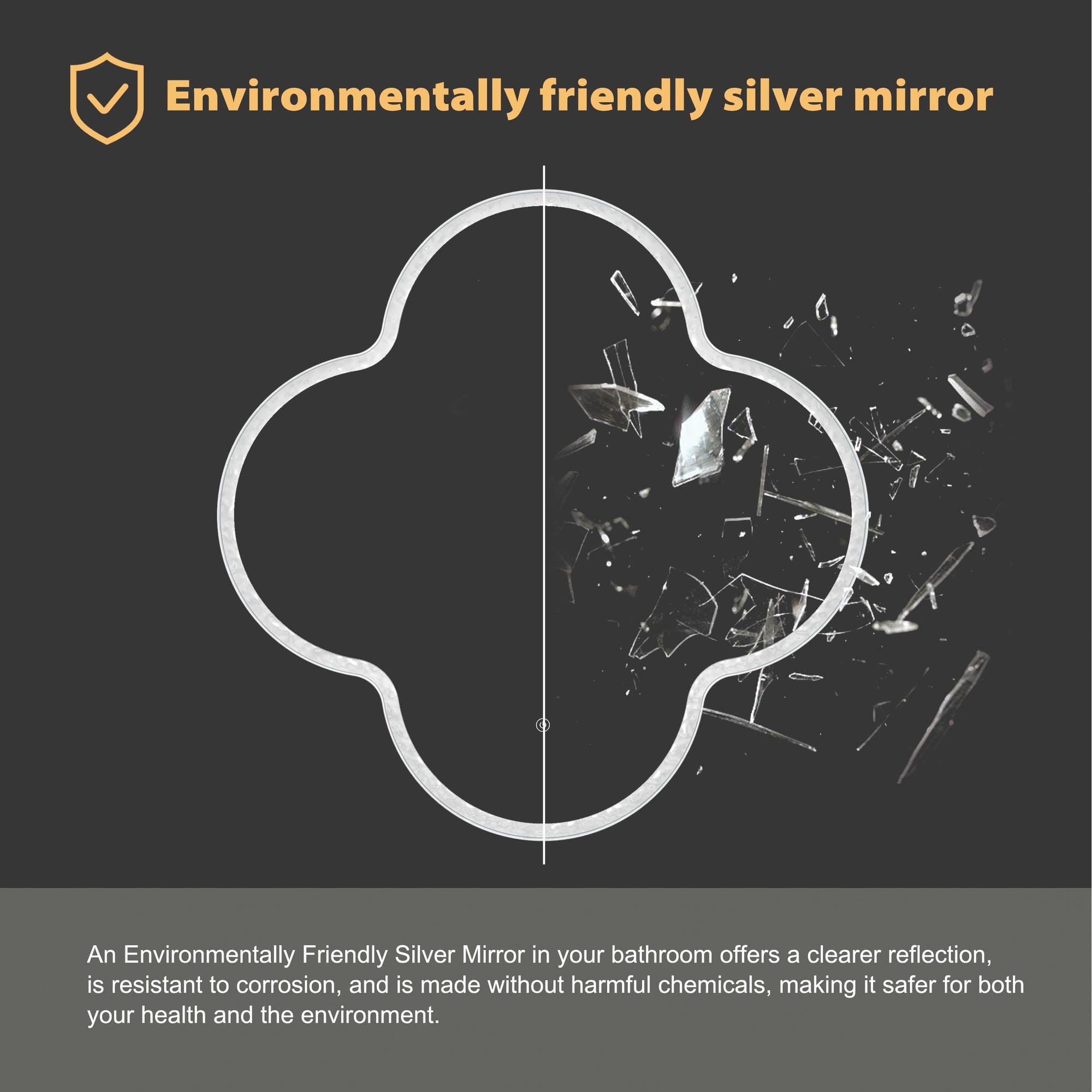
Welded shelves, where the shelf is fused directly to the mirror frame, offer superior strength and vandal resistance. This seamless construction eliminates gaps, preventing dirt and bacteria accumulation and simplifying cleaning protocols. Bracketed shelves, while potentially offering more design flexibility, introduce hardware and seams that can be potential points of failure or difficult to clean. For maximum durability and hygiene in public facilities, welded construction is the preferred specification.
Ensuring Compliance: ADA Mounting and Protrusion Standards
Adherence to the Americans with Disabilities Act (ADA) is non-negotiable in commercial restroom design. For mirrors with shelves, two key considerations are mounting height and shelf protrusion. ADA guidelines require that the bottom edge of the mirror's reflective surface be no higher than 40 inches above the finished floor (AFF). Additionally, objects protruding from the wall, such as a mirror shelf, must not project more than 4 inches into a circulation path if mounted between 27 and 80 inches AFF. Specifying mirrors with integrated shelves designed within these protrusion limits is essential to ensure accessibility and avoid costly compliance violations.
Wholesale Customization for Large-Scale Projects
For large volume orders, partnering with a manufacturer that offers extensive customization is key to meeting specific project requirements. Beyond standard catalog items, look for a supplier that provides options for dimensions, frame finishes, and shelf designs. The ability to specify custom sizes ensures a perfect fit for unique architectural spaces, while finish options like brushed, polished, or powder-coated allow for brand and design consistency across a facility. Our Bathroom Mirror Customization services ensure your project's unique needs are met with precision-engineered solutions. We provide detailed technical specification sheets and CAD files to support your planning and installation process.
Frequently Asked Questions (FAQ)
Q: What are the specified load-bearing capacities for integrated mirror shelves in high-traffic commercial environments?
A: Load-bearing capacity varies by model and construction. Our commercial-grade mirrors with welded 304 stainless steel shelves are typically tested to support a static load of 10 to 25 lbs. Always refer to the technical specification sheet for the specific model to ensure it meets your project's requirements. We can provide detailed load testing data upon request.
Q: How do different frame materials like 304 stainless steel vs. anodized aluminum impact long-term ROI?
A: 304 stainless steel offers a superior long-term ROI in demanding environments due to its exceptional durability and corrosion resistance, minimizing replacement costs. Anodized aluminum provides a better ROI for projects with initial budget constraints and moderate traffic, offering good durability at a lower upfront cost.
Q: What are the ADA compliance considerations for mounting heights and shelf protrusion in commercial restrooms?
A: To be ADA compliant, the bottom of the mirror's reflective surface must be mounted no more than 40 inches from the floor. The shelf itself should not protrude more than 4 inches from the wall to avoid being a hazard in circulation paths. We manufacture many models with ADA-compliant shelf depths.
Q: What customization options are available for large volume wholesale orders?
A: For wholesale orders, we offer extensive customization, including custom dimensions (width and height), a variety of frame finishes (e.g., brushed satin, polished chrome, matte black), and different shelf designs or depths. We work with clients to engineer products that meet precise project specifications.
Q: How does the shelf attachment method (welded vs. bracketed) affect vandal resistance and ease of cleaning?
A: Welded attachments are significantly more vandal-resistant as they form a single, solid unit with the frame, eliminating leverage points. This seamless design also prevents debris buildup in crevices, making it far easier to clean and maintain a hygienic surface compared to bracketed shelves.