 Nederlands
 Deutsch
 Español
  Français
 Русский
Procurement Guide: Commercial-Grade Lighted Vanity Mirrors for Hotels and Salons
Commercial-grade lighted vanity mirrors: High-performance mirror units engineered for hospitality and salon environments must prioritize modular component repairability, rigorous humidity resistance, and stringent photobiological safety compliance. Procurement managers should focus on MTBF metrics for drivers, CRI levels exceeding 95, and standardized batch testing to ensure operational longevity and guest satisfaction.
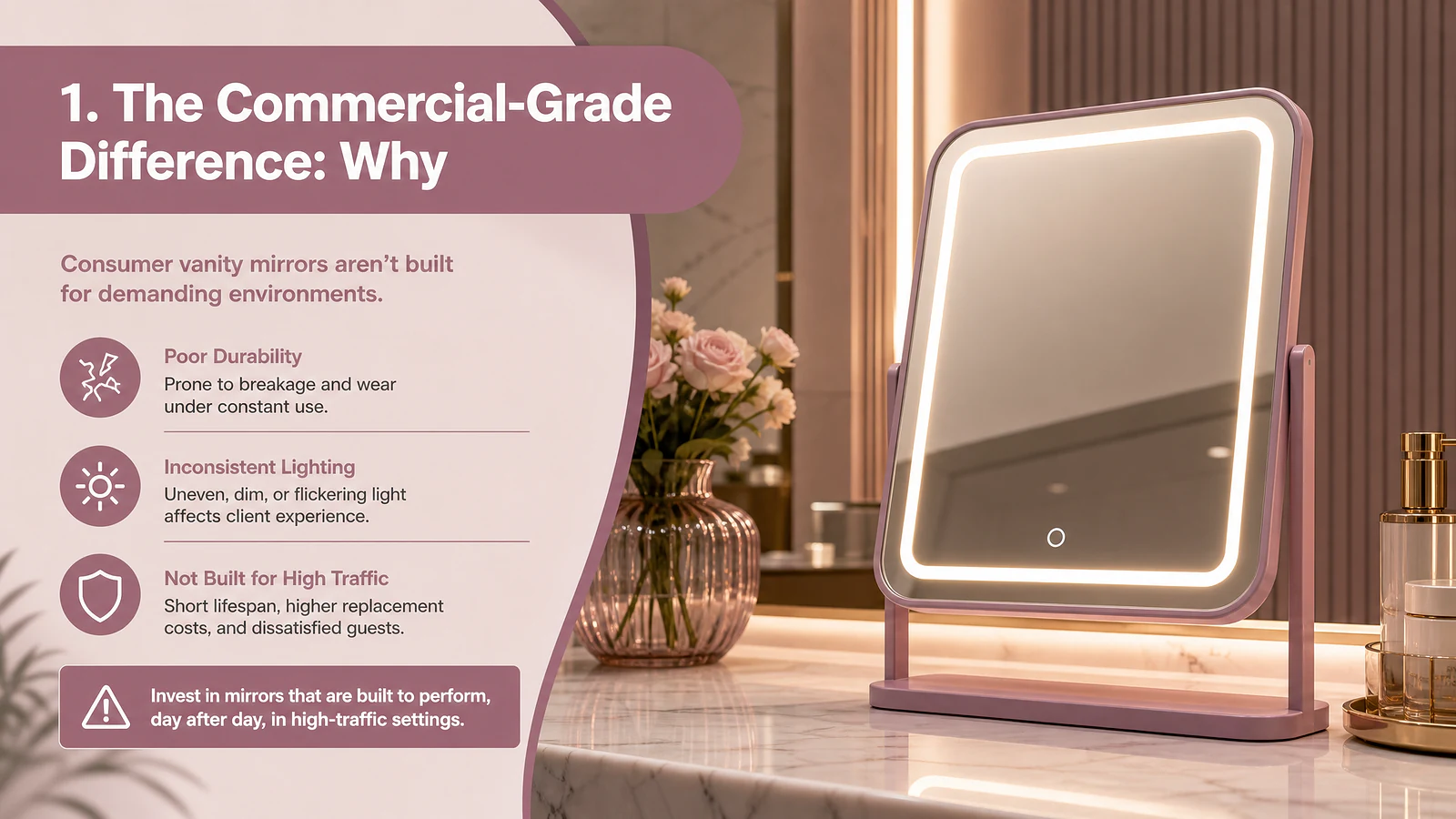
1. The Commercial-Grade Difference: Why Consumer Vanity Mirrors Fail
In high-traffic environments like luxury hotels and professional salons, a standard consumer-grade vanity mirror often fails within the first 18 months. The primary failure mode is not the glass itself, but the integrated LED driver and moisture ingress within the electrical housing. During our production audits, we have observed that consumer-grade units often lack the thermal dissipation pathways required for daily, multi-hour operation, leading to premature diode degradation. For procurement managers, investing in commercial-grade hardware ensures that the total cost of ownership (TCO) is optimized through longevity, not just low initial acquisition costs.
2. Engineering Longevity: Pivot Hinges, Anodized Frames, and Humidity Mitigation
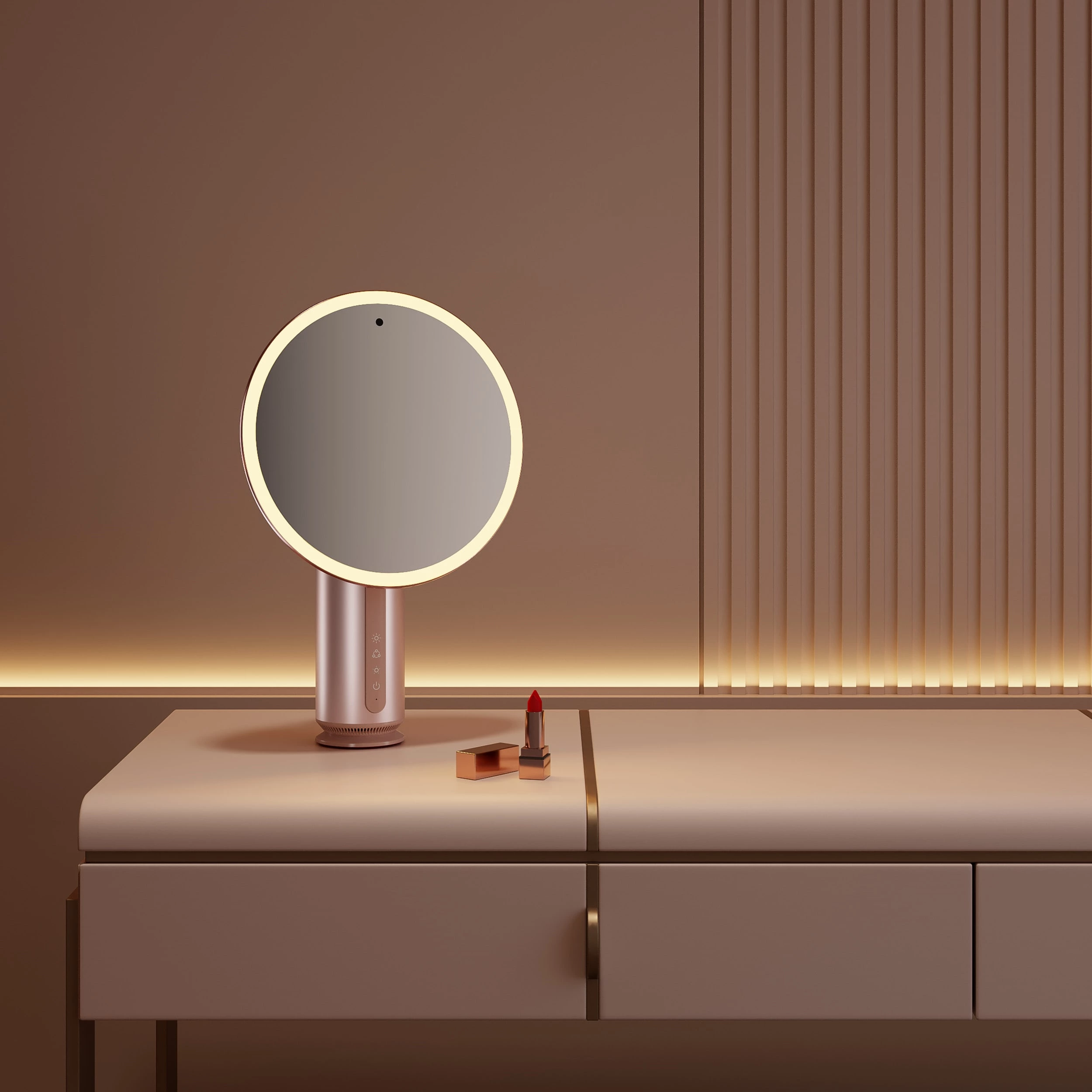
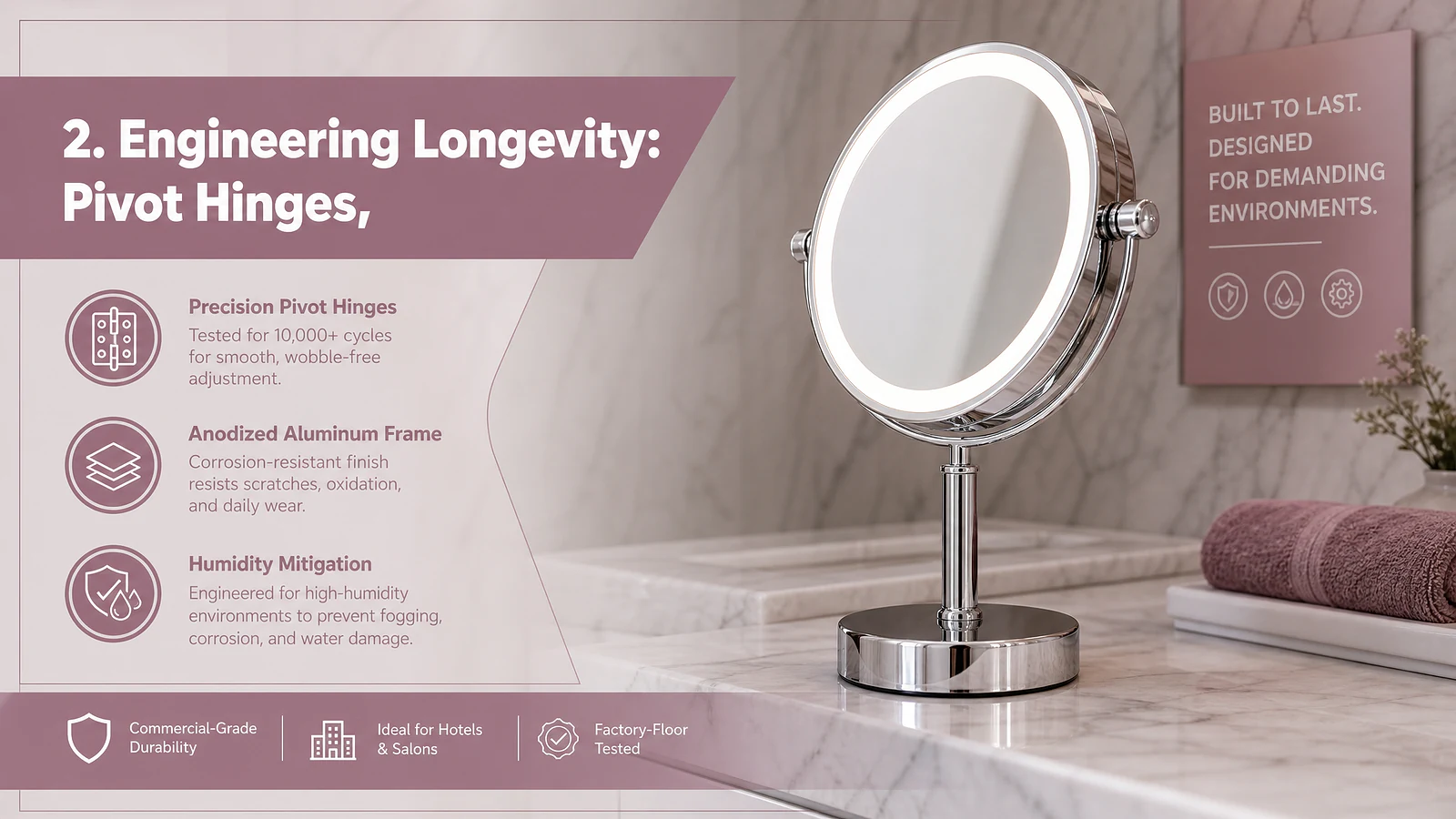
The structural integrity of a metal vanity makeup mirror is defined by its mechanical components. Our factory-floor testing protocols include rigorous hinge fatigue cycles, ensuring that pivot mechanisms withstand over 10,000 cycles without loss of tension. Furthermore, in high-humidity bathroom environments, standard powder-coated steel is prone to oxidation. We utilize anodized aluminum frames, which provide a significantly higher resistance to moisture and chemical cleaning agents. Internal humidity mitigation is managed through sealed, IP44-rated enclosures that prevent water vapor from reaching the LED driver circuitry.
3. Optical Precision and Lighting Standards: Beyond CRI
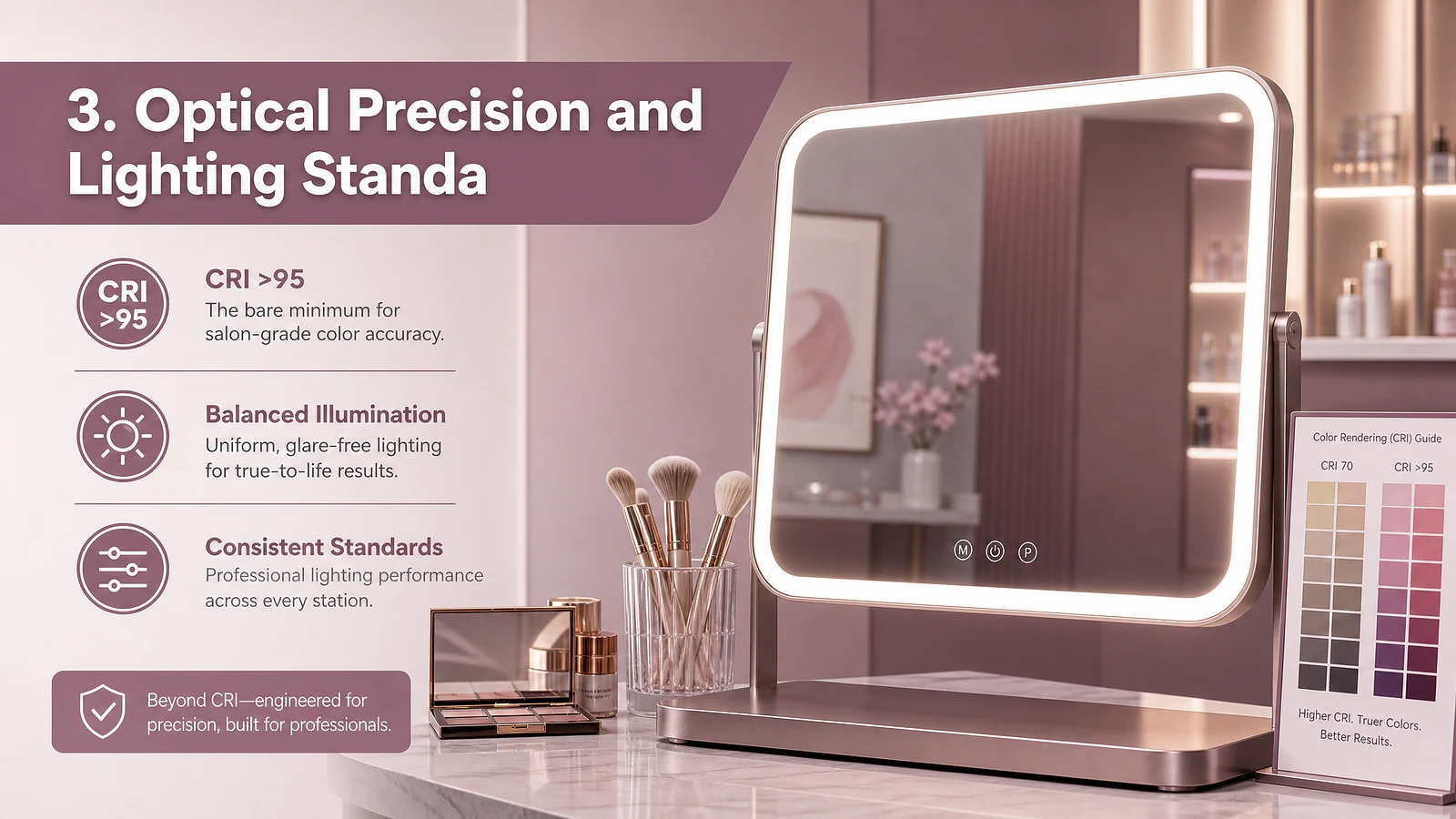
For salon-grade color accuracy, Color Rendering Index (CRI) of >95 is the bare minimum requirement. However, commercial-grade optical precision extends to the spectral distribution. Using certified optical diffusion materials, we eliminate "hot spots" and glare, providing an even, shadow-free illumination essential for makeup artists. Our systems are verified against EN 62471 photobiological safety standards to ensure that eye-safety is maintained even when users are in close proximity to the light source for extended periods.
4. Procurement Strategy: The Value of Modular Design
A significant pain point for facility managers is the necessity to replace entire units when a driver fails. Our vanity mirror customization service emphasizes modular component design. By separating the power supply from the LED strips, maintenance teams can perform field repairs in minutes rather than replacing the entire mirror assembly. This approach significantly extends the lifecycle of our hardware and ensures that the facility remains operational with minimal downtime.
5. Integration Compatibility: DMX and Smart-Dimming
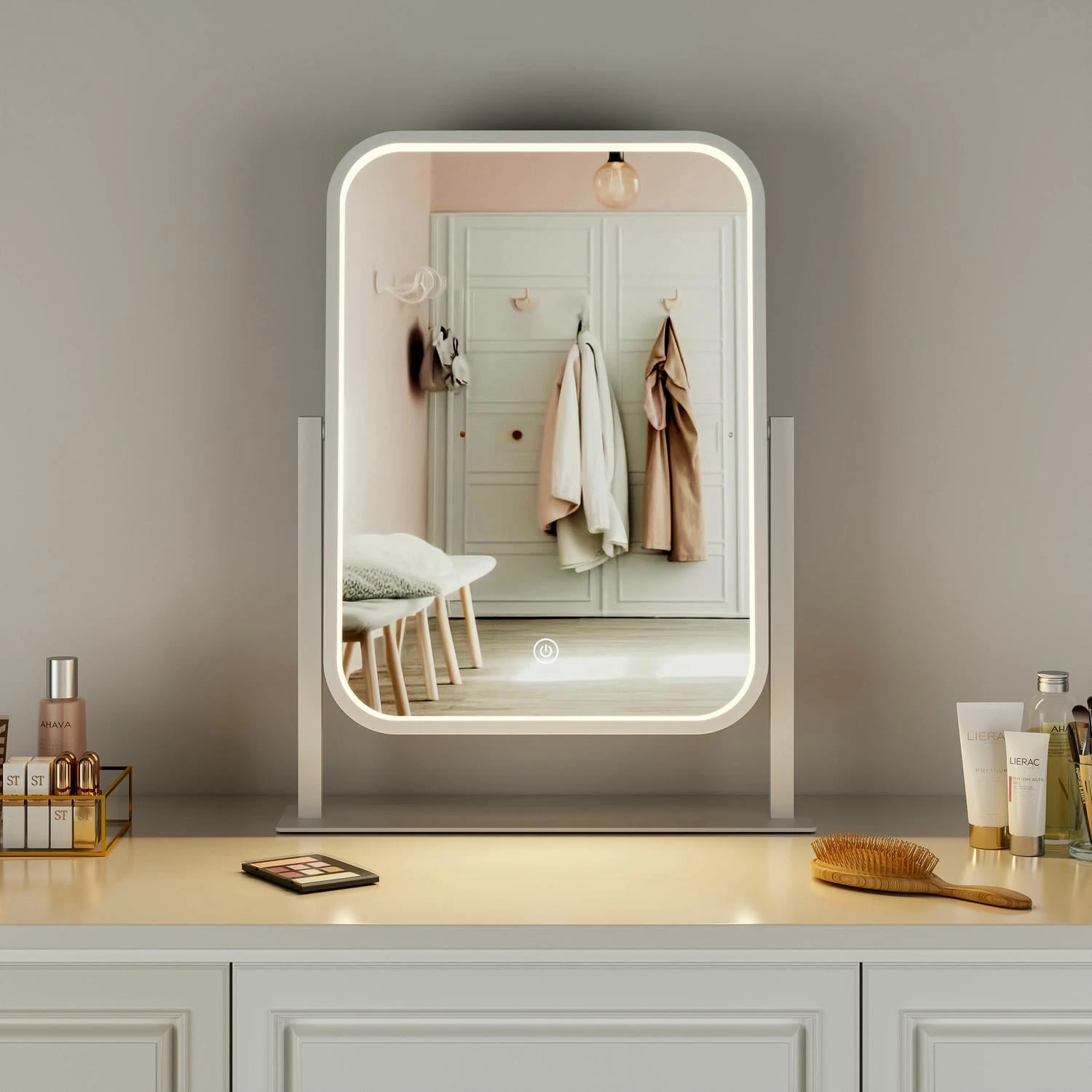
Professional salon environments often require lighting that integrates with centralized facility control systems. Our mirrors are engineered for compatibility with specific DMX and 0-10V dimming protocols, allowing stylists to adjust color temperatures synchronously across a suite of mirrors. By specifying driver-level protocols during the procurement phase, we ensure that the light output remains flicker-free and stable, preventing the ocular fatigue commonly associated with poorly regulated dimming systems.
6. Quality Control Protocols: Batch Uniformity and Stress Testing
Batch uniformity is critical for large-scale hospitality rollouts. In our makeup mirror assembly workshop, every batch undergoes strict color temperature (CCT) binning to ensure that every mirror in a 500-unit rollout emits the identical hue. We document Mean Time Between Failures (MTBF) for all drivers, providing procurement managers with data-backed expectations for maintenance cycles. All electronic components are subjected to rigorous stress testing, including voltage fluctuations and heat-soak tests.
7. Compliance Checklist: Essential Certifications
International hospitality projects require verified compliance with electrical safety standards. We ensure all luminaires meet UL 2108 safety standards for low-voltage systems and IEC 60598 for general-purpose luminaires. When sourcing for your next project, ensure the manufacturer provides comprehensive test logs for every batch to mitigate project risk and insurance liability.
| Feature | Consumer-Grade | Commercial-Grade |
|---|---|---|
| Repairability | None (Unit replacement) | Modular (Drivers/LEDs) |
| Frame Material | Painted/Coated Steel | Anodized Aluminum |
| Hinge Life | 1,000 Cycles | 10,000+ Cycles |
| Safety Rating | Basic (Consumer) | UL 2108 / IEC 60598 |
Optimize Your Procurement Cycle
Download our full technical specification sheet and request a verified batch-testing sample for your next hospitality project.
Request Spec Sheet & SampleFrequently Asked Questions
Q: What are the specific electrical safety requirements for hardwired vanity mirrors in commercial hospitality environments?
A: Commercial vanity mirrors must adhere to UL 2108 or IEC 60598 standards, which dictate the safety of low-voltage lighting systems, enclosure integrity, and electrical insulation in moist environments.
Q: How do CRI ratings affect professional makeup application in salon settings?
A: A CRI of 95 or higher ensures that colors appear accurate and consistent, preventing errors in makeup application and ensuring client satisfaction through faithful light rendering.
Q: What is the difference between integrated LED vs. replaceable bulb systems in terms of maintenance?
A: Integrated modular LED systems allow for the replacement of specific components like the driver or strip without discarding the entire mirror, offering significantly higher long-term ROI compared to sealed consumer units.
Q: How do IP ratings determine mirror placement near wet zones in hotel bathrooms?
A: IP44 ratings indicate that the enclosure is protected against splashing water from any direction, which is the standard requirement for safe installation in hotel bathrooms.
Q: What mounting configurations are standard for high-traffic vanity installations?
A: High-traffic environments typically require wall-mounted swing-arm mechanisms made from reinforced anodized aluminum, stress-tested for thousands of fatigue cycles to ensure long-term stability.
Need Commercial-Grade Assistance?
Our engineering team is ready to support your large-scale procurement with custom batch-testing and durability reports.
Get a Quote


