 Nederlands
 Deutsch
 Español
  Français
 Русский
Scaling Production: How Factories Mass-Produce Premium Hollywood Style Vanity Mirrors
Sourcing premium-grade illuminated mirrors at scale requires a deep understanding of industrial engineering, material tolerances, and stringent electrical safety standards. For B2B buyers and commercial distributors, partnering with a manufacturer capable of scaling production without sacrificing optical and electronic consistency is critical. This guide breaks down how high-volume facilities optimize assembly lines, maintain rigorous quality control checkpoints, and deliver high-performance commercial products.
1. Automated Glass Processing and Silvering Mechanics
In our production line, the manufacturing process begins with raw, high-transmittance float glass sheets. To achieve perfect optical clarity and structural integrity, we utilize automated CNC glass-cutting centers that maintain dimensional tolerances within ±0.5mm. Once cut to size, the glass undergoes precision double-edging and polishing to eliminate microscopic micro-cracks that could cause stress fractures during shipping or daily use.
Following physical shaping, the glass enters an automated silvering line. Unlike budget retail options that use cheap aluminum backings, our factory applies a multi-layer protective coating to prevent oxidation and black-edge corrosion. This coating consists of a high-reflectivity silver layer, followed by a copper-free protective film and two layers of waterproof lead-free backing paint. From manufacturing thousands of units, we have found that utilizing a copper-free silvering formulation drastically extends the lifespan of a Hollywood Mirror in humid bathroom or backstage environments.
2. Precision SMT Assembly for LED and Driver Calibration
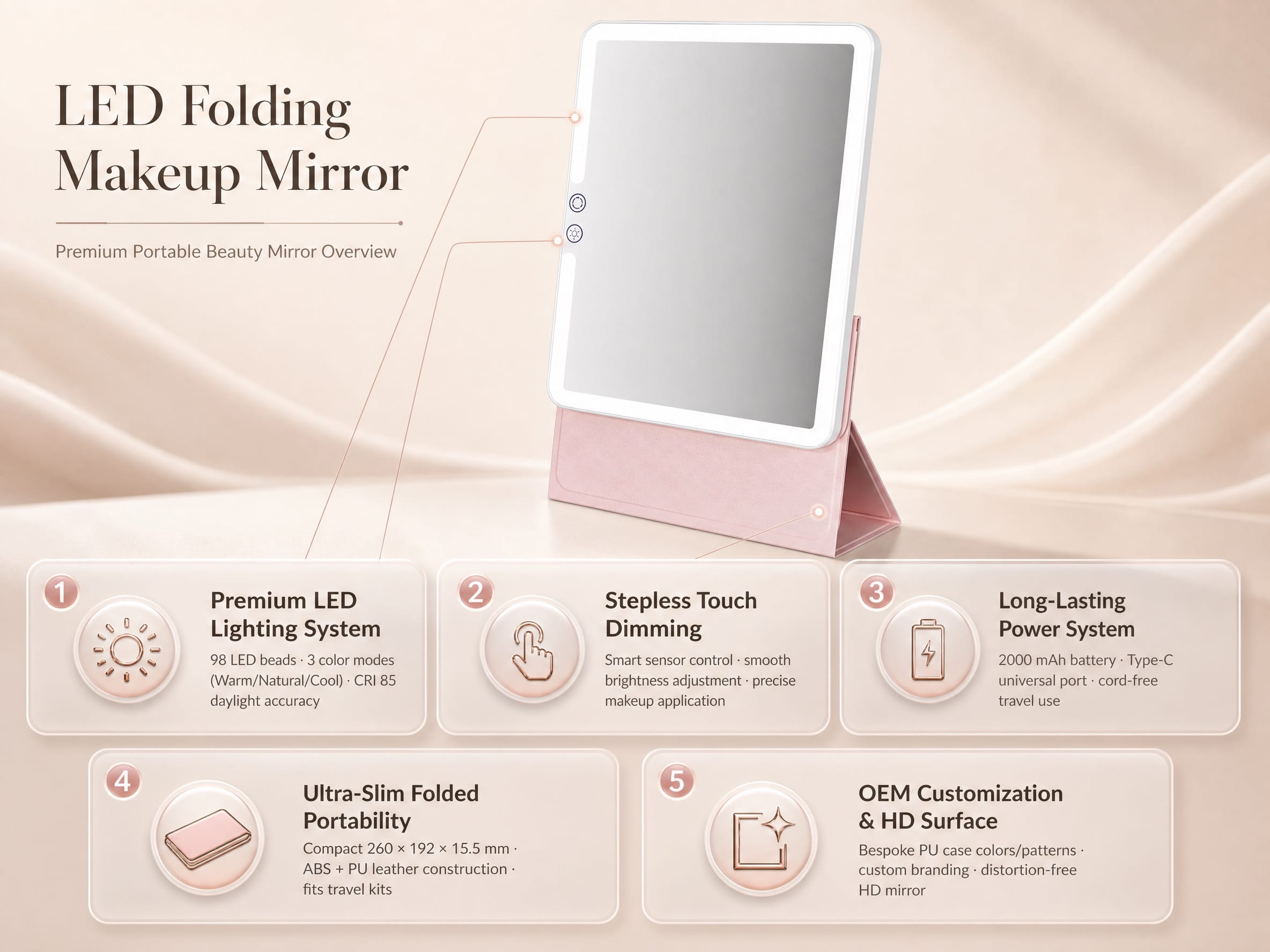
Maintaining consistent color rendering index (CRI) and color temperature across massive production runs is a common challenge in the lighting industry. To solve this, we utilize high-speed Surface Mount Technology (SMT) lines to populate the printed circuit boards (PCBs) used in our custom LED strip configurations. During factory audits we've found that sourcing LEDs from a single binning code is the only way to prevent visible color temperature variations across bulk shipments of a Large Hollywood Mirror.
Our standard LED configuration features a high-density layout with a minimum specification of 120 LEDs/meter, delivering a Color Rendering Index (CRI) of Ra ≥ 90 and an R9 value greater than 50 to ensure accurate skin-tone representation. The thermal management of the enclosed drivers is also strictly engineered; we pair our LED arrays with heat-dissipating aluminum profiles to keep operating temperatures below 55°C, which prevents premature lumen degradation and ensures a lifetime exceeding 50,000 hours.
3. High-Volume Frame Fabrication and Metal Working
The structural integrity of a heavy commercial mirror depends heavily on its support frame. For premium products, we utilize CNC-punched aluminum alloys or SPCC steel frames. In our factory, automated benders shape the metal outer casings for the Metal Vanity Makeup Mirror, ensuring perfect alignment of the integrated bulb sockets.
After machining, frames undergo a multi-stage electrostatic powder coating process. The metal surfaces are pre-treated with zinc phosphate to optimize paint adhesion. A 60-to-80-micron layer of epoxy-polyester powder is then applied and cured in a continuous conveyor oven at 200°C. This automated curing line guarantees a smooth, chip-resistant finish that easily withstands high-use retail or hospitality environments without peeling.
4. Rigorous Quality Control and Electronic Compliance
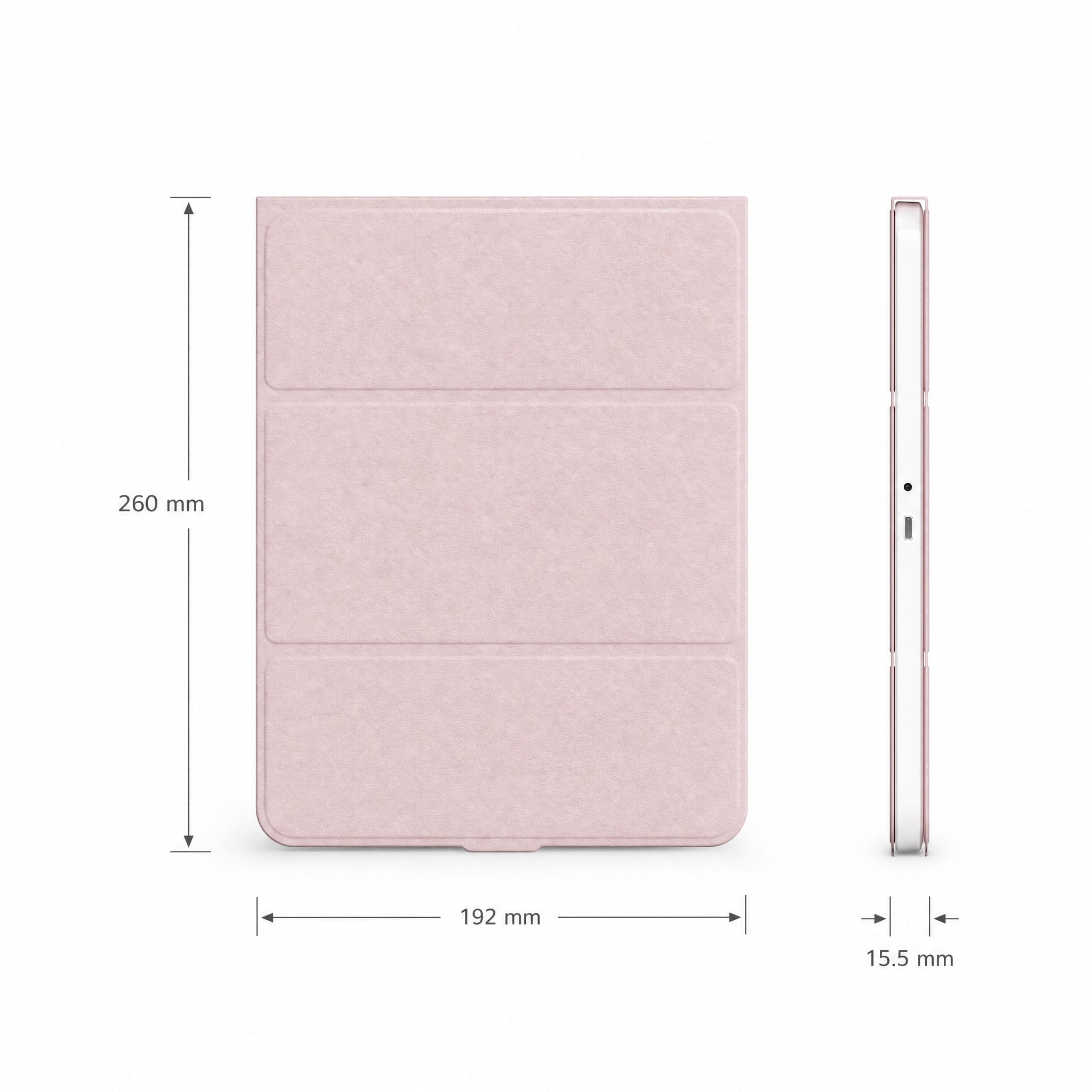
Every mirror produced in our facility is subjected to strict safety and functional testing protocols. We design and test our products to comply with recognized international standards, such as UL 2108 (Low Voltage Lighting Systems) and CE EN 60598-1. Before any batch is cleared for packaging, 100% of the units must pass a high-voltage dielectric withstand test (Hi-Pot test) to ensure no electrical leakage risks exist.
Additionally, we conduct ongoing testing for ingress protection, verifying that our damp-rated models meet IP44 standards. Our optical QC team inspects the silvered glass under high-intensity inspection lamps to catch any distortion, pinholes, or scratches. Our internal standard allows zero defects larger than 0.2mm within the central viewing zone, ensuring that the final Hollywood Mirror Customization order arrives with flawless optical fidelity.
5. Customization Capabilities and B2B Sourcing Advantages
B2B procurement often demands tailored dimensions, custom frame finishes, and smart features such as Bluetooth speakers, touch-sensor dimmers, or integrated power outlets. Our engineering department supports full Vanity Mirror Customization, transforming CAD drawings into physical prototypes within 7 to 10 days. Utilizing modular assembly lines allows us to scale production while remaining flexible enough to insert customized specifications without bottlenecking overall factory throughput.
| Specification/Feature | Premium Commercial Grade | Standard Retail Grade |
|---|---|---|
| Glass Type & Mirroring | 5mm Copper-Free Silver Mirror (Anti-Corrosion) | 3-4mm Standard Aluminum Mirror |
| LED Performance Metrics | CRI Ra ≥ 90, R9 > 50 (Single Binning) | CRI Ra 70-80 (Mixed Batches) |
| Safety Standards | UL 2108, CE EN 60598, IP44 Rated | Basic non-certified or CE-only components |
| Frame Material & Coating | Powder-Coated Aluminum / SPCC Steel (60-80 μm) | Lightweight plastic or thin sheet metal |
| Driver Lifetime Rating | Active heat dissipation, > 50,000 Hours | Passive enclosed, < 15,000 Hours |
Frequently Asked Questions
Q: What are the key failure points when scaling custom-size vanity mirror production?
A: The most common failure points include dimensional discrepancies from manual cutting, color-temperature shifting due to mixed LED batches, and peeling coatings on custom-finished frames. Advanced factories mitigate these risks by using fully automated CNC cutting systems and sourcing single-bin LEDs for color consistency.
Q: How do manufacturers ensure consistent CRI and color temperature across large LED batches?
A: High-volume manufacturers enforce strict LED binning protocols, ensuring all chips used in a single order come from the exact same manufacturing run. This maintains a Color Rendering Index of Ra ≥ 90 and preserves consistent color temperatures (typically 3000K, 4000K, or 6000K) across thousands of units.
Q: What UL or CE standards apply to mass-produced lighted smart mirrors?
A: Lighted smart mirrors must comply with UL 2108 (Low Voltage Lighting Systems) or UL 1598 (Luminaires) in North America, and CE EN 60598-1/EN 60598-2-1 in Europe. Additionally, touch sensors, Bluetooth modules, and integrated power supplies must meet electromagnetic compatibility standards like FCC Part 15.
Q: How does automated glass cutting and silvering impact unit economics at scale?
A: Automation drastically reduces material waste and lowers human error rates, resulting in a yield rate of over 98%. It also significantly shortens cycle times per mirror, allowing the factory to pass these operational savings on to B2B buyers in the form of competitive unit pricing on high-volume orders.
Q: What QC protocols are used to inspect distortion-free glass in bulk shipments?
A: Before packaging, we run every mirror through an automated optical scanning system that checks for surface distortion and reflective clarity. This is backed by a manual inspection under a high-intensity grid pattern light source to ensure there are no optical warps, bubbles, or silvering defects before shipping.


