Nederlands
 Deutsch
 Español
  Français
 Русский
Smart Upgrades: Incorporating LED Technology into Wholesale Bathroom Mirror Cabinets
Integrating advanced light-emitting diode technology into commercial storage systems requires a deep understanding of electrical safety, thermal dynamics, and optical performance. For wholesale buyers, developers, and hospitality procurement managers, selecting the right specifications ensures long-term reliability and minimizes field maintenance costs. This technical guide explores the key factors involved in manufacturing and sourcing high-performance smart mirror cabinets.
Optical Performance: Balancing CRI and Luminous Efficacy
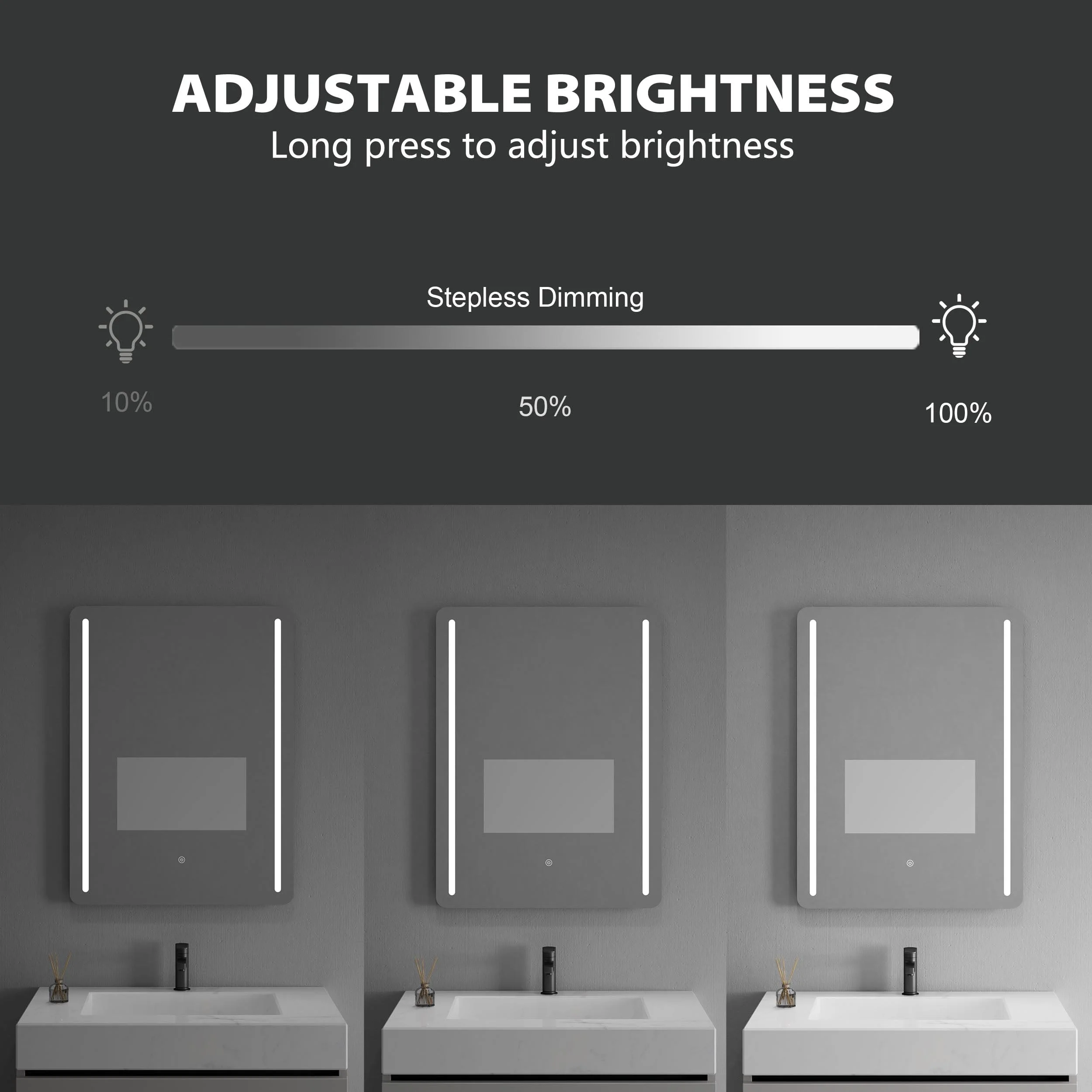
When engineering a modern bathroom mirror cabinet, manufacturers must balance color rendering index (CRI) against overall luminous efficacy. While high CRI values (Ra > 90) provide true-to-life color representation critical for grooming tasks, they naturally reduce the lumens-per-watt output due to heavier phosphor coatings on the LED chips. For commercial installations, we recommend specifying a minimum of 90 CRI paired with efficient SMD 2835 LED strips to deliver vibrant illumination without excessive power draw.
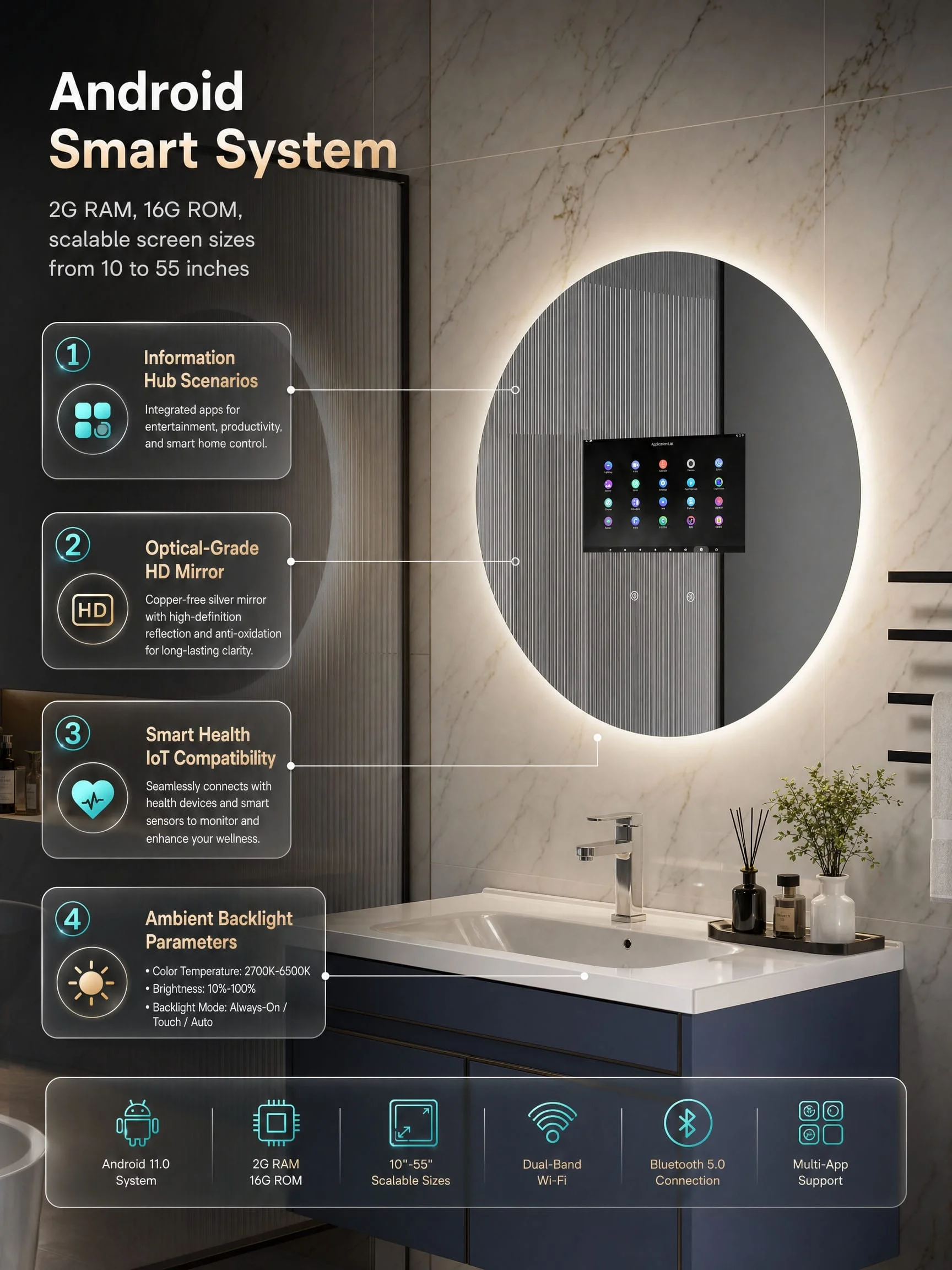
Furthermore, the choice of diffusion materials significantly impacts light transmission. High-grade acrylic diffusers maintain up to 85% light transmission and resist yellowing under UV and thermal exposure, whereas lower-cost polycarbonate alternatives may degrade and discolor over time in high-humidity environments.
Thermal Management and LED Driver Isolation
In enclosed wooden or metal cabinetry, heat is the primary enemy of LED longevity. Driver components and integrated LED strips generate localized heat that must be dissipated to prevent premature lumen depreciation.
To ensure system reliability, quality manufacturers mount LED strips within extruded aluminum profiles acting as heat sinks. Additionally, the LED driver must be physically isolated from internal moisture and auxiliary heat sources, such as dual-voltage demister pads. This thermal separation prevents heat feedback loops, ensuring the driver operates well within its rated temperature threshold.
Technical Comparison of LED Integration Systems
Selecting the appropriate electrical architecture is crucial for project safety, installation simplicity, and budget compliance. The table below details the technical trade-offs between low-voltage and mains-voltage configurations.
| Specification Parameters | 12V/24V Low-Voltage Systems | 110V/220V Mains-Voltage Systems |
|---|---|---|
| Electrical Safety | Very High (SELV compliant, minimal shock hazard) | Moderate (Requires robust grounding and insulation) |
| Manufacturing Cost | Higher (Requires dedicated step-down drivers) | Lower (Direct driverless or simplified designs) |
| Lifespan & Reliability | Excellent (Lower thermal stress on individual diodes) | Moderate (Higher thermal generation on board) |
| Dimming Compatibility | Excellent (Supports PWM, 0-10V, and DALI protocols) | Limited (Often restricted to TRIAC phase-cut dimming) |
IP Ratings and Moisture Protection in High-Humidity Environments
Commercial bathrooms experience sustained high-humidity levels, requiring strict ingress protection (IP) for all electrical compartments. While a basic bathroom mirror might rely on passive ventilation, an illuminated cabinet requires dedicated sealing. Wiring chambers, integrated touch sensors, and internal shaver sockets must achieve at least IP44 rating certification, with IP54 preferred for high-exposure multi-residential projects to guarantee complete dust and splash resistance.
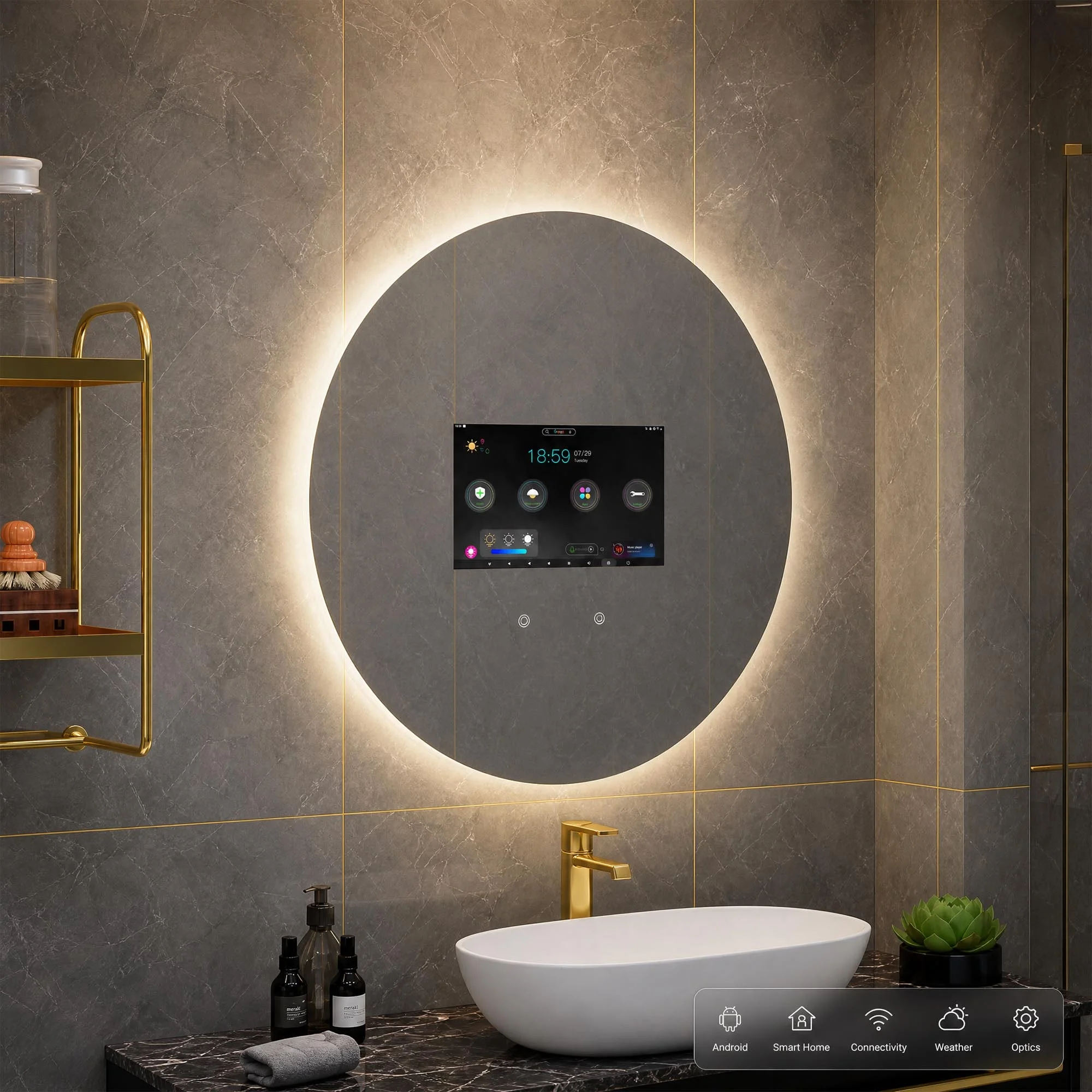
Silicone gaskets, sealed cable glands, and conformal coatings on PCBs are crucial factory-level implementations. These components prevent moisture condensation inside the cabinet, avoiding short circuits and prolonging the service life of smart features like integrated Bluetooth modules or digital clocks.
Modular Construction and Field Serviceability
A key concern for B2B buyers is the long-term maintenance of built-in electronics. Committing to a non-serviceable design can result in costly full-cabinet replacements if a single driver fails. Specifying a bathroom mirror customization pathway that emphasizes modularity allows maintenance teams to swap out drivers or LED strips in the field within minutes. Accessible backplanes, plug-and-play wiring connectors, and removable internal service panels are essential design features for hospitality and commercial real estate developers seeking to future-proof their investments.
Frequently Asked Questions
Q: What is the average lifespan of integrated LED strips in damp-rated cabinets?
A: High-quality integrated LED strips have a rated operational life of 50,000 hours (L70). However, the internal driver typically requires replacement after 20,000 to 30,000 hours of use, depending on thermal conditions and power cycling frequencies.
Q: How does dual-voltage demister pad integration affect the wiring layout?
A: Integrating a demister pad requires a dedicated relay and split wiring pathways inside the cabinet. The high-voltage heating element must run isolated from low-voltage DC lines to prevent electromagnetic interference and ensure user safety.
Q: What are the primary structural differences between recessed and surface-mounted backplanes?
A: Recessed backplanes allow all electrical junctions and drivers to sit flush within the wall cavity, providing a streamlined profile. Surface-mounted models require a dedicated internal chases or double-walled panels to conceal wiring while preserving storage space.
Q: Why is COB preferred over SMD for specific illuminated cabinet designs?
A: Chip-on-Board (COB) LEDs provide a continuous, seamless line of light without visible dots, even when placed close to the diffuser. SMD LEDs are highly efficient but require greater diffusion depth to eliminate hot spots.
Q: Can these smart cabinets be integrated into centralized building management systems (BMS)?
A: Yes, by utilizing dimmable drivers compatible with DALI, 0-10V, or Zigbee protocols, smart cabinets can seamlessly connect to master automation systems for scheduled power-saving and centralized control.