 Nederlands
 Deutsch
 Español
  Français
 Русский
Sourcing Aluminium vs. Stainless Steel Bathroom Mirror Cabinets: A B2B Durability Guide
Selecting the correct material specification for commercial sanitary ware is critical to ensuring long-term performance and minimizing maintenance overhead. For high-traffic hospitality, multi-family housing, and commercial developments, the choice between an aluminium and a stainless steel bathroom mirror cabinet determines the installation lifecycle. This technical guide evaluates structural integrity, corrosion resistance, and total cost of ownership to assist procurement officers in making data-driven decisions.
Alloy Metallurgy: 6063-T5 Aluminium vs. SUS 304/316 Stainless Steel
The base alloy grade dictates how a cabinet housing responds to constant moisture exposure. Architectural-grade 6063-T5 anodized aluminium relies on an engineered, controlled oxide layer that prevents further atmospheric oxidation. In contrast, SUS 304 and SUS 316 stainless steel utilize chromium and nickel alloying elements to form a self-healing passive chromium oxide film.
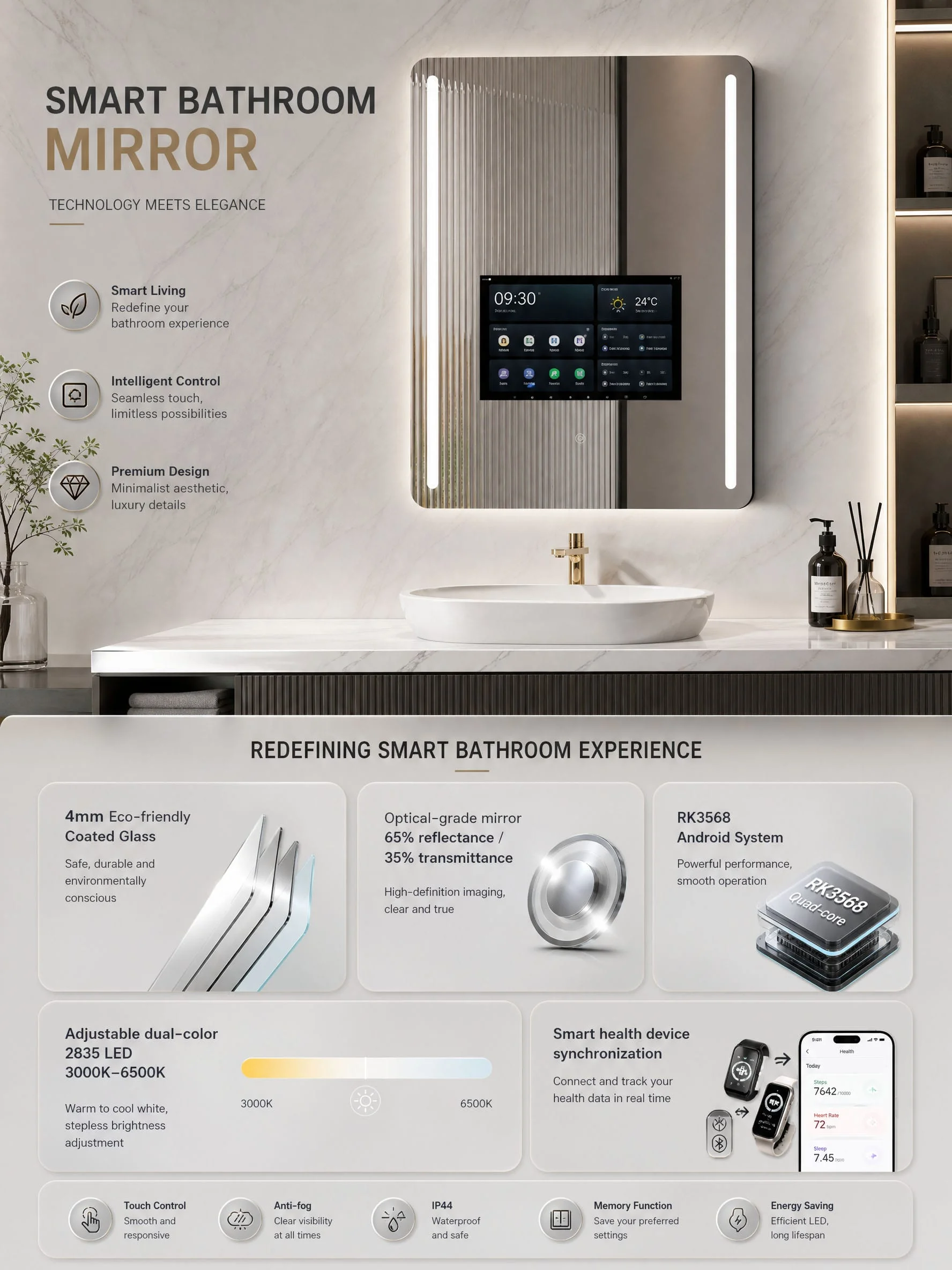
While 6063-T5 provides excellent corrosion resistance under standard municipal water exposure, SUS 304 provides higher mechanical strength. For coastal developments or high-salinity environments, SUS 316 is the industry standard due to its molybdenum content, which prevents localized pitting and crevice corrosion. When integrating premium features like an ai tv bathroom mirror into commercial projects, matching the alloy grade to environmental humidity levels prevents premature housing failure.
Corrosion Resistance and Salt-Spray Performance
In high-humidity commercial restrooms, moisture accumulation can degrade metal surfaces. Anodized aluminium undergoes an electrochemical process that thickens the natural oxide layer, typically specified at 10 to 15 microns for commercial wet areas. This treatment allows aluminium to withstand up to 480 hours of neutral salt spray testing without showing signs of red rust or pitting.
Stainless steel cabinets require strict passivation treatments during manufacturing to remove free iron from the surface. Without proper passivation, even SUS 304 can suffer from "tea staining" (surface cosmetic rust) in poorly ventilated coastal zones. Procurement officers must specify a minimum of 240-hour salt spray certification for stainless steel housings to ensure long-term aesthetic and structural preservation.
Structural Load Capacities and Weight Considerations
Structural engineering differences between the two metals impact both wall mounting requirements and bulk shipping logistics. Stainless steel has a density of approximately 8.0 g/cm³, whereas aluminium is roughly 2.7 g/cm³. This means a stainless steel cabinet of identical dimensions will weigh nearly three times more than its aluminium counterpart.
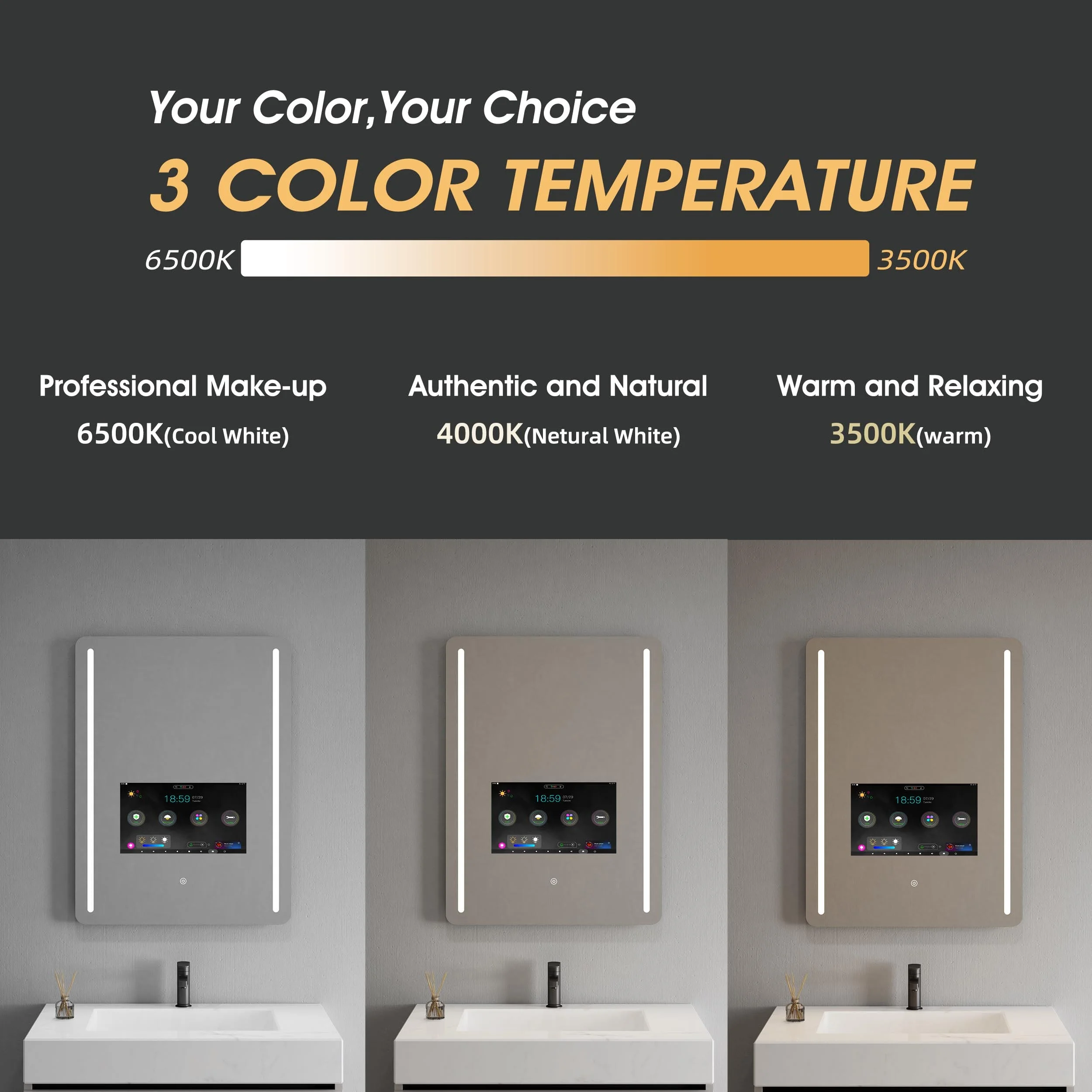
This weight differential has a direct cascading effect on commercial projects. Heavy stainless steel units require reinforced drywall backing and heavy-duty anchors, increasing on-site installation labor costs. Aluminium extrusions can achieve high structural rigidity at a fraction of the weight by optimizing wall thickness, which also lowers international freight costs for large-scale B2B orders. For heavy configurations, such as a large round bathroom mirror cabinet, aluminium is often selected solely to manage wall-load limitations.
Manufacturing Joinery, CNC Tolerances, and Weak Points
The manufacturing process determines where a cabinet is most likely to fail over years of repetitive use. Aluminium cabinets are typically constructed using precision CNC-machined extrusions joined by mechanical fasteners, internal corner brackets, or specialized adhesive bonding. These non-welded joints eliminate heat-affected zones that are prone to accelerated corrosion.
Stainless steel cabinets, conversely, rely heavily on sheet metal bending and spot or laser welding. Every weld point represents a potential vulnerability. If the welding area is not thoroughly cleaned, descaled, and re-passivated, these heat-affected zones will rust rapidly in high-humidity commercial bathrooms. For premium hospitality projects, choosing a high-quality bathroom mirror customization process ensures that all structural joints are treated to resist environmental degradation.
Engineering Comparison: Aluminium vs. Stainless Steel Cabinets
This comparative analysis highlights the key physical properties, mechanical limits, and manufacturing specifications of both material options in commercial settings.
| Technical Parameter | Anodized Aluminium (6063-T5) | Stainless Steel (SUS 304 / 316) |
|---|---|---|
| Material Density | ~2.7 g/cm³ (Lightweight) | ~8.0 g/cm³ (Heavy) |
| Yield Strength | 145 MPa | 215–290 MPa |
| Salt Spray Resistance | Up to 480 hours (Neutral) | 240–480 hours (Depending on passivation) |
| Joinery Methods | CNC extrusion, mechanical fasteners | Sheet metal bending, spot/laser welding |
| Corrosion Risk | Low (Galvanic corrosion at steel hinge points) | Moderate (Tea staining at unpassivated weld points) |
| B2B Logistics Impact | Lower shipping cost; easier handling | Higher shipping cost; requires structural wall anchors |
B2B Procurement Selection Checklist
To ensure structural performance and eliminate downstream warranty claims, procurement teams should utilize the following checklist when evaluating suppliers:
- Verify Alloy Certification: Require official material test reports confirming 6063-T5 for aluminium or SUS 304/316 for stainless steel.
- Anodizing Thickness: For aluminium, specify a minimum anodizing film thickness of Class I (15 microns) or Class II (10 microns) depending on humidity exposure.
- Passivation Verification: For stainless steel, request proof of post-welding passivation treatments to prevent crevice corrosion.
- Hardware Compatibility: Ensure hinges and mounting screws are made of stainless steel with nylon spacers to prevent galvanic corrosion where metals meet.
- Packaging and Shipping: Ensure heavy stainless steel units feature reinforced corner packaging to prevent impact warping during freight.
Frequently Asked Questions
Q: How does the corrosion resistance of anodized aluminium compare to 304 stainless steel in high-humidity commercial bathrooms?
A: Anodized aluminium (6063-T5) provides highly reliable, uniform protection because its oxide layer cannot chip or peel. SUS 304 stainless steel offers excellent corrosion resistance but is more vulnerable to localized tea staining if the manufacturing weld joints are not correctly passivated.
Q: What are the structural load capacity differences between aluminium and stainless steel mirror cabinets?
A: Stainless steel has a much higher yield strength, allowing it to support heavier structural loads without bending. However, its high weight requires heavy-duty wall anchors, whereas aluminium cabinets offer high strength-to-weight efficiency, reducing structural wall reinforcement requirements.
Q: Which material option offers better long-term cost-to-durability ROI for hospitality and multi-family developments?
A: For most standard multi-family projects, anodized aluminium provides a better ROI due to lower shipping costs, faster installation, and excellent resistance to daily humidity. Stainless steel (specifically SUS 316) is the superior ROI choice for luxury developments or coastal properties where extreme corrosion resistance is required.
Q: How do manufacturing tolerances and weld joint vulnerabilities differ between aluminium and stainless steel cabinet frames?
A: Aluminium frames are produced via precision CNC extrusions with mechanical joinery, resulting in highly consistent dimensional tolerances. Stainless steel frames rely on sheet bending and welding, which can introduce thermal warping and micro-crevices susceptible to rust if not post-processed correctly.
Q: What surface treatment specifications should a procurement officer look for to prevent tea staining on stainless steel cabinets?
A: Procurement officers should specify a brushed grain finish (such as No. 4 finish), require electrochemical passivation post-welding, and ensure the alloy contains a minimum chromium content of 18% to maintain the integrity of the passive oxide layer.





