Nederlands
 Deutsch
 Español
  Français
 Русский
Sourcing Bulk Illuminated Bathroom Mirrors: How to Verify Manufacturer Compliance and Quality
Procuring illuminated mirrors for large-scale hospitality, commercial, or residential developments requires a rigorous risk-mitigation framework. Unlike standard mirrors, electrical integration introduces strict safety compliance standards, moisture-ingress challenges, and potential electronics failures that can derail a project's timeline and budget. Sourcing teams must look beyond aesthetic appeal and verify factory-level quality control protocols to ensure long-term durability and structural safety.
1. Critical Electrical Safety and Component Certifications
When sourcing a commercial bathroom mirror, the entire assembly—not just individual components—must comply with local electrical safety regulations. Sourcing agents often make the mistake of accepting individual component certifications while the fully assembled unit remains uncertified.
To mitigate liability and ensure site inspection approval, verify that the manufacturer holds comprehensive certifications such as UL/cUL (for North America), CE (for Europe), and SAA (for Australia). Request the manufacturer's UL file number and verify it directly on the UL Product iQ database. Sourcing custom shapes like an arched bathroom mirror or an oval bathroom mirror requires confirmation that the custom backing and housing are engineered to maintain these strict electrical safety standards.
2. Verifying True IP Ratings and Moisture Protection
Bathroom environments expose electronic components to high humidity and direct splashing. A common gap in bulk procurement is verifying the Ingress Protection (IP) rating of the fully assembled mirror versus the individual LED strip. While a supplier might advertise an IP65 LED strip, the overall product might only meet IP44 standards due to unsealed back housing.
A professional factory should possess in-house testing equipment, including a water ingress test chamber, to verify IP ratings on finished units. Ensure that the back enclosure housing the driver and wiring is fully sealed with closed-cell gaskets and silicone barriers. If you are sourcing high-end options like an ai tv bathroom mirror, safeguarding sensitive electronics against moisture is critical to preventing premature display failure.
3. Evaluating Glass Quality and Silvering Durability
The quality of the glass substrate dictates both optical clarity and resistance to black-edge corrosion. Low-iron glass should be specified to avoid the green tint common in standard float glass, especially when utilizing integrated lighting. The silvering process must use copper-free, lead-free backing paint to prevent oxidation in humid environments.
Review the table below to understand the key performance indicators that separate premium commercial-grade mirrors from sub-standard retail alternatives:
| Quality Parameter | Standard Requirement | Testing Verification Method |
|---|---|---|
| Glass Substrate | Low-iron, 5mm thickness | Optical spectroradiometer verification |
| Corrosion Resistance | Copper-free coating | CASS (Copper-Accelerated Salt Spray) test (120+ hours) |
| Color Rendering Index | CRI ≥ 90 | Integrating sphere photometric test |
| Driver Lifespan | 50,000 hours minimum | High-temperature burn-in chamber testing |
4. LED Driver Reliability and Burn-In Testing
The LED driver is the most common point of failure in illuminated mirrors. Cheap, unbranded drivers will flicker, overheat, or fail completely within the first year of installation. When executing a bathroom mirror customization project, mandate the use of tier-one driver brands (such as Mean Well or Lifud) or verify that the manufacturer's proprietary drivers carry independent UL/CE certifications.
Before any bulk shipment leaves the factory floor, a 100% end-of-line functional test must be executed. This includes a minimum 4-hour high-temperature burn-in test to weed out infant mortality failures in the electronics. Sourcing teams should request burn-in test logs corresponding to their specific production batch as a condition of shipment release.
5. Factory QC Protocols and On-Site Audits
A reliable manufacturer operates under a strict ISO 9001 quality management system. When conducting a factory audit or hiring a third-party inspector, focus on three primary control points: incoming quality control (IQC) for glass, LEDs, and drivers; in-process quality control (IPQC) checking waterproof sealing during assembly; and final quality control (FQC) testing electrical insulation (Hi-Pot test) and cosmetic defects.
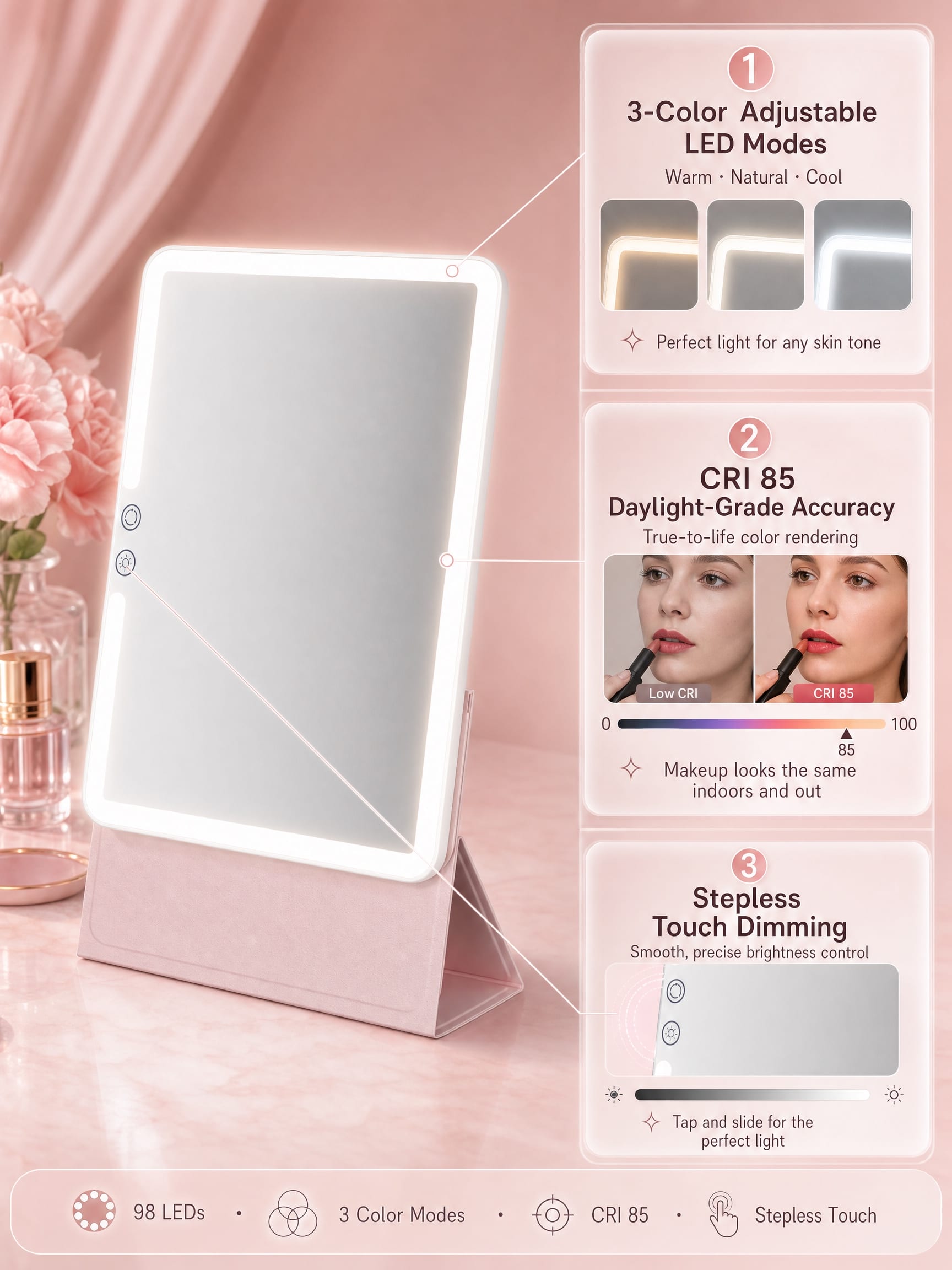
Whether your order consists of standard panels, a premium bathroom mirror cabinet, or specialized rgb led bathroom mirror setups, physical inspection protocols should never be bypassed. Confirm that packaging is drop-tested (ISTA 3A or 6-Amazon standards) to guarantee the fragile glass and integrated electrical systems survive long-distance transit and site handling.
Sourcing and Compliance FAQ
Q: What UL certifications are required for commercial illuminated mirrors?
A: The complete mirror assembly should be certified under UL 962 (household and commercial furnishings) or UL 1598 (luminaires). Simply using UL-listed LED strips or drivers inside an unlisted mirror enclosure does not constitute a UL-certified product and may fail local building inspections.
Q: How do you test IP ratings for bathroom mirrors in bulk orders?
A: Manufacturers verify IP ratings using specialized water spray and dust chambers to simulate environment-specific exposure. For volume orders, buyers should request IP44 or IP65 laboratory test reports for the exact enclosure model being produced.
Q: What is the standard warranty period for commercial-grade LED drivers?
A: Commercial-grade LED drivers should carry a minimum 3-to-5-year replacement warranty, reflecting a projected lifetime of at least 50,000 operational hours under continuous use.
Q: How can I verify a mirror manufacturer's ISO 9001 compliance?
A: Request a copy of their active ISO 9001 certificate and verify its validity online via the issuing accreditation body (e.g., ANAB, IAF). Additionally, review their internal traceability records to ensure materials and testing steps are logged systematically.
Q: What are the signs of poor silvering and glass quality in bulk shipments?
A: Look for edge-desilvering (dark spots or cloudy edges), microscopic bubbles, distortion under angled viewing, and a distinct green tint on the profile edge. High-quality mirrors utilize low-iron glass with copper-free backing coatings to prevent these defects.