 Nederlands
 Deutsch
 Español
  Français
 Русский
Sourcing LED Bathroom Mirrors: How to Evaluate Driver Quality and IP Ratings for Hospitality Projects
In high-end hospitality environments, lighted mirrors are no longer just design statements; they are critical electrical fixtures subjected to continuous operation and high humidity. For hotel developers, procurement managers, and MEP engineers, specifying the right internal components is vital to avoiding premature failures, flickering, and high maintenance overheads. This guide breaks down the technical criteria for evaluating LED drivers and IP ratings to ensure long-term reliability in commercial hospitality bathrooms.
1. Understanding LED Driver Quality and Component-Level Lifespans
The LED driver is the heart of any illuminated mirror system, regulating the voltage and current supplied to the LED strips. In hospitality projects, unbranded or sub-par drivers are the leading cause of early system failure. High-quality drivers utilize premium internal components, such as Japanese-made solid-state electrolytic capacitors, which are rated for high operating temperatures up to 105°C. Specifying tier-1 driver brands (such as Mean Well or Lifud) ensures a high Mean Time Between Failures (MTBF), typically exceeding 50,000 hours of continuous operation.
When reviewing technical datasheets during the Bathroom Mirror Customization process, engineers should examine the thermal dissipation design of the mirror chassis. Aluminum backing plates act as effective heat sinks, keeping the driver's case temperature (Tc) well below its maximum limit. Standard thermal stress testing in manufacturing laboratories involves operating the drivers at 50°C ambient humidity for prolonged periods to measure thermal degradation and ensure consistent current output.
2. Ripple Current, Dimming Systems, and PMS Integration
One of the most common issues in commercial hospitality lighting is LED flickering. This is frequently caused by high ripple current in the driver output, which refers to the residual AC current superimposed on the DC output. High-quality drivers restrict ripple current to less than 3% or 5%, eliminating the visible and invisible high-frequency flicker that can trigger headaches or interfere with guest photography and smartphone cameras.
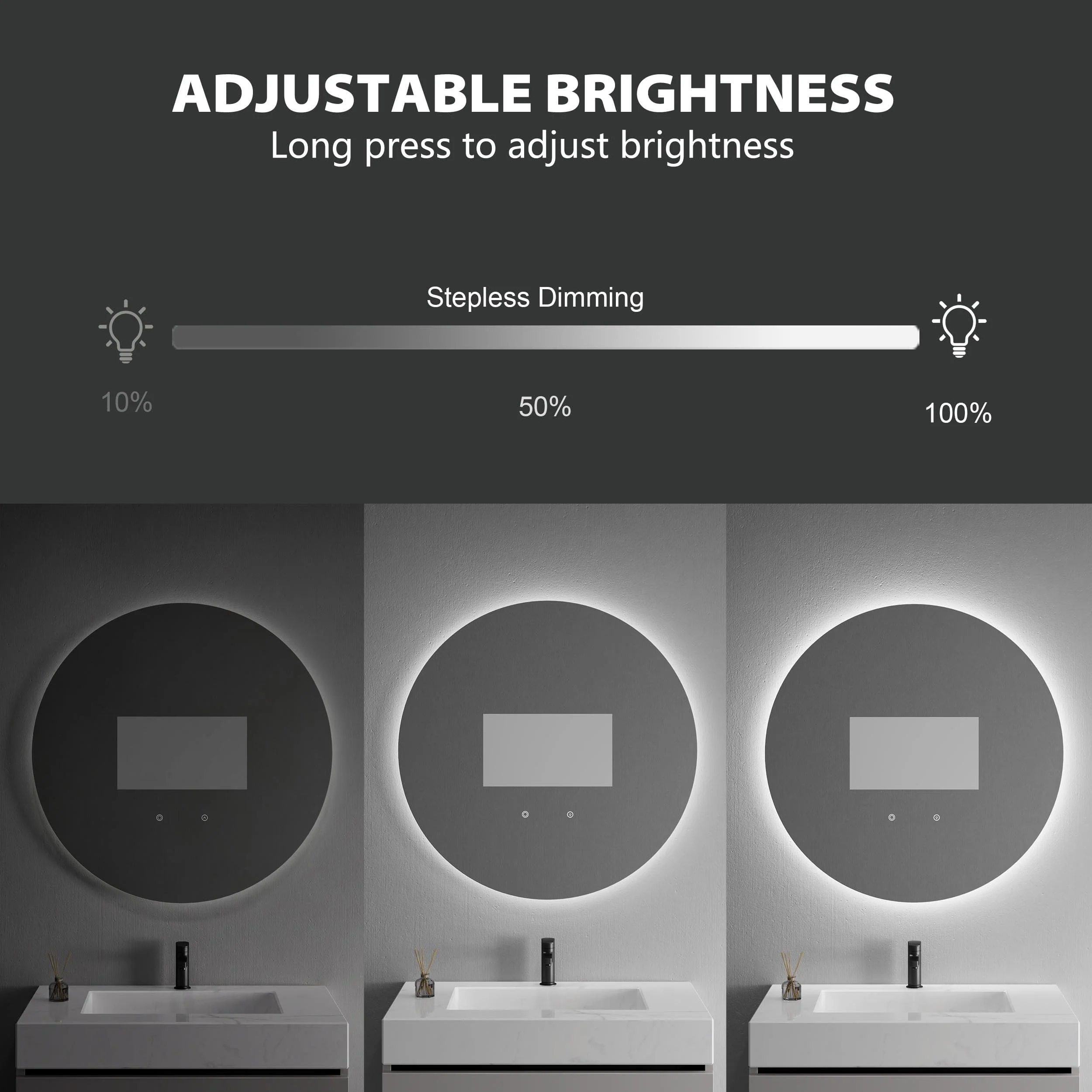
Furthermore, hotel guestrooms are increasingly managed by central Property Management Systems (PMS) or sophisticated in-room dimming networks. Standard dimming options like 0-10V, DALI, or TRIAC require precise driver compatibility. Cheap, unbranded drivers fail to dim smoothly below 10%, causing steps, drop-outs, or persistent buzzing noises. When specifying a modern Bathroom Mirror, it is critical to verify that the integrated driver supports flicker-free, deep dimming protocols (down to 1% or 0.1%) matching the hotel's physical control systems.
3. Demystifying IP Ratings for Bathroom Moisture Zones
Ingress Protection (IP) ratings are a dual-digit standard used to define the sealing effectiveness of electrical enclosures against solids and liquids. For hospitality guest bathrooms, understanding these moisture zones is essential for both regulatory compliance and long-term durability. The first digit represents protection against solid particles (0 to 6), while the second digit indicates protection against liquids (0 to 9).
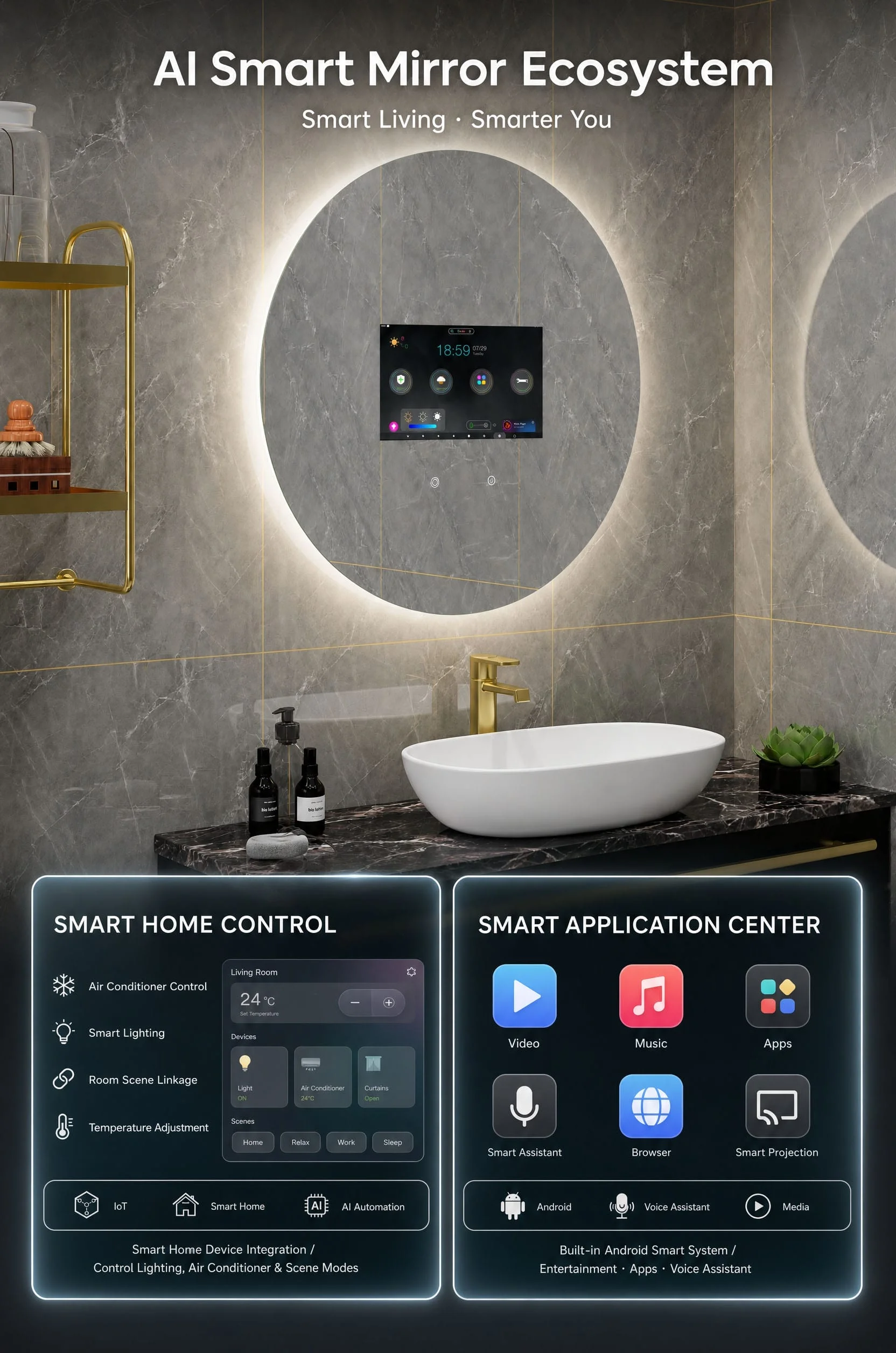
In a typical hotel guest bath, Zone 1 (inside the shower or tub area) requires IP67 or higher waterproof fixtures due to direct water exposure. Zone 2 (within 60cm of the washbasin, shower edge, or bathtub) requires at least an IP44 rating to protect against splashing water from any direction. For most standard wall-mounted vanity applications, an IP44 rating is fully sufficient. However, for high-humidity steam rooms, wet rooms, or luxury suites featuring integrated smart tech like an Ai Tv Bathroom Mirror, stepping up to an IP65-rated driver and enclosure ensures complete protection against low-pressure water jets and heavy moisture condensation.
4. Driver Evaluation: A B2B Selection Checklist
When sourcing from a manufacturer, procurement managers should demand concrete electrical and thermal performance data. Below is a checklist designed for technical evaluation teams to verify driver reliability before signing off on large-scale hospitality orders:
- Manufacturer Credentials: Verify if the driver brand is globally recognized (e.g., Mean Well, Lifud, Philips, Osram).
- Ripple Current Limits: Ensure the driver datasheet specifies a ripple current of < 5% to prevent flickering under all dimming levels.
- Thermal Protection: Check for automatic over-temperature, over-voltage, and short-circuit protection circuits.
- Dimming Control: Confirm seamless compatibility with TRIAC, 0-10V, or DALI-2 systems depending on the hotel PMS.
- Certifications: Verify authentic UL, ETL, CE, or RoHS certifications relevant to the installation region.
| Parameter / Feature | Tier-1 Premium Drivers | Unbranded / Entry-Level Drivers |
|---|---|---|
| Expected Lifespan | 50,000+ hours (with commercial warranty) | 10,000 - 15,000 hours (prone to failure) |
| Ripple Current Percentage | < 3% (completely flicker-free) | > 10% (visible flicker on cameras) |
| Dimming Protocol Compatibility | Smooth 0-10V, TRIAC, DALI-2 (down to 1%) | Unstable, steps, buzzing, or no dimming |
| Moisture Protection | IP44 to IP67 fully sealed silicone potting | IP20 open-frame or poorly sealed plastic |
| Internal Components | 105°C solid-state capacitors | Cheap 85°C liquid electrolytic capacitors |
5. Safety Compliance, Certifications, and Long-Term Maintenance Costs
In the hospitality industry, electrical safety is non-negotiable. Illumination fixtures installed in bathrooms must comply with strict local electrical codes. In North America, drivers must carry UL (Underwriters Laboratories) or ETL (Intertek) certification, while CE and RoHS certifications are mandatory in Europe. These marks prove that the driver has undergone thorough testing for electrical insulation, fire resistance, and overcurrent safety.
Choosing high-quality components from the start directly impacts hotel maintenance costs. When an LED driver fails in a hotel room, the room must be taken out of inventory (Ooo - Out of Order) while maintenance staff or local electricians diagnose, source, and replace the component. Over a 5-to-10-year hotel renovation cycle, the cost of labor and lost room revenue from a single driver failure far outweighs the minor initial premium of specifying a certified, branded IP-rated driver. Investing in robust components for a premium Bathroom Mirror Cabinet or illuminated vanity mirror ensures guest satisfaction and uninterrupted hotel operations.
Frequently Asked Questions
Q: What are the signs of a high-quality LED driver in commercial mirrors?
A: Key signs include a low ripple current rating (< 3%), robust certifications (UL/ETL/CE), silent operation without buzzing, thermal protection features, and the use of premium solid-state capacitors rated for 105°C.
Q: Is IP44 or IP65 required for hospitality bathroom mirrors?
A: For typical vanity backlighting in a standard hotel guestroom bathroom (Zone 2), an IP44 rating is sufficient to protect against water splashes. For steam rooms or mirrors positioned directly next to showers or open wet zones, an IP65 rating is highly recommended to protect against low-pressure water jets and heavy condensation.
Q: How do LED driver failures impact hotel maintenance costs?
A: A failed driver requires taking the guestroom offline, leading to immediate lost room revenue. Added to this are the costs of maintenance labor, replacement parts, and shipping delays. Using certified, high-grade drivers lowers the failure rate to less than 0.1%, protecting the hotel's bottom line.
Q: What UL or ETL standards apply to commercial mirror drivers?
A: In North America, commercial LED drivers must comply with UL 8750 (the standard for light-emitting diode equipment for use in lighting products) and UL 1310 (Class 2 Power Units) to ensure electrical and fire safety in damp and wet environments.
Q: How do you calculate the lifespan of an LED mirror driver in a high-use environment?
A: Lifespan is calculated using the manufacturer's MTBF (Mean Time Between Failures) data, adjusted for actual operating temperatures (Tc). Keeping the case temperature low via aluminum chassis heat dissipation helps the driver achieve its full 50,000-hour rated lifespan even in 24/7 commercial operations.





