Nederlands
 Deutsch
 Español
  Français
 Русский
Sourcing Smart Bathroom Mirrors with Storage: Integrating USB Outlets and Defoggers for Hospitality
Integrating smart bathroom mirrors with storage into high-end hospitality projects requires a precise balance of guest convenience, storage capacity, and strict electrical safety. For hotel developers and B2B procurement managers, selecting these complex fixtures involves evaluating how high-voltage heating elements and low-voltage charging ports interact within a high-humidity environment. This technical guide outlines the critical engineering standards, installation requirements, and material specifications necessary to ensure long-term durability and safety in commercial lodging applications.
1. Electrical Safety and Isolation in Multi-Functional Mirrors
The primary engineering challenge in a smart Bathroom Mirror with integrated storage is the coexistence of high-voltage components, such as the 110V-240V defogger pad, and low-voltage systems like USB charging ports (5V/9V). Manufacturers must design these units with complete physical and electrical isolation barriers to prevent short circuits and shock hazards. High-voltage wiring must be routed through dedicated, grounded aluminum conduits separate from the low-voltage DC lines feeding the USB modules and LED drivers.
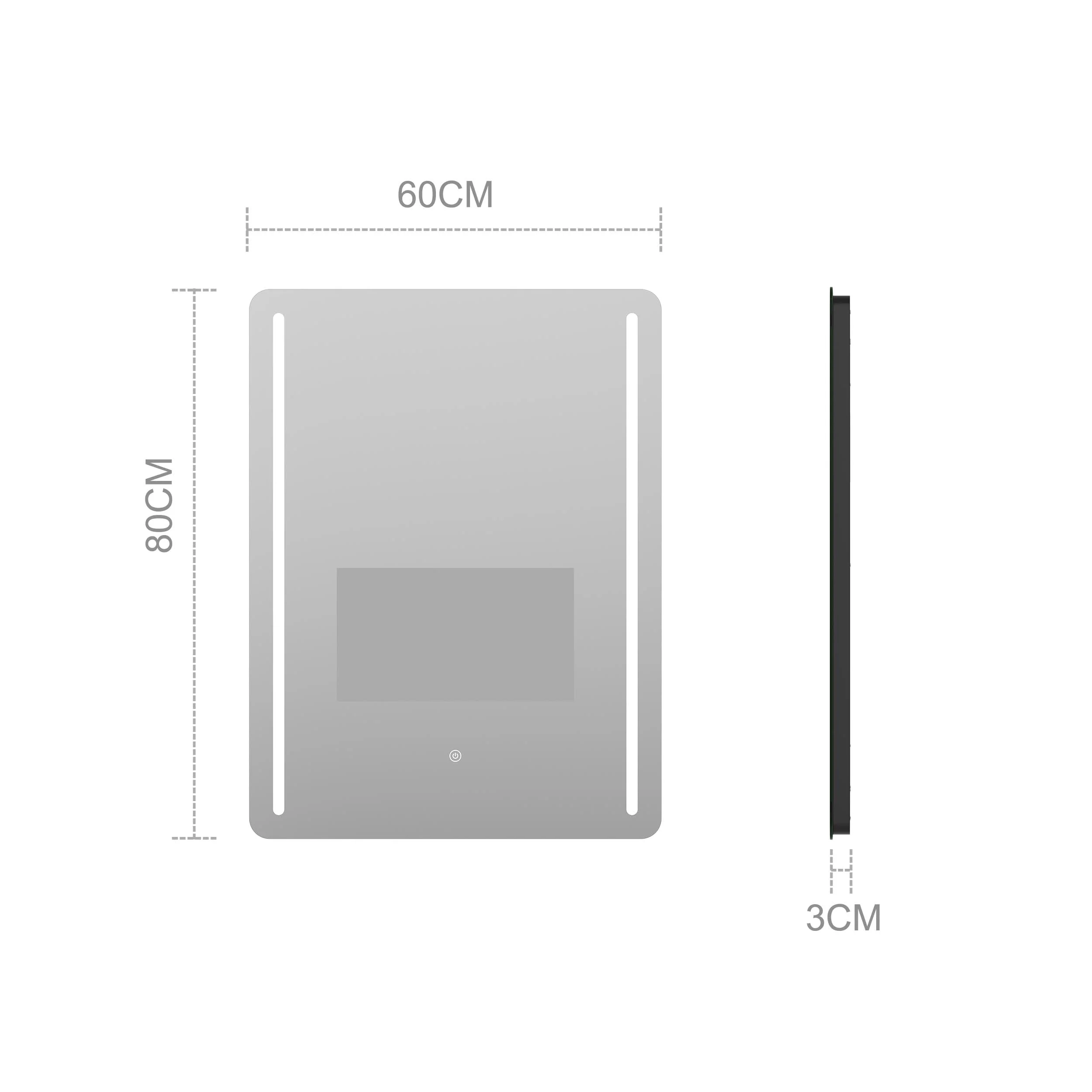
To guarantee safety in wet zones, look for products where the electrical junction boxes and drivers are sealed inside an IP44 or IP66 rated enclosure. Isolation transformers are utilized to step down voltage for the USB ports, and built-in overcurrent and thermal cutoff protection are integrated directly into the circuit boards. This ensures that any power surge or overheating event instantly cuts off power before it reaches the guest-facing interfaces.
2. Thermal Management inside Sealed Storage Compartments
When adding smart components to a Makeup Mirror With Storage, heat accumulation becomes a major operational concern. Defogger pads generate continuous heat on the glass face, while LED drivers and USB charging transformers produce ambient heat inside the cabinet. Without proper thermal management, this heat buildup can degrade electronic components, reduce the lifespan of LED chips, and present a risk to items stored inside the cabinet.
To mitigate this, commercial-grade smart storage mirrors incorporate passive heat dissipation systems. This includes anodized aluminum cabinet bodies that act as natural heat sinks, along with strategically positioned, moisture-sealed ventilation slots. High-quality defogger pads also feature automatic shut-off timers (typically 30 to 45 minutes) to ensure they do not run continuously and overheat the internal storage environment.
3. Durability of USB Ports and Corrosion Resistance
The bathroom is a highly corrosive environment due to humidity, steam, and cleaning chemicals. Standard USB ports are highly susceptible to oxidation, which leads to charging failures and structural degradation. When sourcing for hospitality projects, it is essential to request Bathroom Mirror Customization that utilizes marine-grade or gold-plated USB-A and USB-C contacts.
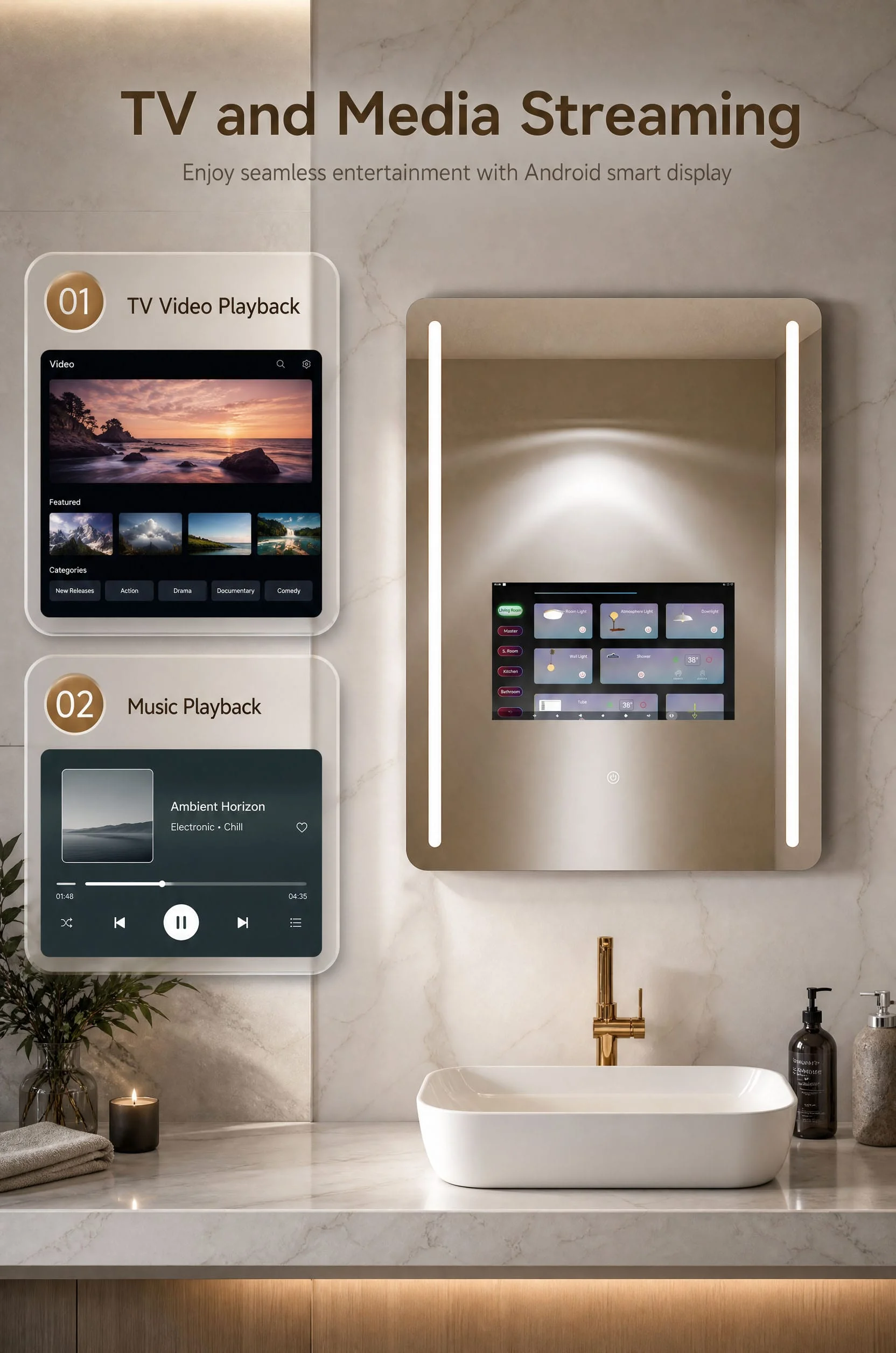
Additionally, integrated USB ports inside or on the side of the mirror storage cabinet must feature spring-loaded, rubber-gasketed protective covers. These covers shield the ports from direct water exposure and airborne moisture when not in use, keeping the internal pins dry and preventing premature corrosion.
4. Structural Integrity and Wall Recessing Configurations
Hospitality developers must decide whether to install storage mirrors as surface-mounted units or recessed into the drywall. Recessed installations offer a sleek, space-saving aesthetic but require careful coordination with the project's structural and drywall sub-contractors. Standard hotel drywalls typically feature a 3.5-inch or 5.5-inch stud depth, which must accommodate both the physical cabinet box and the rear-facing electrical connections.
For recessed setups, the cabinet flange must provide a clean cover over the drywall cutout. The structural frame of the mirror cabinet must be made of heavy-duty, rust-resistant materials such as powder-coated aluminum or stainless steel to prevent warping under the weight of the thick glass and internal components. Hardwiring must be coordinated early in the rough-in stage, with dedicated power lines run to the exact junction box location behind the recess pocket.
5. Selection Checklist and Performance Comparison
Sourcing these complex fixtures for a hotel chain requires balancing performance, electrical certification, and maintenance access. The table below outlines key technical parameters that procurement teams should verify with their manufacturing partners.
| Technical Feature | Standard Specification | Premium Hospitality Specification | Procurement Importance |
|---|---|---|---|
| Ingress Protection (IP) | IP44 (Splash-resistant) | IP54 to IP66 (Dust and water jet proof) | Crucial for guest safety in Zone 2 bathroom areas. |
| USB Port Material | Nickel-plated steel | Gold-plated with rubber gasket covers | Prevents port oxidation and contact failure over time. |
| Cabinet Construction | Anodized MDF / Plastic | 6063-T5 Aircraft-grade aluminum | Ensures superior heat dissipation and zero warping. |
| Defogger Control | Manual touch switch | Auto-shutoff timer (30-min threshold) | Reduces hotel energy load and prevents overheating. |
| Driver Accessibility | Rear sealed (requires removal) | Front-accessible internal service hatch | Enables fast maintenance by hotel staff without dismounting. |
Frequently Asked Questions
Q: What are the electrical safety requirements for installing USB-integrated mirrors in hotel bathrooms?
A: USB-integrated mirrors must feature complete galvanic isolation between the low-voltage DC charging circuit and the high-voltage AC supply. All electrical components must be housed in a minimum IP44-rated enclosure, and the unit must carry certifications like UL 962, CE, or ETL to verify it complies with national commercial electrical codes.
Q: How do commercial defoggers impact the overall power consumption load of a hospitality project?
A: Individual defogger pads typically draw between 20W to 50W depending on their surface area. Across a 200-room hotel, this can significantly increase peak electrical load if left on continuously. Sourcing mirrors with integrated 30-minute auto-shutoff timers or connecting them to the room’s key-card energy management system is crucial to managing overall power consumption.
Q: Can smart mirrors with storage be recessed into standard hotel drywalls?
A: Yes, but it requires coordinating the cabinet depth with the wall stud profile. A standard 4-inch deep cabinet can fit in 2x4 framing, but projects must account for the rear clearance needed for the hardwire whip and junction box. Flush-recessed units also require a peripheral flange to neatly cover the cut drywall edge.
Q: What are the maintenance and driver replacement protocols for hospitality smart mirrors?
A: To minimize guest room downtime, choose a manufacturer that designs mirrors with front-accessible driver compartments. This allows hotel maintenance staff to swap out a failed LED driver or USB power supply in minutes by opening the storage cabinet doors, eliminating the need to completely dismount the heavy mirror assembly from the wall.
Q: How do manufacturers ensure IP44 or IP66 ratings on mirrors with integrated USB outlets?
A: Manufacturers achieve these ratings by placing all active electronic components (transformers, wiring hubs) within a gasketed, silicone-sealed back box. The external USB outlets are fitted with self-closing, rubberized spring covers that form a physical seal over the ports when not in use, preventing moisture ingress and ensuring localized safety compliance.