 Nederlands
 Deutsch
 Español
  Français
 Русский
How to Vet an LED Bathroom Mirror Manufacturer: The Ultimate B2B Sourcing Guide
Sourcing commercial-grade illuminated mirrors for hospitality, residential developments, or wholesale distribution requires looking beyond paper certificates. In high-humidity bathroom environments, subpar raw materials and poorly engineered electronics lead to rapid degradation, black spots, and electrical failures. This technical procurement guide outlines how to audit an LED bathroom mirror manufacturer's actual factory capabilities, material quality, and testing protocols.
1. Raw Material Verification: Copper-Free Glass vs. Cheap Aluminum
The foundation of any high-quality bathroom mirror is the glass substrate and its backing. Traditional mirrors utilize an aluminum or copper-based backing layer, which oxidizes rapidly when exposed to humidity, resulting in unsightly black edge corrosion within months.
To ensure a service life of over 10 years, B2B procurement managers must verify that the manufacturer uses 5mm copper-free silver glass. This material features a protective silver layer coupled with a lead-free, corrosion-resistant passivation coating. When vetting a factory, request proof of their raw material supply chain and verify whether they have in-house glass cutting, silvering, and CNC processing capabilities rather than outsourcing these fundamental steps to third-party processors.
2. Evaluating Electronic Components and Lifespan Testing
An illuminated mirror is an electrical appliance, meaning its longevity depends heavily on the quality of its internal electronics. High-performance projects require premium-grade LED strips, often configured with high-density light-emitting diodes to prevent visible hot spots through the frosted glass diffuser.
Sourcing teams should mandate that the manufacturer uses drivers with safety certifications from recognized bodies like UL, ETL, or CE. Furthermore, a qualified factory must perform continuous, high-temperature aging tests on both the LED strips and driver power supplies prior to final assembly. Ask the manufacturer to document their standard burn-in or aging test protocols, which should run for a minimum of 4 to 12 hours under load to weed out infant mortality defects in the semiconductors.
3. Ingress Protection and Safety Testing Standards
Bathroom environments require strict adherence to ingress protection (IP) ratings to guarantee safety. Most commercial specifications call for an IP44 or IP65 rating for electrical enclosures behind the mirror surface.
During a physical or virtual factory audit, look for dedicated testing chambers designed to measure IP ratings. Factories must demonstrate their ingress protection testing protocols, showing how they simulate water spray and dust exposure. In addition, every single shipped unit must pass a high-voltage dielectric strength test (commonly known as a Hi-Pot test) to verify that no current leaks from the internal electronics to the aluminum frame or glass surface.
4. Comparing Manufacturing Capabilities and Quality Standards
Understanding the difference between an assembled-product trader and a true direct manufacturer is critical for large-scale projects requiring custom designs, such as a specialty bathroom mirror cabinet or complex architectural shapes. Direct manufacturers maintain full control over tolerances, polishing quality, and structural integrity.
The table below outlines key technical differences to consider when evaluating potential suppliers during the commercial investigation phase:
| Inspection Category | Premium Manufacturer Standard | Low-Cost Assembler Risk |
|---|---|---|
| Glass Substrate | 5mm Copper-free silver mirror; double-coated backing | Aluminum backing or thin 4mm copper mirror |
| LED Strip Lifespan | 50,000 hours LM-80 tested; Epistar chips or equivalent | Generic chips without thermal management |
| Driver Certifications | UL, cUL, CE, SAA, RoHS compliant with waterproof housing | Uncertified drivers; prone to flicker and premature failure |
| Manufacturing Steps | In-house CNC, edging, silvering, and structural assembly | Outsourced glass processing; manual assembly only |
5. Assessing Customization and OEM Capabilities
Commercial B2B projects rarely rely on off-the-shelf items. Sourcing managers frequently require custom structural configurations, integrated technology, or unique frame geometry to match interior design concepts. When selecting a partner, evaluate their engineering capacity for bathroom mirror customization.
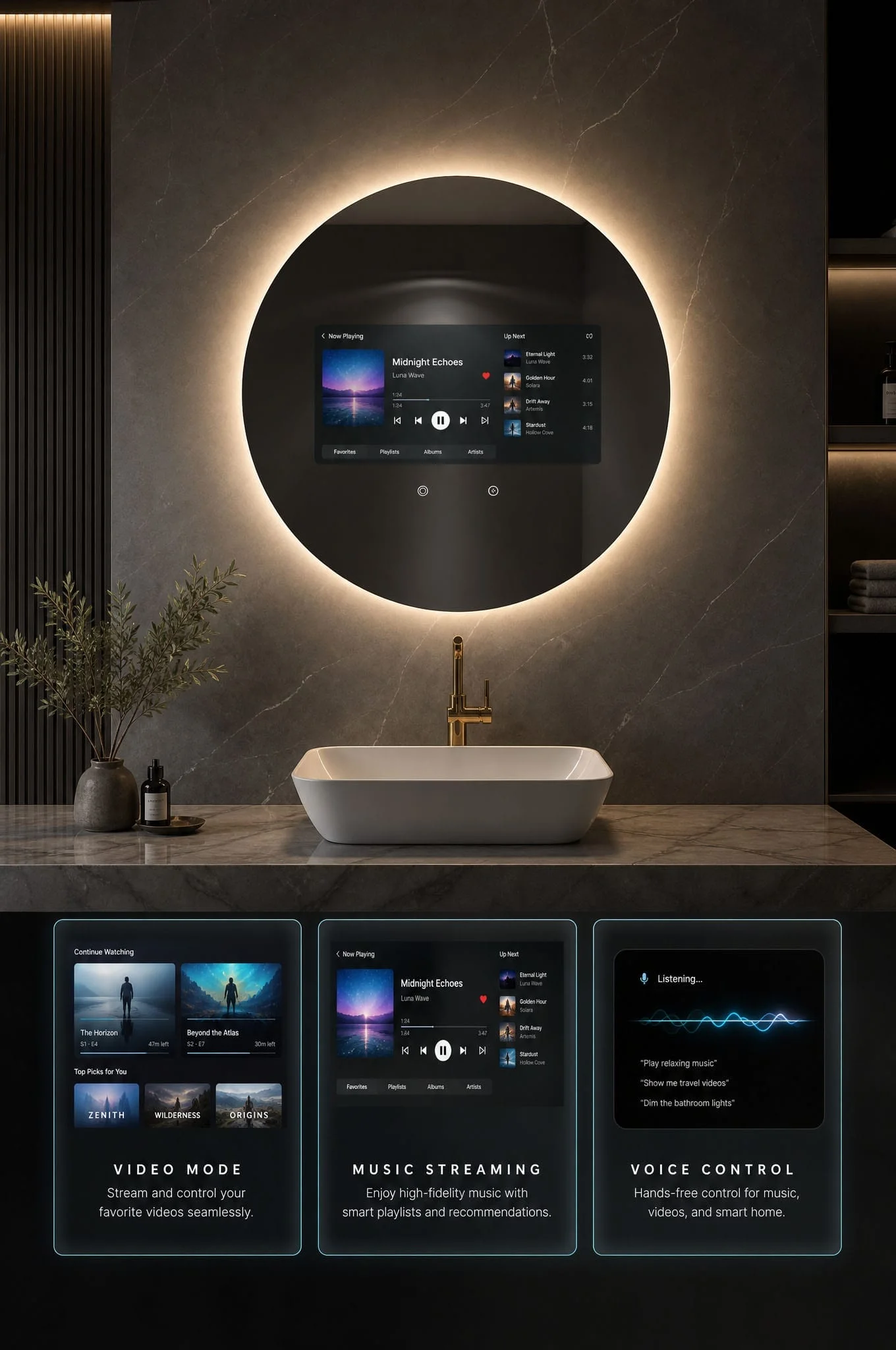
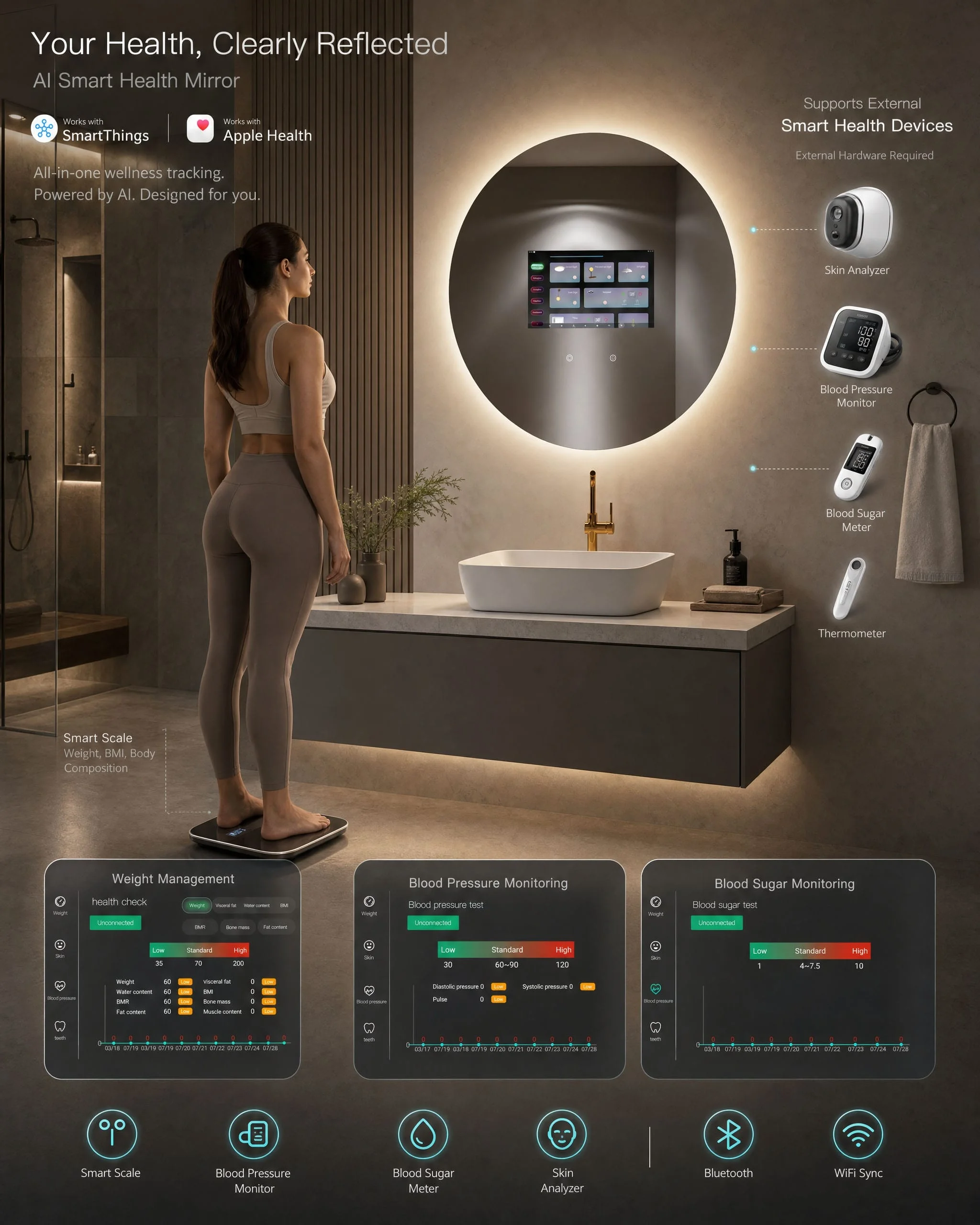
A premium manufacturer should offer complete OEM services, including CAD drawing development, photometric file (IES) generation for lighting calculations, and rapid prototyping. Ensure the factory can handle advanced hardware options such as touch sensor dimming, anti-fog heating pads, or integrated digital displays, ensuring the final product meets your exact project specifications.
6. Frequently Asked Questions
Q: What are the standard defect rate limits for bulk LED mirror shipments?
A: Standard B2B contracts generally specify an Acceptable Quality Limit (AQL) of 1.0 for major defects (such as functional failure or glass cracks) and 2.5 for minor defects (such as tiny cosmetic blemishes on the non-functional backing or minor edge polishing variations).
Q: How do you verify if an LED mirror manufacturer uses copper-free glass?
A: Sourcing teams should request a raw material test report from an independent lab (such as SGS or TÜV) showing compliance with salt spray tests. Additionally, look at the protective paint layers on the reverse side of the mirror; copper-free glass features a robust double-coat backing that feels smooth and resistant to scratching.
Q: What UL or CE electrical safety ratings are required for commercial bathroom mirrors?
A: For North American commercial projects, the entire mirror assembly (not just the driver) should ideally be listed under UL 962 or CSA C22.2 standards. For European installations, CE mark certification with RoHS compliance is required, verifying the safety of all integrated electronics.
Q: How does a factory test the IP rating of an illuminated mirror?
A: Quality manufacturers test ingress protection by placing prototype and production samples in water-spray testing chambers. For IP44 ratings, the unit must resist multi-directional splashing water, while IP65 testing involves direct water jet exposure to ensure the silicone seals and back-enclosures are completely watertight.
Q: What are the standard lead times for custom-size OEM LED mirror orders?
A: Standard lead times for OEM manufacturing run between 35 and 45 days. This allows sufficient time for technical CAD sign-off, precision CNC glass cutting, structural framing fabrication, electrical assembly, and the essential 24-hour quality assurance burn-in test.





