Nederlands
 Deutsch
 Español
  Français
 Русский
5 Key Certifications Every Commercial LED Bathroom Mirror Manufacturer Must Have
For hospitality procurement managers, real estate developers, and commercial contractors, specifying the right illuminated fixtures is critical to project timelines and safety. Installing non-compliant fixtures can lead to failed building inspections, costly project delays, and severe liability issues. Choosing a manufacturer with certified products guarantees that the entire assembly meets rigorous electrical, structural, and environmental standards for commercial high-moisture spaces.
1. UL 962 / ETL Listed (North American Electrical Safety)
In the United States and Canada, any electrical fixture installed in a commercial property must be certified by a Nationally Recognized Testing Laboratory (NRTL). The primary standard for commercial illuminated mirrors is UL 962, which covers household and commercial furnishings. Many buyers make the mistake of sourcing from manufacturers that only use UL-listed components, such as a certified LED driver or strip light, while the finished Bathroom Mirror assembly remains uncertified. Inspectors will reject fixtures that lack full-system ETL or UL certification marks.
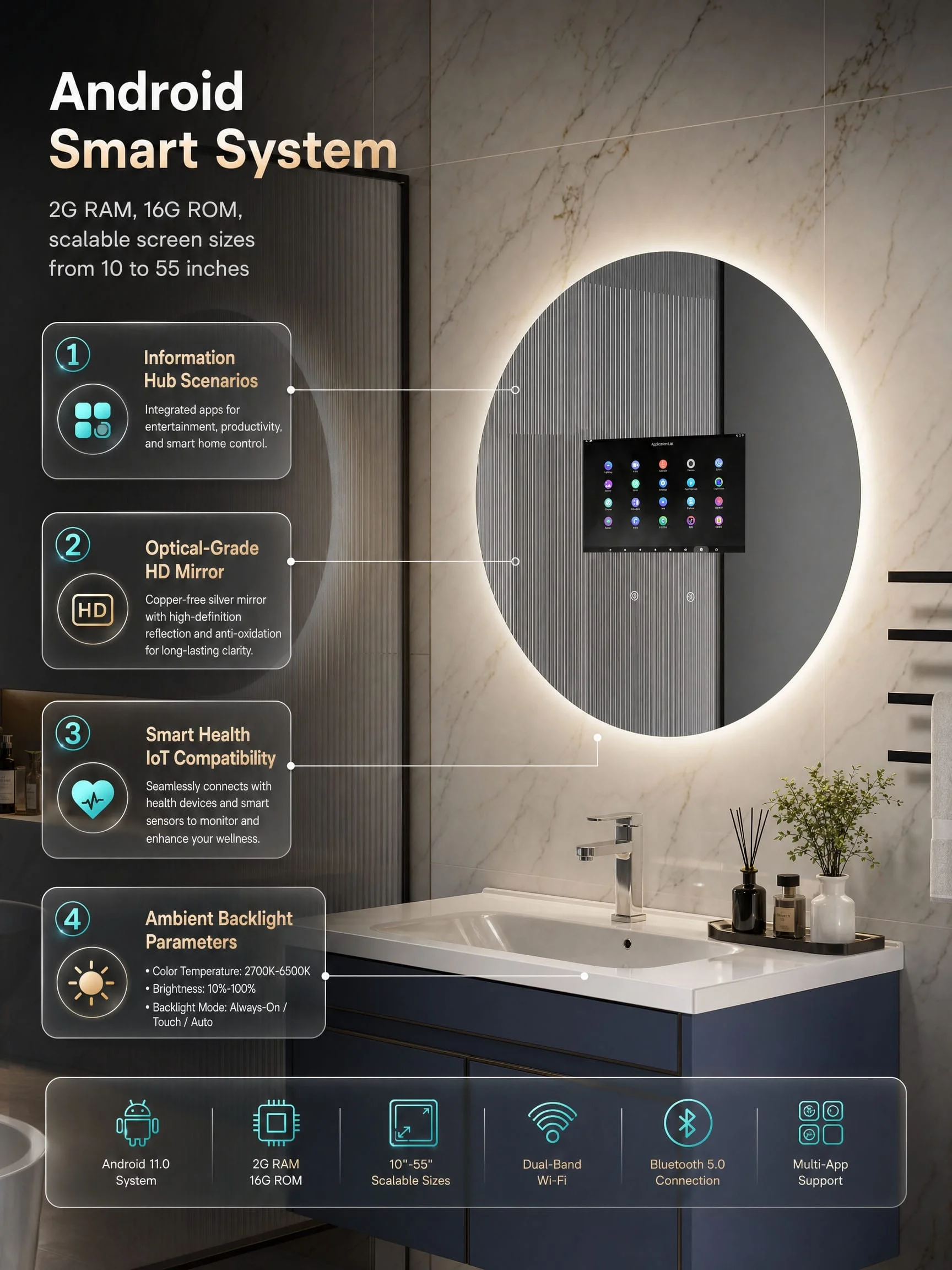
An authentic UL 962 or ETL Listing guarantees that the complete unit—including the glass, backing, defogger pad, drivers, and housing—has been rigorously tested as an integrated system. Our senior quality assurance director emphasizes that our factory-level testing includes high-pot (dielectric voltage withstand) testing to verify that current cannot leak from the electrical elements to the touchable metal frames of the finished units.
2. IP44 or IP54 Rating (Ingress Protection for Damp Environments)
The bathroom is a high-humidity environment subject to splashing water and steam condensation. Ingress Protection (IP) ratings define how effectively an enclosure seals its electrical components against dust and liquids. For commercial guestroom bathrooms, an IP44 rating is the industry baseline, ensuring protection against solid objects larger than 1mm and splashes of water from any direction. An IP54 rating provides enhanced protection, offering a dust-protected seal alongside the same water resistance.
A reliable OEM manufacturer conducts waterproof testing within specialized in-house environmental chambers, subjecting the Bathroom Mirror Cabinet or standalone mirror assembly to continuous moisture spray. When sourcing your units, always request the official lab test reports showing the specific IP rating parameters to prevent premature driver failures and corrosion in damp zones.
3. CE and RoHS Compliance (European Market Standards)
For European commercial building developments, the CE (Conformité Européenne) mark is mandatory. This marking demonstrates that the product complies with all relevant EU health, safety, and environmental protection legislation. Alongside CE, RoHS (Restriction of Hazardous Substances) compliance is required, certifying that the electronic components of the mirror do not exceed permissible limits of hazardous materials like lead, mercury, and cadmium.
When executing projects globally, some procurement managers attempt to use European CE-marked products in the US, or vice versa. It is critical to note that CE is self-declared or third-party tested for European standards and is not legally accepted by US building inspectors, who strictly require an NRTL mark (UL/ETL) to satisfy local National Electrical Codes (NEC).
4. FCC Certification (Electromagnetic Interference Compliance)
Even if an illuminated mirror lacks smart features or integrated screens, its internal LED drivers and touch sensors are digital devices that generate radio frequency energy. In the United States, the Federal Communications Commission (FCC) Part 15 regulations require these components to be tested to ensure they do not cause harmful electromagnetic interference with other nearby devices, such as building Wi-Fi routers or guest cellular signals.
During a high-end Bathroom Mirror Customization project, choosing non-FCC compliant drivers can result in flickering displays, disrupted hotel guest room signals, and wireless network dropouts. Manufacturers must provide FCC declarations of conformity for the electronic ballast or driver assemblies used inside the frame.
5. IECEE CB Scheme (Global Certification Access)
The CB Scheme is an international system for mutual acceptance of product safety test reports and certificates among participating countries. An OEM manufacturer holding a CB Test Certificate for their LED mirror designs can quickly convert this documentation into local national safety certifications across more than 50 countries, including those in South America, Asia, and the Middle East.
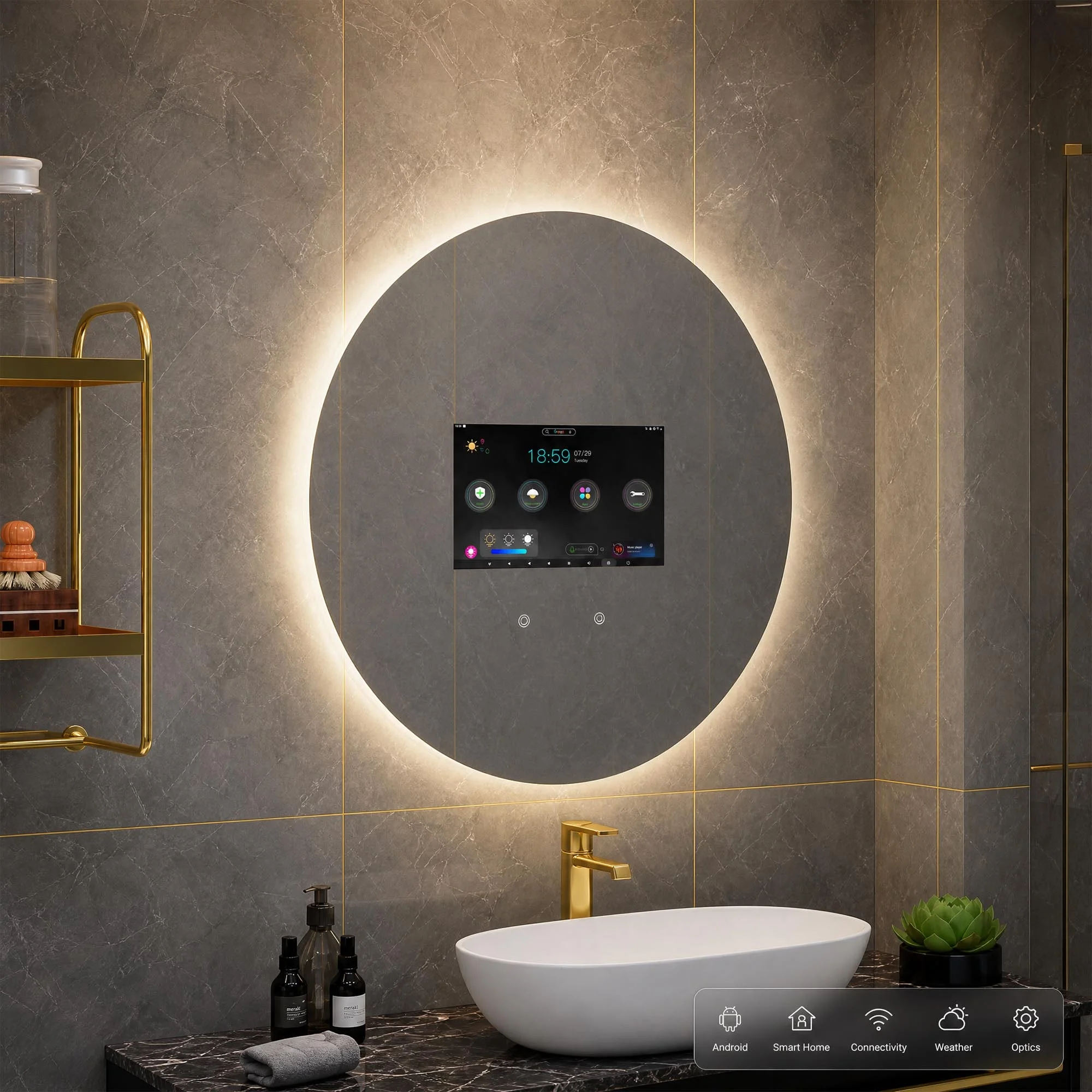
This is highly advantageous for global hotel chains and international developers. If your design calls for an advanced Ai Tv Bathroom Mirror, securing a product backed by a CB Test Report drastically reduces the timeline and costs of obtaining localized compliance approvals for global rollouts.
Certification & Compliance Comparison
| Certification Mark | Primary Target Region | Scope of Evaluation | B2B Project Relevance |
|---|---|---|---|
| UL 962 / ETL Listed | North America (US & Canada) | Full-fixture electrical safety, thermal safety, structural integrity | Mandatory for local building code sign-off and occupancy permits. |
| IP44 / IP54 Rating | Global | Ingress protection against solid particles and splashing liquids | Prevents moisture damage, short circuits, and corrosion in damp bathroom zones. |
| CE & RoHS | European Union | Health, safety, environmental protection, and hazardous substance limits | Required for customs entry and commercial building installation in Europe. |
| FCC Part 15 | United States | Electromagnetic and radio frequency emissions interference | Ensures LED drivers do not disrupt local Wi-Fi, television, or mobile signals. |
| CB Scheme | International (50+ Countries) | Mutual recognition of electrical safety test certificates | Streamlines global project rollouts by facilitating local safety approvals. |
Frequently Asked Questions
Q: What is the main difference between component-level and full-fixture certification for LED mirrors?
A: Component-level certification means individual parts (like the LED strip or power supply) are certified, but the assembly as a whole is not. Full-fixture certification (such as UL 962) means the entire mirror assembly, including housing, glass, and internal wiring, has been tested together to ensure complete system safety.
Q: Can CE certificates be used instead of UL or ETL in US commercial projects?
A: No. Local electrical inspectors in the United States require NRTL safety marks, such as UL or ETL, to approve installations under the National Electrical Code. CE marks are not legally recognized by US building inspectors.
Q: Does an LED mirror require FCC certification if it has no smart or Bluetooth features?
A: Yes, because the electronic drivers and power supplies used to run the LED lighting are classified as unintentional radiators that emit radio frequency energy, which must fall within FCC Part 15 limits.
Q: What compliance documentation should a procurement manager request from an OEM mirror manufacturer?
A: You should request the official UL/ETL Certificate of Compliance, actual laboratory test reports showing IP ratings (e.g., IP44 or IP54), and the manufacturer's factory inspection reports to verify active quality control protocols.
Q: What tests do quality assurance directors perform in-house to ensure commercial durability?
A: Premier manufacturers perform high-pot electrical insulation testing, specialized salt-spray testing to measure corrosion resistance on mirror backings, and temperature-humidity chamber testing to simulate long-term bathroom conditions.