Nederlands
 Deutsch
 Español
  Français
 Русский
Backlit vs. Front-Lit Mirrors: Technical Comparison for Hospitality Procurement
Selecting the correct lighted vanity mirrors for large-scale hotel developments requires a balance of optical performance, structural engineering, and electrical safety compliance. Hospitality procurement officers must evaluate how different lighting configurations affect both the guest experience and the total cost of ownership. This technical guide examines the structural, optical, and maintenance differences between backlit and front-lit mirrors to help you optimize your next commercial project.
Optical Performance and Photometric Distribution
The primary engineering difference between backlit and front-lit mirrors lies in their photometric design and light distribution curves. Front-lit mirrors utilize precision frosted glass cutouts, or sandblasted borders, that allow light to pass directly forward toward the user's face, delivering high lux levels and exceptional color rendering index (CRI) values, typically exceeding 90 Ra.
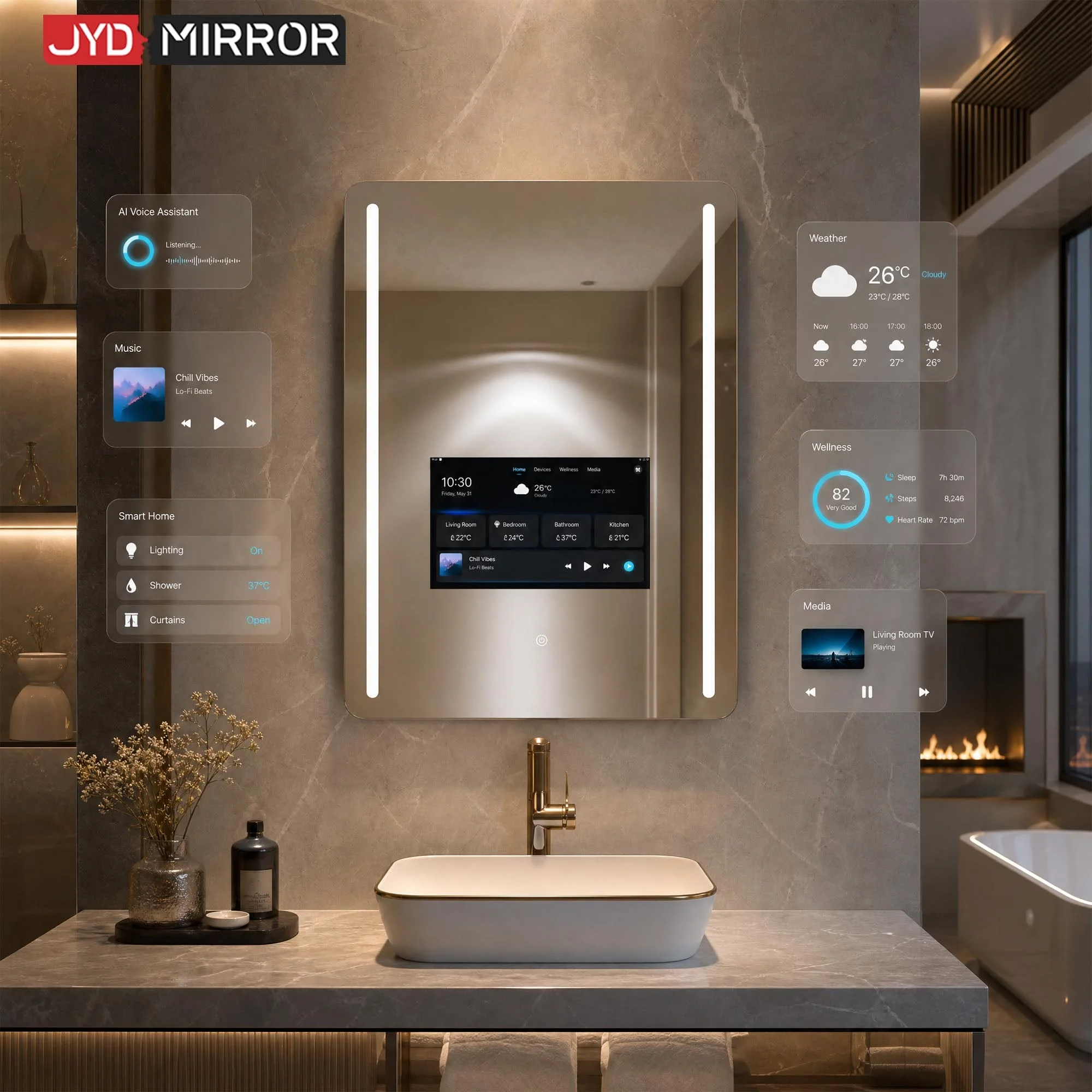
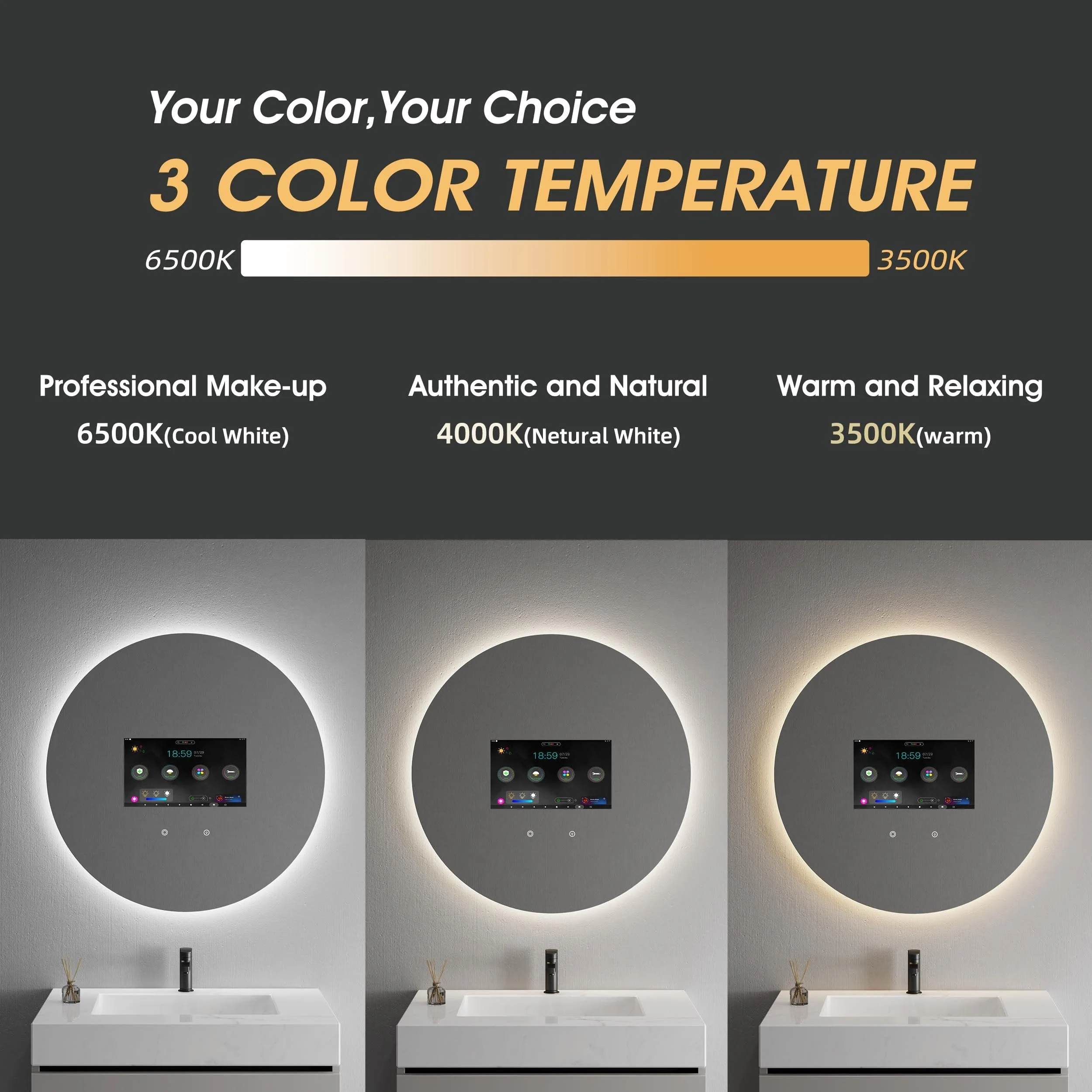
Conversely, backlit mirrors feature LED strips mounted on the rear of the structural frame, projecting light outward against the wall surface. This indirect configuration creates a soft, ambient glow that is highly valued for luxury hospitality aesthetics, though it offers lower functional illuminance for detailed grooming tasks. For projects requiring specific face-level task lighting, a custom Vanity Mirror Customization program ensures that the chosen lux outputs align with your brand standards.
Structural Engineering and Driver Accessibility
Commercial-grade mirrors must withstand continuous operation and simplify long-term maintenance. Front-lit models house their LED modules, diffuse lenses, and driver systems within a fully sealed internal aluminum chassis.
Backlit mirrors utilize an open or semi-enclosed chassis with LED strips mounted outward along the perimeter. When sourcing a reliable Bathroom Mirror Customization solution, ensure the structural schematics provide quick-release mechanisms or front-access panels, allowing engineering teams to swap out proprietary drivers or controllers without removing the glass from the wall.
Electrical Integration and Safety Compliance
In high-moisture hotel guest bathrooms, compliance with international wet-rating standards is a critical procurement metric. Mirror installations must conform to UL 1598 (Luminaires) or CE equivalent certifications, especially when positioned near shower enclosures or wash basins.
Front-lit mirrors naturally provide higher ingress protection (IP) ratings, often achieving IP44 or IP54, as the optical compartments are completely sealed against steam and dust. Backlit mirrors, due to their exposed rear chassis configuration, require precise installation planning and wall finish considerations to prevent moisture accumulation behind the reflective surface.
Technical Comparison Matrix
The following table summarizes the key physical, electrical, and optical properties of commercial backlit and front-lit mirrors to streamline your sourcing decisions.
| Technical Parameter | Backlit Mirrors | Front-Lit Mirrors |
|---|---|---|
| Primary Light Path | Indirect (reflected off wall surface) | Direct (through sandblasted frosted borders) |
| Task Illumination (Lux) | Lower (requires auxiliary overhead lighting) | High (suitable for detailed grooming/makeup) |
| Ingress Protection Rating | Typically IP44 | IP44 to IP54 (completely sealed chassis) |
| ADA Compliance | Easily complies (< 4 inches projection) | Requires thin-profile chassis to comply |
| Maintenance Profile | Moderate (depends on driver location) | Simplified via modular front-access chassis |
Selection Checklist for Hospitality Project Managers
To avoid common installation bottlenecks and long-term maintenance liabilities, procurement managers should follow this checklist during the submittal review phase:
- Confirm both the driver and LED strip assemblies carry UL, CE, or RoHS certifications relevant to your regional target market.
- Verify that the mirror thickness and bracket design comply with the Americans with Disabilities Act (ADA) bathroom vanity projection limit of 4 inches.
- Request photometric testing reports (including R9 values and CCT metrics) to ensure consistency with your guestroom lighting scheme.
- Evaluate the wall surface material behind backlit configurations; dark, textured, or highly matte walls can absorb light and significantly diminish the intended backlit effect.
- For high-density projects, check if the supplier offers modular driver packages that can be serviced without dismantling the entire unit. For bespoke suites, consider a dedicated Vanity Mirror setup that combines both backlit aesthetics and direct lighting.
Frequently Asked Questions
Q: What are the installation cost differences between backlit and front-lit mirrors in large-scale hotel projects?
A: Backlit mirrors are generally faster and less expensive to install as they do not require precise alignment with decorative frosted glass borders. However, backlit models are highly sensitive to wall irregularities and require a completely flat backing surface, which may increase wall preparation costs compared to front-lit models with rigid chassis systems.
Q: Which mirror lighting type complies best with ADA bathroom vanity projection requirements?
A: Both styles can comply, but backlit mirrors naturally feature a thinner profile since they do not require the depth needed for internal light diffusers. Front-lit mirrors must be engineered with low-profile chassis (under 1.5 inches deep) to stay well within the ADA 4-inch maximum wall projection limit when mounted.
Q: How does maintenance and LED driver replacement compare between backlit and front-lit hospitality mirrors?
A: Front-lit mirrors with modular designs allow maintenance teams to access drivers by removing a single front-facing pane or service panel. Backlit mirrors typically require unmounting the entire fixture from the wall to access drivers housed on the rear frame, which can increase maintenance times in high-occupancy hotels.
Q: Which lighting style provides better CRI and lux levels for hotel guest vanity tasks?
A: Front-lit mirrors offer significantly superior task lighting, delivering direct illumination through the frosted border with minimal lux loss. This configuration provides a high CRI (typically 90+) directly onto the guest's face, making them the preferred choice for master bathrooms and grooming vanities.
Q: How do backlit vs front-lit mirrors impact bathroom IP ratings and moisture protection zones?
A: Front-lit mirrors feature sealed, enclosed internal cavities, making it easier to achieve IP54 ratings suitable for high-humidity areas (Zone 2). Backlit mirrors, which often have exposed components at the rear, are typically rated IP44 and require adequate ventilation and proper sealing along the top edge to prevent water run-off from reaching electrical connections.