Nederlands
 Deutsch
 Español
  Français
 Русский
What to Look for in OEM Bathroom Mirror Cabinet Manufacturers for Large-Scale Hotel Projects
Sourcing commercial-grade fixtures for high-volume hospitality developments requires balancing architectural aesthetics with rigorous structural engineering. In high-traffic hotel environments, a standard residential mirror cabinet will quickly fail due to humidity exposure, frequent guest use, and improper mounting. Selecting the right OEM partner for a large-scale project requires evaluating technical manufacturing capabilities, rapid-installation designs, and long-term component field-serviceability.
1. Structural Integrity and Glass-to-Metal Bonding
Large-scale hotel installations demand robust structural loading limits to prevent glass delamination or cabinet sagging over time. High-volume manufacturers must employ advanced polyurethane or silicone structural bonding agents to attach heavy glass panels to metal frames or hinges.
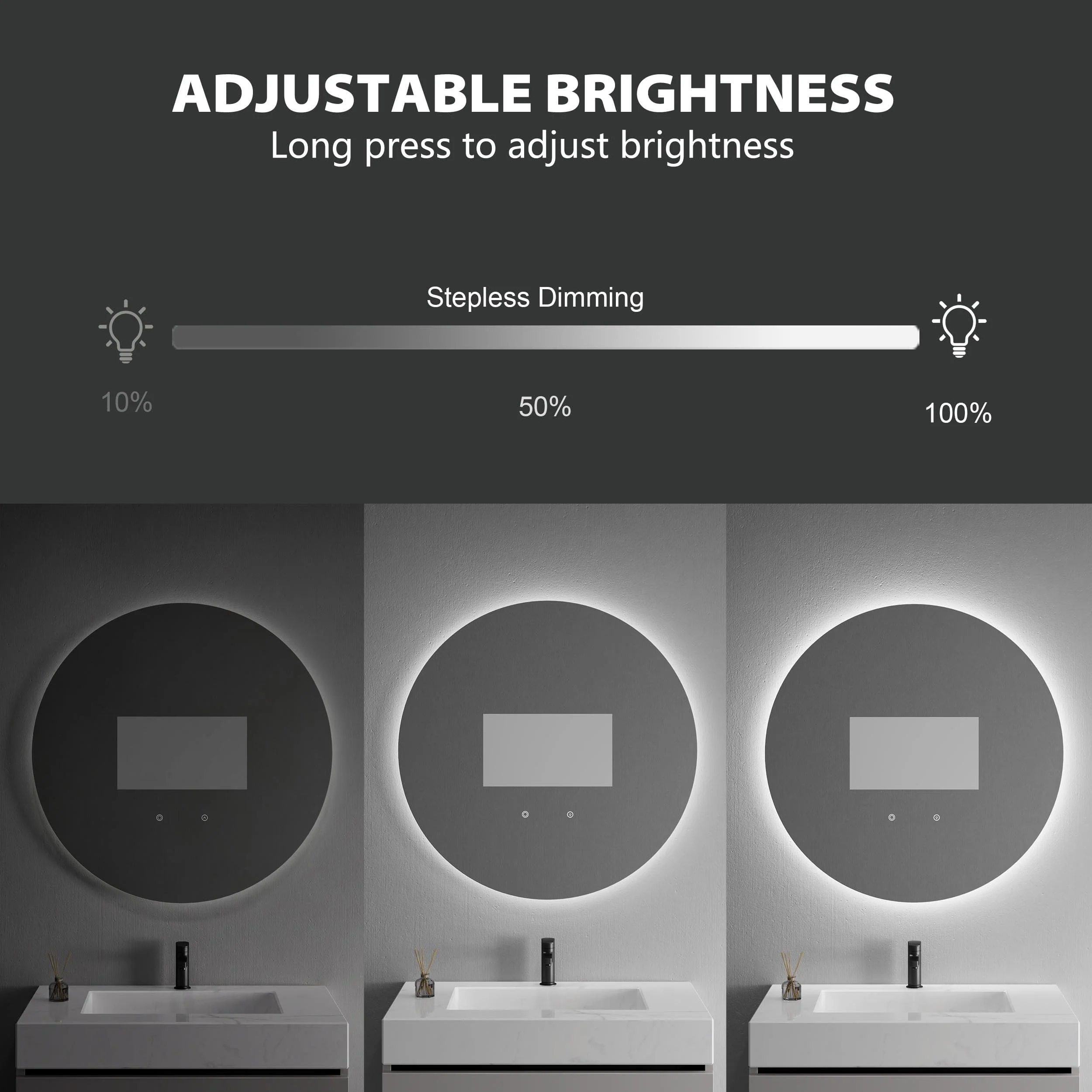
When evaluating a manufacturer, request their structural loading calculations and details on their glass-to-metal bonding processes. A premium Bathroom Mirror Cabinet relies on industrial-grade double-sided bonding tape paired with primer systems that are cured under controlled thermal conditions. This ensures the heavy glass face remains permanently adhered to the aluminum or stainless steel substrate, even under the constant pulling force of guests opening and closing the unit daily.
2. Moisture Resistance and Hardware Durability
Hotel bathrooms experience prolonged periods of high humidity and chemical exposure from cleaning agents. Standard hinges and dampeners will rapidly corrode, leading to squeaking doors, rust stains, or complete mechanical failure.
Ensure your OEM supplier utilizes salt-spray-tested hardware, specifically SS304 or SS316 stainless steel with an electroplated or PVD coating. For high-end hospitality designs, a Round Bathroom Mirror Cabinet requires heavy-duty pivot hinges that distribute weight evenly without compromising the curved aesthetic. The hinges should feature integrated soft-close mechanisms tested to at least 100,000 open-close cycles under maximum load conditions.
3. Rapid-Installation Systems and Anti-Theft Mounting
In multi-story hotel construction, installation speed directly impacts project overhead. Standard retail mounting brackets are inefficient and labor-intensive for hundreds of rooms.
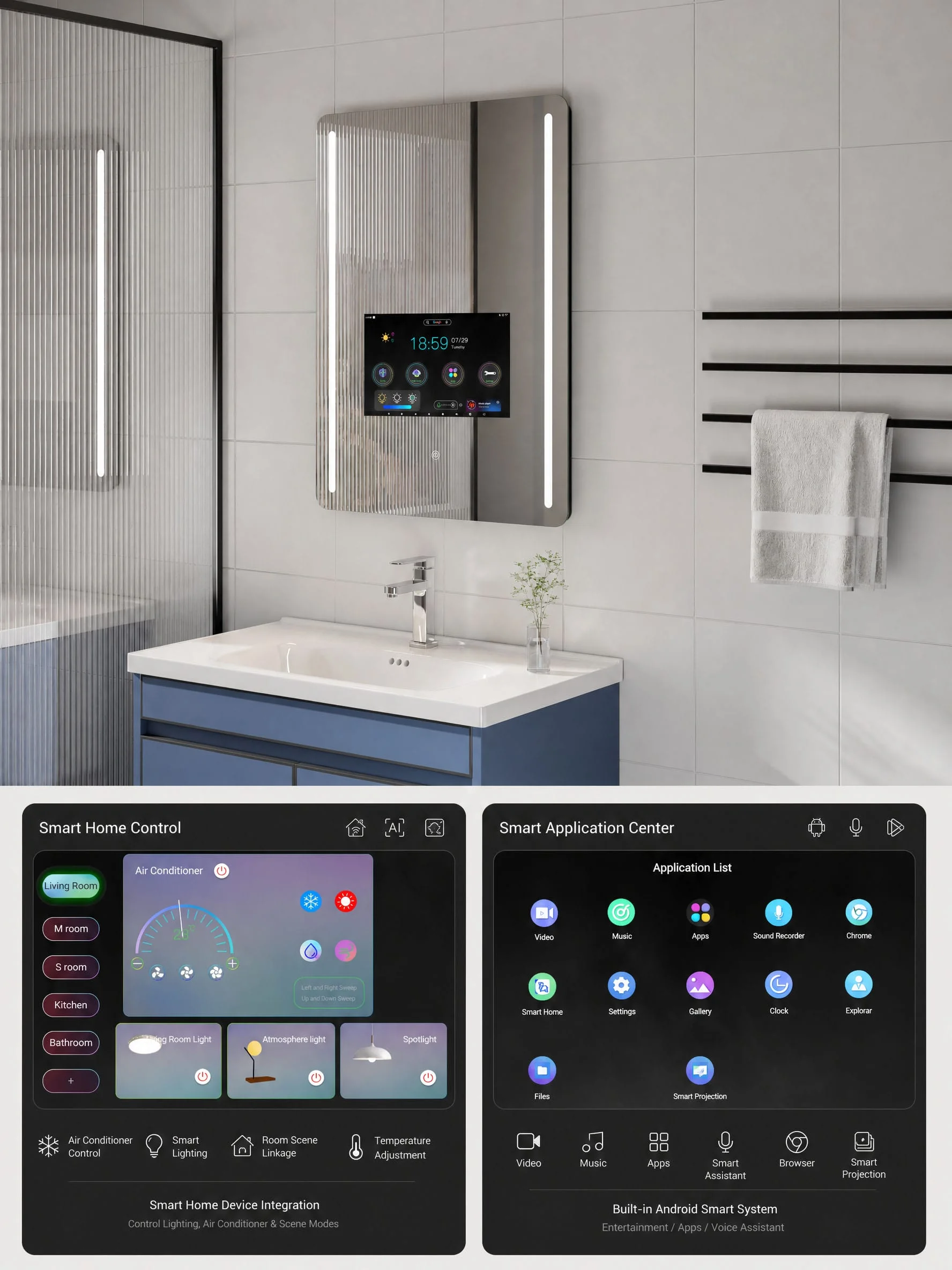
Top-tier B2B manufacturers design custom french-cleat hanging systems or heavy-duty Z-bar brackets with micro-adjustment capabilities. These allow installers to level and secure the cabinet within minutes. Additionally, anti-theft locking screws should be integrated at the bottom of the mounting system, preventing guests or unauthorized staff from lifting the heavy glass cabinet off its wall anchors. This level of engineering is crucial when executing a complex Bathroom Mirror Customization plan for luxury hotel suites.
4. Electrical Engineering and Field-Serviceability
Integrated LED lighting and demister pads have become standard expectations in modern hospitality bathrooms. However, if an LED driver or heating element fails, replacing the entire cabinet is financially unfeasible for the hotel operator.Your OEM partner must provide field-serviceable electrical compartments. This means LED drivers, touch sensors, and demister relays should be housed in an accessible, IP44 or IP54 damp-rated junction box behind or inside the cabinet. If a component fails, hotel maintenance staff should be able to swap out the modular driver in under five minutes without removing the entire cabinet from the wall. This design philosophy differentiates commercial-grade Bathroom Mirror systems from cheaper residential alternatives.
5. Bulk Packaging, Transit Testing, and Logistics
Even the most durable cabinet is useless if it arrives broken. For large-scale project deliveries, logistics packaging is just as important as product engineering.
Manufacturers must adhere to ISTA 3A or ISTA 6 drop-testing standards. This involves packaging individual cabinets in high-density polyethylene (HDPE) foam corners, placed within double-wall corrugated cartons, and secured on reinforced wooden pallets with plastic strapping. Ask your supplier for their historical breakage rate on bulk shipments; reputable commercial partners maintain transit breakage rates below 0.5% through optimized palletization and direct-to-site container shipping.
| Feature / Specification | Commercial Hotel Standard (OEM) | Standard Retail Grade |
|---|---|---|
| Hinge Durability | SS304/SS316 Stainless, 100,000+ cycles, Salt Spray tested | Zinc alloy or basic steel, <20,000 cycles |
| Waterproofing Protection | IP44 / IP54 certified enclosure for all electronics | IP20 or uncertified electrical components |
| Mounting System | Heavy-duty Z-bar / French cleat with anti-theft lock | Basic keyhole hanger or simple drywall screws |
| Component Serviceability | Modular, plug-and-play drivers & sensors (field-replaceable) | Hardwired, sealed-in electronics (requires total replacement) |
| Drop Testing | ISTA 3A / 6 standard bulk palletization | Basic drop test or no transit certification |
Frequently Asked Questions
Q: How do OEM manufacturers ensure structural integrity of heavy glass cabinets for high-traffic hotel environments?
A: Manufacturers utilize Finite Element Analysis (FEA) to calculate stress distribution across hinges and backing panels. They combine mechanical fasteners with structural-grade polyurethane bonding adhesives, which undergo climate-chamber testing to guarantee they will not fail under humid conditions or continuous mechanical stress.
Q: What are the typical lead times for custom-dimension mirror cabinets in volume hotel projects?
A: For mid-to-large-scale hotel orders (typically 200 to 1,000 units), lead times range from 35 to 45 days after prototype approval and technical shop drawing sign-off. This timeline allows for precision metal extrusion, glass cutting, silvering, electrical integration, and rigorous quality control testing.
Q: How do suppliers manage hardware durability and corrosion resistance under high humidity conditions?
A: OEM partners source marine-grade stainless steel (SS304/SS316) for all structural hardware. These components undergo continuous salt spray testing for 96 to 240 hours to ensure they remain rust-free when exposed to moisture and alkaline bathroom cleaners.
Q: What testing protocols do manufacturers use to verify safety backing and electrical integration on large-scale mirror orders?
A: Factories apply safety shatter-proof film (CAT II vinyl backing) to prevent glass fragments from scattering in the event of an impact. Electrically, assemblies undergo high-voltage dielectric withstand tests (hipot testing), leakage current tests, and IP44/IP54 water ingress verification before final packaging.
Q: What are the shipping and bulk packaging standards to prevent transit breakage for large project deliveries?
A: Bulk shipments are packaged according to ISTA 3A standards. Each cabinet is encased in molded foam inserts, placed in thick cardboard boxes, and loaded onto customized, heat-treated wooden pallets. These pallets are wrapped in heavy-duty shrink film and secured with edge protectors to prevent shifting during maritime transit and container unloading.