 Nederlands
 Deutsch
 Español
  Français
 Русский
Material Matters: Anti-Corrosion and Shatterproof Standards for Multi-Family Residential Bathroom Mirrors
Sourcing commercial-grade fixtures for high-density, multi-family residential developments requires a strict focus on material science and durability. Unlike standard consumer projects, multi-family bathrooms experience high-turnover occupancy, continuous humidity cycles, and varying cleaning regimens. Incorporating the correct anti-corrosion and shatterproof standards into your architectural specifications is essential to mitigate liability risks and reduce long-term maintenance overhead.
The Metallurgy of Silver Oxidation: Preventing Black Edge
The unsightly dark spotting and edge deterioration commonly seen on older mirrors is a chemical phenomenon known as desilverization. When moisture, ambient oxygen, and common airborne chemicals penetrate the perimeter of a mirror, they react with the silver reflective layer, causing it to oxidize. Traditional mirrors rely on a copper bonding layer to protect the silver, but copper is highly susceptible to moisture-induced degradation in high-humidity bathroom environments.
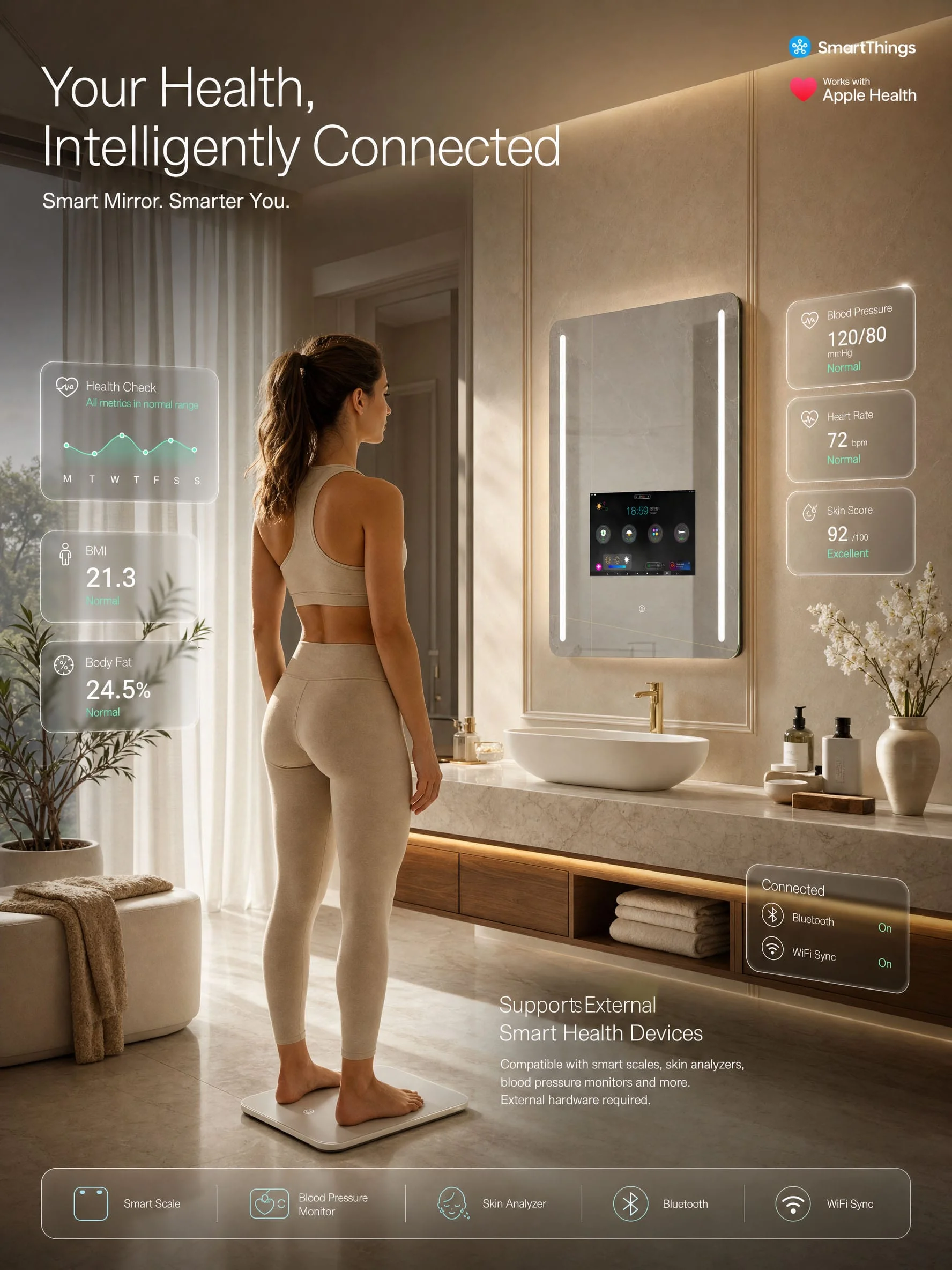
To solve this, commercial-grade Bathroom Mirror Customization utilizes copper-free silver technology. Eliminating the copper layer prevents the galvanic corrosion loop entirely. Instead, manufacturers apply a highly durable, multi-layer protective backing paint consisting of base coats and top coats formulated with advanced acrylic or polyurethane polymers. This impermeable barrier seals the pure silver layer from ambient moisture and corrosive cleaning agents, ensuring long-lasting edge-to-edge clarity.
Shatterproof Performance: CAT-I vs. CAT-II Safety Backings
In multi-family properties, glass breakage poses a significant physical injury and liability risk. To protect residents, developers must specify vanity mirrors featuring safety-backed glass. These products rely on a high-tensile vinyl backing film applied to the rear of the glass sheet, which holds shards in place if the mirror breaks.
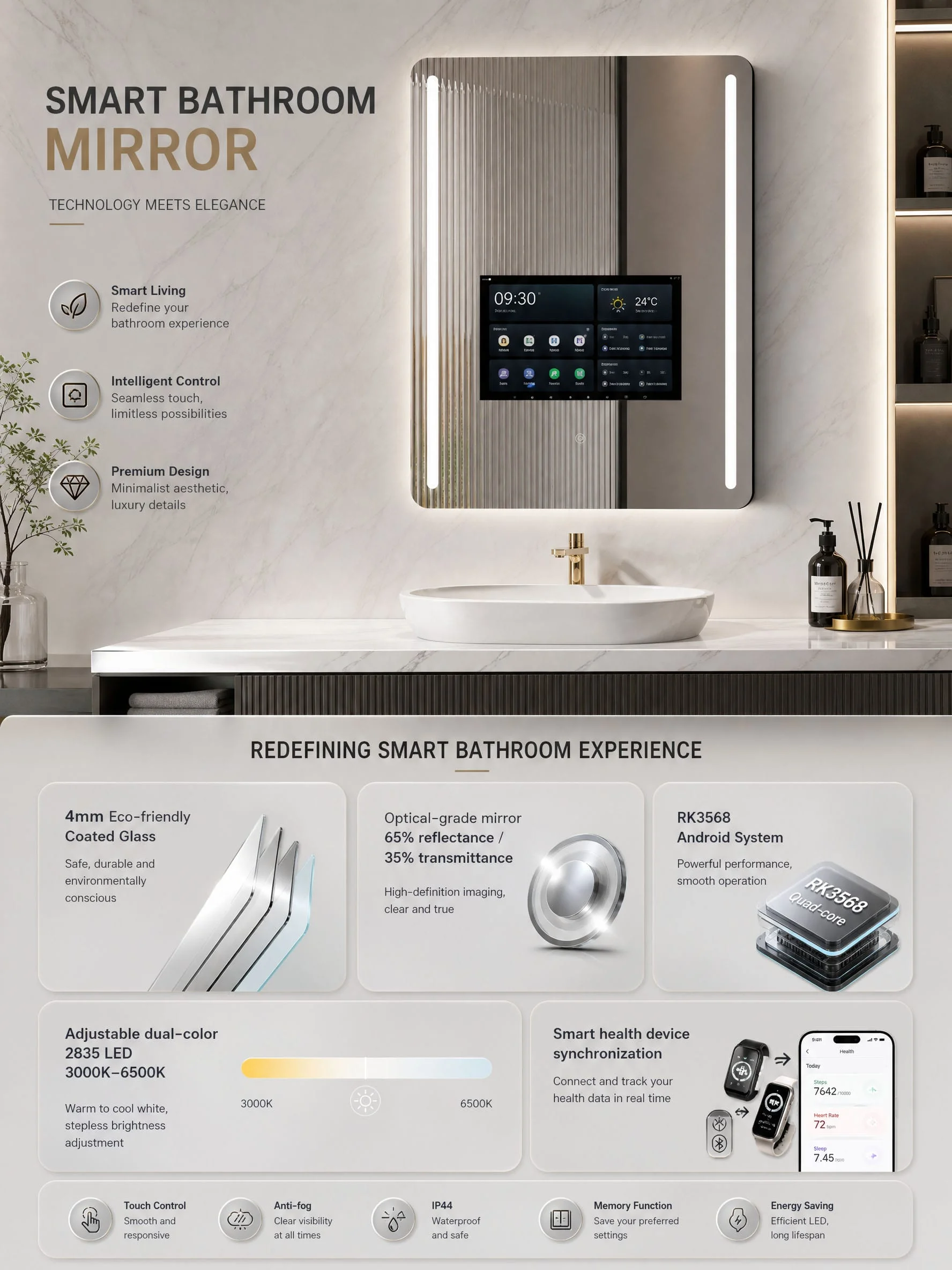
There are two primary classifications for safety backing films under American National Standards (ANSI Z97.1) and Consumer Product Safety Commission (CPSC) guidelines: CAT-I and CAT-II. CAT-I backing consists of a woven scrim film designed to pass basic impact testing. It is suitable for low-traffic applications but may lack the heavy-duty shear resistance needed for larger panels. CAT-II backing utilizes a smooth, heavy-duty woven or solid vinyl film designed for extreme impact resistance. CAT-II films ensure that even if a Frameless Bathroom Mirrors installation is shattered by direct impact, the shards remain firmly adhered to the backing substrate, preventing sharp fragments from falling.
Testing Metrics for Harsh Bathroom Environments
When evaluating suppliers for commercial-grade products like a Bathroom Mirror, procurement teams should demand verified laboratory test reports. Visual assertions of quality are insufficient to guarantee multi-year performance in high-occupancy environments.
The benchmark test for atmospheric corrosion resistance is the ASTM B117 Salt Spray Test. Mirrors are placed in a controlled chamber and exposed to a continuous 5% sodium chloride mist at elevated temperatures. High-performance copper-free mirrors can withstand over 120 to 240 hours of continuous salt spray exposure with zero or minimal edge corrosion (typically less than 0.2mm penetration). Additionally, adhesion testing for safety backings—evaluating the peel strength of the CAT film under thermal and humidity cycles—ensures the adhesive backing does not delaminate over years of service.
Adhesive Compatibility in Commercial Construction
One of the most common causes of early mirror failure in new multi-family developments is chemical incompatibility between the installation adhesives and the mirror backing paint. Many general-purpose construction adhesives contain high levels of acetic acid or aggressive solvents that chemically attack and dissolve the protective backing paint, leading to rapid desilverization.
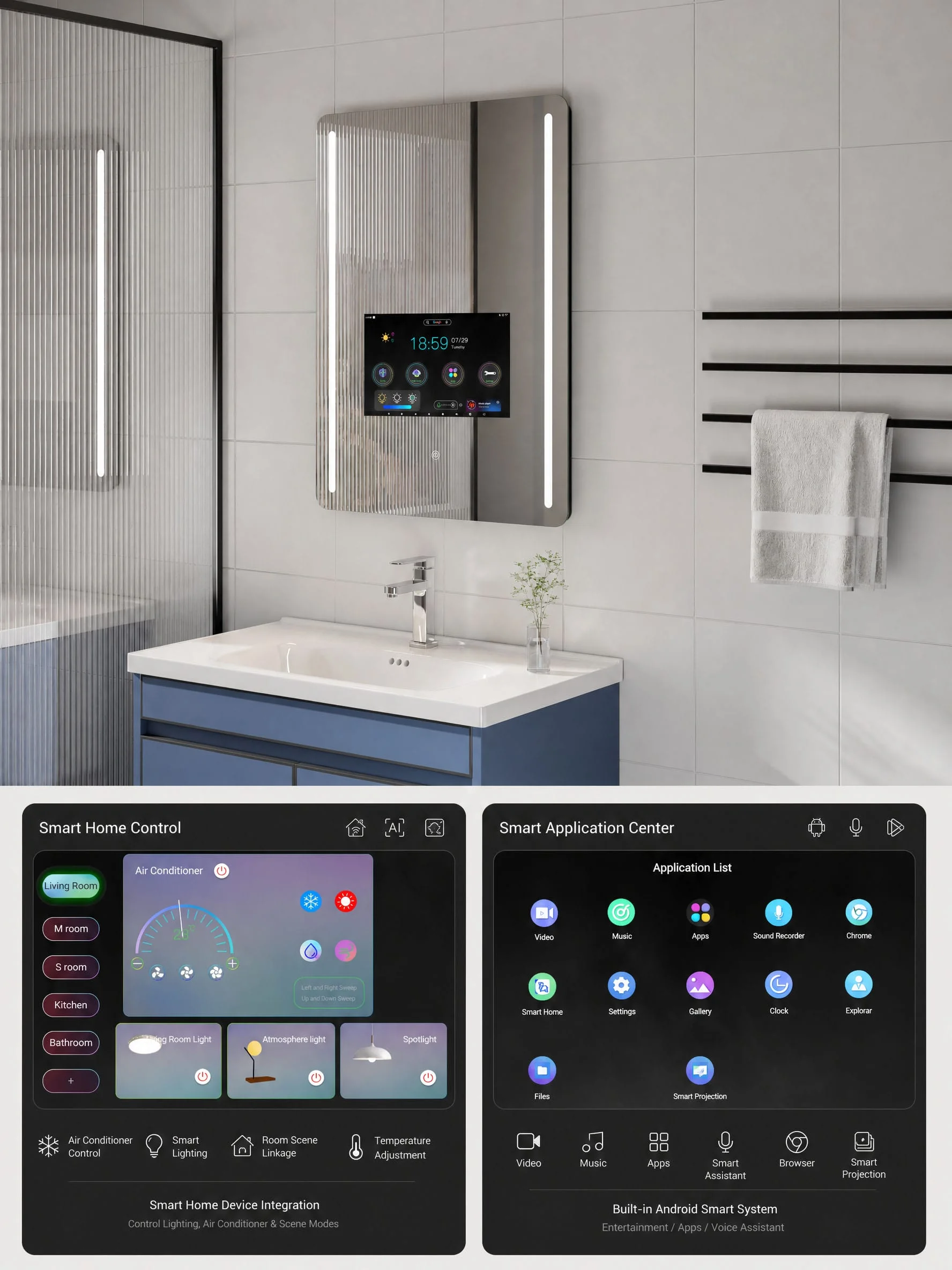
When installing fixtures such as a Framed Bathroom Mirror, installers must strictly use neutral-cure, solvent-free mirror mastics. These specialized adhesives are formulated specifically not to react with polyurethane or epoxy backing paints, maintaining structural integrity and preventing chemical burn-through over the lifecycle of the building.
Commercial vs. Consumer Grade Mirror Comparison
To help procurement officers and multi-family developers make informed decisions, the table below highlights the key differences between residential consumer-grade mirrors and high-performance commercial-grade mirrors.
| Specification Metric | Consumer-Grade (Retail) | Commercial-Grade (B2B Multi-Family) |
|---|---|---|
| Reflective Backing Technology | Traditional copper silvering | Advanced copper-free silvering |
| Salt Spray Resistance (ASTM B117) | Not rated or < 48 hours | 120 to 240+ hours certified |
| Shatter Protection | None or basic low-adhesion film | CAT-I or high-tensile CAT-II vinyl film |
| Adhesive Chemical Compatibility | Highly sensitive to standard adhesives | Highly compatible with neutral-cure mirror mastics |
| Edge Corrosion Protection | Single-layer thin lacquer paint | Double-layer polymer backing + edge sealing paint |
Frequently Asked Questions
Q: How does copper-free silver backing prevent black edge corrosion in high-humidity multi-family bathrooms?
A: Copper-free silver backing eliminates the intermediate copper layer used in traditional mirrors, which is highly prone to oxidation. By replacing this copper layer with multi-layer protective polymer backing paints, the pure silver layer remains completely sealed and protected against moisture and chemical corrosion, preventing black edge development.
Q: What ASTM or ISO testing standards validate shatterproof performance for commercial vanity mirrors?
A: Shatterproof performance is validated through strict impact testing criteria under the ANSI Z97.1 and CPSC 16 CFR 1201 standards. These tests evaluate the ability of safety films to withstand high-energy impacts and successfully retain broken glass fragments to protect users from injury.
Q: How do CAT-I and CAT-II vinyl backings compare in preventing glass shards during mirror breakage?
A: CAT-I films utilize a basic woven scrim backing that is cost-effective but has lower tensile limits. CAT-II films are thicker, high-tensile woven or solid vinyl backings designed for heavy-duty commercial installations. CAT-II provides superior adhesion and shear resistance, holding heavy glass fragments securely in place during impact.
Q: What are the long-term cost benefits of specifying corrosion-resistant mirrors in high-turnover residential properties?
A: Specifying high-durability, corrosion-resistant mirrors dramatically reduces replacement rates and labor costs. High-turnover rentals often suffer from aggressive cleaning and poor ventilation, which destroy consumer-grade mirrors in 1–3 years. Commercial-grade alternatives typically last 10+ years, offering a much lower total cost of ownership.
Q: How does adhesive compatibility affect the silver backing and backing paint of multi-family mirrors during installation?
A: Standard construction adhesives contain acidic curing agents and harsh solvents that dissolve the protective backing paint of the mirror, causing the underlying silver to oxidize and peel. Installers must use neutral-cure, solvent-free mirror mastics to guarantee chemical compatibility and long-term installation stability.





