Nederlands
 Deutsch
 Español
  Français
 Русский
Sourcing LED Bathroom Mirrors Wholesale: A Guide for UK Electrical and Bathroom Distributors
For UK electrical and bathroom distributors, sourcing illuminated mirrors at container-load scale requires balancing competitive unit costs with strict compliance and low warranty return rates. Navigating the technical differences between retail consumer goods and commercial-grade fixtures is critical to securing your supply chain. This procurement guide outlines the essential component standards, logistics considerations, and manufacturing specifications required to protect your brand reputation and distribution margins.
UK Compliance and Electrical Safety Standards
Distributors must verify that imported products carry the appropriate UKCA and CE markings to meet UK electrical safety regulations. When evaluating a commercial-grade bathroom mirror, the driver and internal wiring must conform to BS EN 60598-1 (luminaires general requirements) and BS EN 60598-2-1 (fixed general purpose luminaires). Utilizing branded, certified drivers such as Mean Well or Lifud ensures superior voltage regulation, over-temperature protection, and a significantly lower failure rate compared to generic alternatives.
Furthermore, electromagnetic compatibility (EMC) is critical to prevent interference with other household devices, meaning all components must pass BS EN 55015 testing. Working with a manufacturer that provides verifiable, third-party test reports from recognized laboratories like TUV or Intertek is the primary safeguard against regulatory enforcement and product recalls in the UK market.
Component Quality: Glass Silvering, Drivers, and Chassis
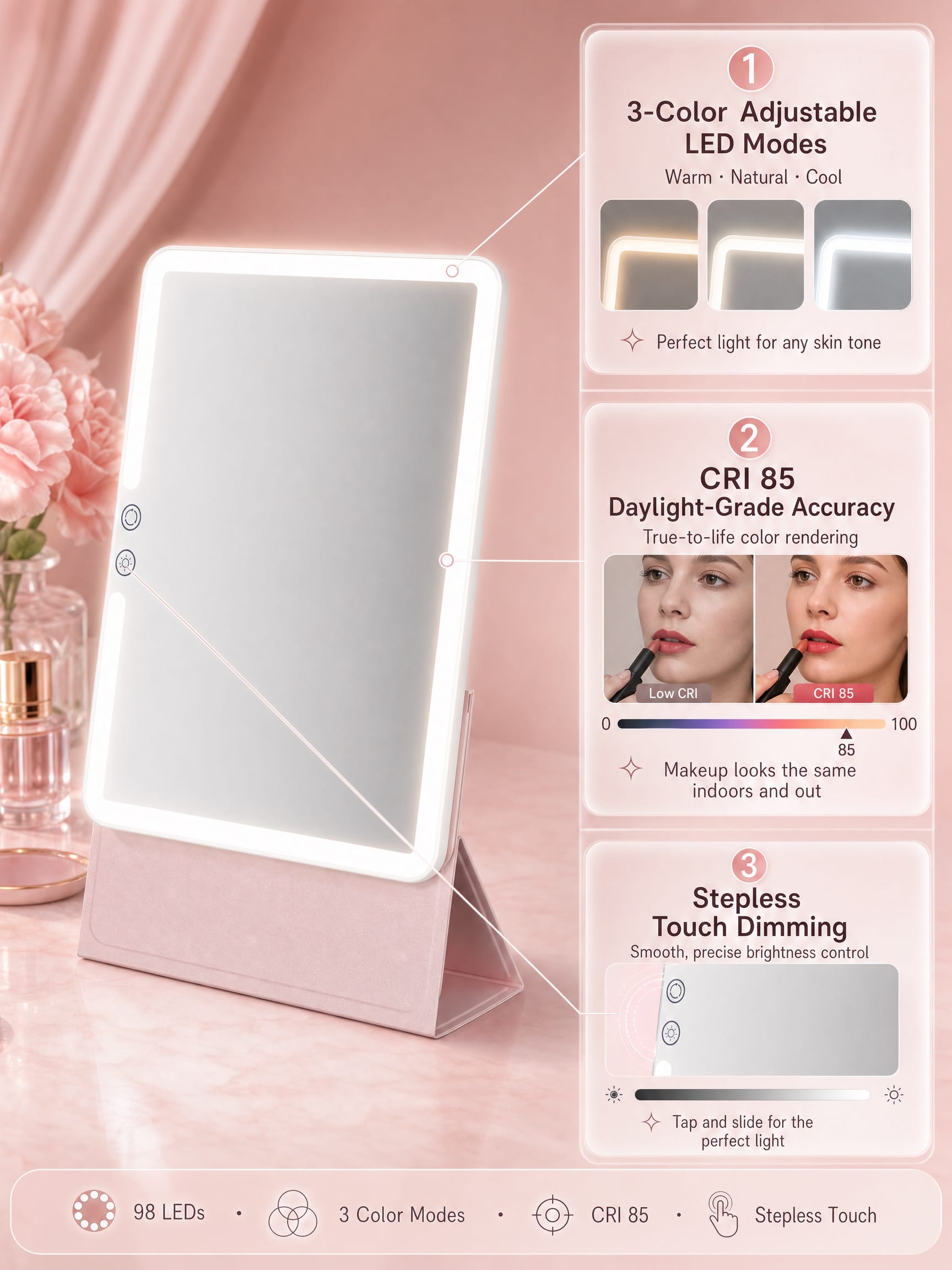
The longevity of an LED mirror in high-humidity UK bathrooms depends heavily on its raw materials. Distributors should specify 5mm copper-free silver glass, which offers superior resistance to desilverization and edge corrosion (black spots) compared to traditional copper-backed glass. Copper-free mirrors utilize a multi-layer protective coating that isolates the reflective silver layer from atmospheric moisture and cleaning chemicals.
From a structural standpoint, an anodized aluminum frame chassis provides much better heat dissipation for the LED strips than cheap plastic or low-grade steel backplates. Effective heat sinking keeps the operating temperature of the LEDs below 60 degrees Celsius, which prevents premature lumen depreciation and ensures the light output remains stable throughout its rated lifespan. When choosing specialized configurations, such as a premium bathroom mirror cabinet, this structural rigidity is even more critical to support the added weight of the doors and internal shelving without warping.
IP Ratings and Bathroom Zone Requirements
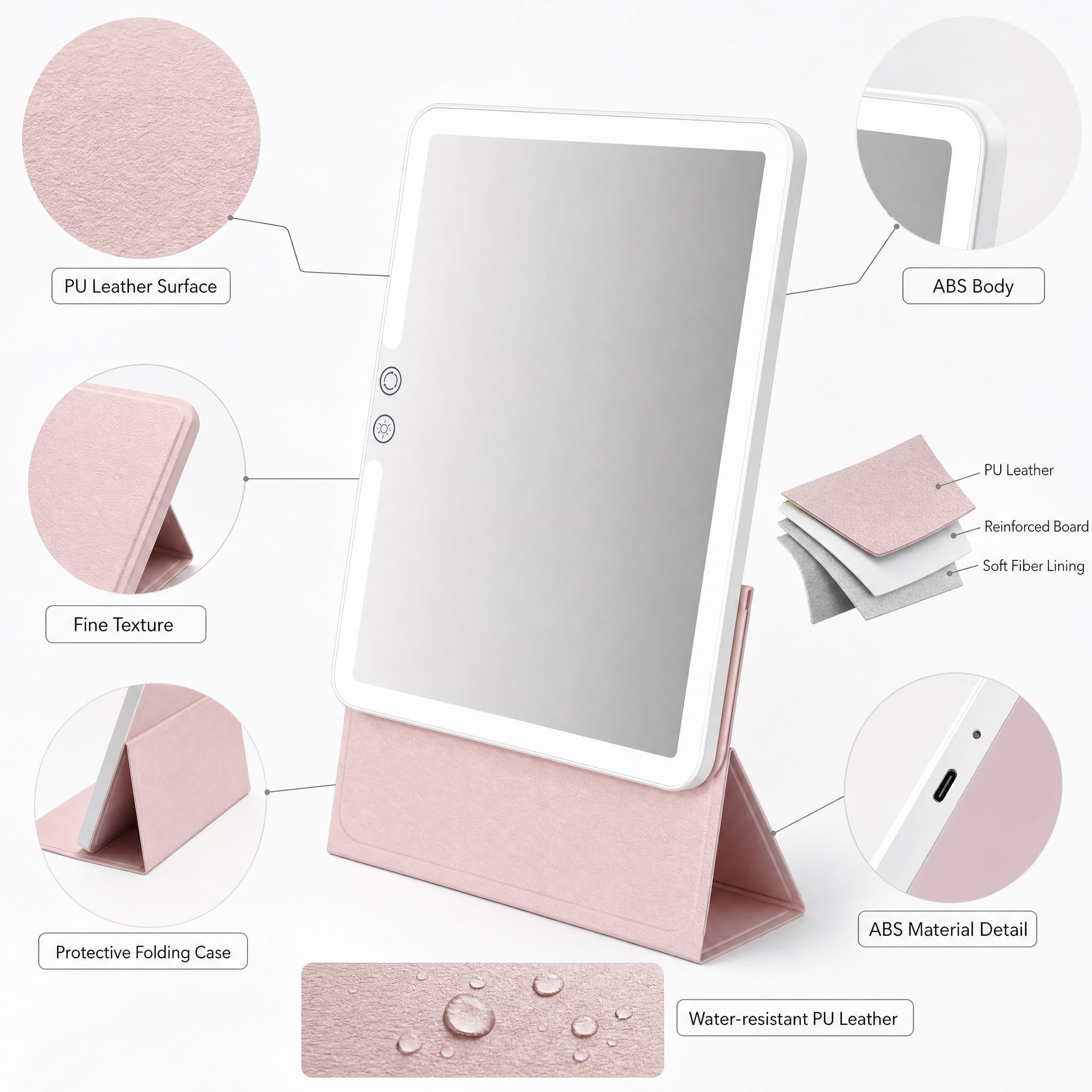
The UK IET Wiring Regulations (BS 7671) strictly define installation zones within bathrooms. For installations in Zone 2 (the area stretching 0.6m outside the perimeter of the bath or shower, up to 2.25m from the floor), electrical fixtures must carry at least an IP44 rating, representing protection against water splashes from any direction. Sourcing mirrors with a certified IP44 or IP54 rating is mandatory for commercial housing projects and hospitality developments in the UK.
Achieving a reliable IP44 rating requires precise engineering of the rear enclosure. The manufacturer must use high-quality silicone sealing gaskets, sealed cable entry glands, and waterproof junction boxes to protect the internal driver, touch sensors, and demister pads from steam penetration. Any compromise in the rear seal can lead to internal condensation, short circuits, or early component failure.
Bespoke vs. Standard: Managing Customization and Lead Times
UK distributors must carefully manage their inventory levels by balancing the shorter lead times of standard stock with the market demand for bespoke designs. While standard sizes (such as 600x800mm rectangular mirrors) are often readily available from factory stock, high-end residential or commercial hospitality projects frequently require extensive bathroom mirror customization, including custom dimensions, integrated Bluetooth speakers, or unique frame finishes.
Bespoke OEM/ODM manufacturing typically incurs longer development and production cycles, ranging from 35 to 45 days, plus shipping time to the UK. This timeline includes drawing approvals, prototype creation, and custom safety testing. Distributors must integrate these lead times into their project planning to prevent supply chain bottlenecks on commercial construction sites.
| Specification / Feature | Standard Stock Option | Bespoke OEM/ODM Option | Impact on Cost & Logistics |
|---|---|---|---|
| Glass Selection | Standard 5mm copper-free silver glass | Custom tints, beveled edges, opti-white glass | Bespoke glass cuts increase tooling costs and lead times by 7-10 days. |
| Chassis & Frame | Anodized aluminum, standard shapes | Powder-coated colors, custom shapes | Specialized profiles like an irregular bathroom mirror require dedicated forming molds. |
| Electronics & Drivers | Pre-certified standard drivers (UKCA/CE) | Dali dimming, smart home protocol integration | Smart protocols require specialized testing; increases unit costs by 15-25%. |
| Minimum Order Quantity | Low MOQ (often 50-100 units) | High MOQ (typically 300+ units or full container) | Customization amortizes tooling costs best at high volume, reducing overall unit cost. |
Logistics, Packaging, and Quality Control for Bulk Imports
One of the largest hidden costs in glass distribution is transit damage. Because glass is fragile and heavy, standard retail packaging is insufficient for sea freight container shipping and subsequent domestic handling. Wholesale shipments must use drop-tested packaging conforming to ISTA 3A or 6-AMAZON standards, incorporating high-density expandable polyethylene (EPE) foam, reinforced corner protectors, and heavy-duty 5-layer corrugated outer cartons.
To guarantee quality before the container leaves the factory, importers should employ a strict Acceptable Quality Limit (AQL) framework, typically set at AQL 1.5 for major defects (such as glass scratches, sensor failures, or uneven LED illumination) and AQL 4.0 for minor defects. Conducting on-site inspections prior to loading reduces the risk of importing defective goods and incurring expensive return shipping and customs fees.
Frequently Asked Questions
Q: What are the BS EN standards required for commercial LED bathroom mirrors in the UK?
A: Commercial LED mirrors imported into the UK must carry the UKCA or CE mark and comply with BS EN 60598-1 (general luminaire safety), BS EN 60598-2-1 (fixed general purpose luminaires), and BS EN 55015 for electromagnetic compatibility to prevent interference with other domestic electronics.
Q: What IP ratings are required for LED mirrors installed in bathroom Zone 2?
A: Under UK IET Wiring Regulations (BS 7671), any electrical equipment installed within bathroom Zone 2 must have a minimum rating of IP44, which ensures protection against water splashes from all directions.
Q: How do wholesale lead times differ between bespoke LED mirror designs and standard stock?
A: Standard stock configurations can often be dispatched within 15 to 20 days. However, bespoke OEM/ODM designs—which require engineering drawings, custom glass molds, and electrical safety testing—typically have a manufacturing lead time of 35 to 45 days, plus shipping.
Q: How do manufacturers package bulk LED mirrors to prevent transit damage to the UK?
A: High-quality B2B manufacturers utilize packaging certified under ISTA 3A standards, featuring thick EPE foam frames, edge guard protectors, and heavy-duty double-wall corrugated outer boxes to withstand sea freight and final-mile courier handling.
Q: What is the typical MOQ requirement for custom-branded LED mirrors?
A: While standard designs can be ordered in batches of 50 to 100 units, custom-branded or bespoke-sized options typically require a minimum order quantity (MOQ) of 200 to 300 units to offset the setup costs for custom screen printing, glass cutting, and custom structural molds.