Nederlands
 Deutsch
 Español
  Français
 Русский
The Ultimate Specifier's Guide to Commercial LED Bathroom Mirrors for Luxury Hotels
Specifying fixtures for luxury hospitality guestrooms requires balancing high-end aesthetics with structural durability and long-term maintenance logistics. For mechanical, electrical, and plumbing (MEP) engineers and interior designers, commercial LED bathroom mirrors represent a critical intersection of architectural lighting and interior finishes. This guide provides the technical specifications, photometric standards, and structural details required to prevent project delays and ensure trouble-free operations.
1. Photometric Standards and Color Rendering for Luxury Vanities
Luxury hospitality environments demand precise color rendering to ensure realistic skin tones and optimal illumination for guest vanity tasks. Standard commercial lighting often fails to deliver the spectrum required for high-end hospitality, leading to flat or green-tinted reflections that detract from the guest experience.
We recommend specifying a minimum Color Rendering Index (CRI) of Ra ≥ 90, with a dedicated R9 value (red spectrum rendering) of ≥ 50. To achieve a soft, luxurious glow without harsh shadowing, the diffusion material covering the LED strip must be engineered to eliminate visible hot spots. Premium diffusers utilize micro-faceted extrusion lenses that distribute light evenly over a 120-degree beam angle. Integrating custom form factors like a Round Bathroom Mirror or a sophisticated Oval Bathroom Mirror can elevate the guestroom's visual signature while maintaining these strict photometric baselines.
2. LED Driver Serviceability and Electrical Engineering
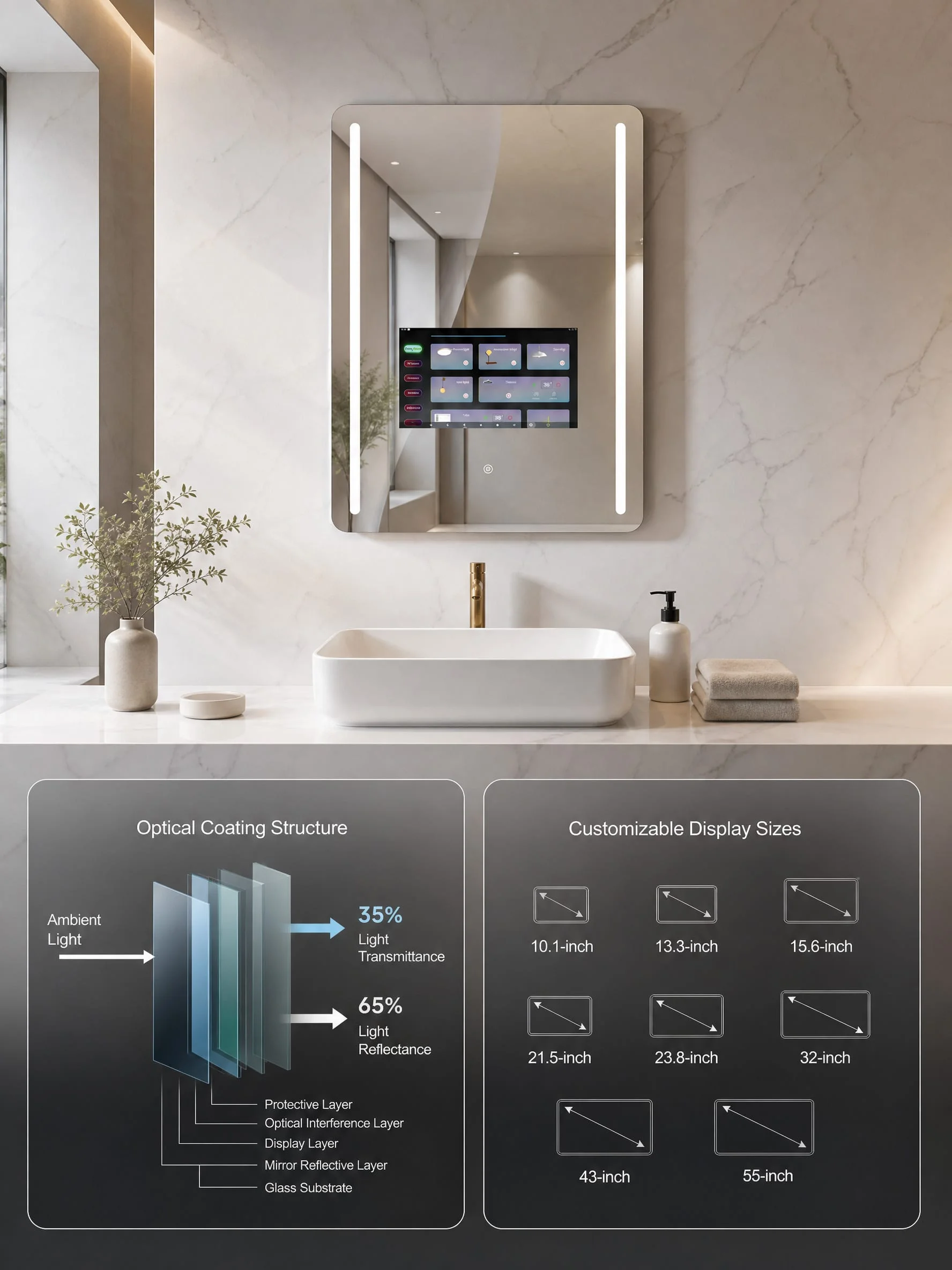
A critical gap in many commercial mirror specifications is driver serviceability. In a 500-key luxury hotel, maintenance teams cannot afford to remove entire glass assemblies from the wall simply to replace a failed power supply, as this risks glass breakage and increases labor costs.
Our commercial-grade designs isolate the LED drivers within a dedicated, front-accessible service compartment or a UL-listed junction box integrated behind the mirror chassis. This design allows engineering staff to swap out drivers in minutes. To ensure compatibility with modern guestroom energy management systems, specify drivers that support both 0-10V analog dimming and TRIAC phase-cut dimming. Furthermore, factory-direct testing data shows that high-quality drivers achieve an L70 lifetime of over 50,000 hours, maintaining at least 70% of initial lumen output under high-humidity conditions.
3. Structural Reinforcement and Defogger Integration
Commercial backlit mirrors require secure mounting systems that can withstand daily cleaning and accidental impacts. Standard wall anchors are insufficient for heavy architectural glass, especially when advanced electronics are integrated.
Specifiers should require a heavy-duty aluminum alloy chassis with integrated keyhole mounting slots or a French cleat system. For modern vanity layouts, utilizing a structured Bathroom Mirror Cabinet provides both robust structural mounting and clean concealed storage. To eliminate condensation in high-humidity suites, integrated defogger pads must be applied to the rear of the glass. These heating elements should be wired to a dedicated circuit or timed relay linked to the bathroom light switch, preventing unnecessary energy draw when the guestroom is unoccupied.
4. Commercial Mirror Comparison Table
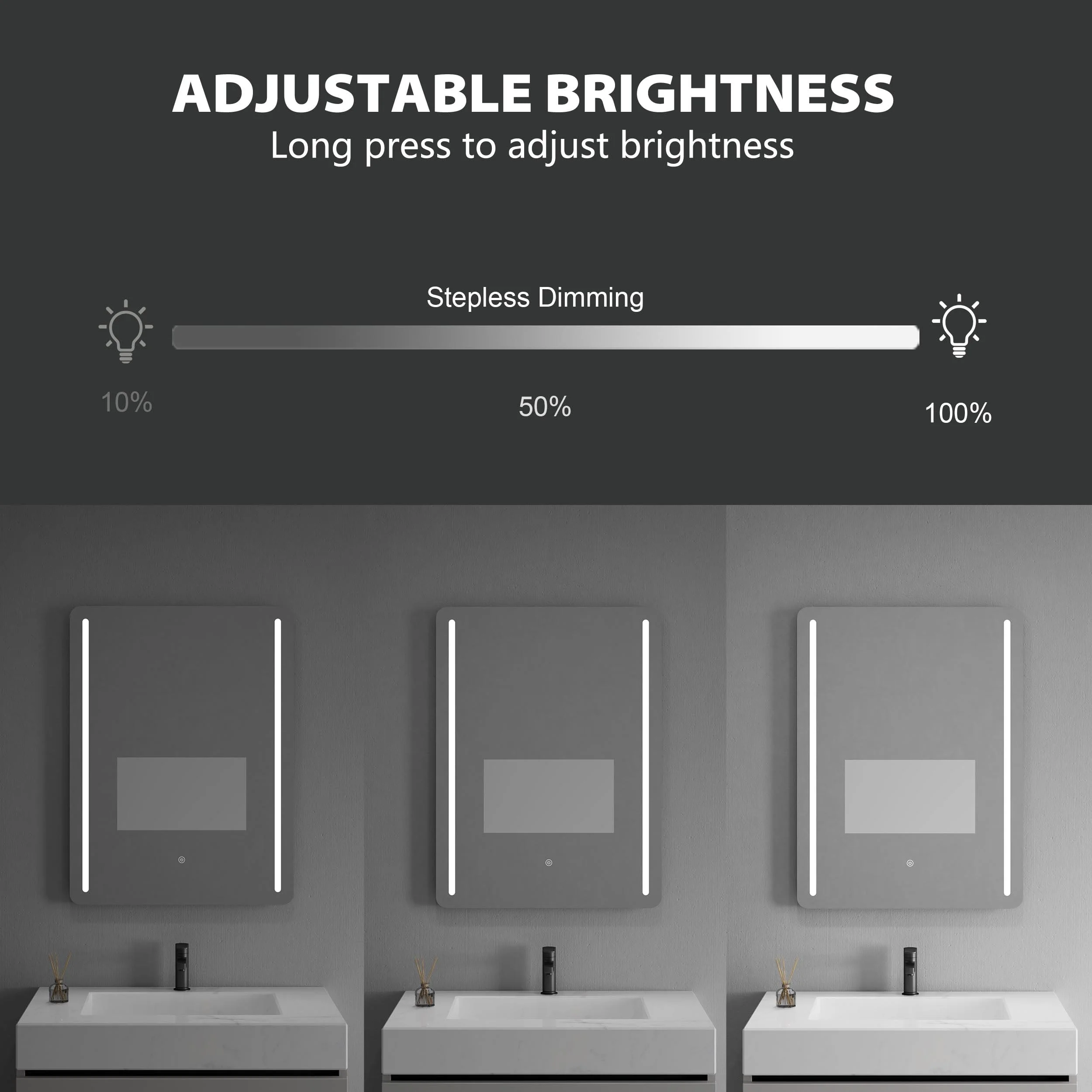
Choosing the correct design depends heavily on the project scope, local electrical codes, and the interior design theme. The table below outlines the primary technical distinctions between typical hotel mirror configurations.
| Specification Parameter | Standard Backlit Mirror | Premium Architectural Mirror |
|---|---|---|
| Ingress Protection (IP Rating) | IP44 (Splash-resistant) | IP54 / IP65 (Enhanced moisture barriers) |
| Color Rendering Index (CRI) | 80 Ra (Typical) | 90+ Ra (R9 ≥ 50 for luxury makeup vanity) |
| Driver Serviceability | Rear-mounted, requires mirror removal | Front-accessible or modular junction box |
| Dimming Compatibility | Non-dimmable or basic TRIAC | 0-10V, DALI, or custom smart integrations |
5. Selection Checklist for Hospitality Procurement
To avoid unexpected maintenance costs and installation delays, procurement managers and project coordinators should reference the following technical criteria during the submittal review process:
- Confirm the Bathroom Mirror Customization parameters include copper-free glass to prevent edge corrosion.
- Verify that the driver compartment has an independent IP rating matching local wet-room zoning codes.
- Ensure the mounting hardware matches the structural backing (e.g., metal studs or concrete blocks) specified by the structural engineer.
- Select appropriate styles such as Frameless Bathroom Mirrors for minimalist aesthetics or a Framed Bathroom Mirror for classical architectural frames.
6. Specification FAQ
Q: What are the hotel IP rating requirements for bathroom mirrors?
A: For most hospitality applications, a minimum of IP44 is required for mirrors installed in Zone 2 bathroom areas. For vanities placed closer to showers or high-steam environments, an IP54 or IP65 rating is recommended to protect the internal LED components and drivers from moisture ingress.
Q: How do commercial defogger pads impact hotel guestroom energy consumption?
A: Standard defogger pads draw approximately 1.5 to 2.5 watts per square foot. To minimize energy consumption, designers should wire the defogger to a smart occupancy sensor, a 30-minute auto-shutoff timer, or integrate it with the room's main master switch so it only operates when the bathroom is actively occupied.
Q: What is the recommended CRI and R9 value for luxury hotel vanity lighting?
A: For high-end hospitality projects, specify a CRI of ≥ 90 and an R9 value of ≥ 50. This ensure accurate rendering of warm colors, including skin tones and cosmetic applications, which is a key benchmark for luxury guest satisfaction.
Q: How does 0-10V vs TRIAC dimming affect smart mirror integration in hospitality?
A: TRIAC dimming is cost-effective and compatible with traditional wall dimmers, but can sometimes introduce flickering at lower levels. 0-10V dimming provides smoother, flicker-free control down to 1% and is highly compatible with centralized Guestroom Energy Management Systems (GEMS) and smart automation controllers.
Q: What are the mounting and structural reinforcement specs for commercial backlit mirrors?
A: Commercial mirrors must be secured to the wall using a rigid aluminum alloy structural chassis and French cleats. Installations must bypass drywall alone, anchoring directly into structural wood or metal blocking behind the wall to handle the continuous weight load and shear force during cleaning.